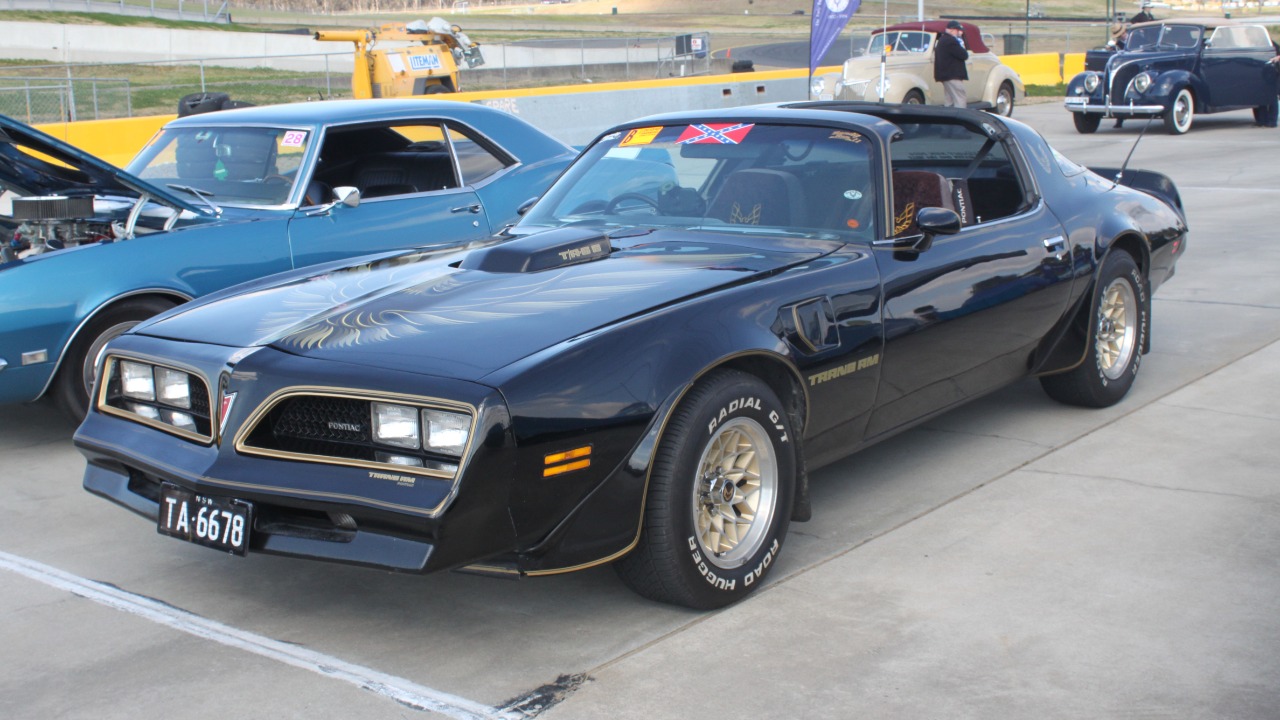

American muscle has long been an export of attitude as much as engineering, but few people would have predicted that the Pontiac Firebird Trans Am would become a cult object on the streets of Tokyo and Osaka. What began as a quirky, plastic-clad coupe from Dec-era General Motors has turned into a rolling canvas for Japanese tuners, a familiar V8 silhouette reimagined through the lens of a very different car culture. The result is an unlikely love story between an aging Detroit icon and a country better known for kei cars and precision-built sports machines.
The oddball from Pontiac that Japan could not ignore
The Pontiac Firebird Trans Am was never meant to be subtle. With its screaming chicken hood decals, pop-up headlights, and plastic body cladding, it was the extrovert of the GM lineup, a car that leaned into excess at a time when many buyers were drifting toward smaller, more efficient imports. In the United States it was often dismissed as a caricature of American performance, a Dec-era holdover that seemed out of step with the rise of compact, front-wheel-drive cars and the growing emphasis on refinement over raw attitude.
In Japan, that same outsized personality landed very differently. The Trans Am’s long hood, short deck, and unapologetically theatrical styling stood out against a backdrop of tidy hatchbacks and boxy sedans, turning it into a kind of automotive cosplay of American bravado. Enthusiasts who had grown up watching Hollywood chase scenes and television shows built around the Firebird suddenly had the chance to import the real thing, and the car’s oddball reputation at home only made it more alluring abroad, where it felt less like a cliché and more like a rare, slightly rebellious statement.
How a tuner-friendly layout made the Trans Am a Japanese canvas
Underneath the flamboyant styling, the Pontiac Firebird Trans Am was a surprisingly straightforward machine, and that simplicity became one of its biggest selling points for Japanese builders. The car’s front-engine, rear-wheel-drive layout, stout V8, and relatively simple suspension architecture made it easy to modify, repair, and upgrade without the need for exotic parts or specialized tools. That tuner-friendly and familiar mechanical package turned the Trans Am into a blank slate for workshops that were already comfortable extracting power and personality from older platforms.
Japanese garages that had cut their teeth on domestic icons like the Nissan Skyline and Toyota Supra found that the Trans Am responded just as eagerly to intake, exhaust, and suspension work, while its generous engine bay and robust drivetrain invited more radical experimentation. Reports on the car’s appeal in Japan emphasize how this mix of accessibility and character helped it evolve from a curiosity into a serious project base for tuners looking for something different, with the Firebird’s bones proving strong enough to support everything from subtle restomods to full-blown custom builds that barely resemble the original silhouette once they roll out of the shop.
From movie prop to street icon in Japanese car culture
The Pontiac Firebird Trans Am did not arrive in Japan as an unknown quantity. For years it had been a fixture in imported films and television, where its exaggerated styling and V8 soundtrack made it a natural choice for chase scenes and hero cars. Japanese audiences encountered the Trans Am first as a symbol of American cool, a rolling shorthand for rebellion and speed, long before they ever saw one parked at a local meet. That cinematic exposure primed a generation of enthusiasts to seek out the real car once import rules and disposable incomes made it feasible.
Once the Trans Am began appearing on Japanese streets, it quickly became more than a movie prop. Owners leaned into the car’s screen legacy with period-correct wheels, retro graphics, and even replica builds that mirrored specific on-screen cars, but they also adapted it to local tastes. The result was a hybrid identity: part Hollywood fantasy, part homegrown street icon. In a scene dominated by domestic legends, the Firebird’s presence at meets and night cruises signaled a different kind of fandom, one rooted in overseas media but expressed through the same obsessive attention to detail that defines Japanese car culture.
Why American muscle resonates in a land of precision
Japan’s fascination with American muscle cars extends well beyond a single Pontiac model, and the Firebird Trans Am sits inside a broader pattern of admiration for Detroit iron. Enthusiasts are drawn to the contrast between the raw, torque-heavy character of cars like the Trans Am and the high-revving, meticulously engineered feel of domestic performance machines. A detailed look at Japan’s obsession with American muscle highlights how V8-powered coupes and sedans offer a different kind of drama, one that emphasizes sound, presence, and straight-line punch over lap times, and that difference is precisely what many owners are seeking.
In that context, the Trans Am’s quirks become assets. Its rumbling exhaust note, heavy steering, and slightly unrefined manners stand apart from the clinical precision of many Japanese sports cars, giving drivers a sense of occasion every time they turn the key. Video tours of local scenes show how American muscle, including the Pontiac, has carved out a niche in cities known for high-rise buildings, breathtaking landscapes, and modern advancements, with cars like the Firebird sharing garage space with domestic icons as part of an extensive car culture that celebrates variety as much as performance.
The cult that formed around a misunderstood coupe
What makes the Pontiac Firebird Trans Am’s story in Japan so striking is the intensity of the following it has attracted relative to its modest status at home. In the United States, the car’s later generations were often overshadowed by more celebrated muscle and pony cars, and by the time production ended it was widely seen as a relic of a bygone era. In Japan, that underdog status helped fuel a cult-like devotion, as owners embraced the chance to champion a car that felt overlooked by mainstream enthusiasts in its country of origin.
Clubs and informal crews formed around shared ownership of the Trans Am, with meetups that showcased everything from meticulously preserved stock examples to heavily modified street machines. The car’s rarity on Japanese roads amplified its impact, turning each sighting into an event and each build into a talking point. Coverage of this phenomenon describes how the Firebird, once dismissed as an oddball, has become a touchstone for a subset of Japanese tuners who value individuality and narrative as much as outright performance, treating the car’s American roots as a starting point rather than a constraint.
How Japanese tuners reinterpreted Pontiac’s design language
Japanese builders did not simply preserve the Pontiac Firebird Trans Am as a museum piece; they reinterpreted it through their own aesthetic and technical sensibilities. Body kits that once exaggerated the car’s already bold lines were often pared back or reshaped, with some owners favoring cleaner, more minimalist looks that aligned with local tastes. Others went in the opposite direction, layering on wide fenders, aggressive aero, and custom paint that pushed the Trans Am into territory more commonly associated with domestic drift and time-attack machines.
Under the skin, the modifications could be even more radical. Suspension setups were tailored for Japan’s tight mountain roads and urban environments, with coilovers, upgraded brakes, and modern wheel and tire packages transforming the way the car drove. Some builds retained the original V8, tuning it for reliability and a broader powerband, while others experimented with engine swaps that blended American chassis character with different powertrains. Throughout these transformations, the Firebird’s core identity as a front-engine, rear-drive coupe remained intact, but the way it expressed that identity became distinctly Japanese, a fusion that helped cement its status as a cult favorite.
Economic quirks and import realities that fed the craze
The Trans Am’s rise in Japan was not just a matter of taste; it was also shaped by economics and regulation. As the car aged out of its prime years in the United States, values for many examples softened, making it more affordable for overseas buyers to acquire and ship them across the Pacific. At the same time, Japan’s own rules around vehicle age and inspection created windows where importing older cars could be relatively cost effective, especially for enthusiasts willing to navigate the paperwork and maintenance demands that came with owning a foreign classic.
These practical considerations intersected with a growing appetite for distinctive imports, particularly among younger enthusiasts who wanted something that would stand out at local meets. The Pontiac Firebird Trans Am, with its unmistakable profile and association with Dec-era American culture, fit that brief perfectly. As more cars arrived and more workshops gained experience maintaining and modifying them, the barriers to entry dropped further, reinforcing a feedback loop in which visibility, affordability, and community support all contributed to the car’s deepening foothold in Japan’s already extensive car culture.
What the Trans Am’s Japanese afterlife says about car culture
The Pontiac Firebird Trans Am’s unexpected second life in Japan underscores how car culture often thrives on reinterpretation rather than preservation. A model that many American buyers had written off as dated or excessive found new relevance when placed in a different social and aesthetic context, where its flaws could be reframed as character and its eccentricities as charm. That transformation speaks to the way enthusiasts around the world selectively adopt and remix automotive symbols, turning mass-produced products into personal and collective statements.
For me, the Trans Am’s journey from American oddball to Japanese obsession is a reminder that the meaning of a car is never fixed. It shifts with geography, media, economics, and the creativity of the people who choose to keep it alive. In the hands of Japanese tuners and fans, Pontiac’s once-maligned coupe has become more than a nostalgic artifact; it is a living example of how global car culture can rescue a fading icon, give it new stories to tell, and, in the process, reveal unexpected common ground between very different automotive worlds.
More from MorningOverview