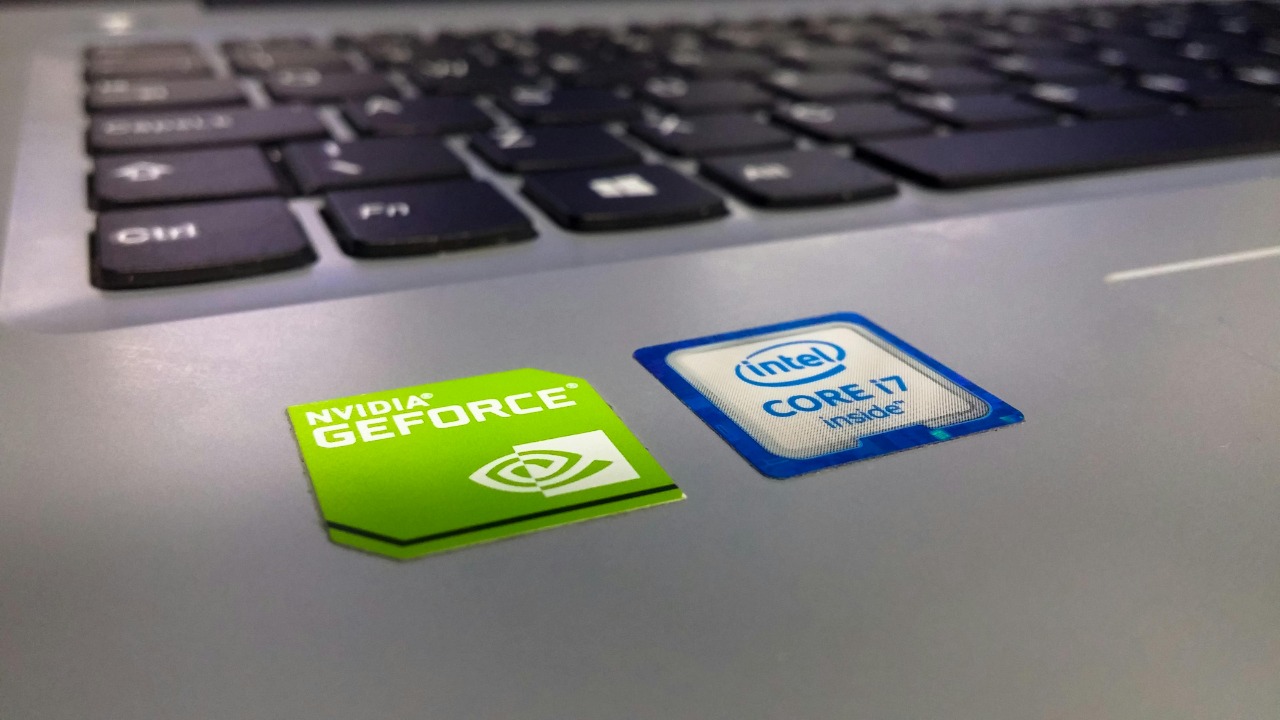

The balance of power in high-performance computing is tilting toward tightly fused CPU-GPU designs, and two old rivals are suddenly aligned around that future. Intel and Nvidia are now chasing a mega chip that marries general-purpose compute with accelerated AI, backed by billions of dollars and the prospect of reshaping who controls the next decade of data center spending. The cash is real, the stakes are enormous, and the partnership is emerging just as both companies face very different pressures in the AI gold rush.
From fierce rivals to uneasy partners
For most of modern computing history, Intel and Nvidia defined themselves in opposition, one as the archetypal CPU giant and the other as the upstart GPU specialist. That rivalry is now giving way to a more transactional logic, as both sides recognize that the most valuable silicon in the world increasingly blends CPU and GPU capabilities into a single, tightly orchestrated platform. The move toward a combined mega chip is less a truce than a recognition that hyperscalers, cloud providers, and AI labs want integrated systems, not fragmented parts.
The pivot is especially striking because it reverses the old hierarchy in which Intel towered over a much smaller Nvidia. Reporting on the new deal stresses that, in the past, In the early days of PC graphics, Nvidia was the GPU dwarf next to CPU giant Intel, while today AI chip giant Nvidia and a struggling Intel are effectively switching roles. That reversal sets the stage for a partnership in which Nvidia brings overwhelming momentum in accelerated computing and Intel contributes manufacturing heft and x86 expertise, both converging on a CPU-GPU mega chip that neither could deliver as quickly alone.
The $5 billion bet that changed the conversation
The inflection point came when Nvidia decided to put real money behind its strategic rhetoric and take a multibillion-dollar stake in its former rival. Nvidia has agreed to invest $5 billion into Intel, a move that instantly reframed Intel from a fading incumbent into a potential kingmaker in the next wave of AI hardware. The investment is not a passive financial play, it is explicitly tied to a broader collaboration around advanced chips that blend CPU and GPU functions for AI workloads.
Coverage of the deal describes how Nvidia is to invest $5 billion in Intel, throwing its heft behind the struggling US chip maker and pairing the cash with a chip development pact that goes beyond simple supply agreements. One report notes that Nvidia has announced a $5 billion equity investment in Intel and an expansive plan to jointly develop multiple generations of x86-based AI systems, describing the roadmap as a family of x86 RTX SoCs for now. Another account frames the move as Nvidia giving Intel a $5 billion shot in the arm, with Intel shares surging after Nvidia announced the investment and the two companies detailed their plan to co-develop advanced chips in a joint presentation on Sep.
Why Nvidia needs a CPU-GPU mega chip
Nvidia’s motivation is straightforward: the company wants to lock in its dominance in AI by owning not just the GPU socket but the entire accelerated computing platform. Its own financials show how much is at stake. NVIDIA revenue for the twelve months ending October 31, 2025 was $187.142B, a 65.22% increase year-over-year, a surge that reflects the explosive demand for AI accelerators and data center GPUs. That figure, often rounded in shorthand to $187 billion, underscores how central Nvidia has become to the AI economy and why it is willing to reshape old rivalries to keep that trajectory intact.
Inside its latest annual review, Nvidia describes Fiscal 2025 as a structural shift in the computing economy rather than a mere transition, emphasizing that its Positioning is now anchored in full-stack accelerated computing, from silicon to systems to software. The company’s own language about Positioning and Fiscal 2025 makes clear that GPUs alone are no longer enough, the real prize is tightly integrated platforms that can run AI, graphics, and general-purpose workloads with minimal friction. A CPU-GPU mega chip built with Intel’s x86 cores and Nvidia’s accelerators would give Nvidia a way to offer that integration even to customers who are deeply invested in x86 software stacks and are not ready to jump wholesale to alternative CPU architectures.
Intel’s struggle and the lure of a turnaround
For Intel, the partnership is less about extending dominance and more about survival and reinvention. Intel revenue for the twelve months ending September 30, 2025 was $53.439B, a 1.49% decline year-over-year, a modest but telling contraction for a company that once set the pace for the entire semiconductor industry. That $53 billion top line, captured in the figure of $53.439, highlights how far Intel has fallen behind the growth curves of AI-focused rivals and why it needs a bold new story for investors and customers.
The market’s reaction to Nvidia’s investment shows how hungry investors are for that story. Intel Corp INTC, listed on NASDAQ, recently traded at 37.30, up 0.62 or 1.69%, with a 52 week range of 17.67 to 44.02, figures that capture both the volatility and the recovery hopes swirling around the stock. Those numbers, drawn from Intel Corp INTC quote data that also track Volume and Day ranges, suggest that investors see the Nvidia tie-up as a credible catalyst. A CPU-GPU mega chip that puts Intel back at the center of AI data centers would not just stabilize revenue, it could reposition the company as an indispensable partner in the very market that has been eroding its relevance.
Inside the joint CPU-GPU roadmap
The core of the pact is a roadmap to build multiple generations of chips that fuse Intel’s x86 CPU technology with Nvidia’s GPU and AI accelerators into a single, coherent platform. Rather than simply placing a CPU and GPU side by side on a motherboard, the companies are talking about system-on-chip designs that share memory, interconnects, and power management, reducing latency and improving efficiency for AI and high performance computing workloads. The reference to x86 RTX SoCs signals that Nvidia is willing to put its flagship RTX branding on products that rely on Intel’s CPU cores, a symbolic concession that underscores how central the combined design is to its future plans.
Reports on the agreement describe it as an expansive plan to jointly develop multiple generations of x86-based AI chips, with Nvidia’s $5 billion equity stake in Intel serving as both financial support and a signal of long-term commitment. One account notes that Nvidia is to invest $5 billion in Intel and close an AI chip pact that covers not just current products but future architectures, while another emphasizes that the two companies are working on a family of Intel-anchored accelerators that will be manufactured in Intel’s fabs. The roadmap is still light on public product names and launch windows, but the direction is clear: a CPU-GPU mega chip that can compete head-on with any integrated offering in the market.
Rewriting the balance of power in AI hardware
The strategic logic behind the mega chip is not just technical, it is geopolitical and financial. By aligning with Intel, Nvidia gains access to a US-based manufacturing partner at a time when supply chain resilience and domestic production are becoming national priorities. Intel, for its part, gains a marquee customer for its foundry ambitions and a way to justify the massive capital expenditures required to modernize its fabs. The result is a partnership that could shift where the most advanced AI silicon is designed and built, with implications for everything from cloud pricing to national industrial policy.
Analysts who once framed the rivalry as GPU versus CPU now describe a more nuanced contest in which integrated platforms matter more than individual chips. One report on the deal points out that in the past Nvidia was the GPU dwarf next to CPU giant Intel, but now AI chip giant Nvidia and a weakened Intel are effectively pooling their strengths to fend off other challengers. The same coverage notes that Nvidia’s $5 billion investment sits alongside a separate $10 billion U.S. government stake in Intel, highlighting how public and private capital are converging around the idea that Intel must remain a viable counterweight in advanced manufacturing. In that context, the CPU-GPU mega chip is not just a product, it is a vehicle for channeling that capital into a concrete, competitive platform.
How investors and markets are reading the pact
From an investor’s perspective, the Nvidia-Intel alignment is a bet that the AI hardware market will consolidate around a few dominant platforms, each offering end-to-end solutions from chips to software. Nvidia’s own revenue trajectory, with NVIDIA revenue for the twelve months ending October 31, 2025 at $187.142B and growth of 65.22%, gives it the financial firepower to make such bets and absorb the risks of co-developing complex new architectures. Intel’s more modest $53.439B in revenue and 1.49% decline underscore why it is willing to trade some independence for access to Nvidia’s growth engine and ecosystem.
Market data services are already reflecting the heightened scrutiny of both companies as the pact unfolds. Platforms that aggregate stock and index information, such as Google Finance, are seeing increased attention to Intel and Nvidia tickers as traders parse every hint about the joint roadmap. The earlier surge in Intel’s share price after Nvidia’s $5 billion shot in the arm, captured in reports that describe how Intel shares jumped on Sep when the investment was announced, suggests that investors are willing to price in a premium for the prospect of a successful CPU-GPU mega chip. At the same time, Nvidia shareholders are watching closely to ensure that the partnership enhances, rather than dilutes, the company’s extraordinary growth in AI.
The risks and unanswered questions
Despite the clear strategic logic, the partnership carries significant risks for both sides. Integrating complex CPU and GPU architectures into a single mega chip is a formidable engineering challenge, especially when the companies involved have different design philosophies, software stacks, and product cadences. There is also the question of how the collaboration will affect Nvidia’s relationships with other CPU partners and how Intel will balance its own competing products against joint offerings that carry Nvidia branding.
Financially, the $5 billion equity stake is a powerful signal but not a guarantee of success. One analysis that describes Nvidia giving Intel a $5 billion shot in the arm also notes that Intel remains a struggling US chip maker, a reminder that capital alone cannot fix execution problems. Another report that frames Nvidia’s move as a $5 billion investment in Intel and an expansive plan to jointly develop x86 RTX SoCs hints at the long time horizons involved, with multiple generations of chips to be delivered before the full payoff is clear. If the CPU-GPU mega chip fails to meet performance or adoption expectations, both companies could find themselves locked into an expensive and politically visible misstep, a risk that investors and policymakers will be watching closely.
More from MorningOverview