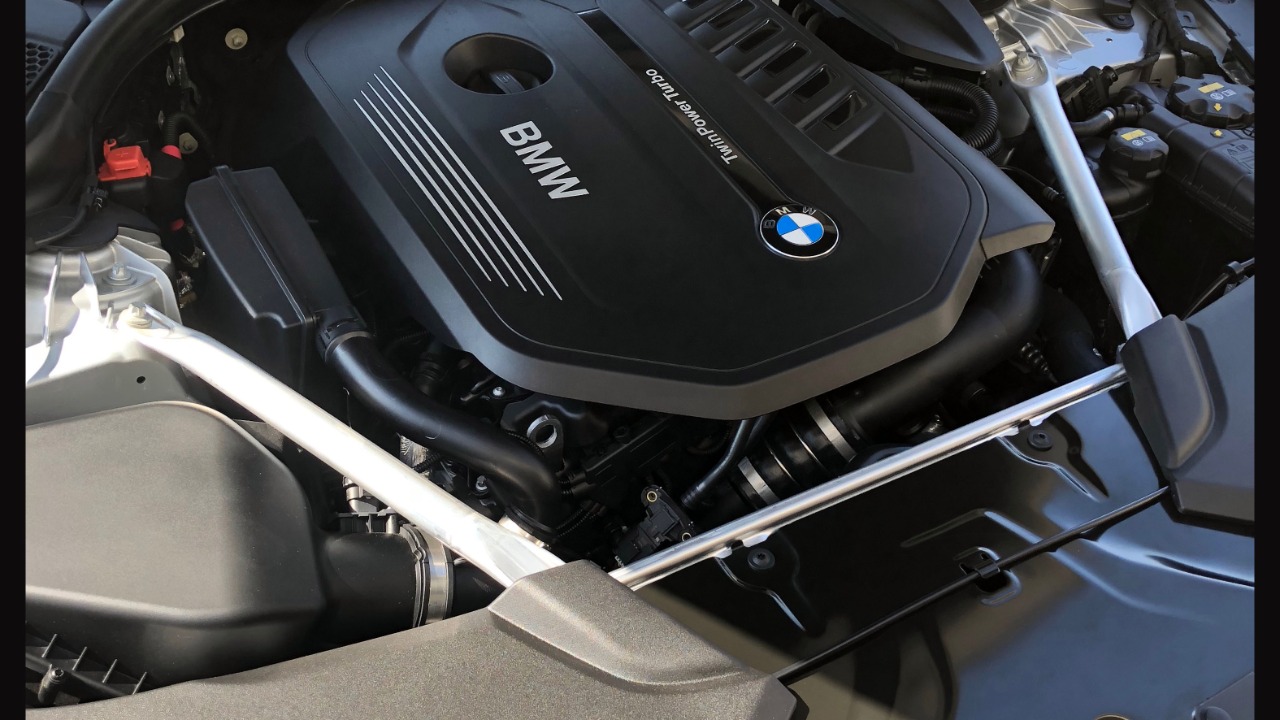

Inline-six engines used to be a staple of mainstream motoring, from family sedans to workhorse pickups. Today, only a small circle of manufacturers still invests in this long, smooth layout, keeping it alive in an era dominated by downsized fours, V-6s, and rapid electrification. I want to map out who those survivors are, how they are using the straight-six format, and why this supposedly old-school design still matters.
Instead of a nostalgic roll call, the story is really about strategy: each remaining carmaker with an inline-six has a clear reason for keeping it, whether that is refinement, packaging, or the ability to pair big power with hybrid tech. From BMW and Mercedes to Stellantis, Mazda, Land Rover, and a handful of niche players, the straight-six has become a carefully chosen tool rather than a default choice.
Why the inline-six almost disappeared, then quietly returned
The straight-six fell out of favor as automakers chased shorter engine bays, lighter front ends, and stricter emissions rules. A long block mounted longitudinally eats into crash structures and cabin space, and for years a compact V-6 looked like the smarter way to get six-cylinder power into front-drive platforms. As crossovers and SUVs took over, many brands simply retired their inline-sixes and leaned on turbocharged fours and V-6s instead, leaving only a few holdouts that still believed in the configuration’s balance and smoothness.
Yet the same pressures that nearly killed the layout have helped bring it back. Modern turbocharging, direct injection, and hybrid systems let a 3.0-liter inline-six rival or exceed the output of older V-8s while keeping weight and emissions in check. Reporting on the last inline-six engines still on sale in America underlines how brands now treat the straight-six as a premium, often electrified powerplant rather than a workaday default, using it to anchor performance flagships and luxury SUVs.
BMW, the enduring benchmark for straight-six power
BMW has built its modern identity around the inline-six, and it remains the clearest example of a company that never walked away from the format. From the classic naturally aspirated units to today’s turbocharged 3.0-liter engines, the Bavarian brand treats the straight-six as a core part of its driving feel, with a signature blend of smooth revs and strong midrange torque. The current BMW B58 and its high-performance derivatives power everything from compact coupes to large SUVs, reinforcing the idea that a well-engineered inline-six can be both versatile and efficient.
That continuity is not just nostalgia, it is a competitive edge. Analysis of the only 7 manufacturers still building straight six engines highlights how BMW’s 3.0-liter Twin, Turbocharged, Inline units deliver exceptional refinement while integrating modern boosts like mild-hybrid systems. Another report on An Enduring Pillar Of BMW Power points to the BMW B58 Twin, Turbocharged, Inline layout as a reference point for the segment, showing how the company has turned a traditional configuration into a high-tech centerpiece of its lineup.
Mercedes-Benz and the hybrid-age straight-six
Mercedes-Benz took a different path, moving away from inline-sixes for a period before returning with a new generation of electrified straight-sixes designed for the hybrid era. The modern Mercedes, Benz M256 engine is a 3.0-liter unit that pairs turbocharging with integrated starter-generators and 48-volt systems, allowing smooth stop-start operation and electric torque fill. In practice, that means the latest Merc six-pot can deliver both the silkiness enthusiasts expect and the low-speed refinement that luxury buyers now demand.
The performance ceiling of this approach is illustrated by the AMG-tuned versions. Coverage of Mercedes-Benz’s M 256 describes it as the most powerful straight-six engine in the brand’s current car range, with Justin’s analysis emphasizing how the combination of turbocharging and electrification lets it punch far above its displacement. A separate look at the Mercedes-Benz M256 notes that the heart of the German six-cylinder not only powers Mercedes models but also vehicles over at Ineos, underlining how this engine has become a shared premium straight-six for multiple brands.
Stellantis and the American twin-turbo straight-six gamble
In North America, Stellantis has made one of the boldest bets on the inline-six by developing a new family of 3.0-liter Twin, Gas Inline engines to replace aging V-8s in trucks and muscle cars. Rather than clinging to large-displacement eights, the company is using a compact, twin-turbo straight-six to deliver similar or higher power with better efficiency. That strategy reflects a broader shift in American performance, where forced induction and careful calibration are doing the work that displacement once handled on its own.
Detailed breakdowns of the 3.0-liter Twin-turbo Gas Inline-6 explain how Stellantis owns brands as diverse as Alfa Romeo and Chrysler and is using this engine to underpin vehicles ranging from SUVs to the gas-powered Charger Sixpack. That breadth shows how a modern straight-six can be tuned for luxury, off-road torque, or classic muscle, all from the same basic architecture. It also signals that, for Stellantis, the inline-six is not a niche indulgence but a core building block for its next generation of combustion products.
Mazda, Land Rover, and the SUV-focused comeback
Outside the German and American giants, some of the most interesting straight-six work is happening in SUVs. Mazda has re-entered the six-cylinder arena with the Mazda CX, Inline engines in models like the CX-70, pairing a longitudinal layout with rear- or all-wheel drive to deliver a more premium feel than its traditional front-drive crossovers. Land Rover, meanwhile, has developed its own family of inline-sixes for vehicles such as the Range Rover and Defender, using mild-hybrid systems to balance off-road torque with on-road refinement.
Technical analysis of why inline-six engines are making a comeback in modern SUVs notes that brands such as Land Rover and Mazda CX, Inline units can churn out 493 horsepower in some applications, showing that High Power Outputs Are Available That Rival The V-8. The same report on the Mazda CX-70 Inline 6-cylinder Engine Cory Fourniquet highlights how these engines are tuned specifically for SUV duty, with broad torque curves and hybrid assistance that make them feel effortless in heavy, high-riding vehicles. In both cases, the straight-six is less about nostalgia and more about giving large SUVs the smooth, muscular character buyers expect without resorting to thirsty V-8s.
Counting the survivors: only a handful of straight-six builders
When I step back and look at the global picture, what stands out is how few companies still invest in new inline-six designs. A detailed survey of current production units concludes that There Are Only, Manufacturers Still Building Straight Six Engines, identifying seven major players that continue to design and manufacture straight-six powerplants rather than relying solely on legacy stock or outsourced units. That small number underscores how specialized the layout has become, even as it enjoys a modest resurgence in certain segments.
Another overview of the market frames the situation in similar terms, noting that These Are The Only Car Companies Still Making Inline, Six Engines and emphasizing that One of the most beloved engine layouts in the world now survives in a relatively tight circle of brands. The same analysis points out that BMW is not the only company still committed to this format, even if many enthusiasts associate straight-sixes primarily with Bavarian powertrains, and that several other manufacturers are quietly building some of the best Six-Cylinder Engines Ever Made. Together, these reports make clear that the straight-six is no longer a mass-market default but a carefully chosen solution for specific performance and refinement goals.
How today’s straight-sixes differ from the classics
For enthusiasts who remember carbureted straight-sixes in old sedans and pickups, today’s engines are almost unrecognizable. Modern units rely on high-pressure direct injection, variable valve timing, and sophisticated turbocharging to extract far more power per liter than their predecessors, while also meeting stringent emissions standards. The long crankshaft and even firing order still deliver the signature smoothness, but the rest of the package is thoroughly contemporary, from aluminum construction to integrated exhaust manifolds and complex cooling circuits.
Coverage of the 3.0-liter Turbocharged Gas Inline-6 used by brands that partner with BMW illustrates this evolution. While other manufacturers have dabbled with inline-sixes here and there, BMW has refined its Turbocharged Gas Inline architecture to the point where it can be shared with vehicles like the GR Supra and Ineos Grenadier without feeling outdated. That kind of cross-brand deployment would have been unthinkable in the era of simple, low-output straight-sixes, and it shows how far the technology has come.
Packaging tricks: from longitudinal luxury to rare transverse layouts
One of the main historical knocks against the inline-six has been its length, which complicates packaging in compact cars and front-drive platforms. Most modern straight-sixes are mounted longitudinally in rear- or all-wheel-drive vehicles, where the long block can sit neatly behind the front axle for better weight distribution. This approach suits luxury sedans, sports cars, and SUVs, which is why brands like BMW, Mercedes, and Land Rover have embraced it for their premium models.
There have been rare experiments with mounting an inline-six transversely, but they remain the exception. A detailed look at the transverse I6 layout notes that The Transverse I6 Layout Was Only Ever Used By three automakers, highlighting how unusual it is to see a straight-six squeezed sideways into front-drive cars like the S60 and XC70. The same report, introduced in Jan with the aside that But his latest obsession is the less-is-more school of thought, underlines that this packaging trick is more a historical curiosity than a template for the future. For the surviving straight-six builders, the path forward is clearly longitudinal, often paired with sophisticated all-wheel-drive systems.
America’s remaining straight-sixes and what they signal
In the United States, the list of vehicles still offering an inline-six is short but telling. It includes premium German sedans and SUVs, off-roaders that prize torque and smoothness, and a new wave of American performance models that have traded big V-8s for compact, turbocharged sixes. The common thread is that these engines sit at the top of their respective lineups, reserved for buyers who are willing to pay for extra power and refinement.
One overview of These Are The Last Inline Six Engines Left In America notes that Few engine configurations are as inherently smooth and well-balanced as a straight-six, which is why they continue to anchor high-end trims even as base models move to smaller turbo fours. Another survey of These Are The Last Inline Six Engines Left In America in Jul reinforces that point by cataloging how these units now appear primarily in halo products rather than entry-level cars. The message is clear: in the American market, the straight-six has become a marker of premium intent.
Why enthusiasts still care, and what comes next
For enthusiasts, the appeal of the inline-six goes beyond spec sheets. The even firing order, lack of secondary imbalance, and characteristic exhaust note give these engines a personality that many turbocharged fours and some V-6s struggle to match. That emotional connection helps explain why fans celebrate cars like the BMW M3, AMG E53, and straight-six-powered off-roaders, even as electric performance models begin to dominate headlines.
At the same time, the future of the straight-six is tied to how long internal combustion remains viable in key markets. Analyses that group together These Are The Only Car Companies Still Making Inline, Six Engines and note that One of the most beloved layouts is now a niche choice suggest that the format will likely persist as a specialty option rather than a mass-market staple. Another perspective that emphasizes BMW is not the only brand still building straight-sixes because of their Bavarian powertrains, captured in These Are The Only Car Companies Still Making Inline, Six Engines, reinforces that a small but committed group of manufacturers sees enough value to keep refining the layout. As electrification advances, those remaining straight-sixes may become even more specialized, but for now they continue to offer a distinctive blend of power, smoothness, and character that no other combustion layout quite replicates.
Supporting sources: The Transverse I6 Layout Was Only Ever Used By … – CarBuzz.
More from MorningOverview