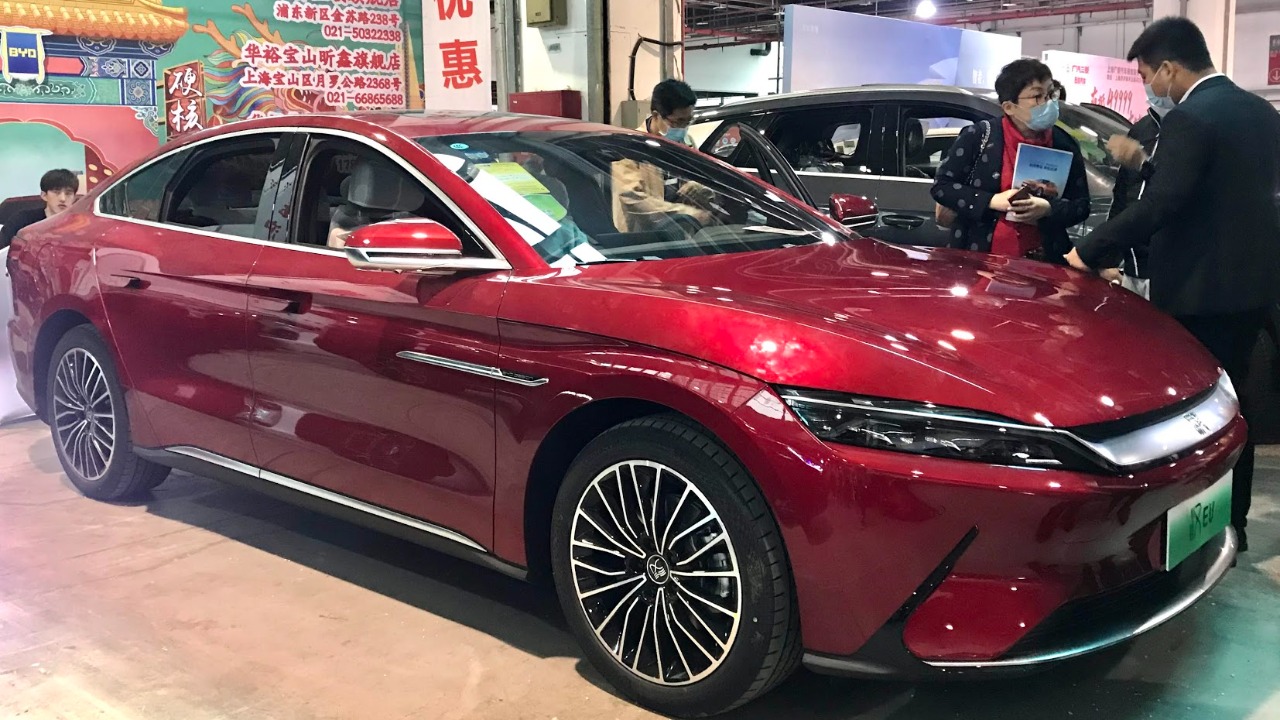

China has turned the electric vehicle from a niche climate product into a mass-market industrial weapon, and the rest of the world is scrambling to keep up. What began as a domestic push to clean up urban air has matured into a global export machine that is reshaping trade flows, technology standards and the balance of power in the auto industry. The result is an electric future in which Chinese companies set the pace, while Western rivals argue over tariffs and try to buy time.
I see the gap most clearly in the numbers and in the hardware. Chinese brands now dominate their home market, flood emerging economies with affordable models and roll out technologies that Western engineers are still testing in prototypes. Policymakers in The United States and Europe are responding with defensive measures, but the strategic question is no longer whether China leads the electric transition. It is how, and how fast, everyone else can adapt.
China’s EV flywheel is spinning faster than anyone else’s
China has reached a scale in electric vehicles that no other country can match, turning its domestic market into a self-reinforcing flywheel of volume, learning and cost reduction. Industry analysis describes how Key Insights from 2025 show Market Dominance Solidified, with China widely described as the world’s undisputed EV powerhouse. That dominance is not just about sales bragging rights, it gives Chinese manufacturers the production runs and supplier depth to iterate quickly on batteries, software and power electronics while driving down unit costs.
The same dynamic is visible in global comparisons of adoption. One detailed assessment notes that China is not just the largest market, it is the fastest electrifying market at large scale, with plug in vehicles far outpacing regions like Europe that once led the transition. When a single country combines that level of demand with dense clusters of battery makers, chip suppliers and software firms, it creates a flywheel effect that keeps spinning faster, pulling the rest of the industry into its orbit.
From domestic champion to export superpower
Having saturated much of its home market, China is now pushing aggressively into overseas sales, turning EVs into a major export category. Recent trade data show that For China, exports of electric vehicles have surged even as some destinations, including the United States, impose hefty tariffs. That combination of rapid growth and rising barriers underscores how central EVs have become to Beijing’s industrial strategy and to its relationships with trading partners.
More granular figures underline the speed of the shift. According to Takeaways compiled by Bloomberg AI, China’s EV exports worldwide rose 87% year on year to 199,836 in November, with shipments to Mexico alone jumping 2,367% year on year to 19,344 and Asia emerging as the biggest import region. Parallel reporting notes that Tsvetana Paraskova has highlighted how China is using this export wave to push aggressively into overseas markets, while another summary stresses that China’s EV exports soar by 87%. Those numbers are not the profile of a niche green product, they are the signature of a country turning EVs into a core export engine.
Technology leadership built model by model
China’s edge is not only about volume, it is increasingly about the sophistication of the vehicles themselves. I see that in the way Chinese brands are rolling out architectures and batteries that compress charging times and improve efficiency, often at price points Western rivals struggle to match. A standout example is The Zeekr 001, which adopted a 900 volt platform and the Golden Brick battery, a combination that allows the pack to charge from 10% to 80% in roughly seven minutes, according to detailed coverage of The Zeekr 001 and its Golden Brick system. That kind of charging performance, built into a production car rather than a lab demo, sets a new benchmark for what drivers will expect.
This technological push is the product of a long Journey rather than a sudden leap. A deep dive into China’s Journey to EV Dominance traces how, In March, a Chinese electric car company like BYD could already claim global leadership in pure EV and plug in hybrid sales, reflecting years of investment in batteries, inverters and software. When companies at that scale start standardizing advanced platforms such as 900 volt systems across multiple models, they pull suppliers along with them and make it harder for slower moving competitors to catch up.
Western automakers are boxed in at home and abroad
While Chinese brands build momentum, Most Western automakers are squeezed between political pressure and commercial reality. On one side, they face domestic governments that want to protect jobs and legacy plants, often by slowing or reshaping the EV transition. On the other, they confront Chinese rivals that can undercut them on price while matching or beating them on technology. One detailed assessment warns that Most Western automotive brands will probably be forced out of the Chinese market due to declining sales within the next decade, and some sooner than that, unless they dramatically boost R&D and localize more of their supply chains.
At the same time, Western governments are trying to shield their own markets from a flood of inexpensive imports. A peer reviewed analysis notes that The US and the EU have been concerned about China flooding the market with inexpensive PEVs, in part because of Chinese state support and integrated supply chains that Western brands cannot easily replicate. Tariffs are one option, and some Chinese manufacturers are already planning local plants to avoid those barriers, but the same research stresses that Western brands cannot possibly match the entire Chinese supply chain for building electric vehicles in the short term. That leaves them boxed in: raise prices to cover higher costs and lose market share, or cut margins to compete and risk their balance sheets.
Policy whiplash in the West versus long-term planning in China
The policy contrast is stark. In China, central planners have treated EVs as a strategic industry for years, aligning subsidies, infrastructure build out and industrial policy around a clear goal of Dominance. In The United States and Europe, by contrast, political support has wavered as consumers push back against higher upfront prices and charging gaps. One sharp commentary argues that The United States is practically done with this whole electric car thing, and that Europe is not far behind, as both regions slow or dilute earlier targets rather than doubling down on a costly longer term EV strategy.
That policy whiplash matters because it shapes where companies place their bets. When Europe signals softer rules and The United States delays stricter emissions standards, it encourages incumbents to keep milking combustion platforms instead of racing to match Chinese EVs. Meanwhile, China keeps refining its own roadmap, using tools like purchase incentives, license plate restrictions on gasoline cars and mandated charging investments to keep its market electrifying. The result is a widening gap between a system that treats EVs as a national project and Western systems that oscillate between ambition and retreat.
Emerging markets are choosing Chinese EVs
One of the most important shifts in 2025 is happening far from Beijing, Washington or Brussels, in the streets of emerging economies where first time car buyers are skipping straight to electric. A global assessment of the EV boom notes that the race is now truly worldwide, with 39 countries reaching an EV sales share larger than 10% in 2025, a third of which are outside the traditional rich world. Within that pattern, the same analysis highlights that Dec data show China reaching over 50% EV share of new car sales, while an emerging economy has become a new leader in EV adoption, underscoring how the center of gravity is shifting.
Chinese brands are positioned to win much of that growth because they offer the right mix of price, features and financing for buyers in places like Mexico, Southeast Asia and parts of Africa. The export figures to Mexico, where shipments jumped 2,367% year on year to 19,344 units, are one vivid example of how quickly Chinese EVs can scale once they gain a foothold. As Asia has become the biggest import region for Chinese EVs, according to the same China export snapshot, it is clear that the next wave of electrification will be shaped as much by Shenzhen and Shanghai as by Stuttgart or Detroit.
Global supply chains are reorganizing around Chinese capital
As tariffs rise and political scrutiny intensifies, Chinese companies are not retreating, they are moving capital. For the first time, firms involved in the electric vehicle industry have invested more overseas than at home, a shift that signals how seriously they take the need to localize production and sidestep trade barriers. Reporting on this trend notes that ENERGYWIRE has documented how Chinese companies are pouring money into overseas plants, battery factories and component suppliers, reshaping local economies even as they anchor more of the value chain under Chinese control.
This outward push dovetails with the domestic flywheel. By investing abroad, Chinese manufacturers can keep their factories running at high utilization, secure access to raw materials and win political goodwill in host countries that benefit from new jobs. At the same time, they reduce the risk that a single tariff decision in The US and the EU could shut them out of key markets. For Western policymakers, that creates a dilemma: blocking Chinese capital can slow the spread of low cost EVs but may also delay their own climate goals, while welcoming it risks deepening dependence on Chinese technology and management.
The strategic stakes for Western governments and consumers
All of this leaves Western leaders facing a set of uncomfortable choices. They can try to wall off their markets with higher tariffs and local content rules, betting that domestic champions will eventually catch up on technology and cost. Or they can accept a larger role for Chinese brands in their own streets, focusing on standards, cybersecurity and fair competition rather than outright exclusion. The peer reviewed work on China and Chinese PEVs flooding global markets makes clear that the status quo, in which Western firms lag on cost and scale while relying on imported batteries, is not sustainable.
For consumers, the calculus is more straightforward. Chinese EVs often offer longer range, faster charging and richer in car tech at a given price point than Western equivalents, as the example of a 900 volt, 10% to 80% in roughly seven minutes charging system in a mainstream model like the 001 illustrates. As more drivers experience that difference, political resistance to imported EVs may soften, especially if domestic brands cannot match the value proposition. The electric future is arriving either way, but on the current trajectory, it will arrive in a form largely shaped by China, with Western players and regulators reacting rather than setting the pace.
More from MorningOverview