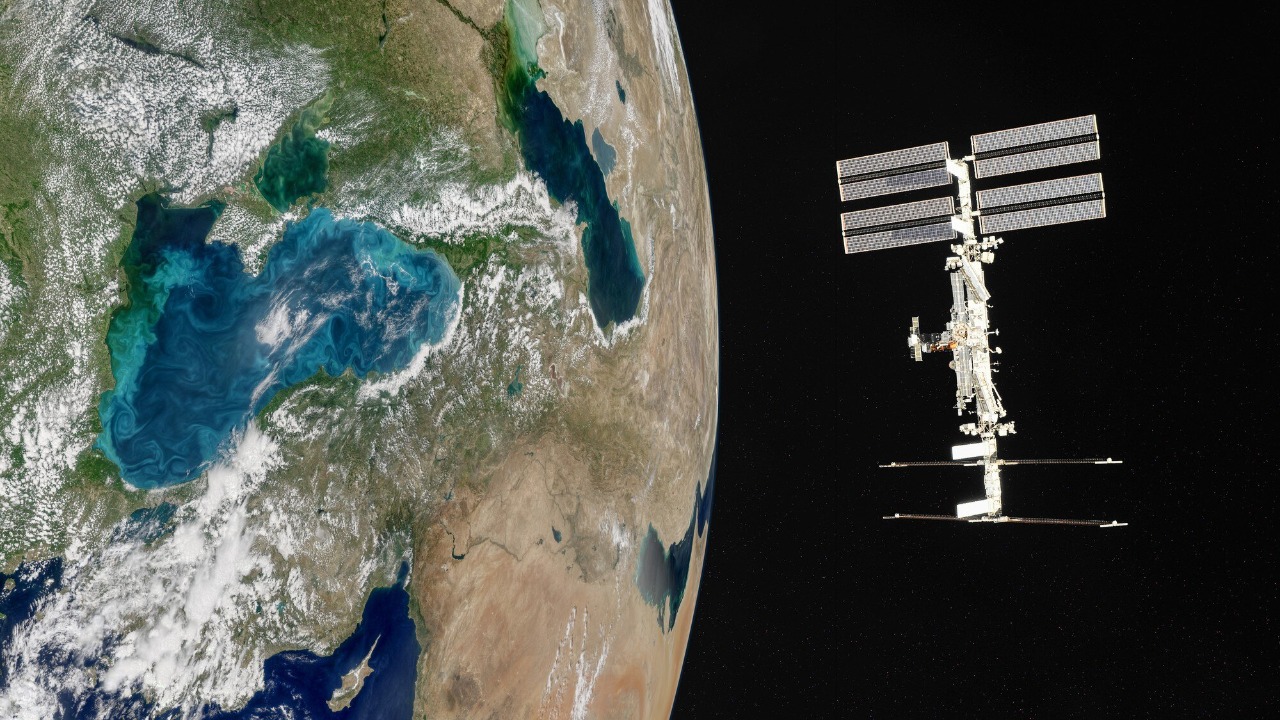

Low Earth orbit is filling up fast, and the industry’s default response has been to treat satellites as disposable hardware that burns up in the atmosphere when the job is done. That throwaway logic is now colliding with evidence that both orbital debris and reentry pollution are reaching dangerous levels. If spaceflight is going to remain viable, the next generation of spacecraft will need to be built less like smartphones and more like infrastructure that is designed to last, be repaired, and almost never fail.
Designing satellites that “never break” is not a literal promise of immortality, but a shift in engineering and policy that treats longevity, repairability, and recyclability as core requirements rather than nice-to-haves. Instead of planning for destruction, operators are starting to plan for continuous service, in-orbit upgrades, and controlled end-of-life, all with an eye toward cutting the pollution footprint of every kilogram launched.
The scale of the satellite pollution problem
The modern space economy depends on a dense shell of hardware circling the planet, and that shell is getting thicker every year. Analysts warn that mega-constellations, sometimes involving tens of thousands of spacecraft, are on track to dominate key orbital bands, with one assessment noting that the number of active satellites could swell so dramatically that a handful of operators effectively control a particular orbit, a trend highlighted in a Jul mega-constellations analysis. That growth is not just a business story, it is a physical transformation of near-Earth space that multiplies the odds of collisions and fragmentation.
Right now, there are already thousands of dead spacecraft, spent rocket stages, and fragments circling the planet, and each new launch adds to the statistical risk that something will go wrong. One technical review of the Effects on Earth and Humanity notes that collision risks to operational satellites and crewed missions are already significant, and that the long-term consequences of this accumulation are still poorly understood. The more hardware we put up that is designed to fail and be abandoned, the more we lock in a future of cascading debris and lost capability.
Why “design for demise” is no longer enough
For years, regulators and engineers have leaned on “design for demise,” the idea that satellites should be built to burn up completely on reentry so they do not drop debris on the ground. Guidance on Designing for Demise emphasizes Safe Breakup, encouraging the use of materials and structures that fragment and vaporize rather than survive to the surface. That approach has helped reduce the risk of intact components hitting populated areas, but it does not address what happens to the atmosphere when thousands of satellites are deliberately destroyed in it.
Scientists are now warning that the cumulative effect of frequent reentries could be far from benign. A detailed statement on the atmospheric impacts of spacecraft reentries notes that Reentry shock waves generate significant nitrogen oxides, or NOx, and that the metals and combustion products from burning satellites and rocket stages can alter upper-atmosphere chemistry. If mega-constellations are routinely replaced every few years, the number of reentries needed to clear old hardware and make room for new units could turn the sky itself into a dumping ground for industrial waste.
The case for satellites that almost never fail
Against that backdrop, a growing group of engineers is arguing that the most effective way to cut satellite pollution is to stop treating spacecraft as consumables. Instead of designing for demise, they are pushing a “design for non-demise” philosophy that emphasizes robust structures, redundant systems, and repairable components so that satellites can survive longer and avoid catastrophic breakup. One recent analysis framed this as a counterintuitive but compelling idea, suggesting that the better option might be to keep satellites intact and serviceable, a concept captured in a report that described Keeping it together as the core of a new strategy.
In practice, that means building spacecraft with higher-quality materials, more shielding, and modular subsystems that can be swapped or upgraded in orbit. It also means designing propulsion and attitude control systems that can perform Active Maneuvers, Empowering satellites to execute efficient attitude control and optimize their positioning so they can dodge debris and maintain safe separation. The longer a satellite can operate without failing, the fewer replacements need to be launched, and the fewer hulks are left drifting as unplanned junk.
Space debris as an environmental tipping point
What happens in orbit does not stay in orbit, and researchers are increasingly blunt about the environmental stakes. A briefing on “5 Things You Should Know about Space Debris” warns that As we continue to pollute near-Earth space, we are approaching what the report treats as a tipping point, where the density of debris could trigger self-sustaining collision cascades. The same document reminds readers that What goes up does not necessarily come down, and that Currently, the orbital environment is already crowded enough that even small fragments can threaten critical services.
Those risks extend back down to the planet. Analyses of the Collision Risks associated with space debris emphasize that a loss of key satellites would disrupt navigation, weather forecasting, and communications, with knock-on effects for disaster response and economic stability. As the number of reentries rises, the same studies caution that we still do not fully understand the lasting effects this will have on atmospheric chemistry and climate, which makes the current strategy of burning up hardware at scale look less like a solution and more like a deferred problem.
Engineering satellites to survive space itself
Designing spacecraft that rarely fail starts with acknowledging that space is a harsh, multifaceted threat environment. Radiation, micrometeoroids, thermal cycling, and plasma interactions all conspire to degrade electronics and structures over time. Engineers have developed a toolkit of protective measures, including Radiation Shiel strategies and Whipple shields, named after their inventor, which use a sacrificial outer layer to absorb and disperse incoming particles before they can puncture the main hull. These techniques add mass and complexity, but they dramatically reduce the odds that a single impact or solar storm will turn a functioning satellite into debris.
Longevity also depends on smarter operations. Guidance on Active Maneuvers highlights how empowering satellites with more efficient attitude control and propulsion allows them to avoid collisions, maintain optimal orbits, and support broader space sustainability initiatives. Combined with robust shielding and redundant systems, these capabilities turn satellites from passive targets into active participants in their own survival, which is essential if operators want to keep hardware in service for a decade or more instead of cycling through replacements every few years.
In-orbit servicing: repairing instead of replacing
Even the best-built satellite will eventually need help, which is where in-orbit servicing comes in. European planners describe ESA initiatives like RISE as the logical continuation of a sustainable approach to space, with Extending the lifetime of satellites framed as a central goal. The concept is straightforward: send up specialized spacecraft that can rendezvous with aging or damaged satellites, refuel them, replace components, or gently deorbit them when their mission is truly over.
That shift from discard to repair has profound implications for pollution. If a servicing mission can keep a communications satellite alive for an extra five or ten years, that is one less replacement launch, one less reentry, and one less dead hulk drifting in a crowded orbit. It also creates an incentive to build satellites with standardized interfaces and modular parts that can be swapped in space, a design philosophy that aligns with calls for a recycling revolution in orbit, where the first step is to design spacecraft that minimize pollution and can be re-used, and the second step is to repair broken systems instead of abandoning them.
Recycling, refueling, and the economics of never breaking
Designing satellites that rarely fail is not just an engineering challenge, it is an economic one. Operators have historically favored shorter-lived, cheaper spacecraft because launch costs were high and technology cycles were fast, making it attractive to replace hardware frequently. Advocates of a more sustainable model argue that the calculus changes when you factor in the environmental costs of debris and reentry, and when you build a market for in-orbit refueling and recycling. A detailed commentary on the poll of industry attitudes toward a recycling revolution notes that the first step is to design spacecraft for re-use, with the second step focused on repairing broken satellites and eventually harvesting materials from defunct ones.
Insurance and finance are starting to respond to this shift. Coverage for launch and on-orbit operations increasingly reflects the risk that a satellite will become an uncontrolled piece of junk, and Many in the industry advocate for tougher standards for new satellites to ensure they will not become dead objects in orbit. Those same voices are pushing for requirements that spacecraft be able to maneuver, de-orbit, or accept servicing, and for operators to help de-orbit some of the junk already in space. As those expectations harden into underwriting norms and regulatory rules, the business case for building satellites that almost never break becomes stronger.
Space sustainability as a design philosophy
Behind these technical and financial debates is a broader shift in how the sector thinks about its responsibilities. Commentators on Space sustainability argue that the amount of human-made debris in orbit has turned near-Earth space into a shared environment that needs stewardship, not just exploitation. That perspective treats orbital slots and clean reentry corridors as finite resources, much like fisheries or clean air, and it frames long-lived, repairable satellites as a way to stretch those resources further.
That mindset is also visible in the way new constellations are being pitched. Some operators now highlight their plans for autonomous collision avoidance, controlled deorbiting, and compatibility with future servicing missions as selling points, not regulatory burdens. Others are experimenting with smaller, more capable spacecraft that can do more with less mass, reducing the total number of units needed to provide global coverage. In each case, the underlying philosophy is the same: if every satellite is built to last, to be fixed, and to leave no uncontrolled debris behind, the entire ecosystem becomes more resilient.
Rethinking reentry and the limits of burn-up
Even in a world of durable, serviceable satellites, some hardware will still need to come down, which makes the manner of reentry a critical design choice. The traditional assumption has been that burning up in the atmosphere is the cleanest option, but emerging research on Reentry chemistry suggests that the shock waves and combustion products from frequent reentries can produce significant NOx and inject metals into sensitive layers of the atmosphere. If mega-constellations are replaced on short cycles, the cumulative effect of thousands of such events each year could become a major environmental factor.
That is where the “never break” philosophy intersects with reentry planning. If satellites are built to survive longer and to be deorbited in a controlled way, operators can schedule reentries over remote ocean regions, at times and trajectories that minimize atmospheric impact, and in numbers that remain manageable. Some engineers are even exploring partial recovery of components, using capsules or heat-resistant structures that survive reentry and can be refurbished, a concept that aligns with the Engineer vision of indestructible satellites that can be guided to safe splashdowns far from land or people. The goal is not to eliminate reentry, but to make it a carefully managed endpoint rather than a default disposal method.
From awareness to action in the satellite era
Public awareness of orbital pollution is finally catching up with the scale of the problem. Educational efforts, including detailed explainers and even visual breakdowns in formats like Untitled video briefings, are helping non-specialists grasp how quickly debris can accumulate and how fragile the orbital environment really is. That visibility is starting to influence policy debates, from national licensing rules to international guidelines on debris mitigation and space traffic management.
For the engineers and operators who actually build and fly satellites, the message is increasingly clear. The era of disposable spacecraft is ending, pushed aside by the hard physics of collision risk, the chemistry of reentry pollution, and the economics of a crowded sky. If I look across the reporting and technical work emerging from groups focused on Here and elsewhere, the throughline is unmistakable: the most sustainable satellite is the one that stays in one piece, does its job for as long as possible, and is designed from day one to be repaired, refueled, and responsibly retired. Building satellites that “never break” is not a slogan, it is a blueprint for keeping space usable for everyone.
More from MorningOverview