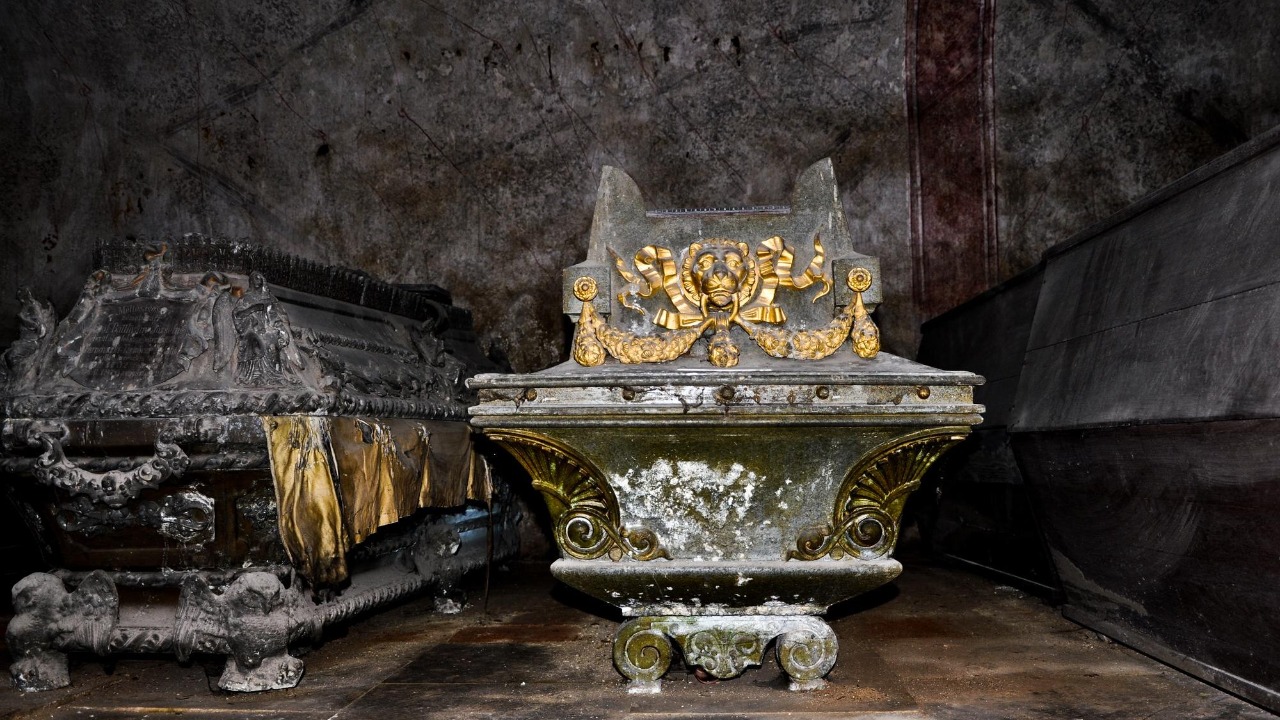

An unassuming grave on the western shore of the Black Sea has pushed the story of gold back to a far earlier chapter than anyone expected. The burial, part of a prehistoric cemetery near the modern city of Varna, contains what researchers now regard as the oldest crafted gold objects ever recovered, predating the pyramids and rewriting how I think about early wealth and power. The find turns a quiet stretch of coast into one of the most important archaeological landscapes on the planet.
A forgotten cemetery on the Black Sea coast
The discovery sits within a prehistoric burial ground close to the Black Sea, where a cluster of graves preserves a snapshot of life and death in the 5th millennium BC. Long before later empires turned this coastline into a crossroads of trade, small communities were already burying their dead with care, arranging bodies, tools, and ornaments in patterns that suggest a surprisingly complex social world. The cemetery lay hidden beneath later development until chance and construction work exposed the first glints of metal in the soil.
Archaeologists now identify this burial ground with the wider landscape of Varna, a port city whose outskirts conceal one of prehistory’s most remarkable necropolises. The area is catalogued in modern mapping tools as a cultural place of interest, with entries such as Varna on the Black Sea marking how a contemporary urban zone overlaps with a deep-time cemetery. That juxtaposition, concrete and cranes above, prehistoric graves below, frames the story of how the oldest known gold came to light.
Grave 43 and the rise of prehistoric elites
Within this burial ground, one interment stands apart from the rest: Grave 43. Archaeologists number graves sequentially as they excavate, but the figure 43 has taken on a symbolic weight because of the extraordinary wealth packed into this single pit. The skeleton, interpreted as a high-status male, was surrounded by a dense cluster of ornaments and regalia that speak to a level of social stratification far beyond what many researchers once imagined for the 5th millennium BC.
Reports on the site describe how Grave 43 contained a concentration of gold objects unmatched by neighboring burials, which often held only a few ornaments or none at all. One detailed account of the Oldest Golden Artifacts Ever Found in a 5th Millennium BC Grave emphasizes that Grave 43 stood out for its golden artifacts, turning a simple number into shorthand for the emergence of prehistoric elites. In my view, the grave functions as a manifesto in metal, a deliberate display of rank that would have been obvious to everyone who attended the burial.
The oldest worked gold in the world
The gold from Varna is not just abundant, it is old on a scale that forces a rethink of technological history. The artifacts date to the 5th millennium BC, which places them well before the construction of the Egyptian pyramids and earlier than any other securely dated worked gold assemblage known so far. That chronology matters because it shows that communities around the Black Sea were experimenting with metalworking at a time when many parts of Europe still relied almost entirely on stone, bone, and wood.
Specialists now describe the Varna assemblage as the earliest known example of systematically crafted gold jewelry and regalia, rather than isolated nuggets or simple hammered pieces. Coverage of the site stresses that the cemetery contains the world’s oldest golden artifacts, older than the pyramids and older than any comparable treasure hoard. When I weigh that claim against other early metal finds, the Varna material still stands apart in both quantity and craftsmanship, making it a benchmark for the dawn of goldworking.
Inside the Varna Necropolis
The grave that yielded these artifacts is part of what archaeologists call the Varna Necropolis, a dense cluster of burials that together form one of the most important prehistoric cemeteries in Europe. Excavations have revealed hundreds of graves, some richly furnished, others starkly simple, arranged in rows that suggest a planned layout rather than haphazard interment. The necropolis captures a community in transition, where new materials like copper and gold appear alongside older stone tools, and where differences in grave goods hint at emerging hierarchies.
Accounts of the site trace its modern story back to a construction worker who, in October, uncovered gleaming objects while digging near Varna, triggering a wave of archaeological investigation. Subsequent research has cemented the Varna Necropolis as the location of the world’s oldest gold treasure, a phrase that captures both the age and the sheer volume of metal recovered. When I look at the layout of the necropolis, with its mix of lavish and modest burials, it reads like a social map, charting who held power, who labored, and who was remembered with ceremony.
What the grave goods reveal about power and belief
The arrangement of objects in Grave 43 is as revealing as their number. Gold ornaments cluster around the head, chest, and hands, while other items, including tools and weapons, lie near the limbs, creating a visual narrative of authority and capability. The placement suggests that gold signaled more than simple wealth, it marked a person whose identity was bound up with leadership, ritual, or both. The grave goods transform the deceased into a kind of permanent symbol, a figure meant to project status even in death.
Comparisons with neighboring burials in the same necropolis sharpen that picture. Some graves contain only a few beads or a single copper tool, while others, like Grave 43, are saturated with metal, including extensive quantities of gold positioned near the pelvis and torso. Detailed descriptions of the 5th millennium grave emphasize these contrasts, which I read as evidence of a stratified community where access to exotic materials was tightly controlled. The symbolism of gold, rare and visually striking, would have reinforced that hierarchy every time mourners gathered at a burial.
Craftsmanship at the dawn of metallurgy
Beyond their symbolic value, the Varna artifacts showcase a level of technical skill that is striking for such an early date. The gold objects include beads, plaques, and possibly diadem-like elements, many of them thinly hammered and shaped with precision that implies specialized artisans. Producing such items required not only access to raw gold but also knowledge of how to anneal, hammer, and polish the metal without cracking it, a process that would have taken years of experimentation to perfect.
When I compare the Varna pieces to other early metal finds, the difference in complexity is clear. The necropolis includes both copper and gold, indicating that craftspeople were already exploring different metals and their properties, a hallmark of the broader shift into metallurgy. The characterization of the site as the world’s oldest gold treasure is not just about age, it is about the sophistication of the work, from tiny perforated beads to larger ornamental plates that would have caught the light during ceremonies. In my view, this level of craftsmanship suggests workshops and apprenticeships, not casual tinkering.
Varna in the wider prehistoric world
Placing Varna in its broader context shows how exceptional the site really is. Across much of Europe in the 5th millennium BC, communities were still primarily agrarian, with modest grave goods and limited evidence of sharp social divisions. The Varna Necropolis, by contrast, presents a society where some individuals commanded access to distant resources and elaborate ornaments, while others were buried with little more than everyday tools. That disparity hints at trade networks, control of surplus, and perhaps early forms of political authority centered on the Black Sea coast.
The location of the cemetery near the Black Sea would have facilitated contact with other regions, allowing ideas and materials to flow along coastal and riverine routes. Modern mapping entries that tie Varna to the wider Black Sea region echo what the archaeology already suggests, that this was a nodal point in prehistoric exchange. When I consider the gold in Grave 43 alongside similar, though less spectacular, finds in neighboring graves, I see a community plugged into a network that carried not only goods but also new ideas about status, ritual, and technology.
How the discovery reshapes the story of gold
The Varna grave forces a revision of long-held assumptions about where and when humans first began to treat gold as a special material. For years, many narratives centered on the Near East and Egypt as the primary cradles of goldworking, with Europe cast as a later adopter. The 5th millennium BC date for the Varna artifacts, combined with their quantity and quality, shows that communities on the Black Sea were already experimenting with gold at a scale that rivals or predates better known centers.
Reports that describe the assemblage as the wealthiest grave of the 5th millennium BC capture the shock of that realization. In my assessment, the Varna Necropolis does not just add a new data point, it compels a more polycentric view of early metallurgy, where multiple regions, including the Black Sea coast, contributed to the invention of gold as a symbol of power. The ancient grave that yielded the oldest known gold artifacts is therefore more than a curiosity, it is a pivot in the story of how humans learned to turn rare metals into enduring markers of status and belief.
More from MorningOverview