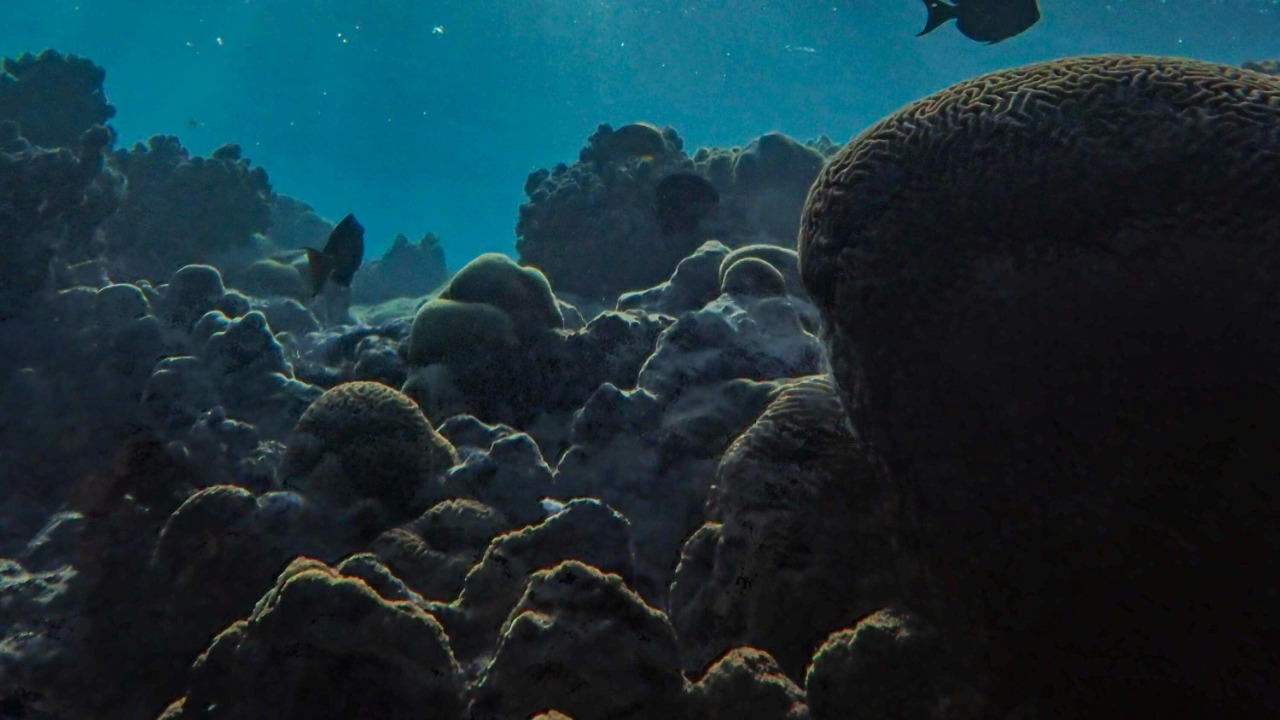

More than 3,600 meters beneath the Arctic Ocean, scientists have stumbled onto a hidden world that should not, by conventional wisdom, exist. In the permanent night and crushing pressure of the deep, they found a bustling community of worms, sponges, corals, and microbes clustered around shimmering mounds of frozen methane. The discovery turns a supposedly barren seafloor into a laboratory for how life adapts, survives, and even flourishes in one of the harshest environments on Earth.
What researchers uncovered on these Arctic hydrate mounds is not just a curiosity, but a challenge to long‑held assumptions about where complex ecosystems can take root. By revealing a dense, structured food web in a place that receives almost no sunlight and little organic fallout from above, the find forces a rethink of deep‑sea biology, climate feedbacks, and even the search for life beyond our planet.
A hidden oasis beneath the Arctic ice
When a team of Norwegian and international researchers sent a remotely operated vehicle to survey the Freya Ridge in the Fram Strait, they expected to document geology and perhaps a few scattered animals. Instead, the cameras revealed seafloor “gardens” of life perched on bright, dome‑shaped hydrate mounds more than 11,940 feet below the surface, with dense patches of tube worms, sponges, and soft corals carpeting the otherwise sparse sediment. The scene, described as a “hidden oasis” in the deep Arctic, stood in stark contrast to the surrounding plain, where animals were few and far between.
The mounds themselves are built from methane hydrate, a crystalline ice that traps gas under low temperatures and high pressure, and they appear to be slowly releasing methane into the surrounding water. Around these structures, scientists documented a striking jump in biomass and diversity, with the hydrate domes acting as islands of habitability in a cold, dark desert. Early reports on the Freya hydrate mounds describe them as teeming with life, while parallel coverage of the broader survey effort frames the site as a previously unknown deep‑sea ecosystem thriving on the Arctic seafloor.
Freya hydrate mounds and the architecture of a deep‑sea city
The Freya hydrate mounds are not just geological curiosities, they are the physical scaffolding for an entire community. Rising several meters above the seafloor, the domes and ridges create hard surfaces where filter feeders can anchor, and their uneven topography shapes local currents that deliver food particles and oxygen. In video transects, researchers observed clusters of sponges and corals perched on the hydrate crust, while mobile animals such as amphipods and brittle stars moved between crevices, turning the mounds into something that resembles a vertical city in miniature.
What makes these structures particularly striking is how sharply the ecosystem changes at their edges. Just a few meters away, the sediment plain holds scattered sea cucumbers and starfish, but on the hydrate itself, the density of animals increases dramatically, suggesting that the mounds concentrate both energy and habitat. Reporting on the Arctic seafloor ecosystem emphasizes that these hydrate features are not isolated oddities but part of a broader ridge system, hinting that similar biological “high‑rises” could be scattered along the Arctic margins wherever methane hydrates reach the seafloor.
Life without sunlight: chemosynthesis at work
At the heart of this Arctic community is a different way of making a living. With no sunlight penetrating to 3,600 meters, photosynthesis is impossible, so the base of the food web is built by microbes that tap into chemical energy instead. Bacteria and archaea living on and within the hydrate mounds oxidize methane and other reduced compounds, turning them into organic matter that fuels the rest of the ecosystem. This chemosynthetic engine mirrors what has been documented at hydrothermal vents and cold seeps, but its presence on hydrate mounds in the high Arctic shows that such systems are more widespread and varied than previously recognized.
Many of the animals observed on the Freya mounds appear to be tightly linked to this microbial production, either by grazing directly on bacterial mats or by hosting symbiotic microbes in their tissues. The dense aggregations of worms and sponges suggest a steady, localized food supply that is decoupled from the sparse rain of detritus falling from the surface ocean. Coverage of the bizarre ecosystem more than two miles beneath the Arctic Ocean underscores how this methane‑driven metabolism allows life to thrive in a place that would otherwise be starved of energy.
From “biological desert” to bustling habitat
For decades, the deep Arctic basin was treated in textbooks as a near‑empty expanse, with low productivity at the surface and thick seasonal ice limiting the organic material that could sink to the bottom. The new observations on Freya Ridge overturn that picture by revealing a patchwork of hotspots where biomass and diversity spike dramatically. Instead of a uniform desert, the seafloor looks more like a landscape of oases, with hydrate mounds, seeps, and other features providing the conditions for complex communities to assemble.
Researchers involved in the work describe how the density of animals on the hydrate mounds rivals that of some shallow‑water reefs, even though the surrounding plain remains relatively barren. A detailed account from the University of Tromsø highlights how the unique ecosystem on Freya Ridge was unexpected in a region long assumed to be biologically poor, while a complementary report from the University of Bergen stresses that the discovery under the Arctic challenges long‑standing assumptions about deep‑sea life in polar waters.
Norwegian‑led expeditions and the technology that made the find possible
The discovery did not happen by accident, it was the product of targeted expeditions using some of the most advanced tools in modern oceanography. Norwegian research vessels equipped with multibeam sonar first mapped the Freya Ridge, identifying unusual seafloor structures and gas flares in the water column that hinted at active methane release. Once those anomalies were charted, scientists deployed remotely operated vehicles fitted with high‑definition cameras, manipulator arms, and chemical sensors to investigate the mounds directly and collect samples.
These ROV dives allowed researchers to document the fine‑scale structure of the hydrate domes, measure methane concentrations, and retrieve animals and sediments for laboratory analysis. According to the University of Bergen’s account of how scientists discovered the ecosystem under the Arctic, the combination of detailed mapping and close‑up imaging was essential to recognizing that the bright, ice‑like crusts were hydrate and that the surrounding fauna formed a coherent community rather than a random scattering of organisms.
Strange residents of the Arctic deep
What stands out in the footage from Freya Ridge is not just the abundance of life, but its character. Many of the animals are pale or translucent, with elongated bodies and delicate appendages adapted to the low‑energy environment. Tube worms cluster in dense tufts, their feathery plumes extended into the current, while sponges form bulbous shapes that provide shelter for smaller invertebrates. Some of the corals appear to be soft, branching forms that can exploit the hard hydrate substrate in a way that is impossible on loose sediment.
Early descriptions from the field emphasize that several of the species may be new to science, or at least represent poorly known Arctic lineages that have rarely been sampled. A narrative account of the dives describes the scene as a “strange life” oasis in the dark Arctic deep, with the hidden oasis label capturing both the isolation of the site and the unfamiliar appearance of its residents. As taxonomists work through the collected specimens, the Freya mounds are likely to expand the catalog of Arctic biodiversity and refine how scientists think about species distributions in the deep sea.
Rewriting the rulebook for deep‑sea ecosystems
From a scientific standpoint, the Freya Ridge discovery is part of a broader pattern that is forcing a revision of how deep‑sea ecosystems are classified and understood. For years, hydrothermal vents and classic cold seeps were treated as the main examples of chemosynthetic communities, each with characteristic fauna and geochemistry. The hydrate mounds in the Arctic do not fit neatly into either category, combining elements of seepage, solid hydrate structures, and a polar setting that shapes temperature and circulation in distinct ways.
Analyses of the site argue that this hybrid character expands the known range of conditions under which chemosynthesis can support complex communities, effectively rewriting the playbook for life in Earth’s oceans. A synthesis of recent work on deep‑sea discoveries notes that the Arctic hydrate ecosystem is one of several finds that rewrite the playbook for deep‑ocean life, alongside new vent fields and subsurface habitats that challenge the idea that extreme environments are rare exceptions rather than integral parts of the marine biosphere.
Parallels from Antarctica: life beneath ice and in iceberg shadows
The Arctic hydrate mounds are not the only polar surprise. Around Antarctica, scientists have documented thriving communities in places that were once assumed to be nearly lifeless, including habitats that only became accessible after large icebergs detached from the ice sheet. In the wake of one such iceberg, researchers found dense assemblages of sponges, worms, and other invertebrates colonizing the newly exposed seafloor, taking advantage of altered currents and fresh nutrient supplies to build a complex ecosystem in a relatively short time.
These Antarctic observations show that polar seas can respond quickly when physical barriers shift, and that life is ready to exploit new niches as soon as conditions allow. A detailed expedition report describes how thriving Antarctic ecosystems emerged in the wake of a recently detached iceberg, while separate work beneath the Antarctic ice sheet itself revealed a deep‑sea ecosystem that had been sealed off from sunlight for long periods. In that under‑ice setting, scientists documented a rich community of filter feeders and other animals living in a narrow cavity, with a mathematical analysis from Cambridge researchers explaining how a deep‑sea ecosystem beneath the Antarctic ice sheet can persist by tapping into nutrient flows along the ice‑shelf front.
Climate stakes: methane, feedbacks, and fragile refuges
The Freya hydrate mounds are biologically captivating, but they also sit at the intersection of climate science and ocean ecology. Methane hydrates are sensitive to temperature and pressure, and as the Arctic warms, there is concern that some deposits could destabilize, releasing methane into the ocean and potentially the atmosphere. The hydrate domes on Freya Ridge appear to be actively venting gas, which fuels the chemosynthetic microbes that support the ecosystem, but also raises questions about how stable these structures will remain as ocean conditions change.
At the same time, the animals living on and around the mounds may be particularly vulnerable to shifts in oxygen levels, acidity, and current patterns driven by climate change. If hydrate mounds are indeed scattered across the Arctic margins, they could represent important refuges for biodiversity in a region undergoing rapid transformation, yet their dependence on specific geochemical conditions makes them fragile. Reporting that framed the Arctic site as a bizarre ecosystem more than two miles deep also highlighted how little is known about the long‑term stability of such habitats in a warming world, underscoring the need to integrate them into broader assessments of climate feedbacks and conservation priorities.
Why this matters for exploration, policy, and the search for life
For me, the most striking lesson from the Freya Ridge discovery is how much of Earth’s biosphere remains effectively unmapped. The Arctic deep sea is one of the least explored regions on the planet, yet a focused survey immediately revealed a complex ecosystem that had gone unnoticed. That suggests there may be many more such hotspots, each with its own evolutionary history and biogeochemical role, waiting in the gaps between existing sampling tracks. As nations debate deep‑sea mining, shipping routes, and Arctic resource extraction, the existence of these hidden communities raises the stakes for precautionary management.
The Freya mounds also resonate far beyond Earth. Chemosynthetic ecosystems that draw energy from methane or other reduced compounds are among the most plausible analogues for life in subsurface oceans on icy moons such as Europa and Enceladus. If complex communities can organize around hydrate domes in the dark Arctic basin, then similar processes could, in principle, operate wherever liquid water, rock, and chemical gradients coincide. In that sense, the Arctic seafloor discovery is not only a reminder of how adaptable life is on this planet, but also a guidepost for where and how to look for it elsewhere, a point echoed in several analyses that treat the deep‑sea discovery as a template for rethinking habitability in extreme environments.
More from MorningOverview