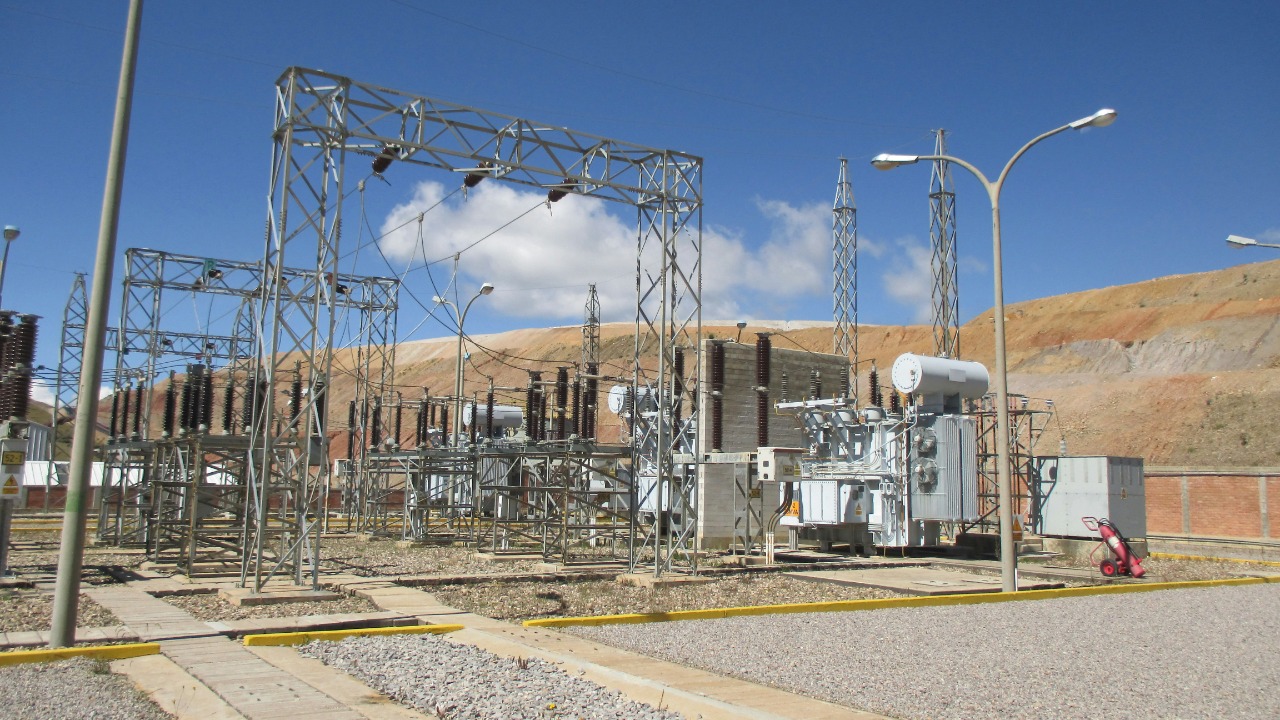

In the high, dry expanse of the Gobi Desert, China is turning thin air into a strategic energy asset. Engineers are assembling what officials describe as the world’s largest “super-cold air battery,” a vast liquid-air energy storage plant designed to soak up surplus electricity and release it on demand. The project, known as the Super Air Power Bank, is a showcase for how a country racing to decarbonize its grid is experimenting with technologies that go far beyond conventional batteries.
Instead of relying on lithium or pumped water, this facility uses ultra-chilled air as its working medium, storing energy in the form of extreme cold and high pressure. If it performs as advertised, it will run for long stretches, deliver industrial-scale power, and operate with no direct emissions, turning a remote corner of the Gobi into a test bed for the next phase of large-scale energy storage.
Why China is betting on super-cold air in the Gobi Desert
China’s leadership has made it clear that stabilizing a rapidly expanding clean power system is now as important as building more wind turbines and solar farms. The country is already the world’s largest installer of renewables, and the national strategy increasingly treats large-scale storage as the missing piece that will let those variable sources dominate the grid. Against that backdrop, the decision to build the Super Air Power Bank in the Gobi Desert reflects a broader push by China to test multiple storage technologies in parallel rather than rely on a single solution.
The Gobi offers vast tracts of inexpensive land, intense sunlight, and strong winds, which makes it one of the country’s most important hubs for utility-scale solar and wind power. That same geography also creates steep daily swings in output, with midday surpluses and evening shortfalls that strain transmission lines and force curtailment. By placing a giant liquid-air plant directly in this environment, planners are trying to capture those surpluses locally and feed them back into the grid when demand peaks, turning a remote desert into a flexible backbone for the national power system.
Inside the Super Air Power Bank: how a liquid-air battery works
At the heart of the Super Air Power Bank is a relatively simple idea: use cheap electricity to liquefy air, store that liquid at very low temperatures, then warm it back up to drive turbines when power is needed. Reports describe the project as the world’s largest liquid-air energy storage plant, with the facility in the Gobi Desert explicitly framed as a “super-cold air battery” that can operate at grid scale. The plant’s design builds on established cryogenic engineering, but scales it up into a multi-hour storage system that can be charged and discharged like a massive, slow-moving battery.
During charging, compressors driven by surplus power squeeze and cool ambient air until it condenses into a frigid liquid that can be stored in insulated tanks. When the grid calls for electricity, that liquid is allowed to warm and expand, creating high-pressure gas that spins turbines and feeds power back into transmission lines. Technical descriptions of the project emphasize that the system is being built as a large Super Air Power Bank, with the entire cycle optimized to minimize energy losses and maximize round-trip efficiency.
From Excess power to stored cold: the step-by-step process
The operating sequence starts when renewable generation outpaces demand and the grid has more electricity than it can immediately use. In that window, Excess power is diverted to run large industrial compressors that draw in Air, clean it, and push it to high pressure. As the air is compressed, it heats up, then is cooled in stages until it reaches temperatures low enough to condense into a liquid, which is then stored in heavily insulated tanks that can hold the cold for extended periods.
When demand rises, valves open and the stored liquid is allowed to absorb heat from the environment or from dedicated heat exchangers, causing it to rapidly expand back into a gas. That expansion drives turbines connected to generators, sending electricity back into the grid in a controlled, dispatchable way. Technical accounts describe how the system works in steps, with each phase of compression, cooling, liquefaction, storage, and re-gasification carefully engineered to capture as much usable energy as possible, a process detailed in explanations of how the system works in steps.
Ten-hour runs and “180 m” kilowatt-hours a year
What sets this project apart is not just its novel medium, but its scale and operating profile. The Facility is designed to run for 10 hours straight at its rated output, a duration that puts it in a different category from the two to four hour discharge windows typical of many lithium-ion battery farms. That long run time allows operators to cover an entire evening peak or ride through extended lulls in wind and solar production, turning the plant into a strategic buffer rather than a short-term balancing tool.
Over the course of a year, the plant is expected to produce “180 m” kilowatt-hours of electricity, a figure that planners say is enough to power “30,000” homes when the system is dispatched as intended. Those numbers underscore the project’s ambition to operate at a truly grid-scale level, rather than as a pilot or demonstration. The annual output and household equivalent are cited in detailed reporting on how the Facility runs for 10 hours and what that means in practical terms for consumers and grid managers.
Why air as a working medium changes the emissions equation
Unlike fossil-fuel peaker plants, which burn gas or coal to meet spikes in demand, the Gobi project uses air as its working medium and does not emit carbon dioxide or conventional pollutants during operation. That choice is not incidental. By relying on ambient air and electricity from renewable sources, the system can shift large amounts of energy in time without adding to local air quality problems or undermining national climate targets. Reports on the project stress that the working medium is air, with no carbon dioxide or pollutant emissions throughout operation, positioning the plant as a clean complement to wind and solar rather than a fossil backup.
There are also lifecycle advantages. The equipment has a long design life and uses industrial components that are already familiar to the power and chemical sectors, which can simplify maintenance and reduce the need for frequent replacement compared with some battery chemistries. Coverage of the project notes that the technology is being promoted as part of a new-type energy storage industry, with the working medium is air framing used to highlight both the environmental benefits and the potential for large-scale deployment.
Construction, commissioning, and the Gobi’s emerging energy cluster
The air battery is rising in a part of the Gobi that is already becoming a dense cluster of energy infrastructure. Construction activity has been described as intense, with crews racing to complete the main equipment and supporting systems so the plant can enter full operation. Reports from the site emphasize that Construction is underway on the core modules that will handle compression, liquefaction, storage, and power generation, turning what was once empty desert into a landscape of tanks, pipes, and turbines.
Project updates indicate that the facility has entered its final commissioning stage, a period when engineers test each subsystem, calibrate controls, and simulate grid interactions before declaring commercial readiness. One account, flagged with the note Translating and accompanied by a disclaimer that the Content is automatically generated by Microsoft Azure Translator Text API, describes how the plant is being tuned to operate as a stable storage carrier under extreme cold. That same report notes that the project has entered its final commissioning stage, signaling that the focus is shifting from construction to integration with the broader grid.
Grid-forming storage and the Golmud connection
The Gobi air battery is not emerging in isolation. It is part of a wider pattern in which Chinese developers are experimenting with advanced storage that can do more than simply inject power on command. In Golmud, a city in the northwestern province of Qinghai, a separate CGDG initiative has been highlighted as a Project in Golmud Writes a New Chapter in Grid-Forming Energy Storage, underscoring how storage plants are being designed to help stabilize voltage and frequency, not just shift energy in time. That project is framed as a New Chapter in how Grid infrastructure can be supported by smart, responsive storage assets.
By placing the Super Air Power Bank near Golmund, in the same broad region of Qinghai where other advanced storage projects are taking shape, planners are effectively building a living laboratory for grid-forming and grid-supporting technologies. Commentary in a widely shared Comments Section notes that the facility is located outside Golmund in Qinghai, a detail that ties the air battery to the region’s broader role as a renewable and storage hub. Technical blogs on the CGDG project describe how a Project in Golmud Writes a New Chapter in Grid-Forming Energy Storage, suggesting that the lessons learned there could inform how the Gobi air battery is controlled and integrated.
Public perception, polls, and the politics of new storage
Large, unfamiliar energy projects often face skepticism, and the Gobi air battery is no exception. Online discussions reflect a mix of fascination with the engineering and questions about cost, efficiency, and long-term reliability. Some of that debate is visible in the same digital spaces where the project’s basic facts are being shared, including the technology-focused threads that dissect the design and location choices. While the technical details dominate official communications, the public conversation is more varied, blending enthusiasm for innovation with concern about whether such projects will deliver promised benefits.
To gauge attitudes toward this kind of infrastructure, Chinese outlets have referenced the use of a poll to measure how citizens view new-type energy storage and its role in national development. Reports that highlight the air battery’s lack of direct emissions, long equipment life, and potential to anchor a new-type energy storage industry often pair those claims with survey findings that suggest broad support for cleaner, more flexible power systems. One such account, published in Dec and focused on how the technology could reshape the sector, notes that a poll was used to assess public sentiment about the emerging new-type energy storage industry.
What this experiment means for the future of energy storage
The Gobi air battery is ultimately a bet that liquid-air storage can move from niche concept to mainstream infrastructure. If the Super Air Power Bank delivers on its promise of long-duration, emissions-free operation at scale, it will strengthen the case for deploying similar plants in other regions with abundant renewables and limited water resources. The project’s design, which uses air as a working medium and relies on industrial components rather than scarce minerals, could make it attractive to countries looking for alternatives to lithium-ion batteries or pumped hydro in their own decarbonization plans.
For China, the project is also a signal to global competitors that it intends to lead not only in building solar panels and wind turbines, but in mastering the storage technologies that will define the next phase of the energy transition. By combining large-scale renewables in the Gobi Desert with advanced storage near Golmund and grid-forming projects in places like Golmud, the country is weaving a complex tapestry of innovation that stretches from generation to transmission to flexibility. The fact that multiple Dec reports have converged on the same core description of the Gobi plant as the world’s largest “super-cold air battery” suggests that, at least for now, this remote facility has become a focal point in the global race to build the next generation of energy storage.
More from MorningOverview