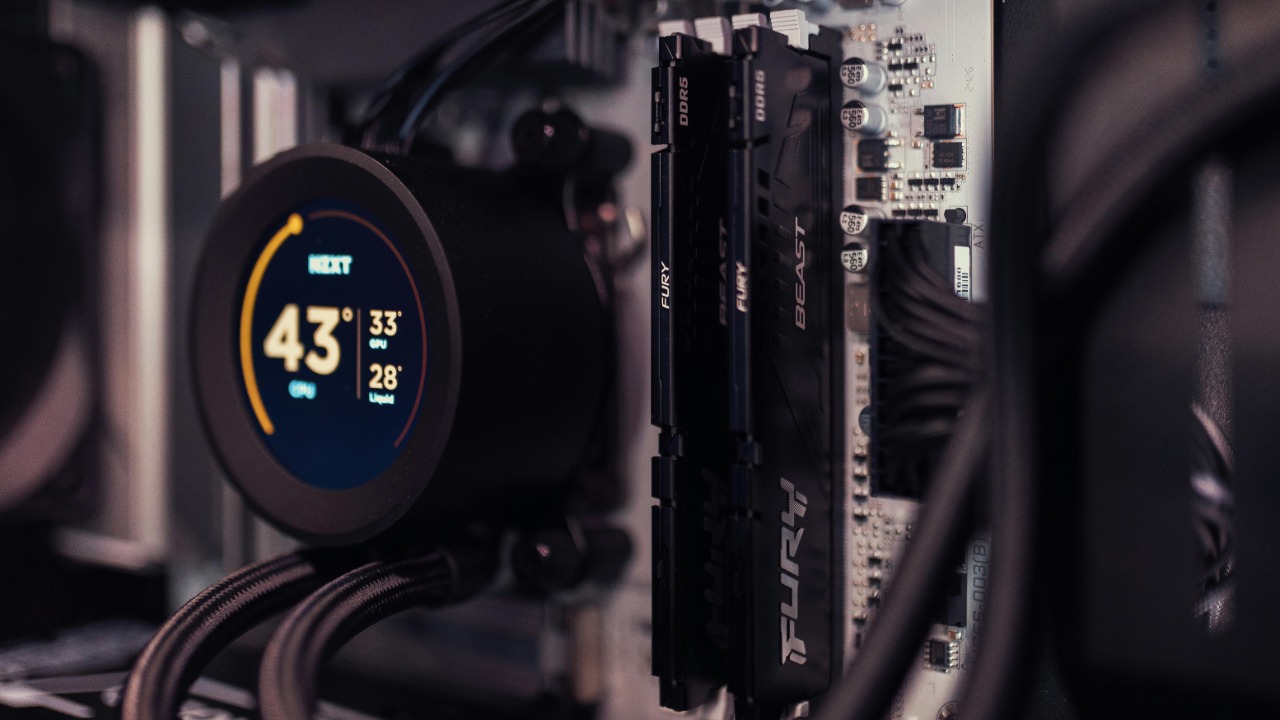

High capacity DDR5 memory has become the latest flashpoint in the AI hardware boom, and nowhere is that more obvious than at the extreme end of the market. A 4TB server kit that would once have been a niche curiosity is now a five‑figure status symbol, as data center buyers race to feed ever larger models and memory hungry workloads. The result is a pricing spike that is rippling far beyond hyperscale clouds and into workstations, gaming rigs, and everyday laptops.
I see the 4TB DDR5 sticker shock as a symptom of a deeper structural shift, not a temporary blip. AI training and inference are colliding with a supply chain that was built for slower, more predictable PC and phone cycles, and the imbalance is pushing DRAM into a new kind of supercycle where capacity, bandwidth, and power efficiency all command a premium.
4TB kits as the poster child of the AI memory crunch
The most eye catching example of this new reality is a 4TB DDR5 server kit from Nemix that currently lists for $76,999. The configuration is straightforward enough, 64 modules of 64GB DDR5‑6400, but the economics are anything but normal. Broken down, that price works out to roughly $18.80 per gigabyte, or about $4,812 per module, a level that would have seemed absurd in the early DDR5 rollout when capacity was plentiful and AI demand was still ramping.
The listing, highlighted by writer Zak Killian, even jokes that this 4TB kit is “only” $76,999, a wink at how distorted the market has become as data center buyers chase every available high density stick from suppliers like Nemix. The same report notes that the kit is marketed as a turnkey way to max out a dual socket server, which underscores how AI workloads have normalized configurations that once belonged only in high end research clusters. When a single memory upgrade costs more than a luxury car, it is clear that AI has turned DRAM into a strategic asset rather than a commodity, a shift that is now feeding directly into broader RAM shortage dynamics.
From PC cycles to AI supercycles
For decades, DRAM pricing rose and fell with familiar patterns tied to PC refreshes and smartphone launches, but that playbook has broken down. Where previous cycles were driven by consumer devices, the current upswing is dominated by data center and AI computing, with hyperscalers and model labs locking in long term contracts for vast quantities of DDR5. That shift has left traditional OEMs and channel buyers scrambling for leftovers, which is one reason server grade 4TB kits have become so expensive and so scarce.
Industry analysts describe this as an AI supercycle, and memory makers have reorganized around it. Micron, for example, has leaned heavily into high bandwidth and high capacity products, and its fiscal year 2025, labeled a watershed in its Financial Performance, reflects how lucrative this pivot has been. The company has emphasized that DDR5 offers significantly higher throughput and efficiency than the aging DDR4 standard, which makes it the default choice for AI servers that need to keep GPUs and accelerators fed. As Micron and its peers prioritize these premium segments, the supply of mainstream modules tightens, and the price of everything from 32GB desktop kits to 4TB server bundles drifts upward, a pattern that is now visible across industry and market trends.
How AI workloads devour DRAM
At the heart of the price spike is a simple technical reality, modern AI models need gobs of memory. Training a large language model or a multi modal system involves shuttling enormous parameter sets and activation maps between GPUs and system RAM, and even inference at scale can saturate hundreds of gigabytes per node. That is why server buyers are now eyeing 2TB and 4TB configurations as table stakes rather than extravagances, especially for dense GPU boxes that host multiple tenants or run several models in parallel.
Reporting on the current shortage notes that Demand for memory chips currently exceeds supply, and that As AI gobbles up memory chips, prices for devices may rise across the board. Those devices include not just cloud servers but also AI PCs, edge boxes, and even smartphones that integrate on device assistants. Every one of those platforms competes for the same DRAM wafers, and when AI data centers are willing to pay a premium for high capacity DDR5, the rest of the market is left to absorb higher costs or accept lower spec configurations. That is the backdrop against which a 4TB Nemix kit can command nearly $77,000, a figure that would have been unthinkable before AI gobbled up memory chips.
171% price jumps and a market hotter than gold
The numbers behind the surge are stark. DRAM prices have skyrocketed globally in 2025, with some benchmarks showing a 171% year over year increase that actually outpaces the performance of traditional safe haven assets like gold. That kind of move is not a gentle recovery from a down cycle, it is a spike driven by what one report calls exorbitant demands from the AI industry, and it has caught many system builders and IT departments off guard.
CTEE, which tracks component pricing, reports that DRAM contract prices are likely to intensify over the coming months as AI deployments accelerate and as more enterprises roll out generative tools. The same analysis notes that DRAM prices are continuing to skyrocket thanks to this demand, which helps explain why even bulk buyers are now paying eye watering rates for high capacity DDR5. When the underlying chips are up 171% year over year, a 4TB kit that once might have slotted in under $30,000 can quickly climb toward $76,999, especially when it is built from fast DDR5‑6400 modules that sit at the top of the performance stack. That is the environment captured in recent coverage of DRAM prices surging 171%.
Why DDR5 is bearing the brunt
Not all memory is created equal in this crunch, and DDR5 sits at the center of the storm. AI servers, next generation laptops, and gaming rigs are all standardizing on DDR5 because it offers higher bandwidth, better power efficiency, and features like on die ECC that improve reliability at scale. That means demand is surging simultaneously in the PC, mobile, and server segments, a convergence that has pushed DDR5 pricing far above what many buyers expected when the standard first launched.
One detailed breakdown notes that RAM prices have surged in 2025 across PC, mobile, and server segments, and that Memory prices have risen sharply as manufacturers shift capacity toward higher margin products. The same analysis argues that AI is the primary driver, but it also points to factors like inventory corrections and cautious capacity expansion after previous downturns. In practice, that means fewer DDR4 lines and more DDR5 wafers, but not enough of either to keep up with AI demand. As a result, high density DDR5 modules, especially 64GB and 128GB sticks used in 4TB kits, command a steep premium that filters down into every configuration, a pattern that helps explain why RAM prices are surging.
Sticker shock from 2TB to 4TB
The 4TB Nemix kit is not an isolated outlier, it sits atop a ladder of inflated pricing that now stretches down to 2TB configurations. Another listing shows that you can now buy 2 terabytes of DDR5 server RAM for the low price of $76,999.99 on Nemix’s website, a figure that puts the per gigabyte cost in the same ballpark as the 4TB bundle. That 2TB kit is pitched as a way to fully populate a single socket server, and its price tag underscores how even “entry level” high capacity builds have become budget breakers.
If it was becoming too easy for buyers to navigate the ongoing DRAM shortage, this kind of pricing resets expectations. System integrators that once specced 1TB or 2TB as a comfortable middle ground are now forced to choose between slashing capacity or passing on costs that can double the price of a server. For AI startups and research labs, that can mean delaying deployments or leaning harder on cloud rentals, while for enterprises it can push them toward more conservative rollouts of generative tools. The fact that a 2TB kit can sit at $76,999.99 while a 4TB kit is “only” slightly more expensive illustrates how distorted the top of the market has become, a distortion captured in coverage of how you can now buy 2 terabytes of DDR5 at supercar prices.
Channel skepticism and the search for scapegoats
Not everyone in the industry accepts the official narrative that AI demand alone justifies the current spike. Some channel veterans argue that suppliers are using AI as a convenient explanation to push through aggressive price hikes after a bruising downturn, and that there is more inventory in the pipeline than public statements suggest. That skepticism is particularly strong among smaller system builders and enthusiasts who have watched retail prices jump far faster than their own order volumes.
One analysis puts it bluntly, RAM prices have skyrocketed globally in 2025, with industry officials pointing to explosive demand from AI data centers, but there is a lot of room for skepticism too. The author notes that while AI is clearly a major factor, the speed and scale of the increases hint at strategic behavior by manufacturers and distributors who want to restore margins. From my perspective, both things can be true at once, AI can be driving genuine scarcity at the high end while also giving cover for opportunistic pricing in the broader market. That tension is evident in the way some buyers now talk about DRAM prices spiking for reasons they do not fully trust.
From YouTube builds to enterprise racks
The shock is not confined to procurement departments and cloud architects, it has filtered into enthusiast culture as well. In a widely shared Oct video titled “DDR5 Pricing Skyrockets, What’s Going On?”, a creator walks through the cost of building a high end PC and pauses on the memory line item, which has ballooned compared with earlier in the DDR5 era. The clip, which also detours into thermal paste application and other build tips, captures a broader mood of frustration among gamers and creators who feel priced out of the latest platforms.
What I find striking is how similar the complaints sound whether they are coming from a YouTube builder or an enterprise architect. Both are grappling with the same underlying reality, DDR5 pricing has detached from historical norms, and AI is the common thread. When a 64GB desktop kit costs as much as a mid range GPU, and a 4TB server kit costs as much as a fleet of compact cars, it changes how people plan upgrades and deployments. The YouTube breakdown of DDR5 pricing skyrocketing is, in that sense, just the consumer facing edge of a much larger structural shift.
Vendors lean into “The Great Squeeze”
Some resellers have stopped pretending this is business as usual and are marketing directly into the anxiety. One retailer frames the situation as The Great Squeeze, with a landing page titled The Great Squeeze, Why RAM and SSD Prices Are Skyrocketing and What to Expect Next. The pitch is straightforward, the era of consistently cheap memory and storage is over, and buyers should lock in capacity now before prices climb even higher.
That kind of messaging might sound alarmist, but it aligns with the broader pattern of tight supply, surging AI demand, and cautious capacity expansion by manufacturers. From my vantage point, it also reflects a shift in how memory is perceived, less as a commodity and more as a strategic resource that can bottleneck entire AI initiatives. When a single 4TB kit can make or break the viability of a dense GPU server, and when that kit costs $76,999, it is hard to argue that we are not in the middle of a squeeze. The retailer’s framing of Why RAM and SSD Prices Are Skyrocketing and What buyers should expect next is, in that sense, less hype than a blunt description of the new normal.
Who wins and who waits in the AI memory race
Behind the headlines and the memes about $76,999 memory kits, there is a clear hierarchy of winners and losers. At the top sit the major DRAM manufacturers, whose balance sheets are finally recovering after years of oversupply, and the hyperscale AI players, who can afford to lock in capacity even at elevated prices. Companies like Micron, which have positioned themselves as the memory backbone of the AI supercycle, are reaping the rewards of that strategy as they ship ever more high margin DDR5 into data centers.
Further down the stack, the picture is less rosy. Smaller cloud providers, AI startups, and traditional enterprises are being forced into hard trade offs between capacity, performance, and cost, while consumers face higher prices for everything from gaming PCs to AI enabled laptops. As AI continues to reshape the memory market, I expect the gap between those who can absorb a $76,999 4TB kit and those who cannot to widen, at least until new fabs come online and the current supercycle cools. Until then, 4TB DDR5 RAM will remain a symbol of both the promise and the growing pains of the AI era, a reminder that every breakthrough model still runs on very expensive silicon and a lot of very scarce DRAM.
More from MorningOverview