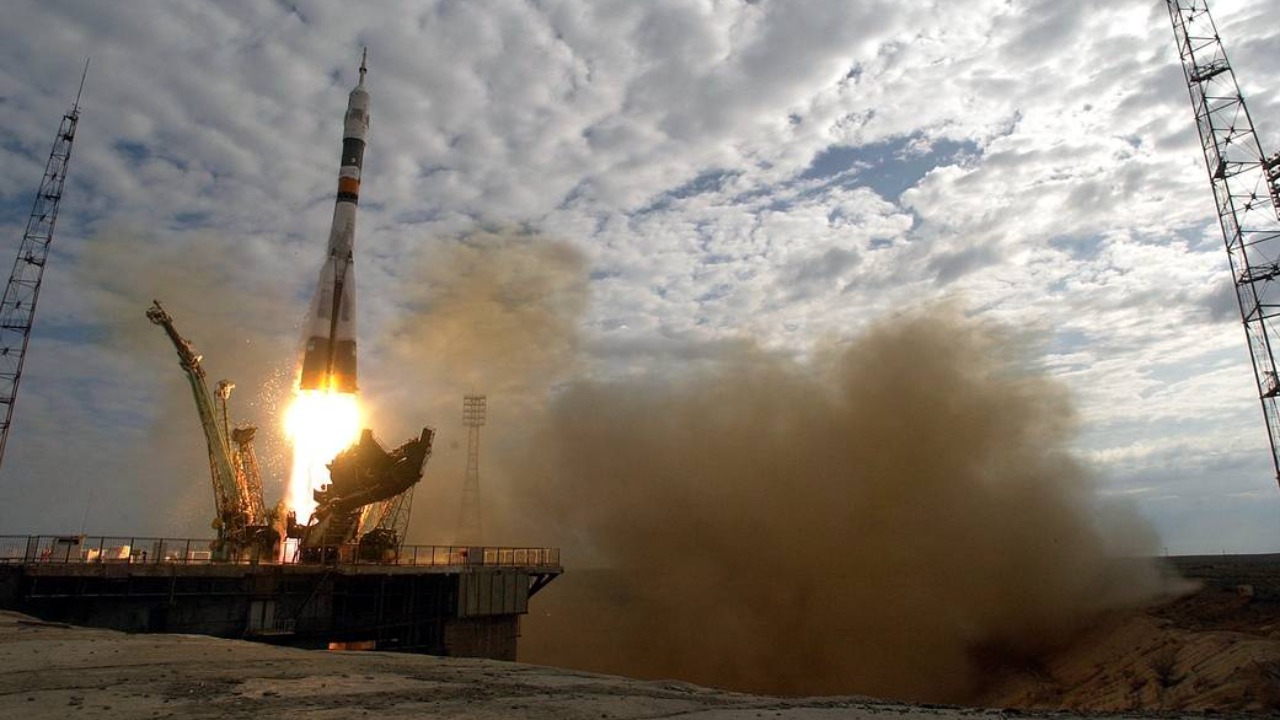

Iran has announced that it successfully placed three domestically built satellites into orbit using a Russian Soyuz rocket, a joint mission that blends technological ambition with hard-edged geopolitics. The spacecraft are billed as tools for Earth observation and communications, but the launch also signals a deepening partnership between Tehran and Moscow at a moment of regional tension and sustained Western sanctions.
By turning to a Russian launchpad to send its hardware into space, Iran is showcasing both its engineering progress and its willingness to align more closely with a major power locked in confrontation with the West. I see this mission as a test case for how space cooperation is becoming another arena where alliances are forged, messages are sent and red lines are probed far above the atmosphere.
The launch that put Iran’s satellites in orbit
The core fact is straightforward: Russia used a Soyuz rocket to carry three Iranian satellites into orbit, with Tehran presenting the mission as a national milestone. The liftoff took place from the Vostochny Cosmodrome in Russia’s Far East, a site that Moscow has been promoting as a symbol of its own space ambitions, and the payload consisted of Iranian-built spacecraft that Iranian officials describe as communications and Earth-observation platforms. Reports from TEHRAN framed the event as Russia sending three Iranian communications satellites into orbit on a Sunday, underscoring that the initiative depended on Russian launch infrastructure even as the hardware itself was made in Iran, and that detail is central to understanding how the two countries are dividing roles in this partnership.
From a technical standpoint, the mission followed a familiar profile for Soyuz launches, inserting the satellites into a roughly 500 kilometre orbit that is typical for low Earth observation and communications constellations. Russian state space company Roscosmos was cited as the Source confirming that the launch at Vostochny Cosmodrome carried the Iranian payload, while Iranian media highlighted that the trio of spacecraft were designed and produced by Iranian scientists despite sanctions and threats, language that turns a routine orbital insertion into a political statement. The fact that Russia, identified in global references as Russia, is willing to provide this service at scale is itself a signal of how far the relationship has evolved.
What the three homegrown satellites are built to do
Iranian officials have been keen to stress that the satellites are homegrown, describing them as domestically produced systems intended to study Earth and improve communications. One of the spacecraft is Zafar-2, developed by Iran University of Science and Technology, which is characterized as an Earth-observation satellite designed for mapping and monitoring, including applications related to natural resources and agriculture. The other satellites in the trio are also described as Iranian communications platforms, forming a small cluster that can relay data and support civilian and potentially dual-use services across the country, and this emphasis on Iranian design and manufacturing is meant to show that Tehran is not merely buying foreign hardware but building its own.
Reporting on the mission notes that the three Iranian satellites will study Earth from space to map Iran’s natural resources, agriculture and more, a description that aligns with the broader trend of countries using small satellites to support environmental monitoring and economic planning. Coverage framed the launch as Iran putting three Homegrown Satellites in Orbit on a Russian Soyuz Rocket, and Iranian statements stressed that these satellites were designed and produced by Iranian scientists despite all the sanctions and threats, a phrase that captures both the technical pride and the political defiance behind the project. One detailed account of the payload explained that Zafar-2, developed by Iran University of Science and Technology, is also an Earth-observation satellite designed for mapping Earth, reinforcing that the mission is about more than symbolic prestige and is intended to deliver practical data back to Iranian users.
How the Soyuz mission unfolded from Russia’s Far East
The mission profile reflects a standard Soyuz operation, but the geography and staging matter for the politics. The launch took place at Vostochny Cosmodrome, a relatively new facility that Russia has been developing to reduce reliance on the Baikonur site in Kazakhstan and to showcase its own high-tech infrastructure. According to accounts that cite Roscosmos as the Source, the launch at Vostochny Cosmodrome carried the three Iranian satellites into orbit, with the Soyuz rocket placing them into a 500 kilometre orbit that is suitable for Earth observation and communications, and that altitude was also highlighted in broadcast coverage that described the satellites being carried into a 500-kilometre orbit by a Soyuz vehicle.
From TEHRAN, Iranian media framed the event as Russia on Sunday sending three Iranian communications satellites into orbit, the second such launch since July, which suggests that this is not a one-off but part of a pattern of cooperation. Video explainers on the mission stressed that Russia has launched three Iranian communications satellites into orbit and that they were carried into a 500-kilometre orbit by a Soyuz rocket, while another segment noted that Russia has just taken its alliance with the Islamic Republic of Iran into the orbit with satellite launches, language that explicitly links the technical feat to a broader strategic alignment. In that sense, the Vostochny launchpad is not just a physical site but a stage on which Moscow and Tehran are performing their partnership for domestic and international audiences.
Tehran’s message of resilience under sanctions
For Iran, the satellites are as much about narrative as capability, and the official messaging has leaned heavily on themes of resilience and self-reliance. Iranian officials have been quoted saying that these satellites were designed and produced by Iranian scientists despite all the sanctions and threats, a formulation that casts the mission as proof that Western pressure has failed to halt the country’s technological progress. Statements from TEHRAN emphasized that the three Iranian communications satellites were domestically produced, and that Russia’s role was to send them into orbit, reinforcing the idea that Iran is mastering the high-tech payloads even if it still relies on foreign rockets for access to space.
That framing fits into a longer-running narrative in which Iranian leaders present advances in areas like nuclear technology, missiles and now space as evidence that the country can thrive despite isolation. One report on Iran Puts 3 Homegrown Satellites in Orbit on Russian Soyuz Rocket highlighted that Iran on Sunday launched three domestically produced satellites on the same Russian rocket, using the phrase Homegrown Satellites to underline local engineering. Another account noted that the three Iranian satellites will study Earth from space to map Iran’s natural resources, agriculture and more, and that Iran has launched a trio of satellites to space on a Russian rocket, a description that blends the practical benefits with the symbolic weight of achieving orbit under pressure. In my view, that combination of technical detail and political messaging is deliberate, aimed at both domestic audiences and foreign rivals.
Russia and Iran’s deepening strategic partnership
The launch also sits squarely within a broader pattern of Russia and Iran tightening their strategic ties, from arms deals to energy cooperation and now space. Analysts have pointed out that Russia has launched three Iranian communications satellites into orbit, marking the second such deployment since July, which suggests a sustained program rather than an isolated gesture. A detailed analysis of Iran’s Satellite Launch from Russia Sparks International Analysis argued that the simultaneous launch of three satellites should be read through both technological and geopolitical lenses, noting that the mission reflects a relationship between Tehran and Moscow that is growing stronger despite US sanctions, and that phrase about growing stronger despite US sanctions was echoed in coverage that tied the Vostochny Cosmodrome launch to a broader pattern of cooperation.
From Moscow’s perspective, providing launch services to Iran helps cement an alliance with the Islamic Republic of Iran at a time when both countries are under Western pressure and looking for partners that can help them circumvent restrictions. One video report framed it bluntly, saying that Russia has just taken its alliance with the Islamic Republic of Iran into the orbit with satellite launches, while another segment on Russia Sends Iranian Satellites Into Orbit Ahead Of a high-profile diplomatic moment underscored that Russia has launched three Iranian communications satellites into orbit as part of this deepening relationship. A separate account that cited Roscosmos as the Source described the launch at Vostochny Cosmodrome and explicitly linked it to ties Growing Stronger Despite US Sanctions, making clear that both capitals see space cooperation as a way to signal defiance and mutual support.
A pointed signal to Israel and the West
Regional observers have interpreted the mission as more than a technical milestone, reading it as a message to Israel and Western capitals about Iran’s capabilities and alliances. One report described how Iran launches new satellites in show of defiance ahead of Netanyahu-Trump meeting, noting that Iran has launched three domestically produced satellites from Russia in a move that some saw as a signal to Israel. The same account stressed that Iran has launched three domestically produced satellites, some in conjunction with Moscow, and framed the timing as significant given an upcoming meeting between Netanyahu and Trump, suggesting that Tehran wanted to demonstrate that it has powerful backers and growing technological reach as regional tensions simmer.
From TEHRAN, the narrative is more about national pride and scientific progress, but the subtext is hard to miss. The fact that Russia on Sunday sent three Iranian communications satellites into orbit, the second such launch since July, shows that this is an ongoing collaboration that can enhance Iran’s ability to gather data and communicate across its territory, capabilities that have clear military and intelligence implications even if the satellites are officially described as civilian. Analysts looking at Iran’s Satellite Launch from Russia Sparks International Analysis have argued that the mission will be scrutinized by Israel and Western governments that worry about how improved Iranian space capabilities could feed into missile guidance, surveillance and secure communications, and that the launch therefore functions as both a technical achievement and a strategic signal.
What the satellites mean for Iran’s space program
Beyond the geopolitics, the mission marks a concrete step forward for Iran’s own space program, which has long struggled with launch failures and limited access to advanced technology. By placing three homegrown satellites into orbit on a single Russian Soyuz Rocket, Iran has demonstrated that its engineers can design and build multiple operational spacecraft that survive launch and begin functioning in space, a milestone that can accelerate learning and spur further investment. Reports on Iran Puts 3 Homegrown Satellites in Orbit on Russian Soyuz Rocket stressed that Iran on Sunday launched three domestically produced satellites on the same Russian rocket, a detail that highlights both the scale of the payload and the confidence Iranian engineers now have in their designs.
Technical follow-up has already begun, with specialized coverage noting Successful Signal Reception for Iranian Satellite Trio Following Soyuz Launch, and explaining that the confirmation marks the official commencement of the operational phase for these assets following a successful orbital insertion. That same account pointed out that the mission reflects a relationship between Tehran and Moscow, but from a purely space-program perspective, the key point is that ground stations in Iran are now in contact with the satellites and can begin using them for Earth observation and communications tasks. Another report on Iran says it launched 3 satellites to space on Russian rocket: report, presented as News By Tariq Malik, underlined that the 3 Iranian satellites will study Earth from space to map Iran’s natural resources, agriculture and more, and that Iran has launched a trio of satellites to space on a Russian rocket, a description that situates the mission within a broader push to use space-based data for economic and environmental management.
International reactions and risk of escalation
International responses have focused on both the technical implications and the political symbolism of the launch, with analysts warning that it could deepen mistrust between Iran and its adversaries. A detailed piece titled Iran’s Satellite Launch from Russia Sparks International Analysis noted that the simultaneous launch of three satellites has been examined through both technological and geopolitical lenses, and that observers are weighing how the mission might affect regional security dynamics. Western officials have long worried that advances in Iranian satellite technology could translate into better missile guidance and surveillance capabilities, and the fact that Russia is now a key partner in putting Iranian hardware into orbit will likely intensify those concerns, especially in capitals that already see Moscow and Tehran as aligned against their interests.
At the same time, the mission underscores how sanctions can have unintended consequences by pushing targeted states into closer cooperation with one another. Coverage that cited Roscosmos as the Source described the launch at Vostochny Cosmodrome and explicitly linked it to ties Growing Stronger Despite US Sanctions, while another report from TEHRAN emphasized that Russia on Sunday sent three Iranian communications satellites into orbit, the second such launch since July, suggesting a durable pattern. Video commentary on Russia Sends Iranian Satellites Into Orbit Ahead Of a sensitive diplomatic moment argued that Russia has launched three Iranian communications satellites into orbit as part of a broader strategy to deepen its alliance with Iran, and that this cooperation could complicate efforts by the United States and its partners to isolate either country. In that context, the satellites are not just tools in space but markers of a shifting geopolitical landscape.
Where Iran’s space ambitions go next
Looking ahead, the successful deployment of this satellite trio is likely to embolden Iran to pursue more ambitious space projects, both independently and with Russian support. The fact that Iran has launched a trio of satellites to space on a Russian rocket, as described in detailed coverage of Iran says it launched 3 satellites to space on Russian rocket: report, shows that Tehran is comfortable relying on Russian launch services while it focuses on building more capable payloads. Analysts who examined Iran launches three satellites from Russia in joint Soyuz mission noted that Zafar-2, developed by Iran University of Science and Technology, is also an Earth-observation satellite designed for mapping Earth, and that Iran’s universities and research centers are increasingly involved in satellite design, a trend that could yield more sophisticated instruments over time.
At the same time, the political context suggests that future missions will be closely watched for signs of military applications or further deepening of the Russia-Iran partnership. A report on Iran launches satellites from Russia in message to Israel argued that Iran launches new satellites in show of defiance ahead of Netanyahu-Trump meeting, and that Iran has launched three domestically produced satellites, some in conjunction with Moscow, as part of a broader strategy to project strength. Another detailed analysis of Iran’s Satellite Launch from Russia Sparks International Analysis stressed that the mission is being viewed through both technological and geopolitical lenses, and that the relationship between Tehran and Moscow is likely to expand into other high-tech domains. For now, the three satellites circling Earth are a tangible sign that Iran’s space ambitions are no longer theoretical, and that Russia is prepared to help keep them aloft.
How media and experts are framing the mission
The way the launch has been covered across different platforms reveals as much about global anxieties as it does about the satellites themselves. Space-focused outlets framed the story as Iran says it launched 3 satellites to space on Russian rocket: report, presenting it as News By Tariq Malik and emphasizing that the 3 Iranian satellites will study Earth from space to map Iran’s natural resources, agriculture and more, while also noting that Iran has launched a trio of satellites to space on a Russian rocket. Regional outlets highlighted that Iran launches three satellites from Russia in joint Soyuz mission and that Zafar-2, developed by Iran University of Science and Technology, is also an Earth-observation satellite designed for mapping Earth, underscoring the role of Iranian academia and industry in building the hardware.
Broadcast and online video coverage has leaned into the geopolitical angle, with one segment titled Russia Sends Iranian Satellites Into Orbit Ahead Of a key diplomatic moment stressing that Russia has launched three Iranian communications satellites into orbit and that they were carried into a 500-kilometre orbit by a Soyuz rocket, while another clip on Russia Sends Iranian Satellites Into Orbit Ahead Of a broader strategic shift argued that Russia has just taken its alliance with the Islamic Republic of Iran into the orbit with satellite launches. Analytical pieces such as Iran’s Satellite Launch from Russia Sparks International Analysis, published by WANA, have tried to balance these perspectives, noting that the simultaneous launch of three satellites is being examined through both technological and geopolitical lenses and that the mission reflects a relationship between Tehran and Moscow that is evolving in response to external pressure. In my reading, that mix of technical detail, political framing and strategic concern captures why a single Soyuz launch has resonated far beyond the launchpad.
More from MorningOverview