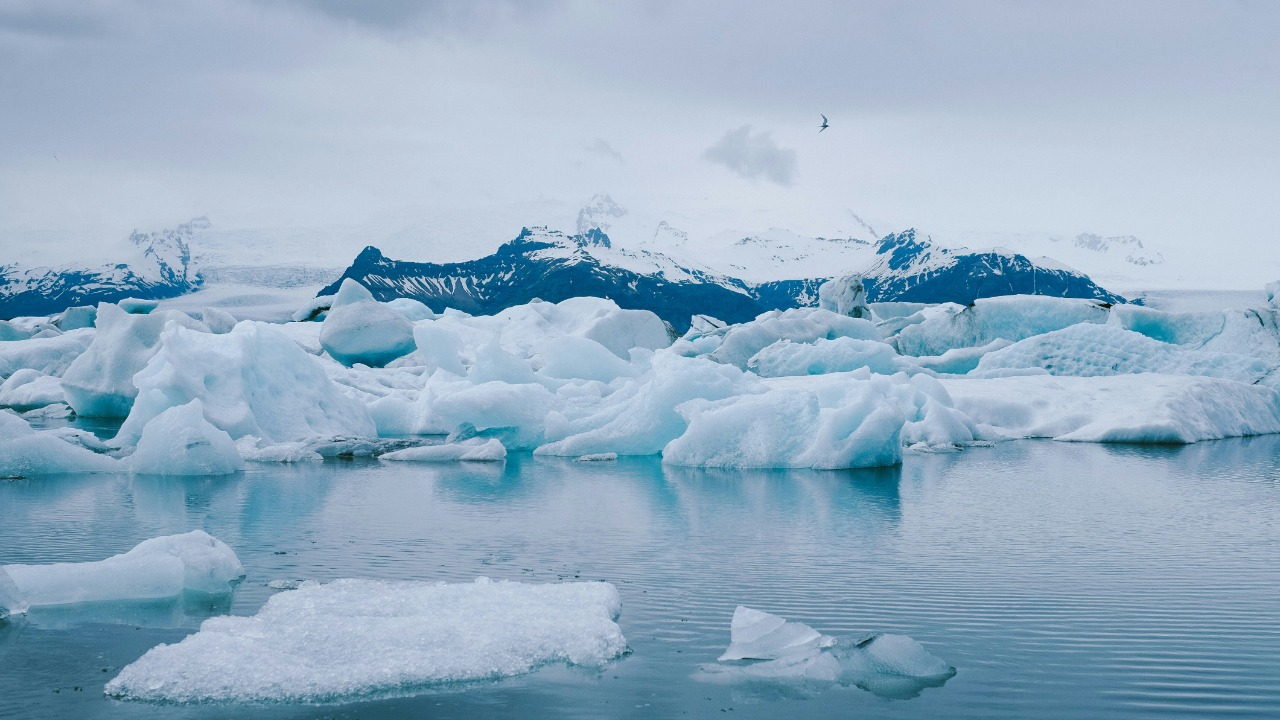

Chile’s long-running megadrought has pushed its Andean ice to a breaking point, shrinking glaciers that once buffered cities and farms from dry years and leaving a water deficit that will not quickly heal. Even if rains return, the country’s frozen reserves have been so depleted that the damage to its high mountain “water towers” will shape rivers, reservoirs, and entire economies for generations. I want to trace how this crisis unfolded, what the science now says about the future of Chile’s glaciers, and why the country’s response has become a test case for a hotter, drier world.
Megadrought in a land built around ice
For more than a decade, Chile has been trapped in what researchers describe as one of the longest and most intense dry spells ever recorded in South America, a megadrought that has steadily drained rivers and soils from the subtropical north to the temperate center. The country’s geography, a narrow strip pinned between the Pacific and the Andes, means that even small shifts in precipitation hit hard, and this prolonged deficit has collided with rising temperatures to accelerate glacier melt and destabilize the very systems that once kept water flowing through dry summers. In the central regions where most Chileans live, that combination has turned a climate anomaly into a structural crisis.
Scientists tracking South American ice now warn that this megadrought is not a passing phase but part of a broader pattern in which glaciers from Peru to Patagonia are retreating while dry extremes advance. Reporting on South American glaciers describes how, in summary, the mega-drought is expected to keep intensifying, with Chile singled out as a Key example of a country where shrinking ice and expanding aridity are unfolding side by side. That backdrop sets the stage for the current alarm over the fate of Chile’s glaciers and the water security of the communities that depend on them.
Glaciers as “water towers” under siege
High in the Andes, Chile’s glaciers have long acted as natural reservoirs, storing winter snow and slowly releasing meltwater through the dry season, a function researchers often describe as a “water tower” for the region. In normal years, that delayed runoff smooths out the difference between wet winters and parched summers, feeding rivers that supply cities, irrigate orchards, and cool hydroelectric turbines. As the megadrought has deepened, however, these ice bodies have been forced to work overtime, melting faster to compensate for missing rain and snow, and in the process eroding the very buffer that once protected Chile from prolonged dryness.
A new modeling study of Chile’s glacier ecosystems, highlighted in coverage of how Chile’s megadrought is dealing a severe and long-lasting blow to these ice bodies, underscores how fragile that buffer has become. The researchers simulated a “Future Chile” scenario in which glaciers are asked to cushion repeated drought shocks and found that once a certain threshold of ice loss is crossed, the system cannot bounce back even if precipitation improves. In other words, the water tower function is being permanently downgraded, and the country is moving toward a new normal in which rivers run lower, earlier, and less predictably than the societies built around them expect.
What the latest glacier science reveals
Behind the headlines about vanishing ice is a detailed body of work that tries to quantify exactly how Chile’s glaciers are responding to the megadrought. In one recent analysis, researchers define the Chilean megadrought as a strong and persistent reduction in precipitation that has hammered snow accumulation and altered the seasonal rhythm of melt. By comparing satellite observations and field data, they show that many glaciers have shifted from a relatively stable mass balance to a rapid loss regime, with thinning surfaces, retreating fronts, and a growing share of runoff coming from long-term ice reserves rather than annual snow.
The same study, presented as Results on Glacier response to the Chilean megadrought, concludes that The Chilean ice fields are now contributing less water during future megadroughts than they did in the past, precisely because so much mass has already been lost. That finding overturns the comforting assumption that glaciers will always be there to backstop drought, and it suggests that each additional dry spell will arrive with a weaker safety net. For water managers, it means that planning based on historical melt patterns is no longer reliable, and that the country must prepare for a future in which the timing and volume of glacier-fed flows are fundamentally altered.
A countdown to possible glacier collapse
As the science has sharpened, so has the language used to describe what is happening in Chile’s high mountains, with some experts now warning of a potential collapse of key glacier systems if current trends continue. Reporting from Nov on how Chile faces the collapse of its glaciers describes a country that has endured a megadrought for 15 years and now confronts the massive loss of glacier mass as a direct consequence. The analysis warns that if warming and drying continue on their current trajectory, some Andean glaciers will have completely disappeared by 2100, stripping away a critical source of water for downstream communities and ecosystems.That same reporting frames the stakes in stark terms, noting that the cumulative effect of this ice loss could leave Chile without reliable water by the end of the century, particularly in basins that rely heavily on glacier melt to sustain summer flows. A companion account on how Chile faces the collapse of its glaciers due to the megadrought emphasizes that even if precipitation patterns shift, the glaciers will keep retreating because the underlying temperature trend is still upward. In practical terms, that means the country is not just dealing with a temporary shortage but with a structural loss of natural infrastructure that once guaranteed a baseline of water security.
The Andes, “Half of” tomorrow’s meltwater, and a shrinking safety margin
Zooming out from individual valleys, researchers have tried to estimate how much glacier-derived water the Andes as a whole will be able to provide in a warmer climate. One modeling effort focused on the 100 largest glaciers in the southern Andes, a group that includes many of Chile’s most important ice bodies, and asked how their meltwater contribution would change under continued warming and drought. The results are sobering: in their projections, by the end of the century these glaciers deliver only Half of today’s summer meltwater resources, a drop that would reverberate through river systems, irrigation districts, and hydropower networks that currently assume a far more generous flow.
The study, summarized in an assessment of the future fate of water in the Andes, stresses that this decline is not linear or easily managed. Instead, there is a peak in glacier runoff followed by a steep fall as ice reserves dwindle, meaning that some basins may experience a deceptive period of abundant meltwater before flows crash. For Chile, which has already burned through a significant share of its ice buffer during the current megadrought, that pattern suggests the country may be closer to the downslope of this curve than it realizes, with less time to adapt than a simple extrapolation of past trends would imply.
From crisis to blueprint: Chile’s water shift
Faced with this convergence of megadrought and glacier decline, Chile has begun to overhaul how it thinks about water, moving from a model that relied heavily on rivers and aquifers to one that treats every drop as a resource to be captured, reused, or manufactured. In the arid north, where mining and coastal cities compete for scarce supplies, the country has leaned into desalination and large-scale reuse, turning what was once seen as an emergency response into a long-term strategy. That shift has been driven in part by the realization that traditional sources, including glacier-fed rivers, can no longer be counted on to meet growing demand.
An in-depth look at Chile’s Water Shift describes how the country has moved From Drought to a National Blueprint for Reuse and Desalination, with a particular focus on a Desert Where the Taps Still Run thanks to aggressive investment in alternative supplies. The same reporting notes that this transformation did not happen overnight but was born out of years of mounting stress, as reservoirs dropped and rural communities faced repeated shortages. By codifying reuse and desalination into national planning, Chile is effectively acknowledging that the old hydrological baseline, underpinned by glaciers, is gone, and that a new, more engineered water cycle must take its place.
Mining moved first, but everyone follows
One of the most striking aspects of Chile’s adaptation story is how quickly the mining sector, a pillar of the national economy, moved to secure nontraditional water sources once the scale of the megadrought became clear. Large copper operations in the Atacama region began investing in coastal desalination plants and long-distance pipelines, both to protect production and to reduce pressure on inland aquifers and rivers that were already under strain. That shift has had a ripple effect, setting technical and regulatory precedents that other sectors can now build on as they confront their own exposure to glacier loss and drought.
A closer look at how Chile’s transformation was born out of crisis notes that Mining Moved First, using its capital and engineering capacity to pioneer large-scale desalination and reuse projects that have since informed national policy. I see that as a revealing case of how climate stress can reorder economic priorities: sectors that once treated water as an afterthought are now forced to treat it as a core input, subject to the same long-term planning as ore grades or energy prices. As glacier-fed flows become less reliable, that kind of forward planning will be essential not just for mines but for agriculture, cities, and energy systems across the country.
Energy, agriculture, and the wider drought economy
The loss of glacier buffering does not only show up in empty canals or dry wells; it also ripples through the broader economy, particularly in sectors that depend on steady water flows. Hydroelectric power, which has historically supplied a large share of Chile’s electricity, is especially vulnerable when both rainfall and glacier melt decline, forcing utilities to lean more heavily on thermal plants or imports. Agriculture, from export-oriented fruit orchards in the central valleys to smallholder farms in the foothills, faces a similar squeeze as irrigation allocations shrink and competition for water intensifies.
To understand how such dynamics can play out, it is instructive to look beyond Chile to other regions grappling with severe drought, such as Zambia, where a lack of water flowing into hydroelectric dams has triggered persistent power cuts. Reporting on how severe drought in Zambia risks widespread hunger and economic collapse describes how reduced generation disrupts everything from agriculture to manufacturing and services, illustrating the cascading nature of water shocks. I read those warnings as a cautionary parallel for Chile: as glacier-fed rivers weaken, the country’s energy and food systems could face similar compounding stresses unless alternative supplies and efficiency measures scale up fast enough to fill the gap.
A future “Chile 2.0” shaped by lingering ice loss
Even with ambitious adaptation, the legacy of today’s glacier losses will shape Chile’s hydrology for decades, creating what some researchers describe as a “Chile 2.0” in which the basic parameters of the water cycle have shifted. In this future, rivers that once surged with late-summer melt may peak earlier and lower, wetlands fed by slow seepage from ice may shrink or vanish, and mountain ecosystems adapted to cold, moist conditions may be replaced by more drought-tolerant communities. For people living downstream, that translates into new patterns of risk, from more frequent water rationing to heightened competition between sectors and regions.
The modeling work on a Future Chile underscores that these changes will be severe and long-lasting, not easily reversed even under more favorable climate scenarios. I see that as the central lesson of Chile’s megadrought era: once glacier systems are pushed past certain thresholds, the damage lingers, and societies must adapt to a permanently leaner water budget. The country’s evolving mix of reuse, desalination, and demand management offers one path through that reality, but the underlying message is stark and widely applicable. In a warming world, banking on ice to bail out drought is no longer a safe bet, and the time to redesign water systems around that fact is now.
More from MorningOverview