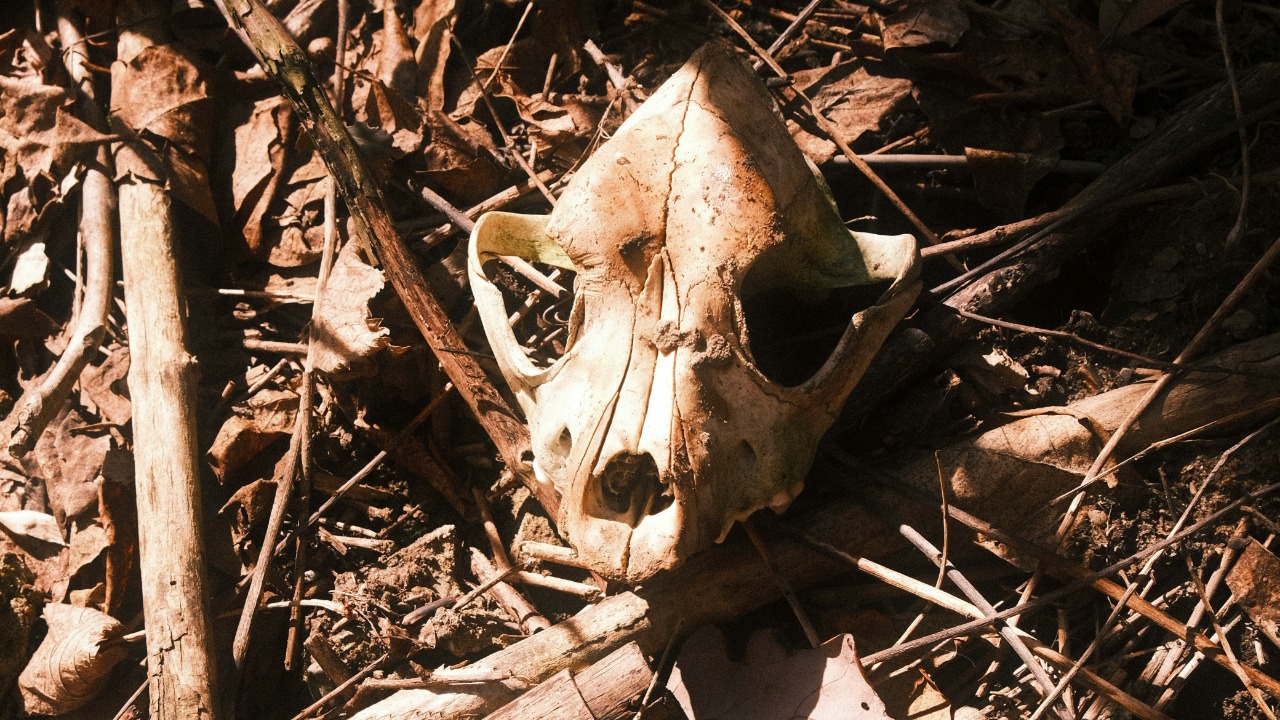

A tranquil Swedish wetland has yielded a startlingly intimate scene from prehistory, where a 5,000-year-old dog lies carefully placed beside a finely worked bone dagger. The Stone Age burial, preserved beneath what was once a clear lake, captures a moment in which a human community chose to send a trusted animal into the afterlife with a weapon fashioned from bone, hinting at a bond that was both emotional and symbolic. I see in this pairing of dog and dagger not just a rare archaeological find, but a snapshot of how deeply early farmers and fishers wove animals into their spiritual and everyday worlds.
The quiet bog that used to be a busy lake
At first glance, the discovery site is unremarkable, a stretch of muddy ground in a Swedish bog that today feels remote and still. Archaeologists working there describe how, five millennia ago, this same spot was part of a clear lake where Stone Age communities fished, traveled, and likely gathered for rituals, leaving behind wooden pilings and other traces of activity that now lie submerged in sediment. The burial of a dog in such a place suggests that the water itself, and the lakebed beneath it, carried meaning for the people who chose it as a final resting place.
When I picture that ancient shoreline, I imagine a landscape humming with seasonal movement, where boats slid between Wooden structures and nets hung to dry while families processed fish and game. The fact that the dog and its bone dagger were placed in what was then open water, rather than on dry land, points to a deliberate act that went beyond simple disposal of a carcass. It fits into a broader pattern in northern Europe where lakes and wetlands often served as liminal spaces, chosen for offerings and burials that were meant to sit between the worlds of the living and the dead.
A “Well Preserved” dog and its bone dagger
The burial itself is striking in its detail, with the animal’s skeleton described as “Well, Preserved, Dog, Bone Dagger, Inside” a carefully arranged deposit that has survived thousands of years beneath the lakebed. Archaeologists report that the remains belong to a large adult dog, its bones intact enough to reconstruct the body and even infer aspects of its musculature and posture. Lying beside the animal is a finely crafted weapon, a dagger carved from bone that appears to have been placed intentionally near the paws, as if the dog were being equipped for a journey.
The pairing of a 5,000-Year-Old animal with such a carefully made tool is what elevates this find from curiosity to cultural statement. The dagger’s workmanship, described in detail in accounts of the Well, Preserved, Dog, Bone Dagger, Inside burial, suggests that someone invested time and skill in an object that would never be used in life. I read that choice as a sign that the dog was not treated as expendable property, but as a being worthy of grave goods, a status usually reserved for humans or for offerings to powerful forces in the landscape.
How archaeologists uncovered the Stone Age dog
The dog did not emerge from the bog by chance. It came to light because Archaeologists Excavating were already working in the area, part of a broader effort to document heritage sites ahead of modern infrastructure projects. As they peeled back layers of peat and mud in a Bog In Sweden Just Came Across a cluster of bones that, on closer inspection, formed the complete outline of a Year, Old Dog Burial, its limbs and spine still in anatomical order rather than scattered by water or scavengers. That intact arrangement was the first clue that this was a deliberate interment rather than a natural death in the wild.
Specialists from Arkeologerna, a unit that often works on rescue excavations tied to development, recognized that the dog’s remains were unusually well preserved for a site that had once been underwater. Reports on the Archaeologists Excavating project describe how the team documented each bone in situ before lifting the skeleton and the associated dagger for further analysis. I am struck by how much this careful, methodical work mirrors the care that Stone Age people themselves took when they first laid the dog to rest.
What the bones reveal about the animal itself
Once in the lab, the dog’s skeleton began to tell its own story. Initial examination of the bones indicates that the muscular dog was about 20 inches tall at the shoulder, a size that would have made it a capable hunter, guard, or working animal in a community that relied on both farming and foraging. The teeth and joints suggest a mature adult rather than a juvenile, which implies that this animal had lived long enough to build a relationship with the humans who eventually buried it with such care.
Specialists note that the dog died before being wrapped and submerged, rather than drowning in the lake, which fits with the idea of a planned burial rather than an accident. The description of the animal as a strong, well built individual in Initial reports hints that it was valued for its abilities as much as for its companionship. When I consider that combination of physical prowess and ceremonial treatment, I see an animal that likely played a central role in daily life, perhaps helping to track game, guard stores, or even pull loads, and whose death marked a moment of loss for the group.
A leather shroud, stones, and a sinking ritual
The way the body was prepared adds another layer of meaning. Archaeologists in Sweden have described how the dog was a large adult male, wrapped in a leather container and weighted with stones so it would sink beneath the water rather than float or wash ashore. That detail, shared in visual updates that show the excavation in progress, suggests a ritual choreography in which mourners enclosed the animal, added heavy rocks, and then released the bundle into the lake at a chosen spot. It is a far cry from a casual disposal of remains.
In my view, the leather wrapping and stone weights transform the burial into a kind of offering, one that required materials and planning at a time when every hide and tool had value. The description of this process in posts about how Archaeologists in Sweden handled the find underscores how deliberate the original act must have been. By sending the dog to the bottom of the lake, the community may have been placing it in a realm associated with ancestors, spirits, or deities linked to water, a pattern seen in other prehistoric deposits of weapons and animals in northern Europe.
Inside the bone dagger’s craftsmanship and purpose
The bone dagger itself is more than a simple tool. Descriptions of the object emphasize its careful shaping, with a pointed blade and smoothed surfaces that would have required time and skill to produce. It appears to have been made from a large bone, possibly from a sizeable mammal, then worked into a form that could pierce or cut, even if it was never actually used in hunting or combat. The fact that it was placed adjacent to the dog’s paws suggests an association between the animal and the weapon, as if the two formed a single symbolic package.
Some accounts even describe the dog as having been buried with its own bone dagger, a phrase that captures how closely the two objects are linked in the archaeological record. Reports on how Archaeologists interpret the find suggest that the dagger may have been intended as a status marker, a protective implement for the afterlife, or even a token of the dog’s role in hunting. I find it telling that the community chose a crafted object rather than a simple bone fragment, which hints at a belief that the dog deserved something made specifically for this final act.
Who is Arkeologerna, and why their paperwork matters
Behind the evocative images of bones and bogs lies a network of institutions that make sense of such finds. Arkeologerna, the organization leading the excavation, operates under Statens historiska museer, Sweden’s national historical museums framework, and is responsible for documenting and preserving heritage uncovered during construction and other land use. Their official communications list contact details such as Arkeologerna, Statens, historiska museer, Box 5428, 114, 84, Stockholm, Tel: 010, 480, 80, 00, which may look like dry bureaucracy but in practice anchor the discovery in a system that ensures it is catalogued, studied, and eventually shared with the public.
I see that formal structure as crucial, because without it, a 5,000-year-old dog and its dagger might have been destroyed or dispersed before anyone realized their significance. The detailed project summaries and technical notes in documents like the Page that outlines Arkeologerna’s work show how each bone, artifact, and soil sample is recorded. That level of documentation allows future researchers to revisit the site’s data, apply new analytical techniques, and place this burial in a wider map of Stone Age activity across Scandinavia.
Why this burial is described as “rare”
Dog remains are not unknown in prehistoric archaeology, but complete, intentional burials with grave goods are another matter. The team behind this discovery has described it as a rare 5,000-year-old dog burial, emphasizing that the find dates back around 5,000 years and includes the complete skeleton of a dog deliberately deposited together with a bone dagger. That combination of age, preservation, and context sets it apart from scattered bones or partial remains that might represent food waste or accidental deaths.
In my reading, the rarity lies not only in the survival of the bones, but in the clarity of the story they tell. The description of the find as a 5,000 year old burial with a complete skeleton and associated artifact gives archaeologists a tightly framed case study of how one Stone Age community treated at least one of its dogs. It provides a counterpoint to more ambiguous deposits and strengthens the argument that, in some contexts, dogs were accorded a status that blurred the line between animal helper and social companion.
Placing the Swedish dog in a wider Stone Age pattern
Viewed alongside other finds, the Swedish bog burial fits into a broader pattern of Stone Age communities investing emotional and symbolic weight in their animals. Reports on similar discoveries note that Stone Age dog skeletons and bone tools have been found together in other parts of northern Europe, sometimes in settlements, sometimes in watery contexts, but rarely with the level of preservation seen here. In this case, archaeologists in Sweden have discovered the skeleton of a dog and a bone dagger in a Swedish bog, with the weapon lying adjacent to the dog’s paws, a detail that reinforces the sense of deliberate pairing.
Accounts that describe this as a Stone Age dog skeleton and bone dagger found together in a Swedish wetland, such as those summarized by Stone Age focused commentators, help situate the burial within a network of ritual practices that used waterlogged places as repositories for meaningful objects and beings. When I compare this case to other dog burials from the Neolithic and Mesolithic, I see a consistent thread: dogs were not just tools, but participants in human lives whose deaths sometimes called for ceremony, offerings, and, in this Swedish lake, a bone dagger laid gently by their side.
More from MorningOverview