
The global electric vehicle race has entered a new phase, with China’s BYD turning a once-implausible scenario into a live threat to Tesla’s status as the world’s top seller. What began as a domestic success story is now an export-driven surge that is reshaping market share, pricing power, and the balance of influence across the EV industry.
As shipments of Chinese-made EVs accelerate into Europe, Asia, and emerging markets, BYD’s expanding footprint is colliding directly with Tesla’s slowing growth and intensifying competition. The result is a year in which the annual sales crown, long treated as Tesla’s to lose, is suddenly in play.
BYD’s rise from domestic champion to global contender
BYD’s ascent has been built first at home, where the company used its battery expertise and aggressive pricing to dominate the world’s largest EV market. In China, BYD’s home market and a crucially important one for Tesla (Tesla, Inc), BYD sales continually topped Tesl output, giving the Chinese group a commanding lead over the year and into 2025 as it pushed volume across multiple price points and body styles, from compact city cars to larger family SUVs. That domestic scale has given BYD the manufacturing muscle and cost base it now leverages abroad.
Globally, that strategy has translated into a market share that rivals and in some segments surpasses Tesla’s. Data on The World Top EV Makers Market Share show BYD covering nearly 20% of the world’s EV market, the largest share overall, a position that reflects both its domestic dominance and its growing export push. I see that combination of home-market strength and international expansion as the core reason BYD has moved from being framed as “Tesla’s China rival” to being treated as a co-equal global force.
The numbers behind a looming sales upset
The shift in leadership is not just narrative, it is increasingly visible in delivery figures. While Chinese manufacturer BYD already pulled ahead of Tesla in production volume last year, with 1,77 units cited as a key benchmark, the more symbolic milestone is global battery-electric vehicle deliveries, where BYD has been closing the gap quarter by quarter. The comparison of While Chinese BYD Tesla deliveries underscores how narrow the margin has become and why investors now treat the leadership question as open rather than settled.
Forecasts for the current year sharpen that picture. Projections suggest that would give Tesla about 1.65 m sales for all of 2025, a drop of 7.7 percent and well below the level BYD had attained by end November, implying that BYD is on track to finish the year with higher total sales. Those figures, drawn from analysis of Dec Tesla BYD performance, highlight not only BYD’s growth but also Tesla’s deceleration, particularly in markets where competition has intensified and price cuts have eroded margins.
Exports turn BYD into a truly global player
What has changed most dramatically over the past year is the role of exports in BYD’s growth story. China EV exports surge as BYD set to overtake Tesla in annual sales, with shipments of Chinese-made electric cars up 71% year on year, a figure that captures how quickly the country has become an export powerhouse for battery-powered vehicles. Within that surge, BYD stands out as the flagship brand, using its cost advantage and broad lineup to penetrate markets from Europe to Latin America, as highlighted in Dec China EV BYD Tesla News.
China’s BYD poised to overtake Tesla in 2025 EV sales, a narrative reinforced by the way its export volumes now complement its domestic base. China’s BYD poised to overtake Tesla in 2025 EV sales, according to analysis that notes how BYD had already reached a sales level by late in the year that Tesla was unlikely to match, and that gap is being widened by overseas deliveries. The Times of India framed this dynamic by stressing that Dec China BYD Tesla The Times of India Read had already signaled a turning point, with exports acting as the swing factor that pushes BYD ahead on an annual basis.
Europe becomes the frontline of the EV crown battle
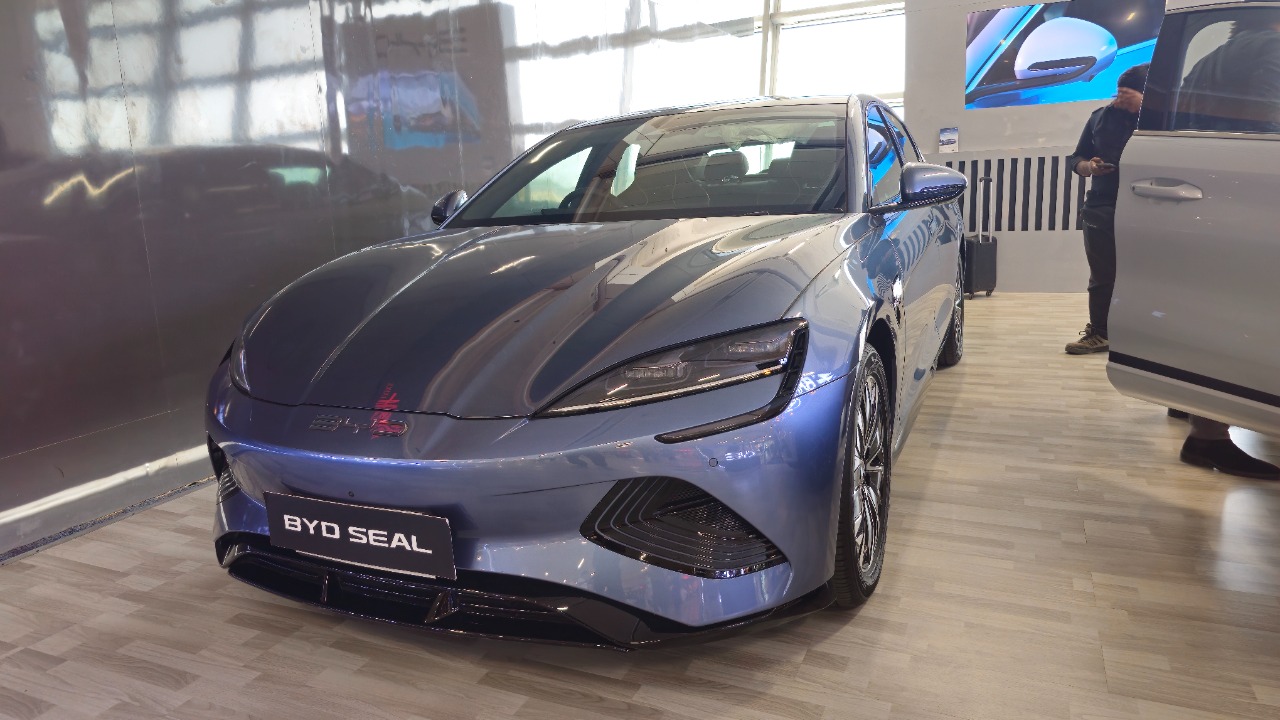
Europe has emerged as the most visible battleground for this changing order, because it is where Tesla once enjoyed a clear premium-brand halo and where BYD’s value proposition is now most disruptive. In markets such as Germany, France, and the Nordic countries, BYD has rolled out models like the Atto 3 and Seal at prices that undercut comparable Tesla offerings, while still promising long range and modern tech. That strategy is starting to show up in sales data, with local analysts pointing to a rapid shift in showroom traffic and registrations.
One vivid snapshot of this shift comes from reporting that byd’s electric car sales in europe increased by 207%. in october 207% tesla sales fell by 48.5%. so what exactly is go, a contrast that captures how quickly momentum can swing when a new entrant combines aggressive pricing with ample supply. The YouTube analysis of Nov performance in Europe underscores how BYD and MG crush Tesla in Europe as sales drop, turning the region into a case study of what happens when Chinese brands meet a mature but price-sensitive EV market.
Tesla’s slowing growth and the “electric crown” narrative
For Tesla, the challenge is not that demand has vanished, but that its growth curve has flattened just as rivals like BYD are accelerating. Electric crown slips from Tesla’s grasp as BYD surges forward, a framing that reflects how Tesla’s estimated 1.2 million deliveries in some recent periods have been outpaced by BYD’s higher volumes. The notion of a Different growth pace, with BYD moving decisively into the lead while Tesla’s expansion slows, is central to the way investors and policymakers now talk about the sector, as captured in Nov Electric Tesla BYD Different.
That narrative is reinforced by broader assessments that a significant shift in leadership within the global electric vehicle sector appears imminent. Based on current deliveries and order books, analysts argue that BYD is poised to claim the EV crown, with projections showing it overtaking Tesla in global sales as early as this year. The sense that the balance is tipping is encapsulated in commentary that Dec Based on current deliveries for the fourth quarter, BYD is on track to finish ahead, turning what was once a hypothetical into a base-case scenario.
How BYD’s product and pricing strategy undercuts Tesla
Underneath the headline numbers is a stark difference in how the two companies approach the market. BYD has built a portfolio that spans everything from entry-level city cars to premium sedans and SUVs, often priced below comparable Tesla models while still offering competitive range and features. That breadth allows BYD to capture budget-conscious buyers in emerging markets and middle-income households in Europe, while Tesla remains more concentrated in the mid to upper price bands with the Model 3, Model Y, and higher-end offerings.
In China, that strategy has already paid off. In China, BYD’s home market and a crucially important one for Tesla ( Tesla, Inc ), BYD sales continually topped Tesl output, giving the company a lead over the year and into 2025 that it is now exporting to other regions. Reporting that In China BYD Tesla Inc Tesl sales surged 29% last year, topping $100B, underscores how scale and pricing power at home have given BYD the financial firepower to sustain thin margins abroad, something Tesla has been more reluctant to do as it balances growth with profitability.
Investor sentiment and the symbolism of the sales crown
The contest for annual sales leadership carries weight far beyond bragging rights. For years, Tesla’s position as the top EV seller has underpinned its valuation, brand aura, and ability to raise capital on favorable terms. If BYD ends the year ahead, it would signal to investors that the era of a single, unchallenged EV champion is over, and that the market is entering a more multipolar phase in which regional giants compete on roughly equal footing.
That is why headlines stressing that BYD Set to Become World Top EV Seller in 2025 have resonated so strongly in financial circles. Dec Overview BYD Set Become World Top EV Seller, as framed in one analysis, captures the idea that the 2025 EV sales crown shifts from Tesla to BYD, with the Chinese automotive powerhouse on the cusp of officially surpassing its American rival in annual deliveries. The suggestion that Dec Overview BYD Set Become World Top EV Seller will end the year with higher total sales than Tesla is already prompting portfolio managers to reassess how they allocate capital across the EV value chain, from battery suppliers to charging networks.
Consumer perception and the Reddit test
Beyond boardrooms and trading floors, the shift is also playing out in the way consumers and enthusiasts talk about the brands. Online communities that once treated Tesla as the default EV choice now debate the merits of BYD’s models, particularly in markets where the Chinese brand has only recently arrived. Those conversations often focus on perceived quality, service networks, and long-term reliability, areas where Tesla has built a track record but where BYD is still proving itself.
One thread that captures this evolving perception comes from a discussion titled BYD – Opiniões, where users in a Brazilian forum traded views on the brand’s strengths and weaknesses. The post, which drew 59 upvotes and 115 comments, was highlighted in a broader conversation about how BYD surpasses Tesla in global pure-electric vehicle sales with leadership for four consecutive quarters, showing that the sales story is filtering down into grassroots debates. The Oct More BYD Opini exchange illustrates how quickly sentiment can shift once a challenger is no longer seen as a niche alternative but as a mainstream option with real scale.
What the BYD–Tesla rivalry means for the next phase of EV adoption
The intensifying rivalry between BYD and Tesla is likely to accelerate some trends and complicate others. On the positive side, fiercer competition on price and features should make EVs more accessible, particularly in emerging markets where upfront cost remains the biggest barrier. BYD’s willingness to push aggressively into lower price segments, combined with Tesla’s continued focus on software, charging ecosystems, and brand, could expand the overall pie even as they fight for share.
At the same time, the geopolitical dimension of a Chinese company potentially overtaking an American icon in a strategic industry will sharpen debates over tariffs, industrial policy, and supply chain security. With BYD already holding nearly 20% of the global EV market according to The World Top EV Makers Market Share, and Tesla facing headwinds in its own crucial markets, governments will be forced to decide whether to lean into open competition or erect new barriers. I see the coming year not just as a contest for an annual sales crown, but as a stress test for how the world wants the next chapter of the electric transition to look.
More from MorningOverview