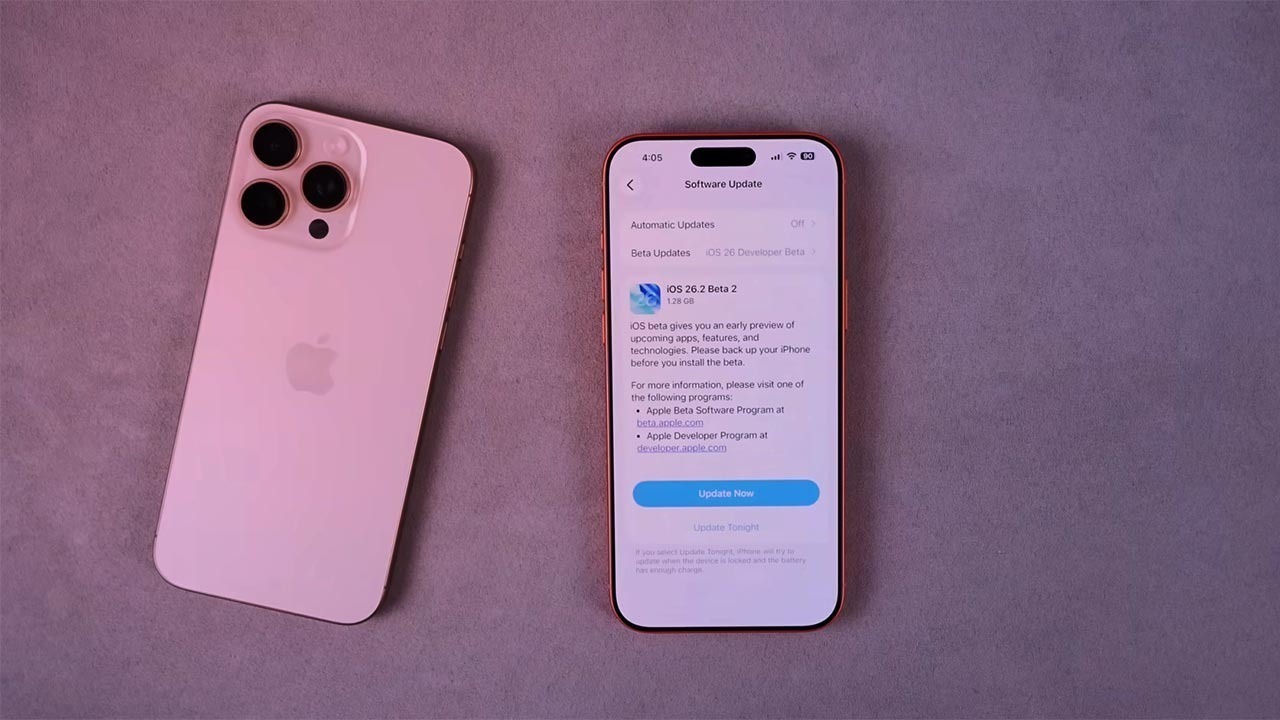

Apple is telling its global customer base that a new class of hacking tools is no longer a niche problem for dissidents and diplomats, but a risk that every iPhone owner needs to understand. Behind the stark language is a simple message for the roughly 1.8 billion people using an iPhone today: the most dangerous attacks are now quiet, targeted and capable of taking over a device without a single tap.
That shift has pushed Apple to roll out emergency patches, direct threat alerts and even a high-security mode that changes how the iPhone works, all in an effort to blunt what the company describes as “mercenary” spyware. I see a clear pattern in those moves, and it points to a future where staying safe on an iPhone is less about avoiding obvious scams and more about recognizing when a sophisticated, next-level hack might already be in motion.
Apple’s unprecedented warning to 1.8 billion iPhone owners
Apple has rarely spoken to its entire customer base in the kind of urgent terms it is using now, but the company is explicitly urging all of its roughly 1.8 billion iPhone users to install the latest security upgrades before attackers can exploit newly discovered flaws. The company’s language is blunt because the stakes are no longer limited to stolen passwords or a wiped device, the right exploit can quietly hand over messages, photos and live microphone access to whoever is paying for the attack. That is why Apple is treating this as a platform-wide risk, not a niche concern for power users.
Security researchers have underscored that the current wave of vulnerabilities is not theoretical, and Apple itself has confirmed that some bugs were already being used in targeted campaigns before patches were released. In parallel, Apple is working with partners such as Oligo and other specialists to understand how attackers chain obscure software weaknesses into full device compromise. When a company that controls both the hardware and software stack starts sounding this alarm, it is a sign that the threat has matured into something that can credibly reach any modern iPhone, not just a handful of high-profile targets.
The “next-level” flaw that can hijack iPhones wirelessly
What has really sharpened Apple’s tone is a flaw that security analysts describe as frightening precisely because it does not require the victim to do anything wrong. Reporting on the bug warns that All 1.8 billion iPhone users need to watch out for a flaw that can be triggered over a wireless connection, potentially allowing an attacker to reach nearby devices without a malicious link or attachment. That kind of proximity-based exploit turns the usual advice about “do not click suspicious links” into only a partial defense, because the attack can begin before a user even sees a prompt.
The reporting credits Ben Williams with highlighting how this flaw changes the risk calculus, and notes that the warning landed on a Fri when many users were more focused on weekend plans than security updates. I see that timing as a reminder of how attackers think, they look for windows when people are distracted and slow to patch. A wireless, zero-interaction exploit is exactly the kind of tool that mercenary spyware vendors prize, because it scales quietly in crowded environments like airports, conferences or political rallies.
Inside Apple’s emergency zero‑day patches
Behind the public warnings are specific technical flaws that Apple has had to fix in a hurry. Two of the most serious vulnerabilities are tracked as CVE-2025-43529 and CVE-2025-14174, and Apple has confirmed that both were exploited in targeted attacks before patches were available. In security jargon, that makes them “zero-day” bugs, flaws that attackers discovered and weaponized before the vendor had a chance to close the hole. For everyday users, the key point is that these are not hypothetical lab findings, they are real weaknesses that someone was already using to go after real people.
Apple has acknowledged that the pattern of exploitation around these CVEs is consistent with state or commercial spyware activity, which is exactly the kind of next-level hacking the company is now trying to blunt. The company has also made clear that these vulnerabilities were under active exploitation in the wild, a phrase that should cut through any complacency about delaying updates. When I look at how quickly Apple moved to ship emergency patches, it is obvious that the company sees these bugs as part of a broader campaign, not isolated one-off incidents.
Mercenary spyware: from Pegasus to the iPhone in your pocket
The most advanced iPhone hacks today are not coming from lone teenagers in basements, they are being developed and sold by professional outfits that behave more like defense contractors than hobbyists. Apple describes these as Mercenary spyware attacks, exceptionally well funded operations that evolve over time and are often purchased by governments or powerful organizations. The best known example is Pegasus, spyware developed by the Israeli cyber-arms company NSO Group that is designed to be covertly installed on mobile phones running iOS and Android. Pegasus and similar tools are built to slip past normal defenses, burrow into the operating system and then quietly exfiltrate data without tipping off the owner.
Apple’s own documentation stresses that these mercenary spyware attacks are exceptionally well funded and constantly changing, which is why the company has had to build new layers of defense into iOS rather than relying on traditional antivirus-style tools. The victims of these campaigns are often not random, they are carefully chosen journalists, activists, politicians and diplomats, people whose communications are valuable to whoever is paying for the spyware. That is why Apple now talks about Victims in the same breath as it talks about features like Lockdown Mode, because the company knows that some users are being hunted by adversaries with budgets and patience that look more like intelligence agencies than criminals.
How Apple’s threat notifications actually work
One of the most visible changes in Apple’s security posture is the way it now contacts people it believes are under attack. If Apple detects activity consistent with a mercenary spyware campaign, it sends what it calls a threat notification directly to the targeted user’s Apple ID and displays a prominent message when they sign in to the account. The company stresses that it relies solely on internal threat intelligence and investigations to decide when to send these alerts, and that it does not take outside reports at face value when determining who should receive an Apple threat notification.
Apple also emphasizes that these alerts are not marketing messages or generic security tips, they are specific warnings that someone may be trying to compromise that particular device with high-end spyware. The company has been issuing these notifications for several years, and its guidance now includes step-by-step advice on what to do if you receive one, from updating iOS immediately to considering whether to enable Lockdown Mode. In my view, the most important detail is that Apple will never ask for passwords or codes in these alerts, so any email that demands credentials while claiming to be a threat notification should be treated as a scam rather than a genuine message from Apr security systems.
Spyware alerts in 100 countries and four major campaigns
Apple’s warnings are not limited to a handful of regions, the company has told users that it has notified iPhone owners in 100 countries that they may be victims of spyware. That geographic spread underlines how widely tools like Pegasus and other mercenary platforms have been deployed, and it shows that this is not just a problem in a few high-profile hotspots. When a single vendor is sending out alerts on that scale, it is a sign that the underlying threat has become a routine part of the digital landscape for people in very different political and economic environments.
On top of that, Apple has disclosed that it issued four waves of alerts in 2025 after uncovering spyware campaigns that targeted high-profile individuals, while simultaneously patching at least seven critical vulnerabilities linked to those operations. According to one analysis, Apple coordinated those alerts with national cybersecurity agencies such as CER to help governments understand the scope of the problem. I see that collaboration as a recognition that no single company can manage this alone, the same tools that go after dissidents can just as easily be turned on officials, business leaders or even security services themselves.
State‑backed hacking goes mainstream
What used to be described as “nation-state” hacking has now spilled into the consumer world in a way that is hard to ignore. Apple has publicly said that it pioneered cyber threat notifications in 2021 to alert users of potential state-sponsored spyware attacks, and it has continued to expand that system as the threat has grown. In a recent global alert, Apple warned users worldwide about huge state-backed hacking activity, naming countries such as India, Saudi Arabia and Tajikistan as places where these campaigns have been particularly active. That kind of explicit attribution is unusual for a consumer technology company, and it signals how seriously Apple views the political dimension of these attacks.
At the same time, the line between state-backed and commercially driven hacking is blurring, because many governments now simply buy access to mercenary tools rather than building everything in-house. Apple’s own description of these threats makes clear that the company sees a continuum that runs from traditional espionage to outsourced surveillance-as-a-service. For iPhone owners, the practical takeaway is that the person trying to break into your device might be a criminal syndicate, a private contractor or a government agency, but the technical methods can look very similar. That is why Apple is investing in systemic defenses and broad alerts instead of trying to distinguish every attack by who is ultimately paying the bill.
Phishing scams piggyback on Apple’s security panic
Whenever a big security story breaks, scammers rush to exploit the confusion, and the current wave of iPhone warnings is no exception. One report describes an urgent warning to all 1.8 billion iPhone users about an email scam that looks like a standard phishing attempt but stands out because it appears to come from a legitimate Apple domain. The message mimics a payment receipt and tries to panic the recipient into clicking a link or calling a number, a classic social engineering trick that becomes more convincing when people are already on edge about real security threats.
Another account notes that One phishing target received what looked like a PayPal receipt for a large purchase, with instructions that would have routed them to a fake support channel designed to harvest credentials. The broader warning is that Apple users should be vigilant about messages that claim to go around Apple’s security measures, especially if they pressure you to act immediately or bypass normal update channels. From my perspective, the most effective defense here is to treat any unsolicited security email as suspect and instead go directly into Settings on the iPhone to check for real alerts or updates, rather than trusting links in a message that could have been forged.
Lockdown Mode, updates and what regular users should do now
For people who are not diplomats or investigative reporters, it can be tempting to assume that mercenary spyware is someone else’s problem, but Apple’s own guidance suggests a more cautious approach. The company advises all users to keep iOS fully updated, to install emergency patches as soon as they appear and to be skeptical of any request for credentials that arrives by email or text. For those who believe they may be at higher risk, Apple has built a feature called Lockdown Mode into recent versions of iOS, which can be enabled from Settings and is designed to sharply reduce the attack surface by limiting certain apps, web technologies and message attachments. Apple’s support pages explain that tap Turn On Lockdown Mode is the key step for anyone who receives a threat notification and needs to harden their device quickly.
Apple is also clear that it will never ask users to install configuration profiles or special tools from outside the App Store as part of a security fix, so any message that pushes you toward a side-loaded “patch” should be treated as malicious. The company’s own security documentation, including the page that notes that Apr mercenary spyware attacks are exceptionally well funded, encourages users to assume that sophisticated adversaries will try to mimic Apple’s branding and language. In my view, the safest mindset is to treat the iPhone less like an appliance and more like a connected computer that needs regular maintenance, from checking for software updates to reviewing which apps have access to your location, microphone and camera.
Why Apple’s 1.8 billion‑user warning marks a turning point
When a company of Apple’s size tells all of its 1.8 billion users to install an upgrade immediately, it is not just another routine patch cycle, it is a recognition that the threat environment has fundamentally changed. The combination of wireless, zero-click exploits, mercenary spyware vendors and state-backed campaigns has turned the iPhone into a frontline target in geopolitical and commercial conflicts. Apple’s response, from emergency CVE patches to global threat notifications and Lockdown Mode, shows that the company is treating security as a moving target rather than a box it can tick once per year.
For users, the practical shift is that security can no longer be outsourced entirely to the platform, even on a tightly controlled device like an iPhone. The next-level hacks Apple is warning about thrive on complacency, on people who delay updates, reuse passwords or trust every email that looks vaguely official. I see the current wave of alerts as an invitation to change habits, to treat every major iOS update as non-negotiable, to verify unexpected messages through trusted channels and to assume that if a flaw can be exploited, someone, somewhere, is already trying. The technology will keep evolving, but so will the attackers, and the only sustainable position for 1.8 billion iPhone owners is to stay one step ahead by taking Apple’s warnings as seriously as the company clearly does.
More from MorningOverview