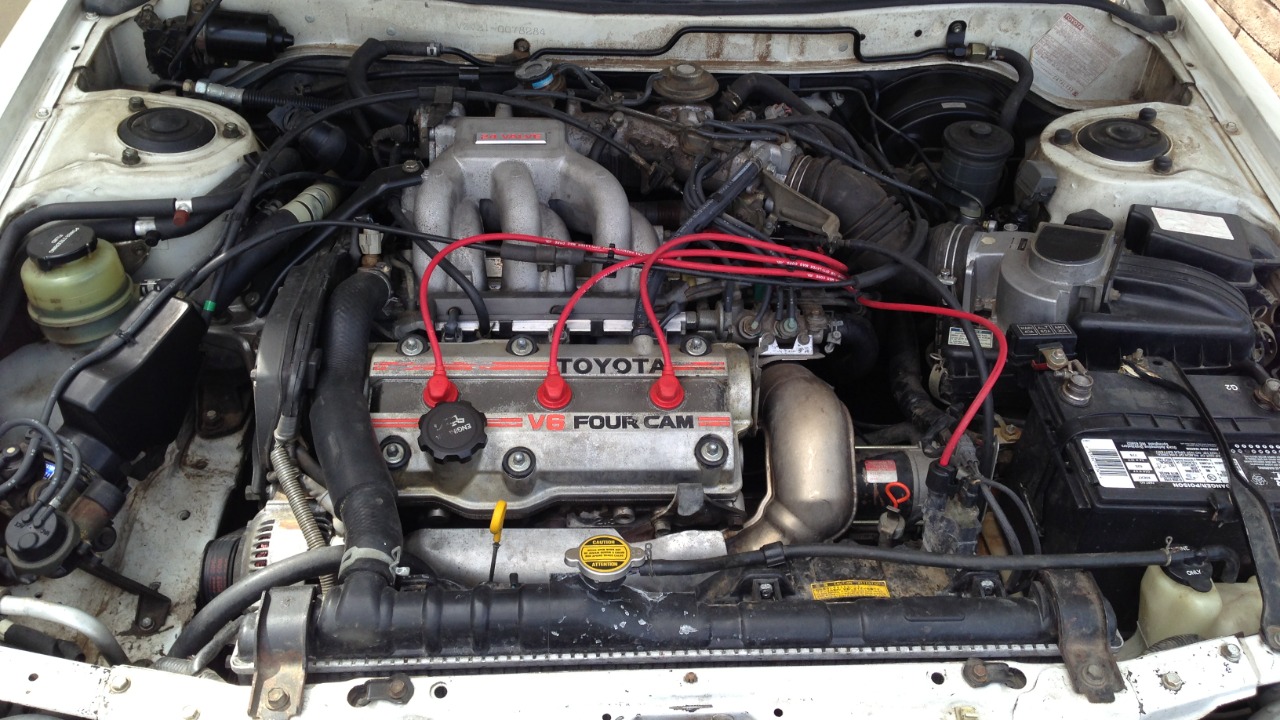

Toyota built its modern reputation on smooth, unburstable six‑cylinder engines, so the quiet retreat from the V6 could look like heresy at first glance. In reality, the company is simply following the same downsizing and electrification logic reshaping the rest of the industry, trading displacement for turbochargers, batteries, and software. The result is a lineup where the classic V6 is rapidly becoming the exception rather than the rule, and most buyers barely seem to miss it.
Across trucks, SUVs, and sedans, Toyota is methodically replacing six‑cylinder workhorses with smaller turbocharged fours, hybrids, and a handful of high‑end alternatives. From the Tacoma and 4Runner to the Camry and Highlander, the pattern is consistent: more torque, better efficiency, and tighter emissions rules are pushing the V6 to the margins, while recent reliability questions around newer turbo V6 designs have only made the transition feel more inevitable.
The quiet retreat from six cylinders
The shift away from six cylinders inside Toyota has not arrived with a big press‑conference flourish. Instead, the company has been steadily re‑engineering core models so that the familiar V6 simply does not appear on the order sheet anymore. Reporting on how Toyota Is Quietly Moving Away From The V6 Engine, And That, Not Surprising, describes a methodical process that mirrors broader industry downsizing, rather than a sudden ideological break with six‑cylinder power.
In that context, the V6 is not being demonized so much as rationalized out of the mainstream lineup. Oct analysis of Toyota Is Quietly Moving Away From The Engine, And That, Not Surprising, notes that the company is following a path already taken by rivals that swapped naturally aspirated sixes for smaller boosted engines to meet tightening emissions and fuel‑economy targets. The place where Toyota’s move stands out is how seamlessly it is being folded into a wave of recent engine downsizing themselves, with hybrids and turbo fours stepping into roles that once seemed permanently reserved for six cylinders.
Tacoma and 4Runner show the new template
Nowhere is Toyota’s new template clearer than in its midsize truck and SUV duo. The latest Toyota Tacoma has dropped its long‑running 3.5‑liter V6 in favor of a smaller, more modern four‑cylinder family. Dealer material for the 2025 Toyota Tacoma spells it out bluntly: the truck now offers two impressive new powertrain choices, starting with a turbocharged 2.4-lit engine that replaces the previous 3.5‑liter V6. That is not a niche option, it is the default configuration for a truck that has long been a V6 stronghold.
The same playbook is being applied to the 4Runner, a model that once seemed inseparable from its 4.0‑liter six. Material on the 6th‑Generation 2025 Toyota 4Runner Highlights at a Glance, including a section titled Generation Toyota Highlights Glance Introducing the Trailhunter, confirms that the new generation is built around updated four‑cylinder power and electrified options rather than a carryover V6. The dedicated Trailhunter by Toyota, designed for overlanding adventures, leans on this new powertrain strategy, signaling that even off‑road‑focused variants no longer treat a six‑cylinder as mandatory hardware.
Only a handful of six‑cylinder Toyotas remain
As the Tacoma and 4Runner pivot, the broader lineup is thinning out its six‑cylinder offerings to a remarkable degree. Coverage of the shrinking pool of six‑cylinder models notes that there are only a few such Toyotas left in the United States, and even those are living on borrowed time. A detailed look at the question What Will Replace The 4Runner’s V6 Engine? explains that a four‑cylinder engine is stepping in, while other trucks like the Tundra and Sequoia have already moved to different layouts.
That thinning is not accidental. Dec reporting framed the trend bluntly with the line that While Toyota has been known for its smooth sixes, over the past few years the company has systematically replaced them with turbocharged four‑cylinder engines and hybrid systems that fill the performance gap left by the larger V6s. In other words, the six‑cylinder is no longer the default answer for power and refinement inside Toyota’s catalog, it is a niche solution reserved for specific halo products or legacy holdouts.
Camry and Highlander prove the family-car case
The shift is just as stark in Toyota’s family cars and crossovers, where the V6 once served as the aspirational upgrade. The ninth‑generation 2025 Toyota Camry arrives without the six‑cylinder option that defined its sportier trims for years. Reporting on how Toyota to discontinue Camry V6 and TRD in 2025 notes that the ninth‑generation 2025 Toyota Camry has just made its debut with so many changes that the V6 many drivers know and love is gone, along with the TRD performance variant that relied on it. In its place, Toyota is leaning on hybrid four‑cylinder power to deliver both performance and efficiency.
The Highlander, a heavier three‑row SUV, offers an even clearer illustration of why this strategy makes sense. Analysis of the 2023 Toyota Highlander explains that the outgoing naturally aspirated V6 is fine in cars like the Camry but in bigger, heavier vehicles like the Highlander it left performance and efficiency on the table. The switch to a turbocharged four brought similar peak power but, crucially for a heavy SUV, more torque and better fuel economy, making the old six feel redundant rather than irreplaceable.
Efficiency rules, even without a formal manifesto
Toyota has not issued a sweeping manifesto declaring the V6 obsolete, but the logic behind its decisions is clear enough. Oct reporting notes that While Toyota has not clearly stated why it is phasing out the V6, the change follows other brands that have been replacing six‑cylinder engines with smaller turbocharged units and hybrids to cut emissions and improve fuel economy. In practice, that means Toyota is aligning its powertrains with regulatory pressure and customer demand for lower running costs, even if it prefers to talk about performance and technology rather than grams of CO₂.
From my perspective, that quiet approach is deliberate. By focusing on the benefits of new engines rather than the loss of old ones, Toyota avoids turning the V6 into a culture‑war symbol for enthusiasts. The company can point to the way its turbo fours and hybrids match or exceed the output of outgoing sixes, while also delivering better efficiency in real‑world driving. The fact that Oct coverage of Toyota Is Quietly Moving Away From The Engine, And That, Not Surprising, treats the shift as part of a broader pattern of engine downsizing suggests that Toyota sees this as routine product planning, not a risky experiment.
Turbo V6 trouble makes the exit easier
If the naturally aspirated V6 is fading out quietly, the newer twin‑turbo V6 has been leaving with more drama. Owners of trucks and SUVs using Toyota’s 3.4‑liter twin‑turbo V6 have faced a growing series of reliability concerns that cut against the brand’s reputation for bulletproof engines. A detailed recall update notes that Nov Toyota has widened the net on its ongoing V35A 3.4-liter twin-turbo V6 problem, adding more than 127,000 vehicles, including some versions of the Tundra and Sequoia and extending to the 2024 Lexus GX. That is a significant chunk of Toyota’s high‑end truck and SUV portfolio.
Enthusiast communities have been dissecting the issue in granular detail. A widely shared teardown video, summarized under the headline Engine Teardown Exposes What Really Wrong With Toyota Problematic V6 News Open, walks through how manufacturing debris in the block and oiling issues can lead to catastrophic failures. Another viral clip, shared in Jun, bluntly states that Toyota just figured out why their new turbo V6 engines are grenading themselves and that it is not for the reason many people think, highlighting how far this story has traveled beyond technical forums. Against that backdrop, Toyota’s broader pivot toward four‑cylinder hybrids and, in some cases, different engine architectures looks less like a theoretical strategy and more like a practical response to real‑world headaches.
V8 history and the search for a new flagship
The V6 story is also tangled up with Toyota’s V8 legacy, especially in trucks. The company’s UR V8 family, particularly the 3UR engine in the second‑generation Tundra, earned a reputation for near‑mythic durability. Analysis of Toyota’s UR V8 Family Gave The Tundra Million-Mile Capability asks Where Did The New Twin Turbo Go Wrong, and concludes that the main reason people are still talking about the 3UR engine in 2025 is that it helped make the second‑gen Tundra a million‑mile truck. That sets a high bar for any replacement, whether it is a turbo V6 or something else.
At the same time, Toyota is experimenting with new flagship engines that sit above the V6 in performance and prestige, particularly for Lexus. Reporting on a new high‑output eight‑cylinder notes that Toyota Doesn Need For Its Truck Lineup The V8 hybrid engine does not seem like an excellent fit for the current pickups, but its 437 horsepower and 583 pound-feet of torque could help Lexus fight BMW and Mercedes in the luxury space. That split underscores how Toyota now sees its engine families: trucks and mainstream models lean on efficient fours and hybrids, while a small number of premium products get more exotic hardware.
Sports cars and the shrinking six-cylinder exception
Sports cars are one of the last safe havens for six‑cylinder engines inside Toyota’s orbit, but even there the picture is complicated. The Toyota GR Supra, which shares its platform and powertrains with BMW, has historically offered both four‑ and six‑cylinder options. A recent update titled Why the 2025 GR Supra Dropped the Four Cylinder explains that The Toyota GR Supra continues to evolve by focusing on what makes it an enthusiast car, and that dropping the four‑cylinder variant allows it to concentrate on a six‑cylinder that delivers an exhilarating driving experience. In other words, the Supra is doubling down on its inline‑six identity even as the rest of the brand moves away from sixes.
That exception proves the rule. Toyota is willing to keep a six‑cylinder alive where it is central to a car’s character and where customers are willing to pay for it, but it no longer sees a V6 as the default step‑up engine for everyday models. The Supra’s strategy mirrors what is happening at other performance brands, where six‑cylinder engines survive in niche sports cars while family sedans and SUVs migrate to turbo fours and electrified setups. For Toyota, that means the six‑cylinder becomes a carefully curated specialty item rather than a mass‑market workhorse.
Why the fade-out feels inevitable
Put together, these threads explain why Toyota’s V6 is fading out and why it is not shocking anyone who has been paying attention. The company is following the same regulatory and market pressures that have pushed rivals to shrink their engines, and it is doing so in a way that often improves the driving experience for typical buyers. When a turbo four in a Highlander offers more usable torque than the old V6, or when a hybrid Camry outpaces the previous six while using less fuel, the emotional case for keeping a V6 in the lineup gets harder to make.
There is also a generational shift in what buyers expect. Younger truck and SUV owners are more likely to judge a powertrain by its torque curve, towing rating, and fuel bill than by the number of cylinders under the hood. Oct coverage of Toyota Is Quietly Moving Away From The Engine, And That, Not Surprising, frames the company’s strategy as part of a broader move toward smaller, more efficient engines that still deliver the performance people want. From my vantage point, the V6 is not being killed off out of spite or fashion, it is simply being outcompeted by newer technologies that fit the current moment better, leaving only a few carefully chosen six‑cylinder holdouts to remind us how central that layout once was to Toyota’s identity.
More from MorningOverview