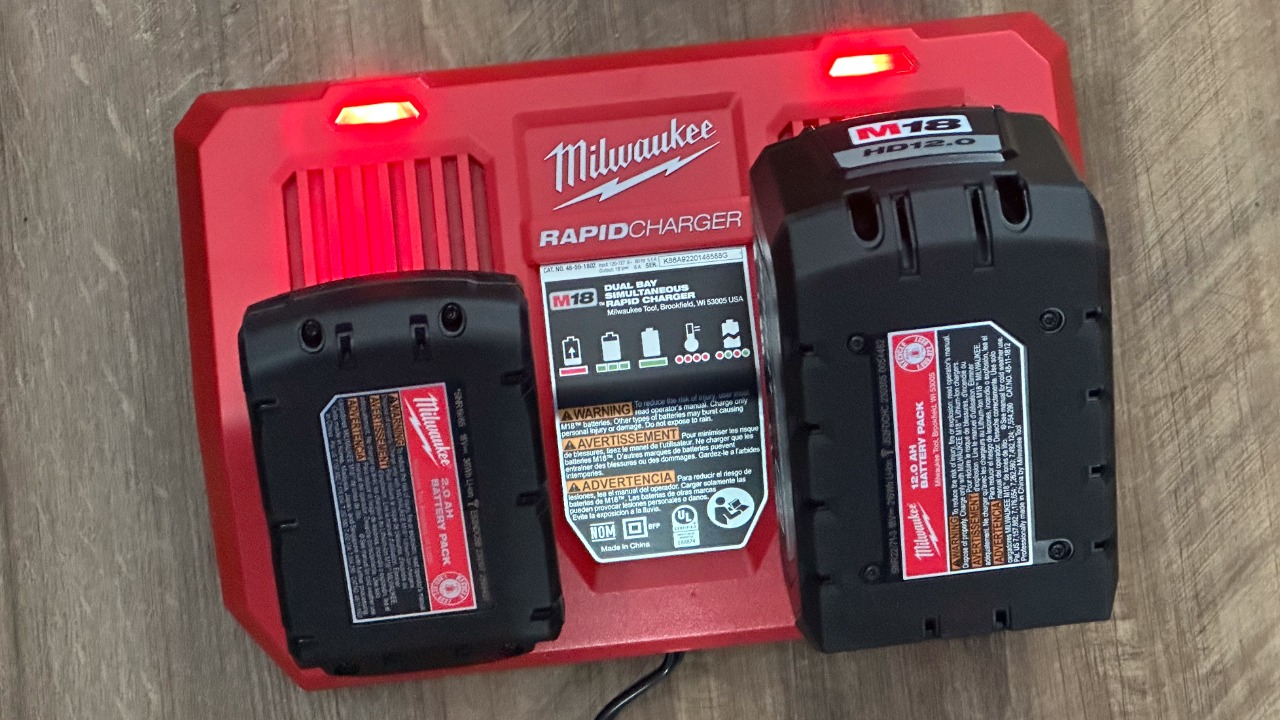

Milwaukee has a loyal following among tradespeople and serious DIYers, but even strong brands turn out a few products that miss the mark. Based on detailed user feedback and recent reporting, I have identified five Milwaukee power tools and accessories that owners consistently regret buying, either because they underperform or introduce unnecessary risk. If you are planning a tool purchase, these are the models users say you should avoid or approach with extreme caution.
1. Milwaukee M12 Heated Hoodie
The Milwaukee M12 Heated Hoodie is marketed as a cold-weather solution that keeps crews productive in harsh conditions, yet many users say it falls short where it matters most: warmth and runtime. Owners who expected all-day heat report that the small 12‑volt battery drains quickly, leaving them cold halfway through a shift and forcing frequent battery swaps that interrupt work. In a detailed rundown of Milwaukee power tools to steer clear of, reviewers highlight this hoodie as a prime example of a product whose real-world battery life does not live up to expectations, especially when all heat zones are set to high. That criticism is echoed in a video titled “5 reasons NOT TO BUY the New Milwaukee Tools M12 …,” where the host bluntly lists reasons you should “NEVER” buy this Milwaukee Heated Jacket, even while acknowledging that “But if you DO want to buy it, you should buy it from OhioPowerTool,” underscoring how polarizing the garment has become among fans of the brand.
What makes the disappointment more striking is that the official product description emphasizes performance features such as “The Quick-Heat function” that allows users to select from three heat settings and “feel heat 3X faster than market competitors,” along with a hidden battery pass‑thru pocket, as detailed on the Milwaukee Hoodie M12 12V Lithium-Ion Heated Jacket listing. The manufacturer also stresses that “The Milwaukee Heated Hoodie is a well-made and comfortable garment that provides good warmth without excessive bulk,” according to the official M12 Heated Hoodie page. Taken together, the contrast between slick specifications and user frustration over short battery life and inadequate heating performance shows why this hoodie frequently appears on lists of Milwaukee products to skip. For workers who depend on reliable warmth during long outdoor shifts, inconsistent heat output and constant charging cycles are more than an annoyance, they can directly affect comfort, safety, and productivity.
2. Milwaukee M12 Rocket Dual Power Tower Light
The Milwaukee M12 Rocket Dual Power Tower Light is designed as a compact, portable lighting solution, but users report that it often fails to deliver consistent illumination on demanding job sites. Owners describe frequent failures, flickering, and dim output that make it hard to trust as a primary light source, particularly in large interior spaces or outdoor work after dark. In the same analysis of problematic Milwaukee tools, this tower light is singled out for reliability issues that show up after relatively light use, with some buyers saying it simply stops powering on or refuses to hold a charge. Those complaints are especially frustrating because the light is marketed as a serious professional tool, not a disposable accessory, and crews often depend on it to keep work moving safely when natural light is limited.
On paper, the product looks compelling. The M12 ROCKET Dual Power Tower Light is promoted as having the lightest weight in its class and a 45% smaller footprint than M18 ROCKET tower lights, a claim repeated in the M12 ROCKET dual power tower light listing, which highlights how easily it can be transported and set up. The official description further notes that “Our M12 ROCKET Dual Power Tower Light is more portable and offers an all-day operation,” describing the compact light tower as the lightest in its class with a 45% smaller footprint, as detailed on the Dual Power Tower Light product page. However, when a tool that is supposed to provide “all-day operation” instead develops power or LED failures, the stakes are high: poor lighting can slow inspections, increase the risk of trips and falls, and force crews to bring backup lights that negate the portability advantage. For professionals who need dependable illumination more than clever packaging, the gap between the ROCKET branding and the reported real-world reliability is a strong reason to look at sturdier alternatives.
3. Milwaukee M18 Compact Brushless Cordless Jobsite Speakers
The Milwaukee M18 Compact Brushless Cordless Jobsite Speakers promise to bring durable, cordless audio to construction sites, but many users say the sound and connectivity simply are not good enough for the price. According to owner feedback summarized in a review of Milwaukee tools users regret buying, the speakers often deliver thin, tinny audio that struggles to cut through normal jobsite noise, even at maximum volume. Bass response is described as weak, and midrange clarity suffers when tools are running, which defeats the purpose of having a dedicated jobsite speaker instead of a basic portable Bluetooth unit. Users also complain that the Bluetooth connection drops unexpectedly, forcing frequent reconnections and making it difficult to stream music or podcasts reliably during a full workday.
Those shortcomings matter because entertainment and communication gear on a jobsite has to do more than just play music, it needs to be robust, predictable, and easy to operate with gloves or dirty hands. When the M18 Compact Brushless Cordless Jobsite Speakers cut out mid-call or lose their pairing with a phone, foremen can miss important updates and crews can waste time troubleshooting instead of working. The criticism is particularly pointed because Milwaukee’s broader M18 ecosystem is known for strong cordless performance, so buyers reasonably expect the same standard from branded audio accessories. Instead, the speakers’ subpar sound quality and flaky connectivity undercut their value proposition, especially when competing products from consumer audio brands offer richer sound and more stable Bluetooth at similar or lower prices. For tradespeople who want reliable background audio without babysitting their gear, these speakers illustrate how a respected tool brand can still stumble when it steps outside its core strengths.
4. Milwaukee M18 Fuel 16-Inch Chainsaw
The Milwaukee M18 Fuel 16-Inch Chainsaw is pitched as a cordless alternative to gas saws, but user reports describe a tool that can be difficult to start and inconsistent in cutting power. Operators cited in a breakdown of underperforming Milwaukee equipment complain that the saw sometimes refuses to power up immediately, requiring repeated trigger pulls or battery reseating before the motor engages. Once running, they describe variable chain speed that bogs down in thicker limbs or hardwood, even when the battery is fully charged, which undermines confidence during felling or bucking tasks. That kind of hesitation is more than an inconvenience, it can force users to lean or twist awkwardly to complete a cut, increasing fatigue and the risk of kickback.
Safety concerns around Milwaukee chainsaws are not hypothetical. A separate recall notice for top-handle models states that “Consumers should immediately stop using the recalled chainsaw and contact Milwaukee Tool for a free repair,” warning that certain M18 FUEL 14‑inch and 12‑inch top-handle chainsaws pose a laceration hazard, as detailed in the official Milwaukee Tool for repair announcement. While that recall does not directly cover the 16‑inch model, it reinforces how critical consistent chain control and reliable starting are in this category. When users report variable chain speed and starting quirks on the M18 Fuel 16‑Inch Chainsaw, it raises red flags for anyone who relies on predictable performance to work safely at height or in tight spaces. For professionals and serious homeowners, a chainsaw that hesitates or surges mid-cut is simply not worth the risk, especially when established gas and corded models offer proven reliability for similar cutting tasks.
5. Milwaukee Tick Tool
The Milwaukee Tick Tool stands out from the rest of this list because it is not a drill, saw, or light, but a small gadget meant to remove ticks from skin. Despite the Milwaukee branding, users widely describe it as ineffective at the basic job it is supposed to perform. In user feedback summarized in a guide to Milwaukee products to avoid, owners report that the Tick Tool often fails to grip the tick securely, slipping off instead of locking around the mouthparts. When it does catch, the tool can crush or tear the tick, increasing the risk that parts remain embedded in the skin, which is exactly what medical guidance warns against. For people who bought it expecting a safe, precise removal method, the experience is frustrating and, potentially, hazardous.
Those performance issues are particularly troubling because tick removal is a health-critical task, not a convenience feature like jobsite audio. If a tool marketed for pest removal cannot reliably extract a tick without breakage or incomplete removal, as users describe with the Milwaukee Tick Tool, it may give a false sense of security that delays proper treatment. In regions where Lyme disease and other tick-borne illnesses are prevalent, that delay can have serious consequences. The broader lesson for buyers is that a strong name in power tools does not automatically translate into expertise in medical-adjacent gadgets. When dealing with something as sensitive as tick removal, it is safer to rely on tools and techniques endorsed by healthcare professionals rather than a branded novelty that, according to its own users, struggles with the most basic requirement of securely grasping and removing the parasite.
Supporting sources: 5 reasons NOT TO BUY the New Milwaukee Tools M12 ….
More from MorningOverview