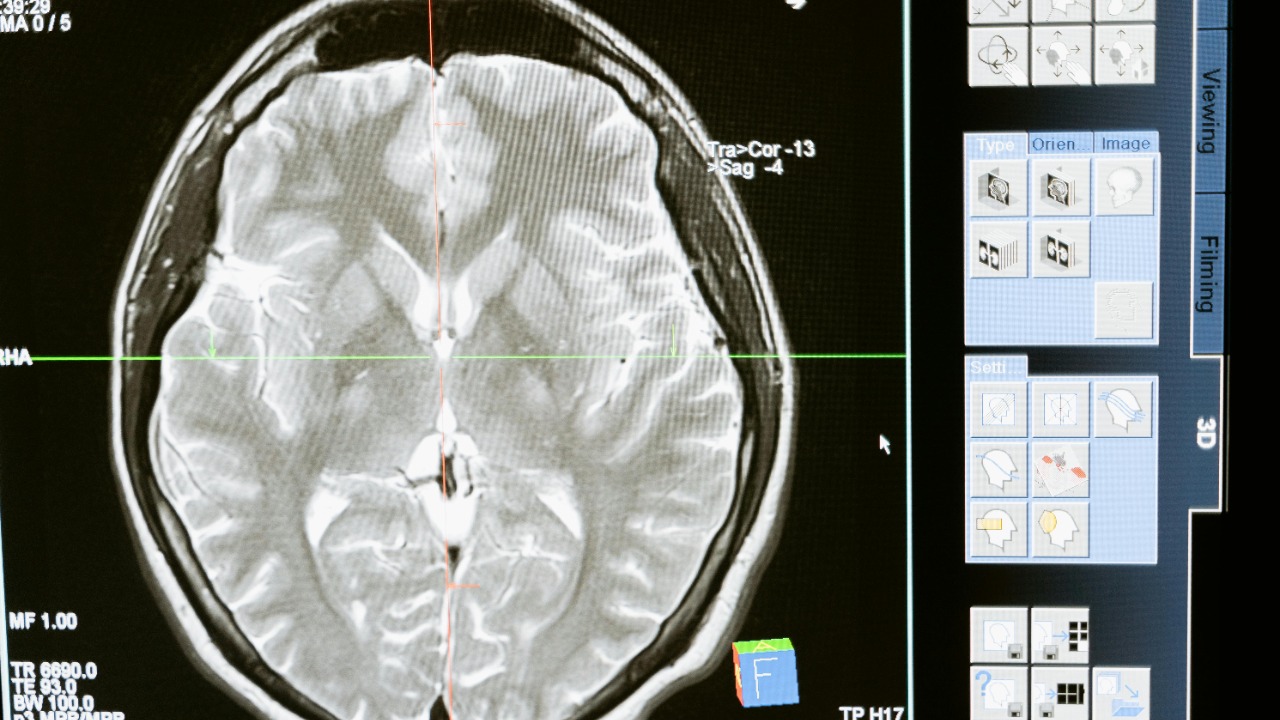

Tiny lab-grown “mini brains” are no longer just a futuristic curiosity. By capturing the electrical chatter of neurons in a dish, they are now revealing clear, measurable signatures of schizophrenia and bipolar disorder that traditional brain scans have struggled to pin down. For psychiatry, which has long relied on symptoms and trial-and-error prescribing, that shift toward objective biological signals could be transformative.
Researchers are using these organoids to watch how neural networks form, misfire, and respond to medications in real time, then pairing those recordings with artificial intelligence to decode patterns that distinguish one diagnosis from another. I see this work as the early foundation of a new kind of mental health medicine, one that treats schizophrenia and bipolar disorder not as mysterious labels but as specific disruptions in brain circuitry that can be tracked, tested, and, eventually, targeted.
From skin cells to “Tiny” brains in a dish
The starting point for this research is deceptively simple: take a person’s cells, reprogram them into stem cells, and coax them into forming three-dimensional clusters of neurons that resemble developing brain tissue. These organoids, sometimes described as Tiny lab-grown brains, do not think or feel, but they do generate spontaneous electrical activity and build synaptic connections that echo the early human cortex. That makes them a powerful stand-in for the living brain, especially for conditions where direct access to neural tissue is impossible.
In the schizophrenia and bipolar projects, scientists derived organoids from people with each diagnosis as well as from individuals without a psychiatric history. Over weeks, these mini brains developed layered structures and networks of firing neurons that could be monitored with electrodes and imaging. Because each organoid carries the donor’s genetic blueprint, the differences that emerge in their electrical behavior, connectivity, and response to stimulation can be traced back to the biology of schizophrenia or bipolar disorder rather than to medication history or life experience, which often confound traditional brain studies.
What schizophrenia and bipolar look like in organoid circuitry
Once the organoids matured, researchers began to see striking differences in how their neurons communicated. In organoids grown from people with schizophrenia, networks showed irregular bursts of activity, disrupted rhythms, and weaker coordination between clusters of cells, suggesting that the circuits that should synchronize thought and perception were misaligned. Organoids derived from people with bipolar disorder, by contrast, displayed their own distinctive patterns, with shifts in firing intensity and timing that hinted at instability in the systems that regulate mood and energy.
These abnormalities were not subtle. One team reported that the organoids displayed Distinct neural misfires that diverged sharply from the smooth, coordinated activity seen in organoids from people without these diagnoses. The differences appeared in how often neurons fired, how strongly they responded to inputs, and how well they synchronized across the mini brain. For the first time, scientists could watch schizophrenia- and bipolar-linked circuitry problems unfold in a controlled environment, cell by cell, rather than inferring them from symptoms or static brain images.
AI and “Organoids” deliver a 92% diagnostic signal
To make sense of the torrents of electrical data coming off these mini brains, teams turned to machine learning. Instead of eyeballing waveforms, they trained algorithms to recognize the complex combinations of firing rates, oscillations, and connectivity that corresponded to each diagnosis. When those models were tested on new organoids, the system could tell which ones came from people with schizophrenia, which from people with bipolar disorder, and which from controls with striking precision.
One group working with these Organoids reported that their model could distinguish schizophrenia from bipolar disorder and from non-psychiatric samples with up to 92% accuracy. That figure is far beyond what any blood test or brain scan can currently offer for these conditions. It suggests that the electrical “fingerprints” of each disorder are robust enough that an algorithm, given enough examples, can reliably spot them, even when human observers might see only noisy spikes on a screen.
Distinct biomarkers and the promise of a biological test
Behind that headline accuracy is a deeper shift: the emergence of concrete biomarkers for illnesses that have long been defined by behavior alone. In the organoids, schizophrenia and bipolar disorder each produced their own constellation of features, from the strength of synaptic connections to the timing of network-wide bursts. Researchers described these as Distinct biomarkers that could, in principle, be measured and tracked over time, much like cholesterol levels or blood pressure.
That opens the door to a biological test for schizophrenia and bipolar disorder that goes beyond checklists of symptoms. One report described how Researchers built a machine-learning system specifically to translate these organoid signatures into clinically relevant predictions, with the goal of supporting diagnosis, drug testing, and precision psychiatry. If validated in larger and more diverse samples, such biomarkers could help clarify ambiguous cases, differentiate overlapping conditions, and give clinicians a more objective foundation for treatment decisions.
Machine Learning Reliably Detects Bipolar Disorder in mini brains
The bipolar side of the story is particularly striking because the condition often hides in plain sight, misdiagnosed as unipolar depression or anxiety for years. In the organoid work, algorithms trained on neural activity patterns were able to flag bipolar-derived mini brains with high reliability, even when their electrical signals looked superficially similar to those from schizophrenia or control samples. That suggests that the underlying circuitry disruptions in bipolar disorder have a consistent electrical signature, even if the outward symptoms vary widely from person to person.
One analysis framed this as proof that Machine Learning Reliably Detects Bipolar Disorder in Lab Grown Mini Brains, and asked whether these models Could eventually support earlier and more accurate diagnosis. For patients, that kind of tool could mean fewer years cycling through ineffective medications and more time on treatments tailored to the biology of their illness. For clinicians, it offers a potential check against bias and uncertainty, especially in complex cases where mood, psychosis, and substance use overlap.
Inside the lab: how scientists listen to mental illness
What makes these advances possible is not just the organoids themselves but the technology used to “listen” to them. Researchers place the mini brains on dense grids of electrodes or use optical sensors to capture the tiny voltage changes that ripple through their networks. Each spike of activity is logged, timestamped, and fed into data pipelines that can handle millions of events. Over time, the organoids develop their own internal rhythms, a kind of electrical language that reflects how their neurons are wiring up and communicating.
One account described how, by listening to that language, scientists are learning to translate confusion into clarity, turning raw spikes into maps of connectivity and dysfunction. The data are vast, but patterns emerge: certain frequencies become more prominent, specific circuits light up or fall silent, and responses to chemical signals shift in ways that correlate with diagnosis. For me, the most compelling aspect is that these signatures are not abstract. They are the direct electrical consequences of the genes and cellular pathways that make some brains vulnerable to schizophrenia or bipolar disorder.
From discovery to drug testing and precision psychiatry
Beyond diagnosis, organoids offer a controlled arena to test how psychiatric medications interact with diseased circuitry. Because each mini brain carries the genetic background of a specific person, researchers can expose it to antipsychotics, mood stabilizers, or experimental compounds and watch how its firing patterns change. If a drug restores more normal rhythms in a schizophrenia-derived organoid, for example, that could be a sign that it will help stabilize thought and perception in the donor’s brain as well.
Several reports emphasize that these organoids could eventually serve as a platform for testing psychiatric medications before those drugs are prescribed to patients. Another analysis noted that the AI systems built on organoid data are being designed with drug testing and precision psychiatry explicitly in mind. In practice, that could mean screening compounds for side effects on vulnerable circuits, matching patients to medications that best normalize their organoid’s activity, and even identifying new targets that current drugs miss.
What this reveals about the neural basis of serious mental illness
For decades, the search for the biological roots of schizophrenia and bipolar disorder has been hampered by limited access to living brain tissue and by the complexity of these conditions. Postmortem studies showed structural changes and altered neurotransmitter systems, but they could not capture how neurons behaved in real time. Organoids change that equation by providing a living, responsive model of human brain development and function that can be probed repeatedly without harming anyone.
One synthesis of the work argued that Tiny engineered brain models are helping scientists discover the neural basis of schizophrenia and bipolar disorder, moving psychiatry away from trial-and-error approaches to medication. Another detailed report from Johns Hopkins University described how organoids derived from patients revealed specific disruptions in neural cells and their ability to form connections. Together, these findings support the view that serious mental illnesses are not vague “chemical imbalances” but concrete disorders of circuit formation and communication that can be mapped, measured, and, eventually, repaired.
More from MorningOverview