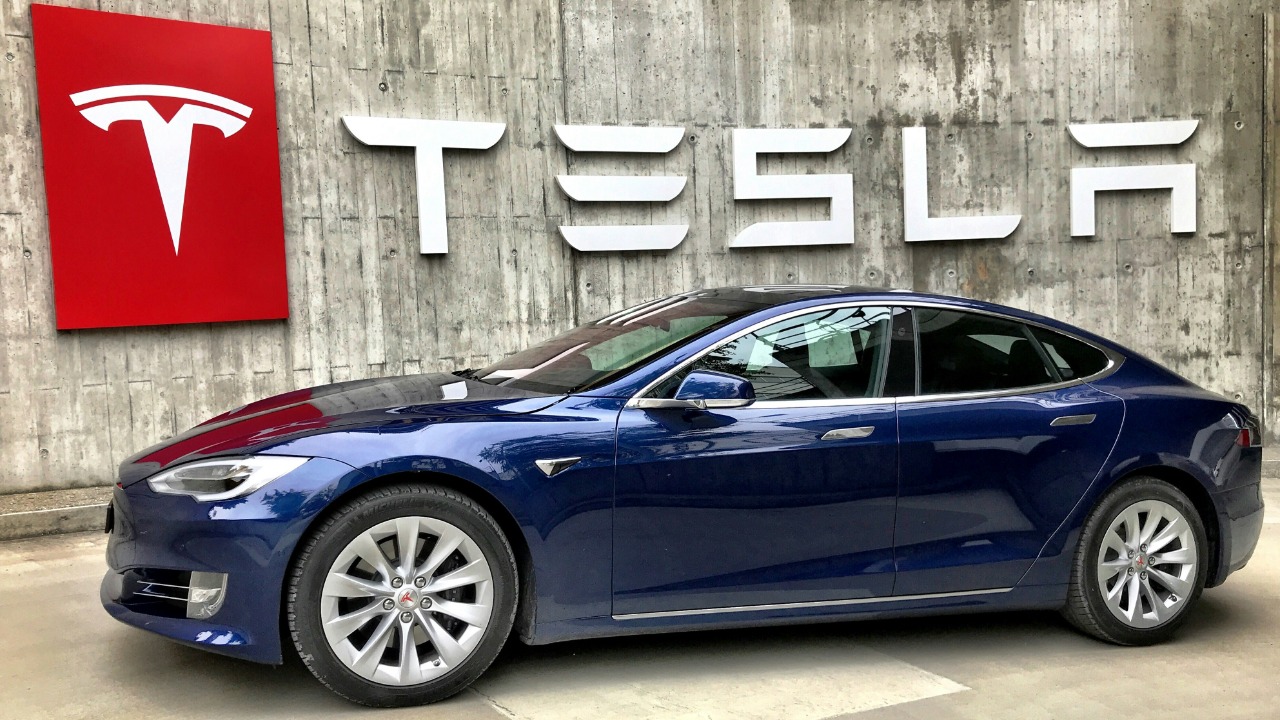

China is preparing to outlaw the sleek, electrically actuated door handles that helped define Tesla’s design language, turning a once futuristic flourish into a regulatory liability. The move will force carmakers to rethink how drivers and rescuers get into vehicles when electronics fail, and it signals a broader shift in how one of the world’s biggest auto markets weighs style against basic safety.
By targeting retractable handles that sit flush with the bodywork and extend only when powered, regulators are challenging a feature that has spread far beyond Tesla into the wider electric vehicle boom. What looks like a narrow design tweak is in fact a test of how far authorities will go to rein in risky technology in a sector where China now sets global norms.
What exactly China plans to ban
Regulators in China have zeroed in on the powered, pop-out handles popularized by Tesla, which sit flush with the door and deploy only when sensors or touch inputs trigger an electric motor. Under draft rules, these Tesla-style retractable handles will no longer be allowed on new vehicles, with the ban scheduled to take effect on January 1, 2027, giving manufacturers just over a year to redesign their hardware before the cutoff, according to reporting that notes the ban goes into effect at the start of that year. The decision is framed not as an attack on electric vehicles themselves but as a targeted response to a specific technology that has repeatedly failed in emergencies.
China’s Ministry of Industry and Information Technology has already circulated draft standards that would effectively outlaw hidden handles that rely on electric actuation, insisting instead on visible, mechanical solutions that can be operated without power. Those draft rules, described in legal analysis of China’s Ministry of Industry and Information Technology, would require doors to open even during power failures, collisions, or fires. In practice, that means the flush, motorized handles that have become a hallmark of Tesla’s Model S and other premium EVs will have to be replaced with manual hardware on any car sold into the Chinese market.
The safety failures that pushed regulators to act
Officials have not had to look far for evidence that retractable handles can turn deadly when electronics misbehave. Tests in China have shown that electric flush handles fail more often than traditional mechanical ones when a vehicle loses power, a pattern highlighted in technical reporting that notes China is considering a ban because these systems can jam when the car loses power. In crash scenarios, that failure mode can trap occupants inside and slow down rescuers who are trained to reach for a physical lever, not a dead touchscreen or a handle that never pops out.
Some models do include mechanical emergency releases, but safety advocates point out that these are often buried under trim pieces or hidden in footwells, making them hard to locate in the chaos of a collision or fire. One analysis of the proposed rules notes that Some models include physical emergency releases that are effectively invisible to panicked passengers. Chinese regulators have seized on that gap, arguing that if a handle cannot be found and operated by instinct in low visibility, it does not meet the basic standard for life-saving equipment.
Inside the new mechanical-handle mandate
The proposed standards do more than simply say “no” to retractable handles, they spell out what must replace them. Under the draft rules, vehicles weighing less than 3.5 tons will have to be equipped with both interior and exterior door handles that can be opened mechanically, even during power failures or after collisions. That requirement effectively bans any design that depends solely on electric motors or software to unlatch the door, and it pushes automakers back toward robust, cable or rod based linkages that work regardless of the state of the battery.
Chinese coverage of the rulemaking emphasizes that starting in 2027, every car sold in the country will need a manual release that is obvious and easy to use, a shift summed up in reports that say Starting in that year, cars sold in China will have manual door releases because electric ones sometimes do not work at all. The same reporting notes that the change is being justified explicitly on passenger safety grounds, not aesthetics, and that regulators are prepared to force redesigns even on high-end imported models if they do not comply.
Why Tesla’s design is in the crosshairs
Although the rules are technology neutral on paper, Tesla’s influence looms large over the debate. The company’s flush, motorized handles have been a visual signature since the early Model S, and Chinese commentators repeatedly describe the feature as a design flourish that other brands copied to give their cars a futuristic look. One report on the draft rules notes that China’s Ministry of Industry and Information Technology is planning to ban a design feature that has been the hallmark of Tesla cars for many years, precisely because it prioritizes a sleek profile over fail-safe access.
Consumer-focused coverage has framed the move as part of a broader moment in which China Is Banning Tesla Style Retractable Door Handles Over Safety Concerns, a phrase that appears verbatim in a financial news summary of the policy shift that stresses how China Is Banning Tesla Style Retractable Door Handles Over Safety Concerns. Another explainer aimed at mainstream readers underscores that Why China is Stepping In has everything to do with repeated reports of people being trapped inside a Tesla vehicle when the handles failed, noting that Why China Stepping In is closely tied to Tesla Under The Spotlight.
How Chinese and global regulators built the case
China’s move did not come out of nowhere, it follows a period of testing and international scrutiny that has steadily eroded confidence in powered handles. Earlier this year, Tests in China revealed that retractable electric handles fail more often than mechanical ones in the event of a crash or power loss, a finding that has been cited repeatedly in policy discussions and was summarized in coverage that highlighted those Tests in China. Safety analysts argue that when a feature consistently underperforms in controlled conditions, regulators are justified in treating it as an unacceptable risk rather than a quirky edge case.
At the same time, U.S. authorities have begun to ask similar questions about Tesla’s hardware. In the US, the National Highway Traffic Safety Administration has opened an investigation into around In the US, National Highway Traffic Safety Administration (NHTSA) scrutiny of 174,000 Tesla Model vehicles over complaints that pop-out handles and other controls can fail after stopping, according to reporting that cites the Financial Times. Another industry-focused piece notes that China is looking to ban the technology and that NHTSA has also launched an investigation in the USA, underscoring that concerns about these handles are not confined to one jurisdiction.
What the ban means for Tesla and its rivals
For Tesla, the immediate impact is clear: any car it wants to sell in China from 2027 onward will need a different door system, and that redesign will have to satisfy both safety regulators and brand managers who have long leaned on the flush handle as a visual shorthand for innovation. Technology reporters like Matt Binder have already framed the policy as a direct challenge to Tesla’s design language, with one widely shared piece explaining that Matt Binder described how U.S. regulators are looking into Tesla’s door handles too, suggesting that the company may face parallel pressure in its home market. For a brand that has built much of its identity on minimalism and hidden hardware, being told to bolt on visible levers is more than a cosmetic annoyance.
The ripple effects will extend to domestic Chinese automakers and global rivals that have adopted similar flush designs. A Chinese-language explainer on the policy notes that Sep commentary has already framed the change as “China’s Big Change” in mandating new door handles on cars, arguing that it will force a wave of reengineering across the EV sector. Another video aimed at enthusiasts, introduced by Hussein in a segment titled “china may ban hidden EV door handles. a safety win or design disaster,” captures how Sep and Hussein have been debating whether this is a necessary correction or an overreach. Either way, the message to manufacturers is blunt: if you want access to the world’s largest EV market, you will have to prioritize mechanical redundancy over seamless bodywork.
A window into China’s wider EV strategy
The crackdown on retractable handles also fits neatly into China’s broader strategy to shape the global electric vehicle industry on its own terms. As domestic champions like BYD, Company Ltd have surged ahead in sales, one market analysis notes that a Chinese EV outsells Tesla worldwide and that the difference becomes even bigger if you consider that BYD, Company Ltd counts its NEVs, or new energy vehicles, by grouping battery electric and hybrid cars together. In that context, setting strict safety rules on design features that Tesla helped popularize can be read as both a consumer protection move and a way to nudge the industry toward standards that favor local engineering philosophies.
Legal commentary on the draft standards points out that China, Ministry of Industry and Information Technology is not just reacting to isolated incidents but is trying to codify a principle that doors must open even during power failures, collisions, or fires, as spelled out in the analysis of Ministry of Industry and Information Technology draft rules. By embedding that requirement into national standards, Beijing is effectively telling global automakers that if they want to compete with domestic players who already favor robust mechanical solutions, they will have to abandon some of the more fragile flourishes that once set them apart.
From online backlash to policy reality
Public reaction to the planned ban has been unusually intense for what might seem like a niche design issue, reflecting how closely Tesla’s brand is watched in China and abroad. In one widely discussed thread, a user posting under the handle Digg-Sucks in a Comments Section argued that Comments Section debates about China’s decision to ban retractable EV door handles over safety concerns show how quickly a small hardware choice can snowball into a referendum on Tesla’s entire approach to design. That same discussion highlighted that China will ban retractable car handles beginning Jan. 1, 2027, amid growing frustration with what some owners see as overcomplicated interfaces.
Local news outlets have also picked up on the human side of the story, reporting on incidents where passengers struggled to escape vehicles with failed handles. One Ukrainian news brief, translated for international readers, noted that a segment about the policy had 42 views at the time of publication and summarized the rule by saying that 42 people had already watched a clip explaining that starting in 2027, cars sold in China will have manual door releases because electric ones sometimes do not work at all. That kind of granular coverage, amplified by social media and enthusiast forums, has helped turn a technical standard into a mainstream talking point.
Will other countries follow China’s lead?
China’s decision to outlaw retractable handles will inevitably raise the question of whether other regulators should do the same. In the USA, NHTSA has so far focused on investigating specific complaints rather than proposing a blanket ban, but the fact that it is already probing 174,000 Tesla Model vehicles over handle and control failures, as noted in the report on NHTSA and Tesla Model issues, suggests that patience with purely aesthetic innovations that compromise safety is wearing thin. If Chinese data continue to show that mechanical handles outperform powered ones in crashes, it will be harder for regulators elsewhere to justify a hands-off approach.
Industry analysts are already speculating that what starts as a national standard in China could become a de facto global benchmark, simply because automakers will not want to engineer separate door systems for different markets. A policy explainer on the Chinese rules notes that Regulators did not have to work too hard to make their case, pointing to multiple incidents where people were trapped inside a Tesla vehicle. If that narrative takes hold among safety agencies in Europe and North America, the Tesla-style retractable handle could soon find itself on the wrong side of a much wider regulatory line.
More from MorningOverview