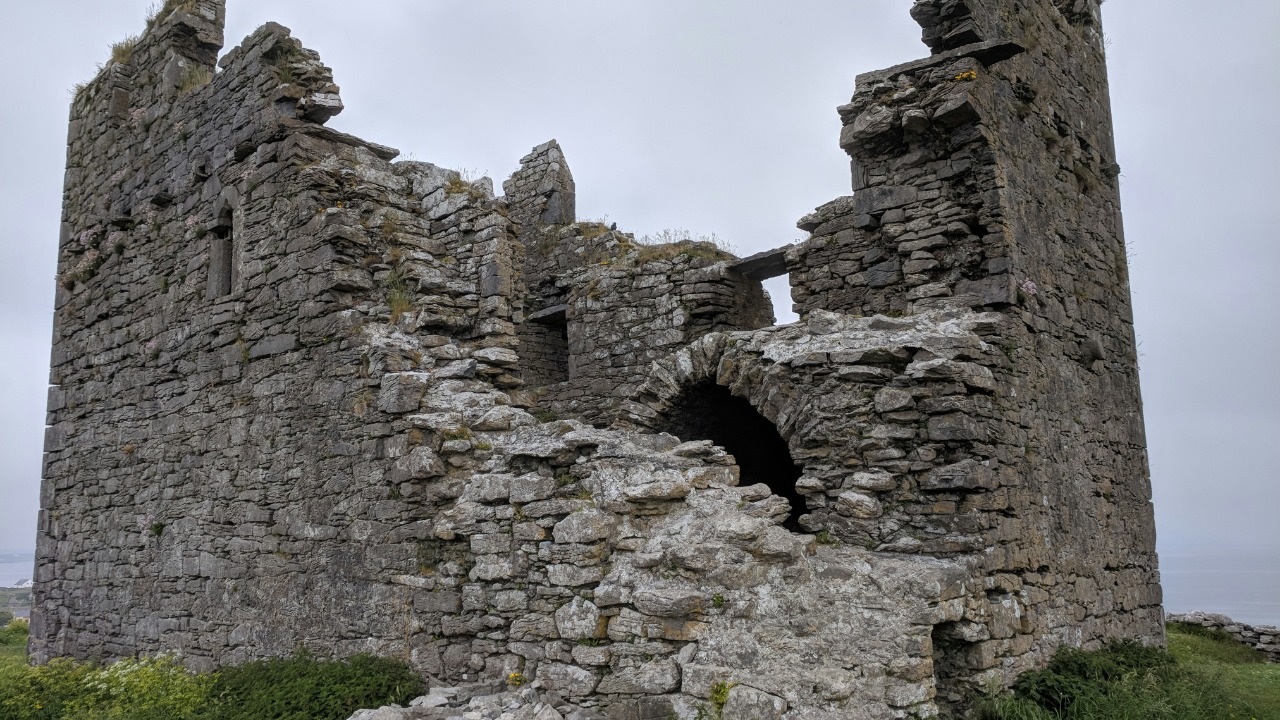

In the old quarter of a Breton town, a routine construction project turned into a rare encounter with the Middle Ages. Beneath the courtyard of a working hotel, archaeologists uncovered the stone shell of a fortified residence that had been buried and forgotten for centuries, its moat, walls and everyday objects preserved in the soil. What emerged from the trenches was not just a curiosity for guests, but a 640-year-old window into how power, war and daily life once converged on this patch of ground in northwestern France.
The discovery has quickly become one of the most striking European archaeology stories of the past few years, because it combines an intact defensive complex with a trove of artifacts that still sit exactly where medieval hands left them. As I trace what researchers have found under Hotel Lagorce, and what they believe it tells us about Brittany’s turbulent past, the story that unfolds is less about a single castle and more about how modern cities quietly rest on top of entire lost landscapes.
The hotel courtyard that opened onto the Middle Ages
The starting point for the discovery was not a grand research plan, but a practical renovation. Before work could proceed in the courtyard of Hotel Lagorce, authorities required a preventive excavation, a standard step in historic French town centers where centuries of building and rebuilding have layered structures on top of one another. When the first trenches went in, archaeologists quickly realized they were not dealing with scattered foundations or isolated walls, but with the footprint of a substantial fortified complex that had survived in place beneath the modern hotel.
As the team expanded their dig, they traced the outline of a large stone residence surrounded by a moat, with structural remains that matched the scale and planning of a high-status stronghold rather than a simple manor. The building’s orientation and the depth of its defensive ditch suggested a carefully engineered project, not an improvised fortification. What had begun as a compliance exercise for a construction permit turned into a rare chance to document a medieval castle that had effectively been sealed under an urban courtyard for roughly six and a half centuries.
A 640-year-old fortress in the heart of Brittany
Archaeologists date the complex to the late fourteenth century, identifying it as a 640-year-old fortified residence that rose during one of the most unsettled periods in Breton history. The structure is associated with Brittany’s Châtel family, a lineage that held power in the region when feudal lords were consolidating their authority through stone architecture as much as through alliances and war. The castle’s age is not a rough guess: stylistic details, construction techniques and the objects recovered from its moat and interior all converge on the same window in time, when local elites were reshaping the landscape to project strength.
The site sits in a part of France where medieval politics were unusually complex. From the 10th to the 16th centuries, Brittany functioned as a feudal state with its own dukes, established after the Vikings were expelled from the region and local rulers asserted their control over coastal strongholds and inland estates. The newly uncovered castle fits into that story as a fortified node in a network of power that had to contend with external threats and internal rivalries. Its survival under Hotel Lagorce gives researchers a concrete example of how Breton nobles translated their status into stone, moat and gatehouse at a moment when the region’s autonomy was still contested.
Moats, walls and a carefully engineered stronghold
What sets this discovery apart is not only its age, but the clarity with which its defensive system can be read in the ground. Excavators uncovered a broad moat that once encircled the residence, a water-filled barrier that would have forced attackers into a vulnerable position and signaled the owner’s wealth. The ditch is substantial in both depth and width, indicating that the builders invested heavily in earthworks before they even raised the first wall. Within that perimeter, the remains of curtain walls and internal structures show a coherent plan rather than piecemeal additions, which is why specialists describe the complex as a true castle rather than a fortified farmhouse.
The precision of the construction is visible in the stonework itself. Archaeologists found markings on some of the blocks, evidence that the project was organized with a level of coordination more typical of major ecclesiastical or royal works than of a rural manor. These marks suggest that teams of masons were assigned specific tasks and that materials were prepared off-site before being assembled on the foundations. The result was a residence that combined domestic spaces with military features, a hybrid typical of fourteenth century aristocratic architecture in Brittany, but rarely preserved so completely under a modern building.
Coins, jewelry and the objects people left behind
Beyond the walls and moat, the excavation’s most evocative finds are the small objects that once passed through the hands of the castle’s inhabitants. In the fill of the ditch and in layers associated with the interior, archaeologists recovered coins, jewelry and other personal items that had slipped from pockets or been discarded as trash. These artifacts help date the occupation and abandonment of the site, but they also sketch a portrait of the people who lived and worked there, from the lordly family to the servants who maintained the household and its defenses.
Some of the jewelry pieces, likely worn by members of the Châtel household or their guests, point to connections beyond the immediate town, since such items often circulated through marriage alliances or trade networks that linked Brittany to other parts of France and to maritime routes in the Atlantic. The coins, too, are more than simple markers of chronology. Their origins and denominations can reveal which authorities were recognized in the region at different moments, and whether the castle’s owners were aligning themselves with local dukes, the French crown or other powers. Together, these finds turn the buried structure from an abstract monument into a lived space, where wealth, taste and political allegiance were expressed in metal as well as in stone.
From Viking raids to feudal power: the wider Breton backdrop
To understand why a fortified residence of this scale ended up in the middle of what is now an urban block, I have to step back to the longer arc of Breton history. From the 10th to the 16th centuries, Brittany evolved from a frontier battered by Viking incursions into a consolidated feudal state, its ruling families determined to secure both their coastlines and their inland territories. The expulsion of the Vikings did not bring peace so much as a new phase of competition among local elites, who used castles, alliances and marriages to carve out spheres of influence. The newly uncovered stronghold under Hotel Lagorce is a physical trace of that process, a stone assertion that this particular family controlled this particular patch of land.
In that context, the castle’s location in a town center makes more sense. Medieval settlements often grew around fortified sites, with markets, workshops and houses clustering near the protection and patronage that a lord’s residence provided. Over time, as warfare changed and aristocratic families shifted their seats or lost their power, some of these castles were dismantled, filled in or built over. The Breton example shows how thoroughly such a site could be absorbed into the urban fabric, its moat and walls disappearing beneath later construction while the street plan above continued to follow the logic set centuries earlier by the castle’s presence.
Hotel Lagorce and the surprise beneath its guests’ feet
For the owners and guests of Hotel Lagorce, the revelation that their courtyard sat atop a medieval fortress was as startling as it was transformative. The hotel, a functioning business in a historic quarter, had long traded on the charm of its setting without realizing that its foundations literally rested on a fourteenth century power center. Once archaeologists confirmed that the buried structure was Brittany’s Châtel castle, the site shifted from being a simple hospitality property to a place where visitors could sleep a few meters above a lost stronghold.
The juxtaposition of a modern hotel and a medieval castle encapsulates how European cities layer eras on top of one another. Guests checking into Hotel Lagorce now do so with the knowledge that beneath the paving stones of the courtyard lies a moat that once defined the edge of a lord’s domain, and that the walls around them follow lines first drawn when feudal politics and the threat of siege shaped the town’s layout. For local authorities, the discovery raises questions about how to balance commercial use with heritage protection, and whether parts of the castle can be made visible or interpreted for the public without undermining the hotel’s operations.
How archaeologists pieced the castle together
Reconstructing the castle’s story required more than simply exposing its walls. Archaeologists had to interpret layers of fill, collapsed masonry and later intrusions to distinguish what belonged to the original fourteenth century phase from what was added or removed in subsequent centuries. They mapped the moat’s profile, traced the foundations of towers or projecting structures, and looked for patterns in the distribution of artifacts that might indicate specific rooms or activity zones. The presence of latrines, for example, helped them understand how waste was managed and how the castle’s inhabitants interacted with their defensive ditch.
Specialists also compared the site’s features with other known fortified residences in Brittany and beyond, looking for parallels in layout and construction that could confirm their hypotheses. The markings on the stone blocks, the way the moat was cut and lined, and the relationship between the main residence and its outbuildings all fed into a broader typology of medieval castles. By situating the Hotel Lagorce complex within that typology, researchers could argue more confidently for its identification as a high-status seat rather than a minor stronghold, and could link it to the Châtel family’s documented presence in the region.
What the moat reveals about daily life and decay
The moat around the castle is not just a defensive feature, it is also a kind of archive. Over time, as the stronghold’s military function waned and its owners’ priorities shifted, the ditch likely became a convenient dumping ground for household waste and discarded objects. Archaeologists found that the fill contained not only structural debris but also everyday items, food remains and the jewelry and coins that slipped through the cracks of daily routines. This mix of materials helps chart the castle’s transition from a fortress on alert to a residence embedded in a more settled urban environment.
The environmental conditions within the moat, particularly where waterlogging occurred, also contributed to the preservation of organic remains that would otherwise have decayed. Seeds, animal bones and other biological traces can tell researchers what people were eating, what crops were grown nearby and how the local landscape was managed. In some sections, the stratigraphy of the ditch records episodes of cleaning, refilling or deliberate leveling, each phase marking a decision about how the castle and its surroundings should function. Reading those layers, I see not just a static monument but a living site that adapted to changing needs before finally being buried under later construction.
From excavation trench to public story
Once the scale and importance of the castle became clear, the challenge shifted from excavation to communication. Archaeological work in a confined urban courtyard is by nature temporary, and much of what is uncovered must eventually be reburied or protected under new construction. That makes documentation and interpretation crucial. Detailed plans, photographs and 3D models allow researchers to preserve the site virtually even as the physical remains are stabilized or covered. For the public, the story is carried through exhibitions, signage and media coverage that translate the technical findings into an accessible narrative about a hidden medieval world beneath a familiar hotel.
In this case, the discovery has already been framed as a remarkable example of how routine development can reveal major heritage assets. Reports have highlighted how archaeologists working in northwestern France turned a standard excavation into a detailed portrait of a medieval castle, complete with moat, coins and jewelry. Other coverage has emphasized that the stronghold lay directly under the old courtyard of a hotel, reinforcing the idea that even well known urban spaces can conceal intact structures from the fourteenth century. As those stories circulate, they help build support for the kind of preventive archaeology that made the discovery possible in the first place.
Brittany’s layered landscape and what comes next
The castle under Hotel Lagorce is part of a broader pattern in Brittany, where centuries of occupation have stacked one era’s architecture on top of another’s. From the time when the Vikings were expelled and local rulers began asserting their authority, through the long life of the feudal state and into the modern period, each generation has reused, adapted or erased the structures it inherited. The newly uncovered stronghold shows how a site that once stood at the center of a lord’s domain could vanish from collective memory even as the town around it continued to grow. Its rediscovery invites residents and visitors alike to imagine the invisible layers beneath their feet.
Looking ahead, the key questions revolve around preservation and integration. Authorities must decide how much of the castle can remain exposed, whether parts of the moat or walls can be incorporated into the hotel’s design, and how to present the story to the public without compromising the site’s stability. The broader Breton context, in which fortified 14th century castles and moats have been documented under other urban spaces, suggests that this will not be the last such discovery. Reports on fortified 14th century castles and their moats uncovered during similar excavations show that the region’s urban fabric is riddled with such buried structures, each waiting for the right combination of construction work and archaeological attention to bring it back into view.
A castle’s second life beneath a modern city
For me, the most striking aspect of the Hotel Lagorce discovery is how it compresses time. Guests walk across a courtyard that, a few meters below, still holds the outlines of a fourteenth century moat and the foundations of a residence where members of the Châtel family once negotiated alliances, managed estates and prepared for conflict. The fact that this 640-year-old complex lay undisturbed for so long speaks to the way urban development can both erase and protect the past, sealing off entire chapters of history until a trench or foundation cut happens to intersect them.
The castle’s story also illustrates how local and global narratives intersect. Brittany’s evolution from a region threatened by Vikings to a feudal state with its own power structures is written into the stone and soil under the hotel, while the coins and jewelry recovered from the site hint at connections that reached far beyond the town’s walls. Coverage of the find has underscored that Hotel Lagorce sits above Brittany’s Châtel castle, and that the stronghold remained hidden for nearly a century after earlier construction first disturbed the area. Other reports have framed the site as a remarkably preserved 640-year-old castle with a moat in France, emphasizing how intact its features are despite the passage of time. Together, these perspectives reinforce a simple point: beneath the routines of modern life, entire medieval worlds still wait to be uncovered, one courtyard at a time.
More from MorningOverview