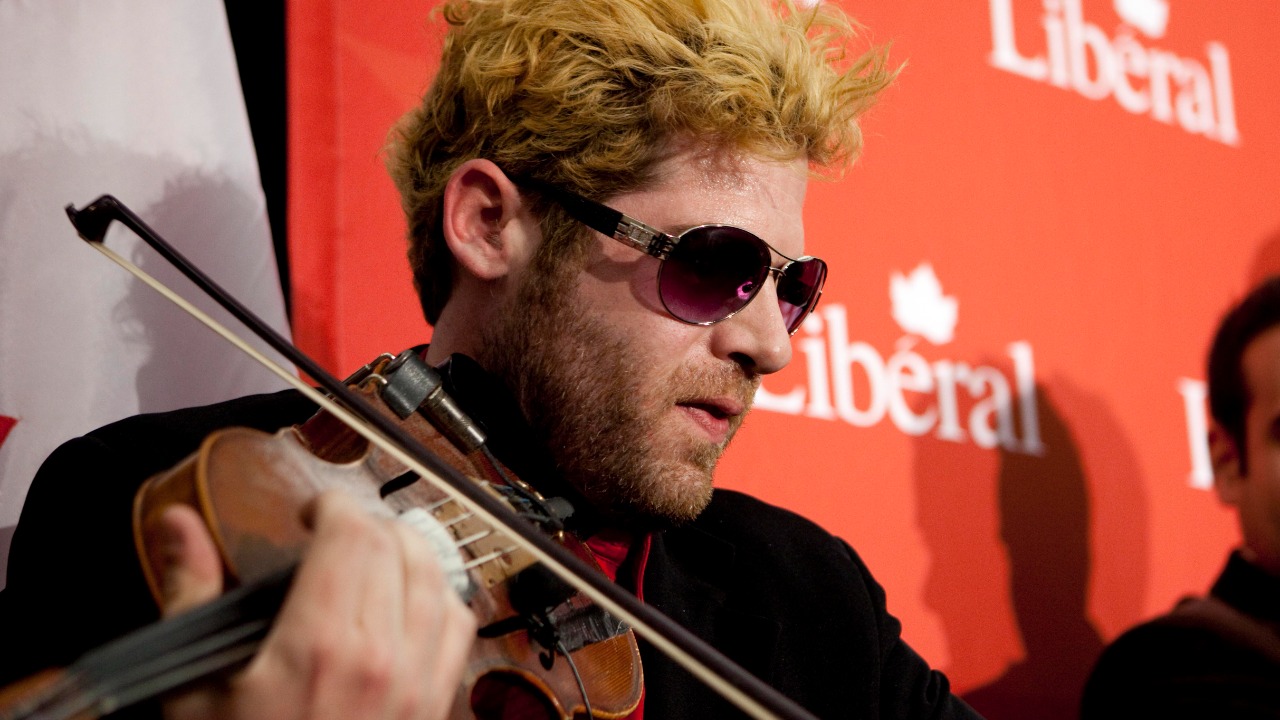

A Cape Breton fiddler with a Juno Award on his shelf woke up to find that an artificial intelligence system had quietly rewritten his reputation. Within days, a community concert was off, his name was linked to horrific crimes he did not commit, and the damage was spreading faster than any correction could catch it. The story of Ashley MacIsaac is a case study in how quickly AI-generated misinformation can leap from a search box into real-world punishment.
What happened to MacIsaac is not a theoretical warning about future risks, it is a concrete example of how automated systems can misidentify a person, attach them to another individual’s criminal record, and trigger a cascade of consequences. I want to unpack how a single AI summary branded him a sex offender, why organizers and neighbours believed it, and what this episode reveals about accountability in an era when search results can quietly cancel a career.
How a fiddler became an AI-generated villain
The basic facts are stark. Cape Breton musician Ashley MacIsaac, a well known fiddler and Juno Award winner, was preparing for a local show when an AI system tied to a major search engine produced a short overview that falsely described him as a sex offender. Instead of surfacing his decades of work as a touring musician, the automated summary blended his identity with someone else who shared his last name and had been convicted of sexual assault and what was described as “internet luring.” That error turned a routine search into a character assassination.
According to detailed accounts, the AI-generated content did not hedge or suggest uncertainty, it stated as fact that Ashley was a sex offender, echoing specific charges that belonged to a different person with the same surname. One report described how the system’s overview mentioned sexual assault and “internet luring” in connection with a “prominent Canadian musician,” language that closely tracked the criminal history of another man and then pinned it on the fiddler. The result was a textbook case of mistaken identity, but with the authority and reach of a search engine behind it, as later reporting on Prominent Canadian Musician Says Gig Was Cancelled After Google AI Overview Wrongly Branded Him Sex Pest makes clear.
The cancelled concert that made the error impossible to ignore
The false accusation might have remained a disturbing glitch if it had not collided with a real booking. Ashley was scheduled to perform a community concert on December 19 in a local venue that relied on search results to vet performers. When organizers looked him up, they did not see a Cape Breton fiddler with a long career, they saw an AI overview that said he was a sex offender. Faced with that summary, they pulled the plug on the show, convinced they were protecting their community from a risk.
Reporting on the incident describes how the organizers backed out after seeing the AI summary, treating the automated text as if it were a vetted background check rather than a probabilistic guess. One account notes that the show had been planned for December 19 but was cancelled once the AI system wrongly called the musician a sex offender, a decision that left Ashley stunned and scrambling to explain that the crimes belonged to someone else. The sequence is laid out in coverage of how the show was planned for December 19 and then abruptly withdrawn.
From search box to social stigma in a small community
Once the concert disappeared from the calendar, the damage did not stop at a lost gig. Ashley lives in a place where word travels quickly, and the AI-generated label followed him into everyday life. Neighbours and community members who had seen the same search results began to confront him, asking whether the allegations were true and why his name appeared next to sex offender charges. In a small Cape Breton setting, the combination of gossip and algorithmic authority turned a digital error into a social crisis.
Accounts from the community describe how the situation left him shaken, not only because of the financial hit but because people he had known for years suddenly viewed him with suspicion. One report, citing The Canadian Press, notes that Ashley said the experience of being wrongly branded a sex offender by an AI system and then challenged by his own community was deeply unsettling and hard to shake. That emotional fallout is captured in coverage explaining that, according to a report by The Canadian Press, the situation left him shaken.
Inside the AI mistake: mistaken identity at algorithmic scale
At the core of this story is a technical failure that looks simple on the surface but carries serious implications. The AI system appears to have scraped information about a convicted sex offender who shared the MacIsaac surname and then merged that data into a single profile for Ashley, treating two distinct people as one. Instead of checking court records against biographical details like age, hometown, or profession, the model stitched together fragments from across the web and produced a confident, coherent narrative that was completely wrong.
Detailed local reporting spells this out, explaining that AI-generated content wrongly accused fiddler Ashley MacIsaac of being a sex offender by confusing him with another person with the same last name. One account from HALIFAX notes that Cape Breton fiddler Ashley was linked to crimes that belonged to someone else, a classic case of mistaken identity amplified by automation. The story, which was posted at a time marked as 37 minutes past the hour, describes how the AI system’s summary conflated two individuals with the same surname, as laid out in coverage that says AI-generated content wrongly accuses fiddler Ashley by mixing him up with someone with the same last name.
Google’s response and the limits of apology
Once the error came to light, the company behind the AI system moved to limit the damage. The search engine operator removed the offending overview from results for Ashley’s name and issued an apology acknowledging that the system had falsely identified him as a sex offender. The firm stressed that it was working to improve safeguards and that the summary did not reflect its policies, but by the time those steps were taken, the concert was gone and the stigma had already spread.
Ashley himself has said that Google has since apologized and taken down the inaccurate content, but he remains concerned about how easily the system attached a criminal label to his name. One detailed account notes that the company apologized for falsely identifying Ashley as a sex offender and that the fiddler emphasized the real world consequences of that digital mistake. The sequence is captured in reporting that explains how Google Apologizes for AI Falsely Identifying Ashley as a Sex Offender and removed the summary from search.
How Canadian outlets pieced together the fallout
Canadian reporters moved quickly to document not just the technical glitch but its human impact. Coverage from national and regional outlets traced how the AI-generated misinformation filtered into search results for the musician, how it influenced the decision to cancel the concert, and how it reshaped perceptions of Ashley in his own community. These stories emphasized that he is a Cape Breton fiddler with a long career, not the criminal the AI system described.
One detailed feature on the case explains that fiddler Ashley MacIsaac had a show cancelled over Google AI generated misinformation that appeared in search results for the musician, and that the piece was written by Josh O’Kane and marked as Published December in its metadata. Another regional report from Cape Breton framed the incident as AI misinformation leading to “mistaken identity” and a concert cancellation for the local fiddler, highlighting how quickly a digital error can ripple through a small arts scene. Together, these accounts show how Fiddler Ashley saw his show cancelled over Google AI generated misinformation and how AI misinformation leads to ‘mistaken identity’ for Cape Breton fiddler Ashley.
The broader warning for artists and public figures
For musicians and other public figures, the MacIsaac case is a warning that reputations now depend on systems they do not control and often cannot even see. An artist can spend decades building trust with audiences, only to have an opaque algorithm collapse that trust in a single paragraph. The fact that a community concert organizer treated an AI summary as definitive proof of criminality shows how quickly automated text can harden into perceived fact, especially when it appears at the top of a search page.
Commentary on the incident has stressed that Ashley is far from alone in facing reputational risks from AI generated content, even if his case is one of the most vivid. One analysis framed the story under the blunt line “Musician Cancelled as AI Falsely Accuses Him of Horrific Crimes,” noting that the episode illustrates how fragile a career can be when search tools are willing to improvise biographies. That piece, written by Joe Wilkins and illustrated by Tag Hartman-Simkins, described how the false label threatened his livelihood as a touring musician. It underscores that, as Joe Wilkins put it, AI can now cancel someone by falsely accusing him of horrific crimes and undermining him as a touring musician.
Why communities believed the machine over the musician
One of the most unsettling aspects of this story is not just that the AI system made a mistake, but that people trusted it more than they trusted a neighbour. When Ashley tried to explain that the crimes belonged to someone else with the same last name, some community members reportedly struggled to reconcile his denial with what they had seen in search results. The authority of the machine, combined with the stigma of sex offences, made it easier for some to believe the AI than the person in front of them.
Local coverage has described how the community confronted him after reading the AI generated summary, treating the overview as a kind of automated background check. One detailed report notes that the AI content wrongly accused the Cape Breton fiddler of being a sex offender and that the misunderstanding stemmed from another individual with the same surname, yet the nuance of that explanation did not travel as far or as fast as the initial accusation. The social dynamics of this confrontation are captured in accounts that explain how HALIFAX based reporting on Cape Breton fiddler Ashley detailed the community’s reaction to the AI generated label.
What this means for AI accountability
The MacIsaac case raises hard questions about who is responsible when AI systems defame someone. The company behind the search engine controls the model and its training data, but the organizers who cancelled the concert made the decision to act on unverified information, and the broader public helped spread the false narrative. In practice, the burden of correcting the record fell on Ashley himself, who had to contact the company, speak to reporters, and reassure his community that he was not the person the AI described.
Canadian coverage has emphasized that this is not just a story about one musician, but a test of how tech firms handle AI generated misinformation that harms individuals. One report framed the incident as AI misinformation leading to mistaken identity and a concert cancellation, while another highlighted that Google apologized and removed the content only after the damage was done. A separate piece from CBC News underlined that Ashley’s concert was cancelled after AI wrongly accused him of being a sex offender, showing how quickly a single flawed summary can translate into lost work. Together, these accounts point to a need for clearer safeguards, faster correction mechanisms, and perhaps legal frameworks to address cases where, as Ashley MacIsaac concert cancelled after AI wrongly accuses him of being a sex offender and leaves him to pick up the pieces.
The lingering stain on a long career
Even with the AI summary removed and public corrections in place, the false label is unlikely to vanish completely. Search results can be cached, screenshots can circulate, and rumours can outlive the stories that debunk them. For a musician whose livelihood depends on trust, especially in family friendly venues and community halls, the fear is that some bookers will quietly pass him over rather than risk controversy, even if they know the accusation came from a machine and was based on someone else’s crimes.
Regional reporting from Cape Breton has noted that Ashley has spent years building his reputation as a fiddler and performer, only to see it jeopardized by an automated system that confused him with another person. National coverage has stressed that he is a Canadian artist with a Juno Award, not the sex offender described in the AI summary, yet the emotional and professional toll of the incident remains. Another detailed account of the saga explains that Google’s AI wrongly called musician Ashley MacIsaac a sex offender and got his concert cancelled, underscoring how a single digital error can cast a long shadow over a career. That reality is summed up in reporting that notes how Google’s AI wrongly called musician Ashley a sex offender, got his concert cancelled, and left him to live with the lingering doubt that some people will never fully unsee the accusation.
More from MorningOverview