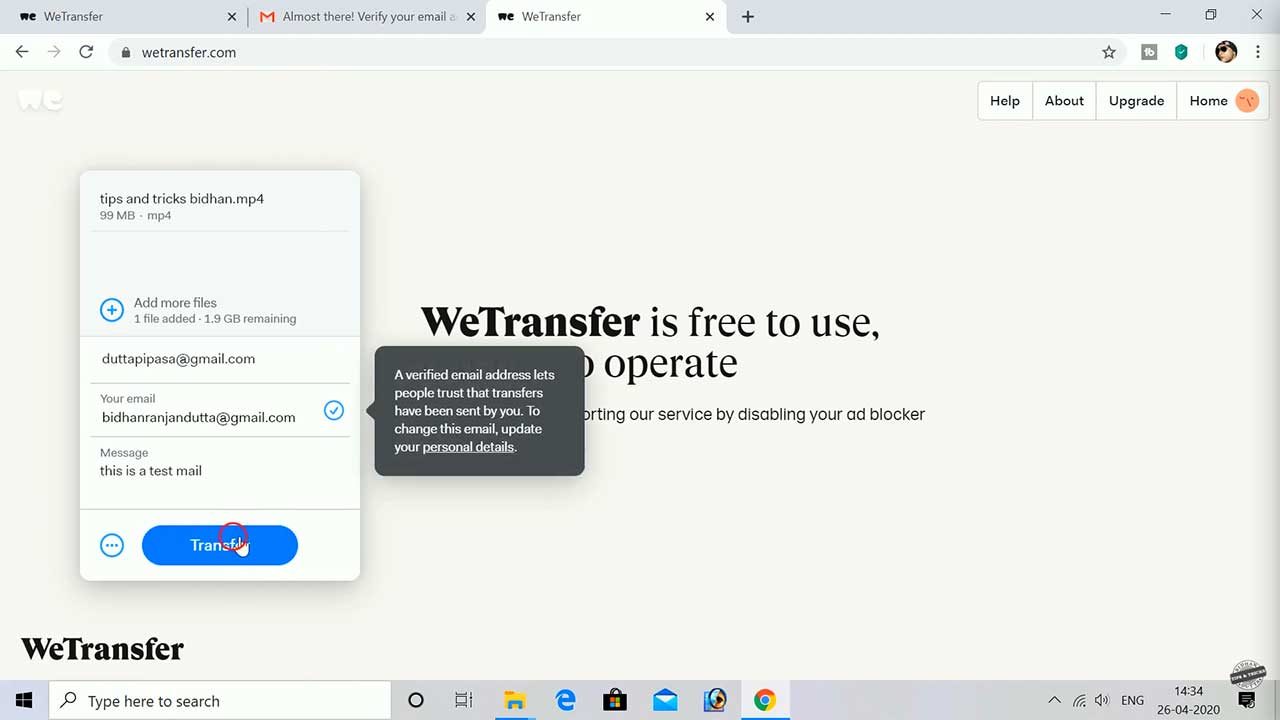

The co-founder of WeTransfer is back with a new file-transfer platform that pointedly sets itself up as an alternative to the company he helped build. Instead of leaning on ads, opaque terms and AI data grabs, his new service, Boomerang, is pitched as a cleaner, more creator-friendly way to send large files. The move lands at a moment when WeTransfer itself is under new ownership and intense scrutiny, turning a personal comeback story into a broader referendum on how we share our work online.
From WeTransfer pioneer to outspoken critic
When One of the original founders of WeTransfer helped turn a simple link-based uploader into a staple of creative workflows, the pitch was straightforward: send big files without friction. Over time, that simplicity became the brand’s calling card, with a free tier that let anyone transfer hefty projects without logging in, and a paid tier for power users who needed more storage and control. According to reporting on One of the founder’s new venture, that early vision is now being contrasted with what the platform has become, especially as it experiments with new business models and data practices.
The same founder, widely known as Nalden, is now using that history as a foil for his next act. In interviews about why he is building another file-transfer service, he has framed the decision as a response to a product that no longer feels aligned with the values that made it indispensable in the first place. Coverage of his new project notes that he is explicitly revisiting the original promise of a fast, efficient way to send stuff, while also addressing the fine print that many users ignored the first time around, a tension detailed in analysis of why the WeTransfer co-founder is building again.
Boomerang: a new file-sharing service with old-school ideals
The new platform is called Boomerang, and its mission is deliberately narrow: move large files from A to B with as little friction and as few strings attached as possible. Reporting describes Boomerang as a file-sharing service that “champions creativity instead of stealing it,” a clear signal that the product is being positioned as a safe conduit for work rather than a data mine. In practical terms, that means a familiar workflow of uploading files, generating links and sharing them with collaborators, but wrapped in a promise that the content itself is not being quietly repurposed for other purposes.
In coverage of the launch, Boomerang is presented as a kind of reset button for the file-transfer category, with a focus on transparent terms and a user experience that does not bury key conditions in every line of fine print. The project is explicitly framed as Boomerang, a new file-sharing service that tries to restore trust between platforms and the creative communities that rely on them, a framing that comes through clearly in reporting that introduces Boomerang as a creativity-first tool.
“Founder Launches Boomerang”: what the new rival actually offers
Beyond the rhetoric, Boomerang is being built as a concrete alternative for people who feel uneasy about where their files go once they leave their desktop. The service is described as a streamlined, efficient way to send stuff, with a focus on speed and reliability rather than upselling users into a maze of add-ons. Early descriptions emphasize that the core experience is intentionally minimal, echoing the early days of WeTransfer but with more explicit guardrails around how content is handled and how long it is stored.
The launch coverage underlines that this is not a side project but a full-fledged attempt to re-enter a market the founder knows intimately. Under the banner “WeTransfer Co-Founder Launches Boomerang,” reports explain that Nalden has returned to the file-transfer space with a product that aims to be both familiar and more principled, highlighting that the co-founder of WeTransfer, widely known as Nalden, has reemerged with Boomerang as an efficient way to send stuff, a positioning captured in detail in the profile of how the Founder Launches Boomerang.
Why create a new file-transfer service now?
The timing of Boomerang is not accidental. WeTransfer has been through a turbulent stretch, from ownership changes to public backlash over how it handles user data, and that instability has created an opening for a rival that promises clarity. In interviews about Why create a new file transfer service now, Nalden has suggested that the original social contract between platforms and users, especially around privacy and monetization, no longer seemed strong or unequivocal, and that this erosion of trust was a key motivator for starting again.
Reporting on the launch also notes that Nalden says he received a wave of feedback from creatives who felt blindsided by shifting terms and creeping complexity in tools they once considered indispensable in the first place. That sentiment, combined with broader anxiety about AI training and surveillance, is presented as the backdrop for Boomerang’s debut, with coverage of Why and What Boomerang offers now for users spelling out how the founder is trying to rebuild that trust from scratch, as detailed in the analysis of Why and What Boomerang promises.
WeTransfer’s AI backlash and the trust gap Boomerang is targeting
The most immediate fault line between WeTransfer and its new rival is how each company treats user data, especially in the age of generative AI. Earlier this year, Dutch file-sharing service WeTransfer updated its terms of service in a way that reignited fears about training AI on user data, after users spotted sweeping language that appeared to give the company broad rights to analyze and reuse the files passing through its servers. The controversy centered on whether creative work uploaded for simple transfers could be fed into machine learning models without explicit, informed consent.
That uproar did not stay contained to legal circles. Artists, agencies and freelancers publicly questioned whether they could keep trusting a platform whose terms seemed to treat their work as raw material for future AI products. Detailed reporting on how the Dutch service reignited fears about training AI on user data explains how the episode exposed a gap between what users assumed and what the fine print allowed, a gap that Boomerang is now explicitly trying to close by promising that it will not quietly repurpose files for AI training, a contrast underscored in coverage of how Dutch WeTransfer reignited AI fears.
WeTransfer’s acquisition, job cuts and strategic pivot
The corporate backdrop to all of this is equally significant. WeTransfer was acquired by Italian tech investor Bending Spoons, a deal that signaled a new phase for the Dutch-born service and raised questions about how aggressively it would be reshaped. Reporting on the acquisition notes that the new owner has a track record of buying established apps and retooling them for growth, and that this playbook is now being applied to WeTransfer as it looks for fresh revenue streams and product angles under Bending Spoons’ control.
The human cost of that transition has been stark. Coverage of the restructuring reports that WeTransfer is set to lose 75 pc of staff from Bending Spoons’ acquisition, a figure that underscores just how dramatic the overhaul has been. In the same reporting, the job cuts are framed alongside other Latest News items, including lessons for cyber defenders from A&E to SOC and a Report on All-island coordination, but the headline number for WeTransfer stands out as a sign that the company is being rebuilt almost from the ground up, as detailed in analysis of how WeTransfer will lose 75 pc of staff.
Backtracking on AI training: damage control or real reset?
Under pressure from users and privacy advocates, WeTransfer has already tried to walk back some of its more controversial moves. After the backlash over AI training, the company published a blog post titled “WeTransfer Terms of Service — What’s Really Changing,” an attempt to clarify and soften the language that had alarmed so many customers. In that post, the company said it would not train AI models on the files users are transferring, a pledge that was meant to reassure people that their work would not be quietly fed into machine learning systems.
The question now is whether that clarification is enough to repair the trust that was shaken by the initial terms. Detailed coverage of the blog post, which breaks down the Terms of Service and What is Really Changing, notes that the company has tried to draw a clearer line between operational data use and AI training, but also that some users remain wary after seeing how quickly the rules can shift. That lingering skepticism is part of the opportunity Boomerang is seizing, positioning itself as a service that will not need to issue similar backtracks because it is building stricter limits into its model from day one, a contrast highlighted in reporting on what WeTransfer says is Really Changing.
Nalden’s vision: no ads, no tracking, and a WAITLIST NOW
At the heart of Boomerang’s pitch is a business model that deliberately avoids some of the levers WeTransfer has pulled over the years. Nalden is clear that with this new service, he does not want to offer advertising to users and keep a clean, distraction-free interface instead. That stance is not just aesthetic, it is a way of signaling that Boomerang will not depend on tracking, profiling or attention-harvesting to make money, which in turn reduces the incentive to mine user behavior and content for monetizable insights.
Early coverage of the product notes that Boomerang is already building momentum, with a WAITLIST NOW call to action that invites users to sign up for early access and promises a dedicated Mac app soon. The same reporting situates Boomerang in the context of Bending Spoons’ acquisition of WeTransfer, highlighting how Nalden’s new venture is emerging just as his old company is being folded into a larger portfolio of apps, a juxtaposition captured in analysis of how WAITLIST NOW and no ads define Boomerang.
“Bouncing back”: the founder’s personal reset and the market stakes
The story of Boomerang is also a story of personal reinvention. Coverage framed as “Bouncing back” describes how the WeTransfer founder is planning a new file-sharing service after stepping away from the company that made his name. The reporting notes that the Dutch entrepreneur is returning to a space he helped define, this time with a sharper critique of how it has evolved and a clearer sense of the trade-offs he is unwilling to make, from invasive advertising to ambiguous data rights.
That same reporting situates his comeback within a broader European tech landscape, pointing out that the Dutch founder’s original company is now owned by Italian tech investor Bending Spoons, while he builds a rival from scratch. The piece, illustrated with a Photo from Depositphotos.com and referencing The Dutch context in which WeTransfer first took off, underscores how the new project is both a personal bounce-back and a test of whether users will follow a founder who promises to restore the simplicity and respect they feel they have lost, a narrative laid out in detail in the profile titled Bouncing back: WeTransfer founder plans new file sharing service.
More from MorningOverview