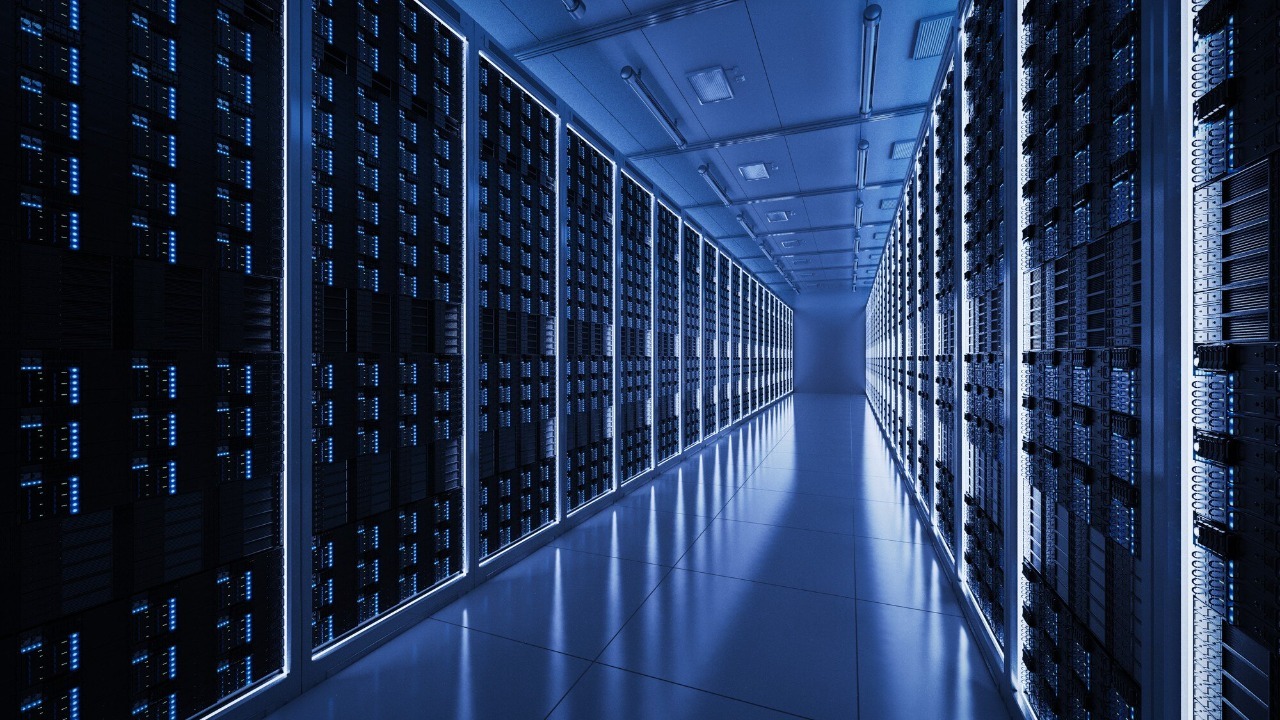

Across the world, vast industrial complexes filled with servers and cooling equipment are rising on farmland, in exurbs, and along transmission lines, quietly becoming some of the most expensive infrastructure projects on the planet. These billion‑dollar data centers now underpin everything from streaming video to generative AI, yet they are often more visible on corporate balance sheets than on public radar. I see a new kind of utility emerging in their shadow, one that is reshaping local economies, power grids, and even national industrial strategy.
The invisible backbone of the AI era
For years, data centers were treated as back‑office plumbing, tucked into anonymous warehouses and industrial parks, but the AI surge has turned them into front‑line infrastructure. Training and running large language models, recommendation engines, and real‑time analytics requires dense clusters of specialized chips, which in turn demand enormous power and cooling capacity. What used to be a relatively modest line item in tech budgets has become a capital‑intensive race to build the biggest, most efficient digital factories the world has ever seen.
That shift is visible in the way companies now talk about their infrastructure. Cloud providers and AI developers no longer describe these facilities as simple server farms, they frame them as strategic assets that determine whether they can keep up with demand for generative tools, logistics optimization, and real‑time personalization. The scale of that ambition is evident in the way a consumer‑facing platform like Amazon has evolved into a global infrastructure giant, with its retail site sitting on top of a sprawling network of hyperscale data centers that power both its own services and much of the modern internet.
Spending that rivals national economies
The money flowing into this infrastructure is staggering, even by tech standards. In the first half of 2025, an Analysis from Harvard economist Jason Furman found that tech giants’ data center investment reached about 102.5 billion dollars, a figure that rivals or exceeds the annual gross domestic product of many countries. When a single industry’s half‑year infrastructure bill can be compared to the output of entire nations, it signals a structural shift in where economic power and physical capital are being concentrated.
That concentration is not just financial, it is also corporate. Jason Furman’s work highlights how a handful of dominant platforms are driving this 102.5 billion dollar wave of construction, deepening the concentration in the tech sector as they lock up land, grid connections, and chip supply. For investors, that looks like a long‑term moat. For policymakers, it raises questions about resilience and competition when so much of the world’s digital capacity sits in the hands of a few firms with the balance sheets to pour tens of billions into concrete, steel, and silicon.
Rural America becomes the new server farm frontier
One of the most striking features of the current boom is where these facilities are landing. Instead of clustering only in traditional tech hubs, developers are targeting rural counties that offer cheap land, favorable zoning, and access to high‑voltage transmission lines. In Arizona, a project at Hassayampa Ranch shows how this plays out: a crucial and unanimous Dec decision cleared the way for developer Verma and partner Lallian to submit detailed zoning plans for a massive AI‑focused campus. Local officials there are betting that the buildout could eventually generate hundreds of millions of dollars a year by 2030, turning a quiet stretch of desert into a high‑tech tax engine.
Similar dynamics are unfolding across the Midwest and South, where communities that once courted factories or distribution centers are now fielding pitches for multi‑billion‑dollar server complexes. A nationwide AI data center boom has turned rural land into a strategic asset, but it has also created friction over water use, noise, and the way these projects can crowd out other forms of development. Reporting on the Arizona buildout notes that the rush to secure grid capacity for AI has in some cases stalled renewable energy development, as utilities prioritize guaranteed long‑term contracts with data center operators over more speculative clean‑energy projects.
Amazon’s Indiana bet and the rise of mega‑campuses
The new generation of facilities is not just rural, it is colossal. In Indiana, Amazon has opened an 11 billion dollar AI data center complex known as Project Rainier, a single site whose price tag would have been unthinkable for digital infrastructure a decade ago. The campus sits in rural Indiana, where the company can spread out across thousands of acres, tap into regional power lines, and build with fewer zoning constraints than it would face near major coastal cities. For Amazon, the facility is both a workhorse for its own AI services and a signal to rivals that it intends to stay ahead in the cloud arms race.
Locals, however, do not always share the enthusiasm. While Project Rainie promises construction work and a new stream of tax revenue, residents have raised concerns about long‑term job counts, land use, and the strain on local infrastructure. An 11 billion dollar facility that runs mostly automated systems and employs relatively few permanent staff can feel like an extractive industry, exporting profits to distant headquarters while leaving behind noise, traffic, and higher electricity prices. That tension is becoming a recurring theme as mega‑campuses proliferate.
Wall Street’s gold rush and thousands of new players
Capital markets have noticed that data centers are morphing into a new kind of real estate and infrastructure play. One investment analysis framed the trend as a Compelling Story, arguing that the numbers tell a clear tale of explosive growth in the global data center market and suggesting that significant opportunities remain for those who can finance and operate these facilities. The pitch is straightforward: AI workloads are surging, cloud adoption is still climbing, and the physical infrastructure that supports both has long depreciation schedules and sticky customers.
At the same time, the ownership landscape is fragmenting. A detailed look at the AI infrastructure boom describes an AI Data Center Gold Rush driven by thousands of newcomers, from private equity funds to specialized developers who see a chance to ride the wave alongside the tech giants. One executive quoted in that reporting said he had already secured some of the land and all of the electricity commitments needed to build and power his sites, underscoring how access to grid capacity has become as valuable as the land itself. For these players, the bet is that AI will remain disruptive enough to keep racks full and power meters spinning for decades.
Energy, emissions, and the “colossus effect”
The environmental footprint of this buildout is becoming impossible to ignore. AI‑optimized data centers consume far more electricity than traditional facilities, both because of the power‑hungry chips they house and the cooling systems needed to keep them within operating temperatures. One analysis of siting strategies warns that a grid that does not transition to renewable energy could spell serious trouble for the climate, given how aggressively data center demand is rising. It notes that some countries, including New Zealand, already generated a high share of clean power in 2022, making them more attractive locations for new facilities that want to keep emissions down, a point underscored in guidance on where to build data centers to minimize climate impact.
On the engineering side, the scale of individual projects is starting to reshape entire energy markets. A detailed video examination of what it calls the New Colossus in AI computing describes a “colossus effect” in which a single hyperscale campus can alter regional power planning, spur new transmission lines, and influence how utilities think about baseload versus flexible generation. When one customer can sign contracts for hundreds of megawatts at a time, the traditional balance between industrial users and residential ratepayers shifts. That raises hard questions about who pays for grid upgrades and how to ensure that the benefits of AI do not come with an outsized carbon bill.
Backlash, bipartisan pushback, and local wins
As the facilities grow larger and more numerous, communities are starting to push back. In several states, residents have organized to challenge rezoning proposals, question tax abatements, and demand stricter environmental reviews. One detailed account of this resistance notes that if there is one thing Republicans and Democrats came together on at the local level in 2025, it was to stop or slow data center projects they saw as threatening quality of life. In some cases, residents have successfully blocked developments, forcing companies to look elsewhere for land and grid access.
Those victories are not isolated. A report on the AI infrastructure boom describes how an AI Data Center Spending Spree by companies like Google, Meta, Amazon, and Microsoft, with projected annual spend reaching 125 billion dollars, has triggered concerns about rising electricity rates and land use. As more residents connect higher utility bills and construction noise to the server farms down the road, data centers have become an obvious political target. Local officials who once saw them as easy wins now face town halls filled with skeptical voters who want to know exactly what they are getting in return for hosting billion‑dollar infrastructure.
Virginia, the UK, and the new national infrastructure map
Some regions have already lived through a full cycle of boom, backlash, and normalization. In Virginia, a long‑running cluster of facilities has turned parts of the state into one of the world’s densest concentrations of server farms. A discussion among residents about inside Virginia’s billion‑dollar data center boom highlights how County leaders tout big homes, big backyards, and lower taxes, in part because data centers bring in consistent revenue without adding many school‑age children. Yet even there, concerns about noise, viewsheds, and grid strain are prompting calls for stricter siting rules and better coordination with neighboring states like Maryland.
Across the Atlantic, policymakers are starting to treat these facilities as strategic assets rather than mere commercial real estate. In the United Kingdom, a recent analysis argues that Today‘s data centres have evolved from simple digital warehouses into energy‑intensive AI growth zones that should be treated as national infrastructure. That mindset shift reflects the reality that these sites now anchor jobs, innovation clusters, and energy investments, and that their failure would ripple across everything from banking to healthcare. As a result, governments are weighing how to balance private investment with public oversight, including whether to steer new builds toward regions with surplus renewable power.
AI billionaires, Main Street, and the politics of place
The social and political stakes of the boom are becoming clearer as the money involved grows. One detailed look at the sector describes how Meta and Microsoft are at the center of a roughly 400 billion dollar AI data center expansion that is reshaping rural America. The report notes that Wall Street Cheers as Tech Giants Soar Wall Street, with Microsoft joining Nvidia in the elite 4 trillion dollar market‑cap club, while investors reward the companies for their aggressive infrastructure spending and AI‑driven revenue growth this year and next. On paper, that looks like a virtuous cycle: more data centers, more AI capacity, higher valuations.
On the ground, the picture is more complicated. Residents in towns hosting these projects see AI billionaires and soaring stock charts, but they also see modest permanent headcounts and landscapes transformed by concrete and transmission towers. The same analysis frames this as a tension between AI billionaires and Main Street, where the benefits of a 400 billion dollar spending spree are unevenly distributed. I see that tension hardening into a political fault line, one where questions about who owns the infrastructure, who pays the power bills, and who captures the upside will shape how voters and local leaders respond to the next wave of proposals.
What happens when the boom hits its limits
Even as companies race to pour more capital into server farms, there are signs that physical and political constraints are catching up. Grid operators warn that connecting dozens of new high‑load facilities is not as simple as stringing a few extra lines, especially in regions where transmission projects already face years of permitting delays. The same reporting that chronicles the AI Data Center Spending Spree also notes that utilities and regulators are grappling with how to allocate scarce capacity between industrial users and other priorities, and that some projects are being delayed or downsized as a result. When annual spend is expected to reach 125 billion dollars, even small bottlenecks can have outsized effects on timelines and costs.
At the same time, communities that have already hosted one or two facilities are becoming more selective about approving a third or fourth. In Arizona, the unanimous Dec vote that advanced the Hassayampa Ranch project for Verma and Lallian came only after intense debate about water, noise, and long‑term tax structures, as detailed in coverage of the nationwide AI data center boom. Elsewhere, local coalitions of Republicans and Democrats have shown they can stop projects outright. I expect that as the easy sites are used up, the next phase of the boom will be defined less by how much capital companies can deploy and more by how deftly they can navigate land‑use politics, climate constraints, and the growing sense that these billion‑dollar boxes are no longer invisible.
More from MorningOverview