
NASA is edging toward a milestone it has not attempted in more than half a century: sending astronauts around the moon on a dedicated test flight that could lift off in 2026. If hardware, schedules, and politics all line up, the mission would mark the first crewed voyage of the Artemis era and a crucial step toward a sustained human presence in deep space. The stakes are high, because success or failure will shape how quickly humans can push beyond low Earth orbit again.
Artemis II, the mission that carries the risk and reward
The flight at the center of this moment is Artemis II, the first crewed outing of NASA’s new lunar architecture and the successor to the uncrewed Artemis I test. As a mission, it is designed to send a four person crew on a roughly ten day journey that loops around the moon and returns to Earth, proving that the Orion spacecraft and its life support systems can keep humans safe far from home. In NASA’s internal planning history, this flight traces back to an earlier concept called Exploration Mission, when the agency briefly considered visiting an Asteroid before pivoting to a more direct lunar focus, a shift that ultimately hardened into the current Artemis II profile.
That change of direction matters because it shows how the agency has re-centered the moon as the proving ground for everything it wants to do next in deep space. Rather than chasing a one off Asteroid rendezvous, NASA is now building a repeatable path that starts with this crewed lunar flyby and extends toward landings, surface bases, and eventually Mars. The mission’s role as the first crewed flight of the broader Artemis Program means it carries both symbolic weight and the very practical burden of validating every major system before astronauts are allowed to descend to the lunar surface.
A launch window that depends on more than a calendar
NASA officials have signaled that, on paper, the earliest realistic opportunity to send Artemis II around the moon comes in early 2026, with internal planning pointing to a launch as soon as February if the hardware and the alignment between Earth and the lunar body cooperate. That target is not a firm date, but rather a window that depends on how quickly engineers can close out testing and how the orbital mechanics line up, a nuance that was underscored when managers at the JOHNSON SPACE CENTER walked through the constraints that govern the trajectory.
Even that early 2026 aim is framed with caution, because the mission is explicitly set to fly no later than April 2026 under NASA’s current planning guidance. The agency has described the flight as an approximately ten day journey that will lift off from Launch Complex 39 at NASA’s Kennedy Space Center in Florida, a detail that anchors the mission in the same coastal infrastructure that once sent Apollo crews to the moon. In public outreach materials, NASA has repeated that the crewed flight is expected to launch no later than April 2026, reinforcing that the early February opportunity is a best case scenario rather than a promise, a nuance reflected in the way the agency describes the schedule for NASA is sending astronauts on this path.
How Artemis fits into NASA’s long game
Artemis II is not an isolated stunt, it is the first crewed node in a larger Artemis Program that NASA has framed as the backbone of its deep space strategy. The program’s architecture layers uncrewed test flights, crewed lunar flybys, surface landings, and eventually a small space station in lunar orbit into a sequence that is meant to build capability step by step. In official descriptions, Artemis is presented as a Program that will return humans to the moon and use that experience as a springboard for Mars, a vision that is laid out in the overview of the Artemis Program and its planned milestones.
Within that framework, Artemis II is labeled as the first crewed flight, a bridge between the uncrewed test of the Space Launch System rocket and Orion capsule and the more ambitious surface missions that follow. The mission’s success will influence how quickly NASA can move toward building a sustained presence on and around the moon, including the infrastructure needed to support longer stays and more complex science. It is also a test of whether the agency can manage a multi decade exploration campaign that spans changing administrations and budgets, something that has historically been difficult for long running human spaceflight projects.
The rocket, the capsule, and the paint job that signals intent
Hardware readiness is the most unforgiving gate between planning and a real launch, and Artemis II is no exception. The mission will rely on the Space Launch System, often shortened to SLS, to push the Orion spacecraft and its crew out of Earth orbit and onto a lunar trajectory, a combination that has already flown once without people on board. In recent weeks, NASA has highlighted that Orion is now integrated atop the SLS rocket, a configuration that allows engineers to begin the final round of verification tests and system checks that must be completed before the stack can roll out to the pad, a milestone captured in an update that described how Orion and SLS are being readied for rollout.
NASA has also leaned into the symbolic side of the hardware, unveiling an “America 250” paint scheme on the Artemis 2 moon rocket that ties the mission to the upcoming 250th anniversary of the United States. The branding is more than cosmetic, it is a reminder that the agency sees this flight as part of a broader national story about exploration and technological ambition. The rocket that will carry Artemis 2 has been described as scheduled to launch in preparation for future lunar landings, and the “America 250” markings are meant to visually connect that future to a specific historical moment, a detail that has been highlighted in coverage of how Artemis 2 moon rocket is being presented to the public.
The crew and the human test objectives
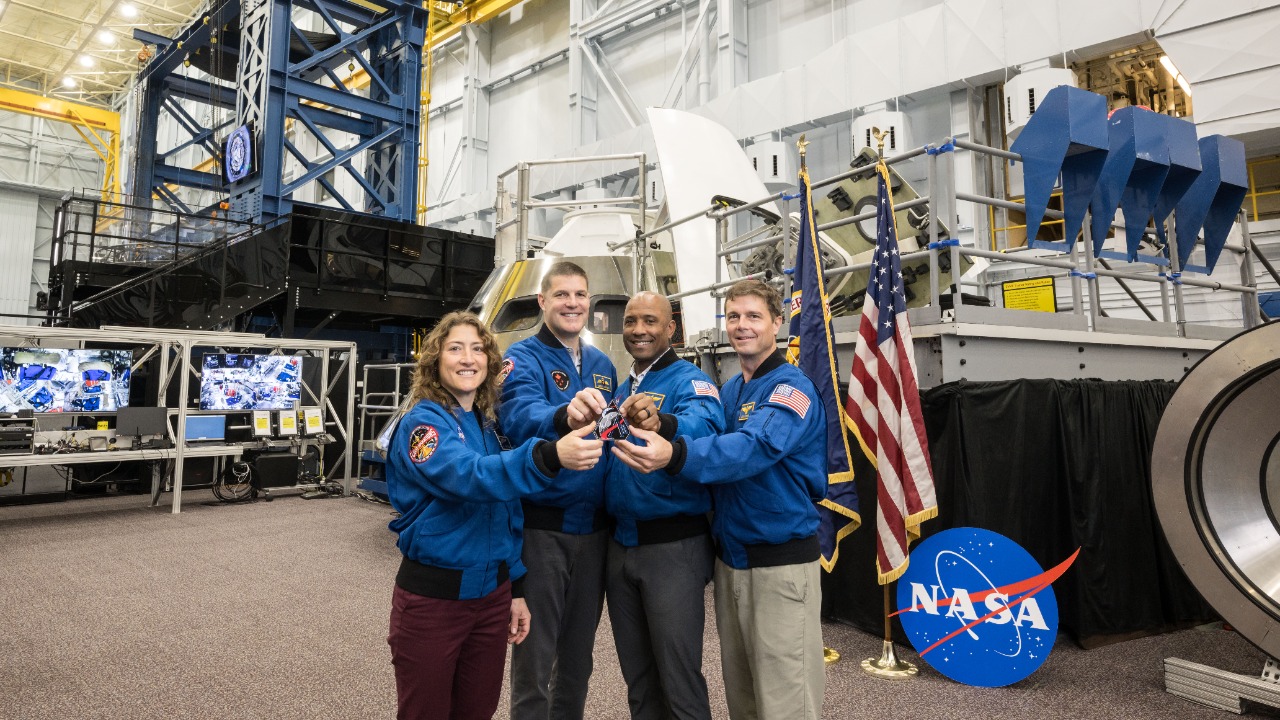
At the heart of Artemis II are the astronauts who will strap into Orion and ride SLS into deep space, serving as both explorers and test pilots. NASA has emphasized that this crew will spend their roughly ten day mission evaluating how the spacecraft’s life support, communications, and navigation systems perform when humans are on board and far from Earth, a very different environment from the uncrewed Artemis I flight. Among the astronauts assigned to the mission is JEREMY HANSEN, whose inclusion underscores the international dimension of the flight and the way NASA is using Artemis to deepen partnerships that were forged on the International Space Station and are now being extended to lunar exploration, a point that is woven into the description of the crew on the Launch Complex 39 mission overview.
The human test objectives go beyond simply surviving the trip. The crew will be tasked with manually checking Orion’s ability to operate in different modes, verifying that the capsule can handle contingencies that might arise on later missions that include lunar landings. They will also be the first people to ride the full deep space configuration of SLS and Orion, providing feedback on everything from vibration and acoustics to the ergonomics of living inside the spacecraft for more than a week. In that sense, Artemis II is as much a shakedown cruise as it is a symbolic return to the moon, and the astronauts’ experiences will feed directly into how NASA tunes the systems for the more demanding missions that follow.
Public engagement, from names on a chip to global audiences
NASA has paired the technical work on Artemis II with a deliberate push to make the mission feel participatory for people who will never leave Earth. One of the most visible examples is the invitation for members of the public to add their names to a digital list that will be etched onto hardware and carried around the moon with the crew, a gesture that turns a simple database into a symbolic ticket to deep space. The agency has framed this as a way to let people “send your name with Artemis,” and it has set up a dedicated portal where anyone can sign up to have their name included on the flight, a campaign that is laid out in the description of how send your name with Artemis works.
That effort is part of a broader strategy to connect Artemis to a new generation of space fans who may know the moon only as a distant object in the night sky or a backdrop in smartphone photos. NASA has described how Participants will be able to launch their name aboard the Orion spacecraft and the SLS, which it spells out as the Space Launch System, alongside the agency’s own astronauts. The agency has even suggested that people will be able to download a boarding pass and keep it as a collectable, framing the mission as a shared experience that extends beyond the small group of professionals on board, a concept that is detailed in the description of how Participants will launch their names around the moon.
Where Artemis II sits on the crowded launch calendar
Even a flagship mission like Artemis II has to find its place on a global launch schedule that is more crowded than at any point in the history of spaceflight. Heavy lift rockets, commercial crew flights, science observatories, and military payloads all compete for ground infrastructure, tracking resources, and public attention, and that competition shapes how NASA sequences its own launches. The agency has to coordinate with other operators and with its own internal manifest to ensure that the pads at Kennedy Space Center and other facilities are available when the lunar mission is ready to go, a reality that becomes clear when scanning the broader launch schedule that tracks upcoming flights.
For Artemis II, that means threading a needle between other high profile missions while also preserving the flexibility to slip if testing uncovers issues that need to be fixed before flight. NASA has already shown a willingness to adjust its timelines in response to technical findings, and the early 2026 window for the crewed lunar flyby is framed with that same kind of conditional language. The agency’s planners know that a rushed launch that leads to a serious problem would be far more damaging than a delay, especially for a mission that is meant to prove the safety and reliability of a new deep space transportation system.
What engineers still need to learn from this flight
From an engineering perspective, Artemis II is the mission that will either validate or challenge many of the assumptions baked into NASA’s deep space hardware. The flight is expected to test Orion’s environmental control and life support systems over the full duration of a lunar voyage, including the ability to manage carbon dioxide, humidity, and temperature in a closed cabin far from Earth. It will also put the spacecraft’s guidance, navigation, and control systems through their paces in the complex gravitational environment near the moon, a set of conditions that cannot be fully replicated in low Earth orbit and that are described as essential for sustained lunar exploration in analyses of what to expect from NASA Artemis II.
The mission will also generate data on how the Space Launch System performs with a crewed payload, including structural loads, engine performance, and the behavior of the rocket’s avionics during ascent and trans lunar injection. Engineers will be watching closely for any discrepancies between predicted and actual performance, because those differences will feed back into models that are used to plan later missions that include lunar landers and surface operations. In that sense, Artemis II is both a destination and a diagnostic tool, a flight that must succeed on its own terms while also revealing the hidden details that will determine how far and how fast NASA can push human exploration in the years that follow.
The political and cultural stakes of a 2026 lunar flyby
Beyond the technical milestones, a successful Artemis II flight in 2026 would carry significant political and cultural weight for the United States and its partners. The mission is unfolding at a time when multiple nations and private companies are racing to stake out their own presence at the moon, from robotic landers to plans for crewed flights. For NASA, sending astronauts around the moon again is a way to demonstrate that it can still lead in human spaceflight while also collaborating with allies, a balance that is reflected in the international makeup of the crew and the broader coalition behind the Artemis Program.
Culturally, the image of a crewed spacecraft looping around the moon and returning home has the potential to become a defining moment for a generation that has grown up with space as a backdrop rather than a frontier. The “America 250” branding on the Artemis 2 rocket, the public campaigns to send names around the moon, and the careful choreography of launch coverage are all signals that NASA understands the narrative power of this mission. If all goes right and the flight lifts off in early 2026, it will not just be a test of hardware, it will be a test of whether the country and its partners are ready to commit to a long term presence beyond Earth, with all the costs, risks, and rewards that commitment entails.
More from MorningOverview