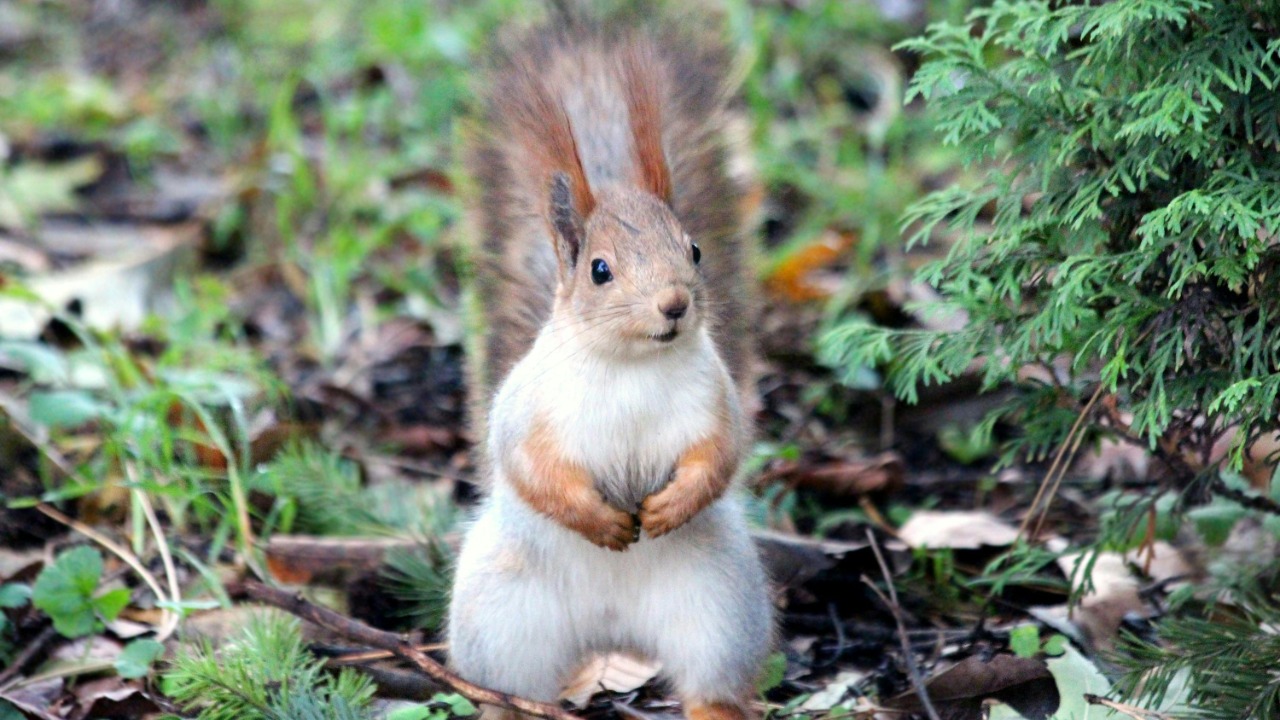

Squirrels are famously forgetful in popular culture, yet field studies show they can relocate roughly 85 percent of the nuts they hide, a success rate that would put most human key-finders to shame. That performance is not luck, it is the product of a finely tuned mix of instinct, memory, smell, and social strategy that has evolved around the high stakes of winter survival. I want to unpack how those pieces fit together, and why the same skills that keep a squirrel alive also reshape forests and even offer clues to human cognition.
The hidden logic of caching
The starting point is a behavior biologists call caching, the instinct to hide food for later instead of eating everything on the spot. For tree squirrels, that means burying acorns, walnuts, and other hard seeds in scattered locations, then returning to them when snow and cold shut down easy foraging. Caching is not a quirky side habit, it is the core of their annual energy budget, and the difference between surviving a harsh winter and starving. The behavior is innate, but it is also flexible, shaped by what food is available, how risky a site feels, and how many competitors are watching.
Because caching is so central, squirrels invest enormous effort in it long before temperatures plunge. In temperate forests, they spend weeks in autumn racing to collect and bury hundreds of individual items, often digging shallow holes, placing a nut, and carefully covering it with soil and leaves. That repetitive choreography looks simple from a distance, but it reflects a series of decisions about which nut to keep, where to place it, and how much time to spend disguising the spot. The fact that they later recover the vast majority of those buried meals shows that caching is not just hoarding, it is a sophisticated planning system.
Why 85 percent recovery is a survival threshold
When researchers say squirrels can find about 85 percent of what they hide, they are describing an average that emerges from tracking hundreds of individual caches over a season. In one discussion of field work, a scientist identified as SD explained that, Yeah, squirrels rely on a long list of special skills to reach that figure, and even then they still lose a fraction of what they cache. From a human perspective, losing 15 percent of your pantry would be a disaster. For a squirrel, that loss is built into the system and offset by over-collecting in the fall.
The 85 percent benchmark matters because it sets a rough survival threshold. Each nut is a compact packet of calories, and winter is long, so the animal must balance the energy it spends caching against the energy it will get back. If recovery rates dropped much lower, the strategy would collapse under its own inefficiency. Instead, the combination of memory, smell, and strategic placement keeps retrieval high enough that the system works, while the unrecovered 15 percent becomes an accidental investment in the next generation of trees.
Autumn triage: choosing and stashing the right nuts
Before a squirrel ever digs a hole, it has to decide which nut is worth the effort. Observers who watch them up close describe a kind of quality-control ritual: the animal picks up a nut, turns it in its paws, and sniffs it repeatedly, as if running a rapid inspection. One researcher summarized this behavior by saying, They pick up the nut, smell it, roll it around, and assess whether it is good enough to bury. That triage matters because a rotten or insect-damaged acorn is wasted effort to cache, so the animal is effectively doing on-the-spot inventory management.
Once a nut passes inspection, the squirrel has to decide where to put it. Studies of fall behavior show that Every autumn, squirrels stash hundreds of nuts and spend weeks racing to get them underground before the first hard freezes. They do not simply dump everything in one spot. Instead, they scatter caches across their home range, a pattern that reduces the risk that a single thief or flood will wipe out their reserves. The choice of micro-site, from open lawn to dense shrub, reflects a tradeoff between ease of later access and the risk that another animal will notice the hiding process.
Smell, memory, and the myth of pure instinct
Popular lore often claims squirrels just sniff around randomly until they bump into buried food, but the evidence points to a more layered system. Behavioral experiments and field observations suggest that they use both spatial memory and scent, switching between them depending on conditions. In one overview of the research, scientists asked, What is behind this obsessive pantry planning, and whether squirrels simply retrieve whatever they sniff out or actively remember specific locations. The answer that emerges is that memory plays a central role, especially in the early weeks after caching.
Smell still matters, particularly in the final moments of a search. When a squirrel returns to a general area where it has cached, it often moves with purpose, then slows and begins to sniff the ground intensely over a small patch before digging. That pattern fits with the idea that spatial memory gets the animal within a few body lengths of the target, and scent guides it over the final few centimeters. The result is a hybrid strategy that is far more efficient than random foraging, and that helps explain how they can recover such a high proportion of their buried stores even under snow or leaf litter.
How, according to Perlut, strategy beats chance
Field biologists who track individual squirrels over time emphasize that there is no single trick behind their success. One researcher, identified as Perlut, has described how squirrels rely on a suite of tactics rather than a single magic sense. How squirrels find their nuts, according to Perlut, involves combining memory, smell, and careful placement, not just one dominant cue. That means the animals are constantly updating their internal map of where food is, which sites have already been raided, and which areas are still worth checking.
Perlut also notes that squirrels do not use a single strategy to recover their caches, they adapt to context. In open areas where wind can disperse scent, they may lean more heavily on spatial memory. In dense leaf litter, scent becomes more reliable. When snow covers the ground, they appear to rely on a mental map of where they buried food relative to fixed landmarks like tree trunks or rocks. This flexible, context-dependent approach is what keeps their retrieval rate high even as conditions change from mild autumn days to deep winter.
Spatial chunking: a memory trick we share
One of the most intriguing insights from recent work is that squirrels use a memory strategy that looks a lot like a human study hack. Cognitive scientists call it chunking, the process of grouping information into meaningful clusters to make it easier to remember. A Radcliffe fellow who tracked squirrel behavior reported that This is called chunking, and that squirrels use spatial chunking by organizing their caches into zones. Instead of remembering hundreds of individual coordinates, they remember clusters of nuts in relation to broader areas.
In practice, that might mean placing one type of nut near a particular tree and another type along a fence line, effectively turning the landscape into a labeled filing system. When the animal is hungry for a high-fat walnut, it heads to the walnut zone, not to a random patch of ground. That strategy reduces cognitive load and likely boosts the 85 percent recovery rate, because the squirrel is not searching everywhere at once. For human memory researchers, the fact that a small rodent uses chunking in the wild is a powerful reminder that some of our own mental shortcuts are deeply rooted in biology.
Learning from others and from experience
Instinct sets the stage, but experience and social learning refine a squirrel’s caching performance over time. Observational work has found that Squirrels also learn from observing others, and that Studies show they can watch their peers bury food and remember those locations, enhancing their resourcefulness in securing food supplies. In other words, a squirrel is not only tracking its own caches, it is also running a mental ledger of potential theft opportunities created by neighbors.
That social awareness feeds back into how individuals cache. Animals that have been repeatedly pilfered may start to hide food in more dispersed or better concealed locations, or they may engage in deceptive behaviors like pretending to bury a nut while actually keeping it in their mouth. Over time, each squirrel’s personal history of losses and finds shapes its strategy, nudging it toward patterns that improve its odds of recovering enough food. The 85 percent figure is therefore not just a species-wide average, it is the outcome of countless small adjustments made by individuals learning from both success and failure.
Pilferage, audience effects, and cache spacing
Because other squirrels are both competitors and potential thieves, the social context around caching has a measurable impact on behavior. Experimental work on what researchers call audience effects has shown that when a squirrel knows it is being watched, it changes how and where it hides food. In one study, the fact that the squirrels in this experiment spaced their caches more widely in the presence of other squirrels provided evidence that they take actions to avoid or minimize pilferage, a pattern documented in detail in Audience effects research on grey squirrels.
That spacing strategy serves two purposes. First, it reduces the payoff for a thief, because discovering one cache does not automatically reveal a dense cluster of others. Second, it makes it harder for a watching rival to track every hiding spot, especially if the caching squirrel moves in a non-linear pattern or uses decoy digs. These audience effects show that squirrels are not just reacting to the physical environment, they are reading the social landscape and adjusting their caching to keep as much of their investment as possible under their own control.
Open fields, risky bets, and decoy stashes
At first glance, some squirrel choices look counterintuitive, such as burying valuable food in the middle of an exposed lawn where hawks and cats have a clear line of sight. Garden observers have noted that They also store their most valuable stash in wide open spaces where predation risks are high, just in case other squirrels are watching. The logic is that a bold, visible cache can function as a decoy, drawing attention away from more secure, hidden reserves elsewhere.
This kind of strategic misdirection suggests a level of planning that goes beyond simple trial and error. By placing some nuts in risky, obvious spots, a squirrel may be effectively paying a small tax to social thieves in order to protect the bulk of its holdings. The decoy caches might be raided quickly, but if they satisfy the curiosity of nearby rivals, the better concealed caches in brushy or complex terrain stand a higher chance of remaining untouched until the owner returns. That tradeoff again feeds into the overall recovery rate, with the animal accepting some losses as the cost of keeping the majority of its winter food secure.
Why do squirrels bury nuts at all?
It is easy to forget that burying food is itself a risky move. A nut in the mouth is guaranteed energy, while a nut in the ground might be stolen, rot, or simply be forgotten. Yet the evolutionary logic is clear: in seasonal environments, there are times of plenty and times of scarcity, and caching smooths that curve. Educators who work with students on ecology have pointed out that Enjoying a well cached nut is only part of the story, because unrecovered nuts can sprout and grow into full oak trees.
That side effect turns squirrels into accidental foresters. Every acorn that is buried and not retrieved has a chance to germinate, and over decades those missed caches can shape the composition of a woodland. From the squirrel’s perspective, that is just the cost of doing business. From the forest’s perspective, it is a powerful dispersal service that spreads tree seeds away from the parent, reducing competition and helping forests regenerate after disturbance. The 15 percent of nuts that are not recovered are therefore not wasted, they are reinvested into the ecosystem that will produce the next crop of food.
Everything you need to know about their senses
Underpinning all of this behavior is a sensory toolkit that is finely tuned to both danger and opportunity. Squirrels have sharp vision for spotting predators and rivals, but their sense of smell is just as critical for locating buried food. Pest control specialists who study their behavior note that Even when they come face to face with a threat, squirrels know what is around and what to evade, a vivid example of survival of the fittest in action. That constant environmental scanning also helps them remember and relocate cache sites, because landmarks and scent cues are integrated into a single mental map.
The same agility that lets a squirrel sprint up a tree or dart across a power line also plays a role in caching. Quick, precise movements allow them to dig, bury, and cover a nut in seconds, minimizing the time they are exposed to predators while hiding food. Their whiskers and paws provide tactile feedback as they handle nuts, helping them detect cracks or insect damage during that initial inspection. All of these sensory and motor skills feed into the 85 percent recovery rate, because they reduce errors at every stage from selection to retrieval.
What cameras and tracking tags reveal
Modern tools have given researchers a more detailed look at how squirrels actually behave in real time. Motion-triggered cameras, GPS tags, and even consumer video platforms have captured the step-by-step process of caching and retrieval. One widely shared clip titled Nov shows how a squirrel appears to methodically inspect, bury, and later relocate nuts, underscoring that the behavior is anything but random. Watching these sequences frame by frame reveals subtle patterns, like the way an animal pauses to scan for observers before committing to a cache site.
These visual records also help confirm what field notes and experiments suggest about memory and smell. When a squirrel returns to a cache, it often heads straight for a particular tree or rock, then begins a focused search in a tight radius, as if following an internal compass. Only in the final seconds does it drop its nose to the ground and start sniffing, a pattern that matches the idea that memory gets it close and scent does the fine-tuning. By combining traditional observation with these newer tools, scientists can quantify behaviors that were once just anecdotal, strengthening the case for how squirrels achieve their high retrieval rates.
How every fall becomes a test of strategy
Each autumn, the cycle begins again. Reports on seasonal behavior note that Every fall, squirrels hide thousands of acorns and use smell, memory, and even theft to get them back, spending weeks stashing hundreds of nuts to survive the colder winter months. That seasonal sprint is a stress test of everything they have learned: how to choose the best nuts, where to hide them, how to avoid thieves, and how to remember it all when snow covers the ground.
From my perspective, the most striking part of this story is how seamlessly all these elements fit together. Caching as a behavior, chunking as a memory strategy, audience effects in social settings, and the sensory skills that tie them together all converge on a simple outcome: a small animal that can reliably find about 85 percent of what it hides. The next time a squirrel pauses on a branch with an acorn in its mouth, it is worth remembering that you are watching a highly tuned survival algorithm in action, one that keeps the animal alive, reshapes the forest around it, and offers scientists a living model of how memory and strategy evolve in the wild.
Supporting sources: Embracing the Value of Squirrels and Chipmunks in our Garden.
More from MorningOverview