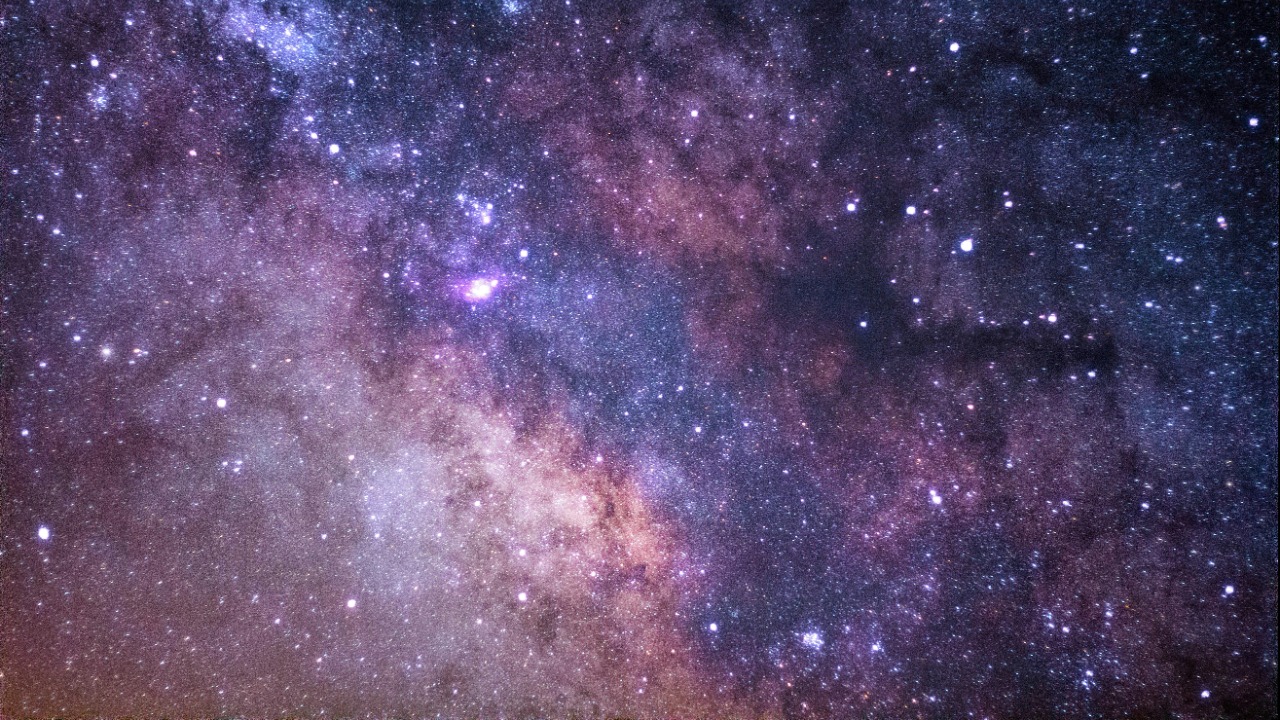

Across physics, biology and philosophy, a once-fringe idea is gaining new intellectual weight: the possibility that the cosmos behaves less like a dead machine and more like a living system. Instead of treating life and mind as late, local accidents, a growing set of theories asks whether the Universe itself might be evolving, sensing and perhaps even thinking in ways that resemble an organism.
I see this shift not as a retreat into mysticism but as a response to puzzles that standard physics struggles to resolve, from the fine-tuning of cosmic parameters to the stubborn complexity of life. The result is a provocative landscape of models, from “cosmic cell” analogies to neural network Universes, that challenge what it means to be alive at the largest possible scale.
The return of a very old idea
The notion that the Universe is alive is not a brand‑new provocation from social media, it is a revival of a very old intuition dressed in modern science. Philosophers have long imagined a cosmos suffused with life or mind, and contemporary researchers are now translating that hunch into testable frameworks that treat cosmic evolution and biological evolution as variations on a single theme.
In this emerging picture, the same logic that shapes organisms, such as adaptation and selection, is being applied to galaxies, black holes and even the laws of physics themselves. Work on a Biological, Like Evolution of the Universe Quoting Hao Wei at the Beijing Institute of Technology, for example, explicitly compares cosmic history to a “fittest survive” scenario, suggesting that universes or cosmic conditions might undergo a kind of natural selection. I find that once you accept this analogy, the line between a living system and a “merely” physical one starts to blur.
From cosmic cell to giant brain
Some of the most vivid proposals come from researchers and theorists who lean into biological metaphors to make sense of the cosmos. One speculative model, known as The Cosmocell Hypothesis, imagines our Universe as “Just a Microscopic Cell Inside a Vast, Living Organism.” In that view, the Big Bang becomes a kind of “Cosmic Cell Division,” and familiar structures like clusters of galaxies resemble intracellular architecture inside a much larger being.
Others push the analogy in a different direction, arguing that the Universe may function like a vast neural network that learns and processes information. Work highlighted in a recent analysis of the Universe as a giant neural network notes structural and mathematical parallels between cosmic web simulations and brainlike networks, and suggests that a new scientific paradigm is emerging from the history of science and philosophy. If the cosmos is wired like a brain and evolves like a cell, I think it becomes harder to insist that life is an incidental footnote rather than a central feature.
Cosmological natural selection and fecund universes
One of the most developed attempts to treat the Universe as something that reproduces and adapts is cosmological natural selection. In this framework, universes are not static one‑offs but members of a population, each with slightly different physical constants that affect how many black holes they produce. A recent discussion of the key implication of cosmological natural selection stresses that slight variation allows for inheritance, and some of those slight variations would lead to more black holes, which in turn could seed new universes.
Advocates of this idea sometimes describe a landscape of “fecund universes” that behave almost like a breeding population. A detailed overview of Cosmological natural selection (fecund universes) even invites readers to “Think of” how Cicadas “choose” to hide out for 13 or 17 years as nymphs, using that life‑cycle strategy as an analogy for how universes might “choose” parameter sets that maximize their reproductive success. I see this as a bold attempt to extend Darwinian logic to the largest possible scale, turning the multiverse into something that looks uncannily like an evolving biosphere.
Biology reshapes cosmology
As these ideas spread, biologists and complexity theorists are increasingly weighing in on what counts as life when the system in question is the entire cosmos. In a recent synthesis of changing theories on how the universe works, researchers argue that biological evolution should not be seen as a unique process that gave rise to a qualitatively distinct form of matter. Instead, they frame evolution as one instance of a broader pattern in which complex structures emerge to perform some kind of function, whether in cells, ecosystems or cosmic structures.
In that same work, the authors go further, suggesting that we may need to rethink concepts like function and purpose at multiple scales, from the molecular to the cosmic. A companion discussion of cosmic function and purpose… argues that if self‑organizing systems consistently generate structures that stabilize or propagate themselves, then talk of “purpose” may not be mere metaphor. I find that once you accept that logic, it becomes easier to entertain the idea that the Universe might have organism‑like goals, such as maximizing complexity or information processing.
Life, entropy and a 33‑billion‑year arc
Any claim that the Universe is alive has to grapple with its birth and eventual death, and here too the language of life is creeping into mainstream cosmology. A Cornell physicist has recently argued that the Universe is approaching the midpoint of its 33-billion-year lifespan, using new data to suggest that cosmic expansion will eventually reverse. In that scenario, the cosmos would end in a “big crunch,” collapsing back into a dense state after a long period of growth.
A more detailed account of this work notes that The universe is approaching the midpoint of that 33‑billion‑year arc and could return to a single point at the end. If I treat this timeline as a kind of cosmic life cycle, with a birth, maturation and eventual death, it becomes tempting to ask whether the rise of complexity and consciousness in the middle of that story is incidental or integral. In biology, midlife is often when organisms are most capable of reproduction and learning, and some theorists wonder if the Universe is in a similarly fertile phase.
Consciousness everywhere, or nowhere?
Even if the cosmos evolves and self‑organizes, that does not automatically make it conscious. Here, philosophers have revived Panpsychism, the view that mentality is fundamental and ubiquitous in the natural world, as a way to bridge physics and experience. On this account, every physical system has some minimal mental aspect, and complex minds like ours emerge when those tiny “mind‑dust” elements combine in the right way, offering a unified conception of nature that does not treat consciousness as an afterthought.
Contemporary thinkers are pushing this line of thought into public debate. Philosopher Philip Goff, a professor at Durham University and a leading defender of panpsychism, has argued that the question “Is the universe conscious?” is not just a religious or mystical puzzle but a serious philosophical and scientific one. In his view, if mentality is baked into the fabric of reality, then it is at least coherent to talk about a Universe‑scale subject of experience, even if we have no direct way to access it. I find that this perspective reframes the debate: instead of asking whether a dead Universe somehow “wakes up,” it asks whether life and mind are how the Universe has always expressed itself.
Brains, networks and a terrifying resemblance
For many readers, the idea of a conscious cosmos only became visceral when visual evidence started to resemble something out of a science‑fiction film. In a widely shared video, astrophysicist Franco Vaza describes how he met his old friend Alberto Fileleti, now a neurosurgeon, at a bar, and how their conversation turned to the eerie similarity between maps of the cosmic web and neural tissue. When they compared data, the statistical properties of galaxy clusters and brain networks turned out to be strikingly alike, from connectivity patterns to information flow.
Vaza has since argued that this resemblance is not just a visual coincidence but a hint that the same organizing principles might be at work in both systems. When I place his work alongside the neural network Universe paradigm, the picture that emerges is unsettling: a cosmos that not only looks like a brain but may also process information in a comparable way. Whether or not that amounts to consciousness, it certainly challenges the idea that the large‑scale structure of reality is random or purely inert.
Biocosmology and a 95% quantum sea
Some theorists go further, arguing that life, mind and cosmos are aspects of a single underlying medium. In a dense but influential paper on Biocosmology, Multiverse, Life and Consciousness, the authors claim that the Universe consists of 95% superfluid quantum space (SQS) and 5% matter, a breakdown that radically reframes how entropy and order behave. In their view, Life emerges as a process that taps into the same energy as this SQS, transcending traditional dualism between mind and matter.
On this account, the evolution of life in the multiverse is not an isolated biological story but a manifestation of deeper cosmological dynamics. If 95% of reality is a superfluid quantum substrate and only 5% is familiar matter, then organisms like us might be specialized structures that interface between the two, channeling information and energy in ways that stabilize the larger system. I find this picture compelling because it treats living beings not as exceptions to physical law but as particularly intense expressions of it, akin to vortices in a fluid that reveal the properties of the medium itself.
Biocentrism and the primacy of observers
Another radical strand of thought flips the usual hierarchy entirely, arguing that life and consciousness are not products of the Universe but its creators. The framework known as Biocentrism presents itself as a revolutionary scientific theory proposing that life and consciousness create the universe, challenging traditional physics‑based assumptions. In this view, space and time are tools of the mind rather than containers for it, and the fundamental immortality of life follows from the idea that observers are primary.
Biocentrism is controversial, in part because it appears to invert the causal arrow that most scientists take for granted. Yet when I set it alongside panpsychism, biocosmology and cosmological natural selection, a common theme emerges: the insistence that mind and life cannot be cleanly separated from the fabric of reality. Whether one believes that consciousness is fundamental, emergent or both, these theories converge on a picture in which the Universe behaves less like a cold stage and more like a participant in its own drama.
Materialism under pressure
All of this puts pressure on traditional Materialism, the view that reality is nothing more than interactions of physical matter. Advocates of a “living systems” perspective argue that there is vastly more to reality than that, and that treating the cosmos as alive yields a richer and arguably more accurate account of phenomena like self‑organization and consciousness. The idea of a “living universe,” they contend, offers a more coherent framework for understanding why the world seems tuned for complexity rather than decay.
Physicists themselves are starting to acknowledge that life poses a unique challenge to reductionist models. One recent essay on the truth physics can no longer ignore notes that, from a physicist’s perspective, no complex system is weirder or more challenging than life, in part because its organization and function resist being explicitly described and predicted. When the most fundamental science admits that its tools falter in the face of living complexity, I think it is unsurprising that some researchers start to wonder whether the Universe itself might be better modeled as a living system than as a simple machine.
More from MorningOverview