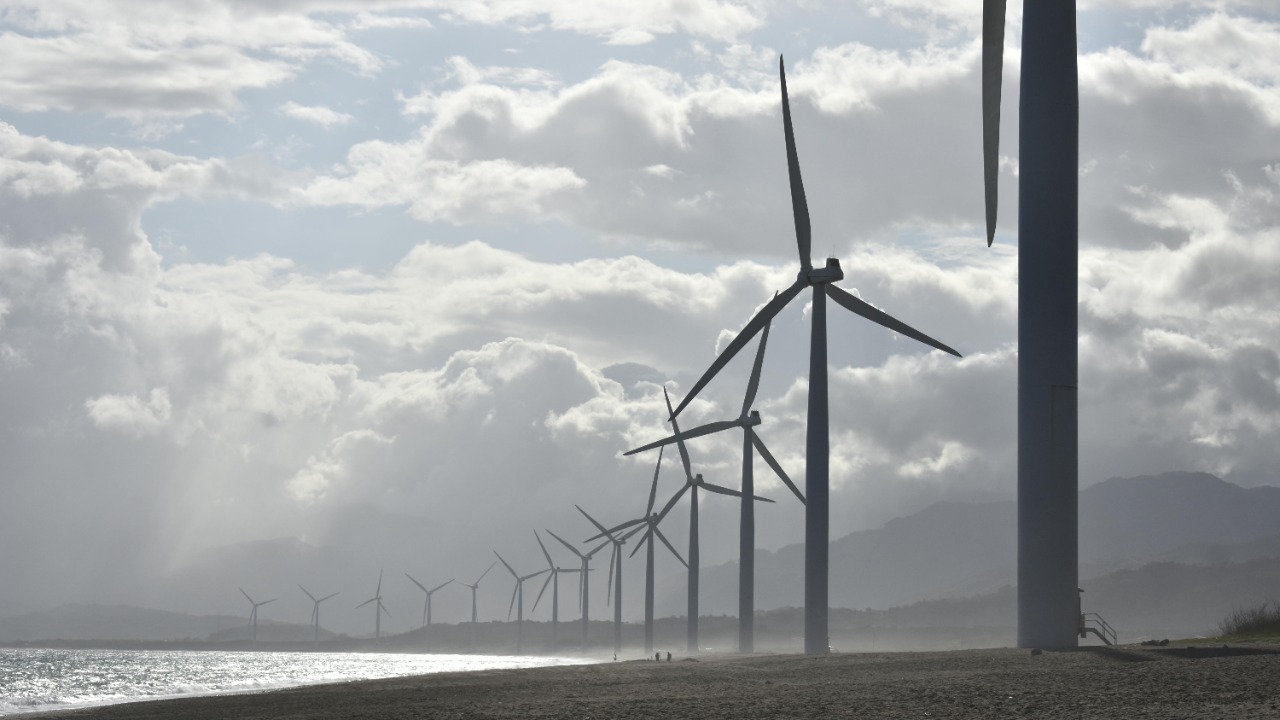

Virginia’s flagship offshore wind developer has taken the Trump administration to court, arguing that a sudden order to halt construction violates federal law and threatens billions in clean energy investment. The lawsuit, filed in federal court in Norfolk, turns a policy fight over turbines in the Atlantic into a high‑stakes legal test of presidential power over the energy transition. At its center is a clash between President Donald Trump’s effort to freeze offshore wind permits and a utility that has already poured money into steel, ships, and jobs along the Virginia coast.
The case arrives just as a separate federal ruling has already undercut Trump’s broader wind moratorium, raising questions about how far the White House can go in trying to slow projects that states and companies have spent years planning. What happens next will shape not only Virginia’s grid and coastal economy, but also the future of offshore wind from Massachusetts to Rhode Island and beyond.
The Norfolk lawsuit that put Virginia at the center of Trump’s wind fight
The immediate flashpoint is a complaint filed in the Eastern District of Virginia, Norfolk Division, by Dominion Energy, the utility that is building a massive offshore wind farm off Virginia Beach. The company is asking a judge in Norfolk to block a Trump administration stop‑work directive that ordered federal agencies to halt approvals for offshore wind projects, including Dominion’s Coastal Virginia Offshore Wind expansion. According to local reporting from VIRGINIA BEACH, Va., the case was lodged in the U.S. District Court for the Eastern District of Virginia, Norfolk Division, underscoring how the legal battle is rooted in the same coastal communities that host the project’s staging yards and transmission corridors, as described in coverage of the Dominion Energy complaint.
From the outset, Dominion has framed the case as more than a contract dispute, casting the Trump order as an unlawful intrusion into a project that already cleared years of environmental review and state regulatory scrutiny. A detailed account of the filing notes that the Virginia offshore wind developer is suing over halted projects after the administration’s directive abruptly froze work that was already underway off the coast of Norfolk, with turbine components and support vessels staged nearby, a scene captured in reporting on the Virginia offshore wind developer.
Dominion Energy’s bet on offshore wind and Virginia’s “data center alley”
Dominion Energy is not a niche renewable start‑up, it is the dominant electric utility in Virginia and a central power supplier to the state’s booming “data center alley” in Northern Virginia. In earlier statements about the project, the company has emphasized that its offshore wind buildout is designed to feed the enormous electricity demand from cloud campuses and artificial intelligence facilities clustered along key transmission corridors. Reporting on the lawsuit notes that Dominion Energy, an offshore wind developer and utility serving Virginia’s data center alley, is now asking a federal judge to shield that investment from a presidential order that could strand assets and force the company to fall back on more fossil‑heavy generation, a link made explicit in coverage of Dominion Energy’s role.
In its legal and public messaging, Dominion has also stressed the consumer stakes, arguing that offshore wind is a long‑term hedge against volatile fuel prices and a way to meet Virginia’s clean energy mandates without sacrificing reliability. The company has already invested heavily in port upgrades, specialized vessels, and grid interconnections, and it now warns that a prolonged pause will ripple through customer bills and regional planning. One detailed industry account notes that Dominion has told regulators and investors that the offshore wind pause is costing over 5 million dollars a day, a figure that underscores how quickly the financial pressure mounts when construction stops, as described in the report that details the daily costs of the delay.
Inside Trump’s stop‑work order and the broader wind energy moratorium
The Norfolk case does not exist in a vacuum, it is part of a broader campaign by President Donald Trump to slow or halt offshore wind development through executive action. Earlier this year, Trump issued an order instructing federal agencies to block or suspend approvals for wind energy projects on the outer continental shelf, effectively creating a wind energy moratorium that reached from Virginia to New England. A detailed legal analysis of that policy describes how the administration’s memorandum sought to halt federal approvals of wind projects and related permits, a move that quickly drew lawsuits from states and industry groups and was later at the heart of a decision in which a federal court struck down Trump’s Wind Energy Moratorium.
In the Virginia case, Dominion Energy argues that the stop‑work directive that followed the moratorium is both substantively and procedurally flawed, claiming that the administration bypassed required environmental and administrative steps before ordering agencies to freeze permits. The company’s complaint echoes arguments that have already found traction in federal court, where U.S. District Court Judge Patti B. Sar ruled that Trump’s memorandum and the actions taken to implement it were unlawful and ultra vires, meaning beyond the president’s legal authority, as detailed in a ruling that explains how, on Dec. 8, District Court Judge Patti B. Sar concluded that the administration’s efforts to implement the memorandum were unlawful and ultra vires.
The legal theory: “arbitrary and capricious” and “procedurally deficient”
At the heart of Dominion’s lawsuit is a familiar administrative law claim, that the Trump order is “arbitrary and capricious” under the Administrative Procedure Act. In plain terms, the company is telling the court that the White House cannot simply reverse course on a complex, multi‑year permitting process without offering a rational explanation and following the procedural steps that Congress has laid out. Reporting on the complaint notes that Dominion Energy has explicitly labeled the Trump directive arbitrary and capricious, language that signals the utility’s intent to align its case with a long line of precedents that limit sudden policy shifts, a framing that appears in coverage of how Dominion Energy sues over Trump’s order.
The company is also attacking the process behind the stop‑work order, arguing that the administration failed to provide notice, solicit public comment, or adequately consider the reliance interests of states and developers that had already committed to offshore wind. In a detailed breakdown of the filing, one business outlet reports that Dominion Energy has sued the federal Bureau of Ocean Energy Management and the Department of the Interior, accusing the agencies of acting in a way that is not only arbitrary but also “procedurally deficient,” a phrase that captures the company’s claim that officials skipped required steps when they moved to halt the project, as laid out in the description of how Dominion Energy sues the Bureau of Ocean Energy Management and the Department of the Interior.
Billions at stake: costs, reliability, and the East Coast grid
Beyond the legal theory, Dominion is warning that the Trump order will have concrete financial and reliability consequences for customers in Virginia and across the East Coast. The company has told regulators that every day of delay adds more than 5 million dollars in costs, as specialized vessels sit idle, crews are sidelined, and supply contracts are pushed back. In an industry briefing, Dominion said that delaying the project will lead to increased costs for customers and threaten long‑term grid reliability, arguing that offshore wind is a key resource for meeting peak demand and balancing intermittent solar, a claim that appears in a report noting that the company warned that postponing construction would raise costs and undermine reliability for our east coast population centres.
Those stakes extend beyond Virginia’s borders, because the project is designed to plug into a regional grid that serves millions of customers from the Mid‑Atlantic to New England. Dominion and its allies argue that offshore wind will help diversify the resource mix and reduce dependence on gas pipelines that have become bottlenecks during extreme weather. The company’s filings and public statements portray the Trump order as a short‑sighted move that could lock in higher emissions and higher bills for years, a theme echoed in coverage that describes how the Virginia offshore wind developer is suing over halted projects that were expected to deliver large volumes of clean power into the regional grid, as detailed in the account of the Virginia offshore wind developer’s halted projects.
Other projects caught in the crossfire: Vineyard Wind and Revolution Wind
Virginia’s case is the most immediate test of Trump’s stop‑work order, but it is far from the only project affected. The same directive has ensnared the Vineyard Wind project under construction in Massachusetts and the Revolution Wind project in Rhode Island, two of the most advanced commercial‑scale offshore wind farms in the United States. A detailed national report on the fallout notes that the other projects are the Vineyard Wind project under construction in Massachusetts and Revolution Wind in Rhode Island, highlighting how the administration’s action has frozen work along multiple stretches of the Atlantic coast, as described in coverage that lists Vineyard Wind in Massachusetts and Revolution Wind in Rhode Island among the affected developments.
Developers and state officials in Massachusetts and Rhode Island have warned that the pause could derail construction schedules, jeopardize tax revenues, and undermine carefully negotiated supply‑chain investments in ports and factories. Democratic governors in those states have vowed to fight the order, casting it as the latest action by the Trump administration to hinder clean energy and climate goals. A detailed account of the political response notes that Democratic leaders see the halt as part of a broader pattern of hostility to offshore wind, a pattern that has now triggered resistance not only from environmental groups but also from labor unions and local business coalitions that had banked on the jobs and contracts tied to projects like Vineyard Wind and Revolution Wind, as reflected in reporting that describes how Democratic governors vowed to fight Trump’s order.
The Portsmouth Marine Terminal: where the pause is painfully visible
Nowhere are the effects of the stop‑work order more tangible than at The Portsmouth Marine Terminal, the sprawling port facility that Virginia has transformed into a staging ground for offshore wind. Before the Trump directive, the terminal was a hive of activity, with wind turbine bases, generators, and blades lined up along the docks, ready to be towed out to sea by specialized support ships. A detailed on‑the‑ground report describes how wind turbine bases, generators and blades are positioned along with support ships at The Portsmouth Marine terminal at the mouth of the Elizabeth River, a vivid snapshot of a supply chain that has been built up over years and is now partially frozen by a political decision, as captured in coverage of wind components at The Portsmouth Marine terminal.
For local workers and businesses, the pause is not an abstract policy debate but a question of whether contracts will be honored and paychecks will keep coming. Stevedores, welders, and vessel crews who had expected steady work installing turbines now face uncertainty, while port authorities worry that a prolonged halt could scare off future investment in offshore wind logistics. The Norfolk lawsuit is, in part, an attempt to reassure those stakeholders that the project will move forward, by convincing a judge that the Trump administration cannot simply walk away from the commitments that made The Portsmouth Marine Terminal a centerpiece of Virginia’s clean energy strategy, a theme that runs through accounts of how the Virginia offshore wind developer is suing over a Trump administration order halting projects that were already physically staged at the port, as described in the same detailed report from The Portsmouth Marine terminal.
Federal courts push back: the earlier ruling against Trump’s offshore ban
Dominion’s lawyers are entering a legal landscape that has already turned against the Trump administration’s offshore wind strategy. Earlier this month, a federal judge in WASHINGTON, D.C., threw out President Donald Trump’s executive order blocking wind energy projects, siding with a coalition of state attorneys general who argued that the president had overstepped his authority. A detailed account of that decision notes that a federal judge on Monday struck down President Donald Trump’s executive order blocking wind energy projects, a ruling that signaled the courts’ willingness to check efforts to impose a sweeping ban on offshore wind, as described in coverage that reports how a judge in WASHINGTON struck down Trump’s order.
That case was brought by attorneys general from 17 states and Washington, DC, who challenged a memorandum that halted federal approvals of wind projects and related permits. A detailed clean energy report explains that attorneys general from 17 states and Washington, DC, filed a lawsuit against the memorandum, supported by industry and public interest groups that saw the ban as a direct threat to their projects and climate goals, as laid out in the account of how attorneys general from 17 states and Washington, DC challenged the ban. For Dominion, that earlier victory offers both a legal roadmap and a measure of political cover, suggesting that judges are skeptical of broad attempts to shut down offshore wind without a clear statutory basis.
What comes next for Virginia, Trump, and the offshore wind buildout
The Norfolk lawsuit now forces a direct confrontation between Dominion Energy and the Trump administration over who controls the pace and direction of offshore wind development. If the court sides with Dominion and issues an injunction, the company could resume construction while the broader legal questions play out, preserving its schedule and sending a signal to other developers that the federal courts will not tolerate abrupt, unexplained reversals. If the judge instead upholds the stop‑work order, the decision would embolden the White House to press its advantage, potentially tightening the moratorium and inviting further appeals that could drag on for years, a scenario that would test the patience of investors and state officials who have already committed to offshore wind, as reflected in the detailed accounts of how Dominion Energy has sued the federal government over the offshore wind farm halt.
For now, the only certainty is that Virginia’s case has turned a policy dispute into a constitutional and administrative law test that will shape the future of clean energy along the Atlantic seaboard. The outcome will influence not just Dominion’s Coastal Virginia Offshore Wind project, but also the fate of Vineyard Wind in Massachusetts, Revolution Wind in Rhode Island, and any future projects that hope to plug into the same grid. As the turbines sit idle at The Portsmouth Marine Terminal and legal briefs pile up in Norfolk and WASHINGTON, the clash between President Donald Trump’s order and the ambitions of states, utilities, and developers has become a defining battle over how quickly the United States will build out its offshore wind fleet, a battle that began when a Virginia offshore wind developer sued over a Trump administration order halting projects and that now stretches from the docks of Norfolk to the federal bench that has already struck down Trump’s Wind Energy Moratorium.
More from MorningOverview