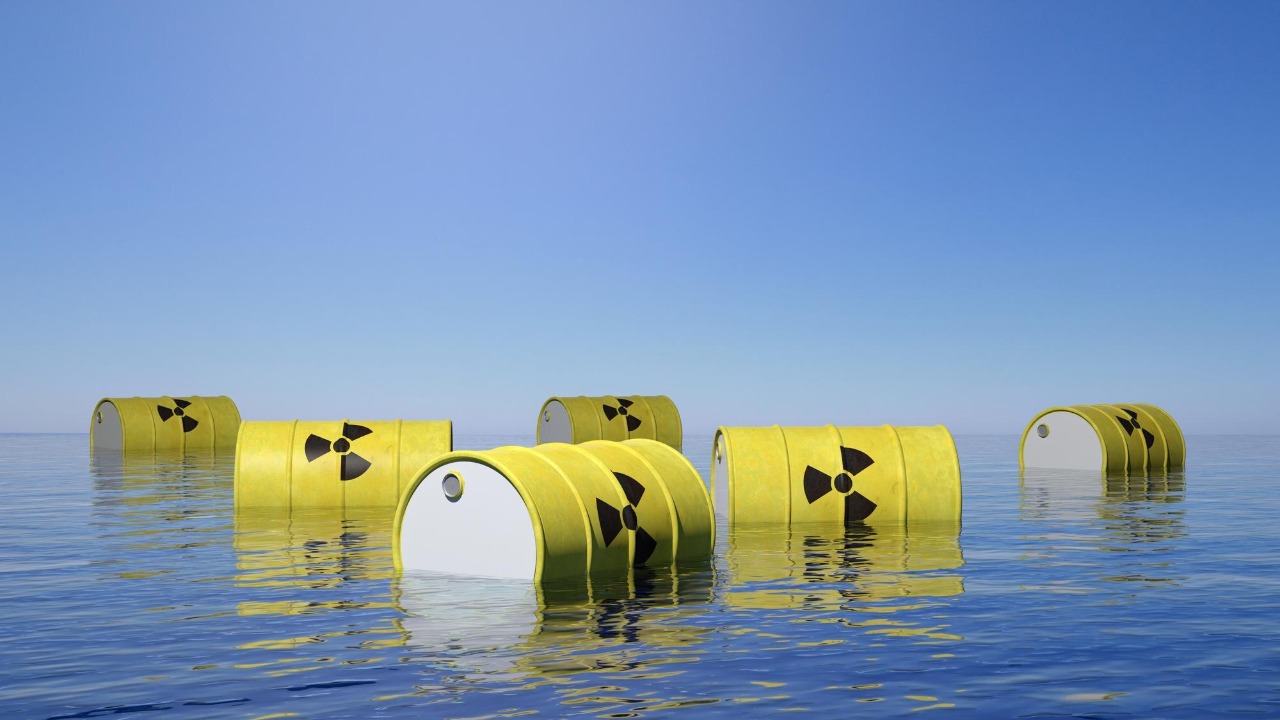

Nuclear power’s dirtiest secret is not how the fuel is made, but where it ends up sitting for decades: in crowded pools of water at the very plants that burned it. The technology to move most of that waste into safer, simpler dry storage has existed for years, yet political stalemate and institutional caution keep thousands of tons of spent fuel stranded in facilities that were never meant to be long term vaults. If the United States is serious about both safety and an expanded nuclear role in a warming world, shifting that waste out of pools and into robust casks is the most obvious step it keeps postponing.
How spent fuel wound up marooned at reactor sites
When a reactor discharges used fuel, the assemblies are blisteringly hot, both thermally and in terms of radiation, so operators lower them into deep basins of water that act as both coolant and shield. These spent fuel assemblies are initially stored in pools of water at the reactor site to cool and reduce radiation levels, a practice that made sense as a short term bridge but has quietly become a de facto long term plan in the absence of a national repository. Over time, racks have been reconfigured and pools have been packed tighter, turning what were supposed to be interim cooling ponds into dense warehouses of high level waste.
Once the fuel has cooled for several years, it no longer needs the constant circulation and shielding that pools provide, yet it often stays there because there is nowhere else to go. As one technical overview notes, after this initial period the assemblies can be transferred into sealed containers made of steel and concrete for interim storage, a step that dramatically reduces reliance on active cooling systems and on-site infrastructure once they leave the pools. Instead, decades of political gridlock over a permanent repository have left utilities managing what amounts to a national waste problem one pool at a time.
The basic fix: move fuel from water to concrete and steel
The most straightforward way to reduce the risk of these crowded basins is to get as much fuel as possible out of the water and into rugged dry casks sitting on reinforced pads. Industry engineers have been doing exactly that at a growing number of plants, where the spent fuel rods are put in big steel and concrete casks and stored on concrete pads at the plant sites once they have cooled sufficiently. As COHON explained, Today nuclear waste is stored at the power plants where it is generated, and the shift to dry storage is already a routine part of that on-site management rather than an exotic experiment once the fuel has cooled.
Dry casks are not a permanent solution, but they are a clear safety upgrade over leaving as much fuel as possible in deep pools that depend on pumps, power and complex plumbing. A National Academy of Sciences panel urged moving more material into such dry systems for safety, and the Nuclear industry has been steadily shifting waste to these dry sites for temporary storage of spent nuclear fuel as a result in response to those recommendations. The fix is not glamorous, and it does not resolve the question of a final repository, but it sharply cuts the consequences of a pool leak, loss of cooling or natural disaster.
What exactly are we storing, and why does it matter?
Public debate often blurs together very different kinds of radioactive leftovers, which makes it harder to see how modest changes in storage can meaningfully reduce risk. In the United States, Two main types of radioactive waste are stored: leftover waste from Cold War weapons production and waste from generating nuclear energy, each with its own chemistry, volume and hazard profile stored at different kinds of sites. The high level spent fuel sitting in reactor pools is compact, intensely radioactive and thermally hot, which is why it demands engineered systems rather than improvised fixes.
By contrast, much of the legacy material from the Cold War weapons complex is lower in heat but spread across vast volumes of contaminated soil, sludge and equipment. That distinction matters because the engineering challenge at power plants is not how to contain diffuse contamination, but how to handle a relatively small number of very hot, very radioactive assemblies in a predictable way. Moving those assemblies into standardized steel and concrete containers is a problem that has been solved in practice, even as the country still struggles with how to remediate sprawling weapons sites where hazards can show up in unexpected forms, including the radioactive wasp nests discovered at one South Carolina facility that once produced parts of nuclear weapons.
Dry casks are safer, but they are not the end of the story
Shifting fuel from pools into casks is often described as “interim” storage, and that label is accurate in both the technical and political sense. The casks are designed to sit for decades, not centuries, and they are meant to bridge the gap until a permanent, once and for all sealed underground repository is available. Serious discussions about this issue started in the US, as one technical review notes with reference, and are still ongoing in nuclear communities in choosing between options for reprocessing and for the once and for all sealed underground repositories that would ultimately take this material as a final destination.
In practice, that means communities hosting reactors are also hosting what look more and more like long term waste parks, even if the official language still calls them temporary. At Maine Yankee, for example, the reactor is gone but the fuel remains in a dedicated installation where spent nuclear fuel is stored in dry casks under the oversight of the Nuclear Regulatory Commission and information is shared through the Nuclear Regulatory Commis and the Nuclear Energy Institute’s web sites to explain how that system works. The longer the national repository question drags on, the more these “interim” pads start to look like the default solution, which only heightens the urgency of at least getting fuel out of vulnerable pools first.
Yucca Mountain, salt beds and the stalled search for a permanent home
Behind the pool and cask debate sits a larger, unresolved question: where the country will ultimately put its high level waste. For decades there has been a proposal to build a permanent central repository under Nevada’s Yucca Mountains, a site chosen for its dry climate and geology, but that project has been frozen by political opposition and legal fights. At the same time, research into other geologies has raised new doubts, with one study warning that nuclear waste storage sites in rock salt may be more vulnerable than previously thought, complicating earlier assumptions that thick salt beds would be a simple permanent storage solution for high level nuclear waste and forcing regulators to revisit their models.
The political stalemate around Yucca Mountains in Nevada has become a symbol of how disposal is less a technological problem than a governance one. Furthermore, although most experts agree that disposal of spent nuclear fuel is not a technological issue, political opposition has blocked efforts to consolidate such fuel at Yucca Mountain in Nevada, leaving utilities to improvise with on-site storage and interim fixes instead of a single national facility. That impasse is precisely why moving fuel out of pools into casks is so important: if the country cannot agree on a final destination, it can at least agree not to leave the most dangerous material in the most fragile configuration.
Interim storage proposals and the politics of “temporary” fixes
In the absence of a federal repository, some states and private ventures have floated the idea of consolidated interim storage, where casks from multiple reactors would be shipped to a single, purpose built site. Advocates argue that such facilities could help solve a policy problem that has been stalled at the federal level by taking pressure off individual plant communities and creating economies of scale for security and monitoring. As one regional report put it, “So the core issue of what this proposal and project is getting at is helping solve a policy problem that has been stalled at the federal level,” while also warning that “But essentially, it’s a very temporary solution” that does not replace the need for a permanent repository even if it buys time.
From my perspective, that tension between “temporary” and “forever” is exactly why the pool problem is so glaring. If policymakers are going to keep arguing over where a final repository should go, the least they can do is make sure the waste is sitting in the safest available interim form while they argue. Consolidated sites may or may not move forward, but the logic of getting fuel into passively safe casks, whether at a central facility or on the plant’s own concrete pad, is hard to dispute when the alternative is leaving it in water that depends on pumps, pipes and backup generators to keep catastrophe at bay.
Regulators, definitions and a system built for delay
Part of the inertia around waste policy comes from the complexity of the regulatory landscape, which can make even straightforward safety upgrades feel like a maze. For information on the ways the Nuclear Regulatory Commission, or NRC, classifies and processes high level radioactive waste, federal guidance directs readers to detailed rules and to Radioactive Regulations and Laws at EPA.gov, underscoring how many layers of statute and agency practice shape every decision about where and how fuel can be stored from pools to casks. Those classifications affect everything from transport approvals to security requirements, which in turn influence how quickly utilities can reconfigure their sites.
In theory, a strong regulator should be an ally in moving waste into safer configurations, not a barrier. In practice, the overlapping roles of the Nuclear Regulatory Commission, state agencies and local stakeholders can slow decisions to a crawl, especially when any change is framed as a potential precedent for the larger repository fight. That bureaucratic drag mirrors what environmental advocates see in other risk areas, where, as Bautista of the New York City Environmental Justice Alliance put it in a different context, “There appears to be, at least from our perspective, a real lack of urgency” in preparing for foreseeable threats like extreme heat even when the technical fixes are well understood. The same critique applies to nuclear waste: the science is clear enough, but the system moves as if time were not a factor.
Why leaving fuel in pools is the riskiest kind of procrastination
From a risk perspective, keeping large inventories of spent fuel in water is a bet that complex systems will never fail badly enough to expose the hot assemblies inside. Pools rely on pumps, valves, sensors and power supplies, any of which can break or be knocked out by natural disasters or human error, and a loss of cooling can lead to boiling, uncovering of fuel and, in the worst case, fires that spread contamination far beyond the plant boundary. By contrast, once fuel is in sealed steel and concrete casks, it cools passively, with no need for active systems, and the thick shielding sharply limits the consequences of even severe external events.
The irony is that the country has already accepted the political cost of living with nuclear waste in its backyard, but has not insisted on the relatively modest additional step of putting that waste in its most robust available form. I see that as a kind of policy procrastination: leaders keep postponing the hard argument over a permanent repository, and in the process they also postpone the easy decision to drain as much risk as possible out of the status quo. Moving fuel from pools to pads will not settle the Yucca Mountains fight or resolve how to handle reprocessing, but it would make every community that already hosts a reactor meaningfully safer while those larger debates grind on.
More from MorningOverview