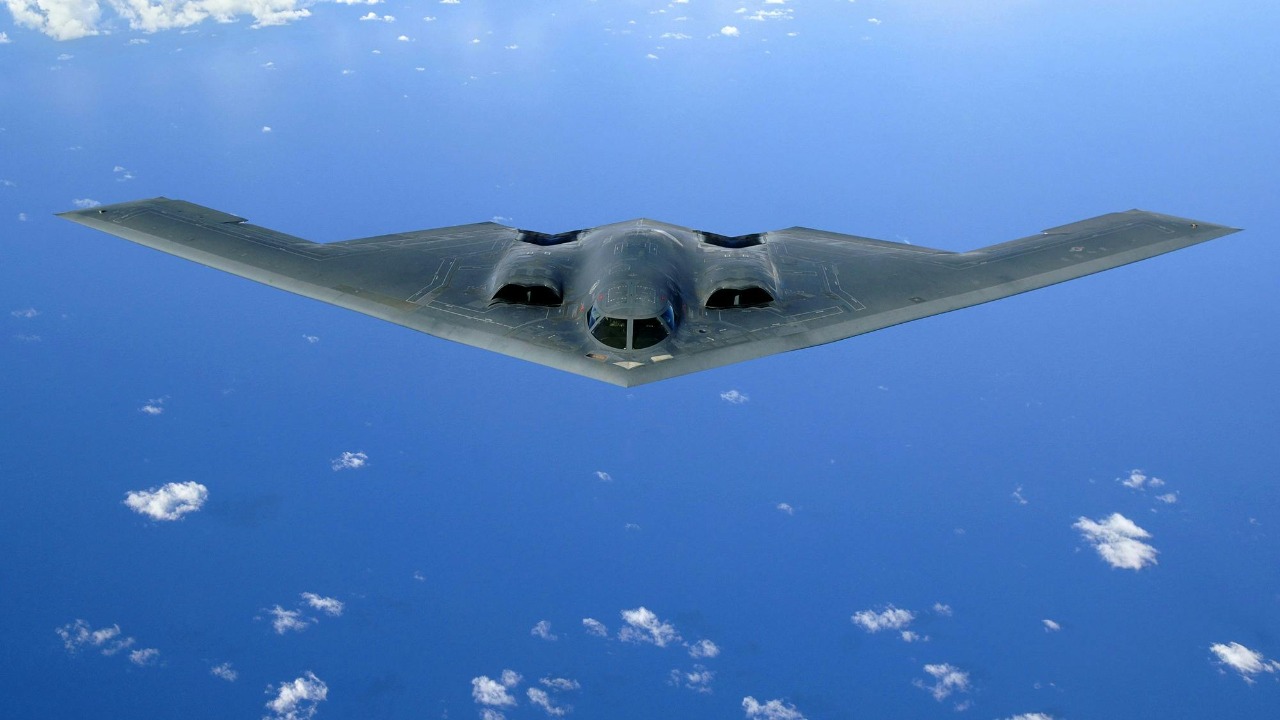

China’s new J-36 “Sky Monster” is not just another stealth jet, it is a heavyweight sixth generation concept built around range, sensors, and control of unmanned systems that could reshape how air wars are fought. With a tailless flying wing, three engines, and a role that blends bomber, fighter, and drone mothership, the aircraft signals how Beijing intends to contest airspace far from its shores. If the program matures as current prototypes suggest, the J-36 could force the United States and its allies to rethink assumptions about air superiority in the Indo-Pacific.
From rumor to “Sky Monster”: how the J-36 emerged
The J-36 moved from internet rumor to strategic concern in a remarkably short time. Early sightings of a huge, tailless aircraft on Chinese social media, amplified by analysis of a single leaked image, showed a platform unlike existing fighters and closer in spirit to a stealth bomber, which prompted analysts to label it a “Sky Monster” for its sheer scale and unconventional layout. Subsequent footage and breakdowns of the airframe’s proportions in detailed video explainers have reinforced the sense that this is a purpose-built long range combat system rather than a simple evolution of earlier designs, with one widely shared analysis walking through the aircraft’s planform and engine layout in a way that underlines just how radical the configuration is compared with current fighters in service, as seen in a technical review on YouTube.
What began as grainy photos has now solidified into a program with multiple airframes and public test flights. Analysts tracking the evolution of the design point to a sequence of prototypes that show rapid refinement of the J-36’s stealth shaping, landing gear, and engine integration, indicating that China is investing heavily to move this concept from experimental showpiece to operational aircraft. That trajectory, combined with the aircraft’s size and the “Sky Monster” nickname, has turned the J-36 into a symbol of how aggressively Beijing is pushing into sixth generation air combat, a trend that has been dissected in depth in another visual breakdown of the jet’s proportions and role on YouTube.
Inside the Chengdu J-36: what the design tells us
At the core of the program is the Chengdu J-36, a stealth machine whose basic geometry reveals its mission. The aircraft is described as a tailless, flying wing style platform with a broad blended body and carefully shielded engine exhaust petals, a configuration that reduces radar and infrared signatures while providing ample internal volume for fuel and weapons. Publicly available technical descriptions of the Chengdu J-36 emphasize that it is a Stealth design focused on multispectral situational awareness, which aligns with its positioning as a sixth generation platform rather than a simple upgrade of existing fighters.
Even the program’s naming conventions and tabular data underscore how central the number 36 has become to its identity, with references to the J-36: General information and J-36: Type explicitly listing it as a Stealth aircraft in official style documentation. That framing matters because it signals that Chengdu is not treating this as a niche demonstrator but as a flagship entry in a new category of combat aircraft, one that is expected to integrate advanced sensors, networking, and low observability from the outset. In other words, the J-36 label is not just a serial increment, it is a statement that China intends this airframe to anchor its next generation of airpower.
Why analysts call it China’s NGAD moment
Western observers increasingly describe the J-36 as China’s answer to “Next Generation Air Dominance,” or NGAD, because of how it blends stealth, range, and command of unmanned systems. Reporting on China New Super NGAD programs highlights that the J-36 Fighter is pitched as a sixth generation platform whose defining claim is the ability to operate as a networked hub for other assets, not just as a standalone dogfighter. In that framing, the number 36 is less about lineage and more about signaling a leap into a new era of air combat where the pilot manages a constellation of sensors and drones.
Context from the same analytical stream notes that Chengdu’s earlier J-20 fifth generation fighter already offers a range that exceeds almost all Western fighters, but the J-36 is expected to go further by combining that reach with a larger payload and more sophisticated networking. One assessment explicitly contrasts Chengdu’s J-20 with the new design, arguing that But the new aircraft is being optimized for very long range missions where it can coordinate multiple unmanned systems while remaining hard to detect. In that sense, the J-36 is less a direct rival to existing fighters and more a peer to the conceptual NGAD platforms the United States is developing, with the number 36 again used as a shorthand for this new class of air dominance system.
From first sighting to third prototype: a fast-moving program
The pace of development is one of the most striking aspects of the J-36 story. After the initial public reveal of a sleek, tailless sixth generation stealth fighter that observers described as a powerful prototype making a dramatic flight, subsequent reporting has tracked a series of follow on airframes that show clear design evolution. Analysts who watched the first test flight of what was described as a prototype noted that military analysts already saw it as a statement of national strength and technological progress that rivals Western defense capabilities, even before the design had fully matured.
Since that debut, China has flown a third prototype of the heavy J-36 fighter, a milestone that confirms the program is moving beyond a single demonstrator. Reporting on how China tests third prototype of its next generation combat aircraft notes that each prototype iteration has introduced changes in several design aspects, suggesting a rapid test and refine cycle. Parallel analysis of the second airframe describes how China’s Massive J-36 Stealth Fighter Gets Major Design Tweaks With Second Prototype, with visible adjustments to landing gear, inlets, and other features that indicate a methodical approach to reducing risk before any potential production decision, as detailed in the breakdown of how the Massive Stealth Fighter Gets Major Design Tweaks With Second Prototype.
Size, three engines, and the “Sky Monster” mission
What truly sets the J-36 apart is its combination of size and propulsion. Analysts describe the aircraft as significantly larger than traditional fighters, with a broad wingspan and voluminous fuselage that can house fuel, weapons, and advanced electronics, which is why it has earned the “Sky Monster” label in the first place. A detailed explainer on why China Sky Monster matters emphasizes that the J-36 appeared in imagery with three engines, a highly unusual choice that suggests a design optimized for both high thrust and redundancy on very long missions. The number 36 is again central in that analysis, used to distinguish this triple engine configuration from the twin engine layouts that dominate current stealth fighters.
The three engine setup is not just a technical curiosity, it is a clue to the aircraft’s intended role. With that much power and internal volume, the J-36 can plausibly carry large sensor arrays, communications gear, and a substantial weapons load while still flying far beyond the ranges typical of legacy fighters. Analysts argue that this makes it ideal for acting as a forward command node that can control drones and coordinate strikes deep into contested airspace, a role that aligns with its portrayal as a sixth generation system. The same video breakdown that popularized the “Sky Monster” nickname stresses that this combination of size, three engines, and drone control could redefine sixth generation air combat by shifting the emphasis from individual dogfights to orchestrated, multi platform operations where the J-36 serves as the central conductor.
Stealth, sensors, and the brain of a sixth generation jet
Beyond its physical bulk, the J-36 is being framed as a sensor rich stealth platform designed to see and strike first. Technical write ups on the aircraft’s role highlight that it is larger than earlier fighters specifically to accommodate more powerful radar, electronic warfare suites, and data links, allowing it to manage a mixed force of unmanned and manned assets. One detailed overview of key features and the role of the J-36 notes that its size and shape are optimized for low observability while still providing the internal volume needed to act as a command node for a swarm of drones, describing how China Over the People Liberation Army Air Force has been modernising toward this kind of networked airpower.
Stealth and survivability are reinforced by a suite of advanced sensors that extend the aircraft’s reach without forcing it to rely on traditional nose mounted radar alone. Reporting on Stealth and Survivability: Features such as side looking airborne radar, electro optical sensors, and advanced low observable shaping describes how the J-36 is expected to use distributed apertures and passive detection to maintain situational awareness while minimizing emissions. That same analysis argues that these Stealth and Survivability Features could give the aircraft a significant advantage in reconnaissance and combat scenarios by allowing it to detect and track targets from multiple angles while remaining difficult to spot itself. In effect, the J-36 is being built as a flying sensor fusion hub, with its stealth shaping and multispectral situational awareness working together to keep it alive in heavily defended airspace.
Drone command and the loyal wingman revolution
One of the most consequential aspects of the J-36 concept is its apparent role as a controller of unmanned systems. Analysts who have studied the aircraft’s size, internal volume, and communications architecture argue that it is designed to operate as a mothership for loyal wingman drones, using secure data links to direct swarms of smaller aircraft that can scout, jam, or strike ahead of the main platform. The “Sky Monster” explainer that focuses on why its size, three engines, and drone control matter explicitly frames the J-36 as a sixth generation hub that could redefine air combat by turning the pilot into a mission commander for multiple autonomous assets, a role that is central to the China’s Giant Stealth Jet narrative that emerged when the aircraft first leaked.
This approach aligns with broader trends in Chinese airpower, where the People’s Liberation Army Air Force is investing heavily in unmanned combat aerial vehicles and loyal wingman concepts. A detailed video analysis of how the aircraft was Spotted during test flights over Chengdu in China’s Sichuan province notes that the Chengdu J-36’s futuristic design is intended to make it even harder to detect while it coordinates other platforms, suggesting that its role is as much about information dominance as kinetic power. That same breakdown of how it was Spotted Chengdu China Sichuan underscores that the aircraft’s tailless shape and embedded sensors are designed to support this networked mission, making it a central node in a future web of manned and unmanned systems rather than a solitary fighter.
Strategic stakes: Taiwan Strait, Indo-Pacific, and beyond
The J-36’s potential impact is best understood in the context of contested regions like the Taiwan Strait and the wider Indo-Pacific. Analysts argue that a long range, stealthy, sensor rich aircraft capable of commanding drones would be particularly valuable in scenarios where China seeks to project power across large stretches of ocean while facing sophisticated air defenses. A detailed assessment of the program’s progress notes that the successful flight of a third prototype over the winter has profound implications for contested theatres such as the Taiwan Strait and the South China Sea, suggesting that the J-36 could give Beijing a new tool for shaping the air environment before and during any crisis, as highlighted in the discussion of how Dec Taiwan Strait Sou factor into the aircraft’s development.
More broadly, the J-36 is part of a two decade transformation in which China has turned the People’s Liberation Army Air Force from a largely regional force into a modern, power projecting service. An in depth overview of this shift notes that Over the last twenty years, China has invested heavily in stealth aircraft, long range missiles, and integrated air defense systems, with the J-36 representing the next step in that trajectory. The same analysis of China Over the People Liberation Army Air Force underscores that this aircraft is being designed not just for national defense but for influence across the Indo-Pacific and beyond, where its range and networking capabilities could complicate the planning of any rival air force.
What the J-36 signals to the U.S. and its allies
For the United States and its allies, the J-36 is less a mystery aircraft than a message about the speed and ambition of China’s aerospace sector. Analysts who have examined the program argue that the Chengdu J-36 may not tell us everything about China’s classified projects, but it does reveal the pace of its design cycle and its willingness to field radical configurations quickly. One detailed assessment titled around how China Mysterious Stealth Fighter Has Message for the Military notes that the J-36 Fighter and the 36 M references associated with it highlight how quickly China can iterate from concept to flying prototype, a capability that challenges assumptions about Western technological lead times.
Some Western commentary has tried to distill the aircraft’s significance into a single word, arguing that China’s New J-36 Stealth Fighter Summed Up in 1 Word captures both the excitement and concern it generates. That analysis, which refers explicitly to the China J-36 Fighter and emphasizes the need to acknowledge its aerospace advancements, suggests that even if the aircraft has not yet entered mass production, its existence alone should prompt a reassessment of how the United States and its partners plan for future air combat. By framing the program as China’s New Stealth Fighter Summed Up in a single Word, the commentary underscores that the number 36 has become shorthand in defense circles for a new level of Chinese ambition in the skies.
A “monster” among giants: how it compares to other stealth projects
Placed alongside other emerging stealth projects, the J-36 looks less like an outlier and more like the leading edge of a broader shift toward larger, more capable air dominance platforms. Earlier analysis of how China’s Massive J-36 Stealth Fighter Gets Major Design Tweaks With Second Prototype points out that the aircraft’s sheer scale and tailless layout set it apart from traditional fighters, aligning it more closely with conceptual designs for future bombers and NGAD style systems. That same breakdown of the Oct China Massive Stealth Fighter Gets Major Design Tweaks With Second Prototype underscores that the number 36 is now associated with a category of aircraft that blurs the line between fighter and bomber, a trend mirrored in some Western concepts that prioritize range and payload over raw maneuverability.
At the same time, the J-36’s UFO like appearance and rapid test schedule have captured public imagination in a way that few military programs do. Coverage that describes how China reveals a mysterious J-36 jet as the most advanced UFO like military aircraft the world was not ready for highlights how its sleek, tailless silhouette and advanced stealth shaping have become symbols of a new era in airpower. That narrative, reinforced by the dramatic first test flight of the Nov prototype, reinforces the idea that the J-36 is not just another aircraft but a marker of how far and how fast China intends to push the boundaries of air combat.
Why the J-36 could change air combat
Taken together, the J-36’s attributes point toward a different vision of air warfare, one where a large, stealthy, sensor rich aircraft orchestrates a web of unmanned systems across vast distances. Its tailless flying wing, three engines, and emphasis on multispectral situational awareness suggest a platform built to survive in heavily defended airspace while managing complex operations, from long range strikes to electronic warfare and reconnaissance. The fact that it has already progressed through multiple prototypes, each with visible refinements, indicates that China is serious about turning this concept into a fielded capability, a trajectory that has been tracked since a single image emerged from the Chinese internet in Jun and analysts began dissecting what this giant stealth jet meant for future conflicts, as captured in the early discussion of the Jun Chinese leak.
For air forces that have spent decades optimizing for smaller, highly agile fighters, the rise of a “Sky Monster” like the J-36 is a warning that the next era of air combat may be defined less by close in maneuvering and more by who can see, decide, and strike first across entire theaters. By combining stealth, range, heavy payload, and drone command in a single airframe, the J-36 challenges traditional categories and forces rivals to think in terms of systems of systems rather than individual jets. Whether it ultimately enters mass production or remains a limited number flagship, the program has already changed the conversation about what sixth generation airpower looks like, and that alone is enough to make the number 36 a fixture in strategic planning rooms from Beijing to Washington.
More from MorningOverview