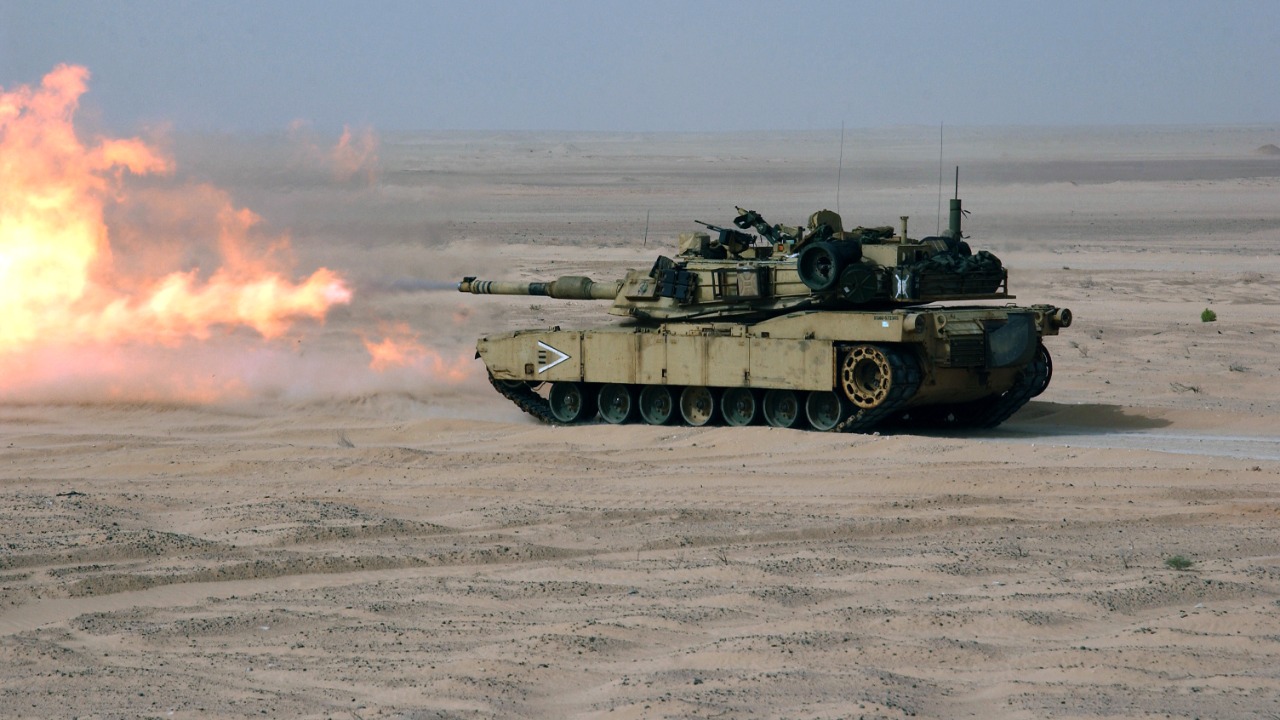

Ukraine’s use of M1A1 Abrams tanks to punch into the Pokrovsk sector has turned a troubled weapons program into a rare battlefield success, and it is already reshaping how both sides think about armor, drones, and urban defense. The breakthrough by units of the 425th Separate Assault Regiment around this key Donetsk hub offers nine hard lessons about modern mechanized warfare that matter far beyond the immediate front line.
I see those lessons as a mix of tactical improvisation and strategic recalibration: how to protect heavy armor from drones, how to choreograph tanks with infantry in dense urban terrain, and how to salvage value from a fleet that many analysts had already written off as a failure in Ukraine.
The Pokrovsk breakthrough and why it matters
The fight for Pokrovsk is about more than a single city, it is about control of a logistics crossroads that shapes the wider Donbas campaign. The area around Pokrovsk sits on key road and rail links that feed Ukrainian positions further east, so any breach there immediately affects supply lines, evacuation routes, and the tempo of operations on multiple neighboring fronts.
When units of the 425th Regiment pushed an armored column toward the city using M1A1 Abrams tanks, they were not just probing Russian lines, they were testing whether Western heavy armor could still open doors in a battlespace saturated with drones and anti tank weapons. According to reporting on the operation, the 425th Regiment advanced into the city using the Abrams, with Ukrainian forces employing the M1A1 in a combined arms push that relied on its firepower and protection to carry assault troops forward, a role detailed in coverage of how Ukrainian forces employed the M1A1 in the Pokrovsk sector.
Lesson 1: Abrams can still punch through, but only in a choreographed column
The first lesson is that the Abrams remains a formidable spearhead, but only when it moves as part of a tightly controlled column with clear objectives and synchronized support. Video and battlefield accounts describe an attempt to break through a Ukrainian army column to Pokrovsk, with Russian forces trying to disrupt the advance as the armored group pushed toward the city, a sequence captured in Footage of the engagement that shows how exposed a single tank or disjointed platoon can be once it is separated from the rest of the formation.
What worked for the 425th Regiment was not raw armor, it was the way the column used the Abrams as a moving bunker for assault troops, with infantry and supporting vehicles tucked into its shadow as they closed on Russian positions. The fact that the Ukrainian column was able to reach the outskirts of Pokrovsk despite attempts to break it apart underlines how critical disciplined spacing, route planning, and mutual support are when heavy armor moves through kill zones that are already mapped by enemy drones and artillery.
Lesson 2: Survivability is now about crew protection, not just keeping the tank running
The second lesson is that in this war, the benchmark for success is often whether the crew walks away, not whether the tank survives to fight another day. In one widely shared clip from Dec, an Abrams is struck and disabled, yet the crew survives and evacuates, with commentary stressing that its armor and internal safety features saved the lives of the group even though the vehicle remained on the battlefield, a point driven home in a video that frames the tank as both “sword” and shield for its crew, captured in the line “groups it saved the lives of the crew. still the tank remains on the battlefield. its armor its cannons it’s a sword w…” in Dec footage.
I read that as a shift in how Ukrainian commanders value the Abrams: it is less about preserving every hull and more about using the tank as a survivable platform that can absorb punishment while crews gain experience and then move on to the next fight. In a conflict where replacement vehicles are scarce but trained personnel are even harder to regenerate, the ability of the Abrams to protect its crews from catastrophic kills becomes a strategic asset in its own right, even when the tank ends up abandoned or written off after a hit.
Lesson 3: Pokrovsk shows how to use Abrams as mobile fire support, not roaming hunters
The third lesson is doctrinal. Instead of sending Abrams on deep raids or independent maneuvers, Ukrainian units around Pokrovsk have leaned on them as mobile fire support platforms that anchor infantry assaults. Reporting on the 425th Separate Assault Regiment describes how the vehicle provided fire cover for assault groups near Pokrovsk, with the regiment explaining that the tank’s role was to deliver heavy direct fire while other units maneuvered, a task described in detail in coverage that invites readers to JOIN and Ukraine Deploys Abrams in the Battle Near Pokrovsk Ukraine narrative.
That approach treats the Abrams less like a lone hunter and more like a tracked assault gun that advances in short bounds, fires, then ducks back under cover while infantry clears trenches and strongpoints. It is a more conservative use of a high value asset, but it fits a battlefield where every exposed tank is instantly targeted by loitering munitions and top attack weapons, and it helps explain why the 425th Regiment was able to keep its crews alive while still bringing the tank’s 120 mm gun to bear in dense, contested terrain.
Lesson 4: Earlier failures still matter, and Pokrovsk does not erase them
The fourth lesson is that this success does not wipe away the Abrams’ troubled record in Ukraine, and commanders ignore that history at their peril. Earlier in the war, Most of the Abrams that appeared on the battlefield were filmed being destroyed or otherwise neutralised, with analysis noting that these tanks had exchanged fire near Avdiivka and suffered heavily under Russian surveillance and strike complexes, a pattern described in detail in assessments that argue Russia has decimated much of the initial Abrams fleet.
Those losses fed into a broader critique that the M1 Abrams, long marketed as one of the world’s best tanks, had not adapted well to a battlefield dominated by drones and precision guided munitions. Key Points and Summary from one detailed study argue that the Abrams faced severe setbacks in Ukr, with its size, heat signature, and logistics footprint making it vulnerable, and with modern anti tank missiles proving highly effective against it, a judgment laid out in an analysis of how the M1 Abrams tank went to war in Ukraine and struggled.
Lesson 5: Adapted tactics and field mods are rescuing a “failed” platform
The fifth lesson is that Ukraine’s military has treated those earlier failures as data, not destiny, and has adjusted how it fields the Abrams accordingly. Instead of pushing the tanks into exposed open country where Russian drones can stalk them for hours, commanders around Pokrovsk have used terrain, urban cover, and tighter integration with infantry to limit the time each vehicle spends in the open, a shift that aligns with the idea that the old Abrams is still pretty heavy and thirsty, which limits its deployment for steady defense or designated large scale operations, as tank enthusiasts have discussed in threads about how the Abrams has been performing in Ukraine.
Field reports also point to incremental upgrades such as added top attack protection, electronic warfare receivers, and better integration with reconnaissance assets, all aimed at blunting the most common threats that destroyed earlier vehicles. When the 425th Separate Assault Regiment describes its Abrams as providing fire support to assault units near Pokrovsk while benefiting from receivers and top attack protection, it is signaling that the tank’s role and configuration have both evolved since those early, costly deployments, and that this evolution is part of why the Pokrovsk push looks different from the grim footage that came out of Avdiivka.
Lesson 6: Drones have turned every advance into a race against time
The sixth lesson is that drones have compressed the timeline for every armored move, turning each advance into a race between the column and the enemy’s sensor network. Accounts of the Pokrovsk fighting emphasize that Ukrainian forces employed the M1A1 while contending with Russian drones on the modern battlefield, with the 425th Regiment having to factor in how quickly quadcopters and loitering munitions could spot, track, and strike their tanks, a reality spelled out in reporting on how drones on the modern battlefield shape Abrams operations.
In practice, that means every movement plan for an Abrams column now has to include not just artillery and infantry support, but also electronic warfare cover, counter drone fire, and deception measures to confuse enemy operators. The Pokrovsk breakthrough suggests that when those elements are in place, heavy armor can still close the distance and deliver decisive fire, but it also shows that any delay, traffic jam, or miscommunication can quickly turn a powerful tank into a stationary target that drones will pick apart within minutes.
Lesson 7: Logistics and fuel remain the Abrams’ hidden vulnerability
The seventh lesson is that even when the Abrams performs well tactically, its logistics tail remains a strategic constraint that shapes where and how it can be used. The tank’s gas turbine engine and weight demand a steady flow of fuel and maintenance support, which is far harder to guarantee near a contested hub like Pokrovsk than on a static defensive line, a point echoed in community discussions that describe the old Abrams as heavy and thirsty, limiting its deployment to specific roles and sectors.
For the Pokrovsk push, that likely meant pre staging fuel, recovery vehicles, and spare parts close enough to support the 425th Regiment’s advance without exposing those assets to easy Russian strikes. It also helps explain why Ukrainian commanders appear to be concentrating Abrams in a few critical axes rather than spreading them thin across the front, since each new deployment zone multiplies the logistical burden and increases the risk that a broken down tank will have to be abandoned rather than recovered under fire.
Lesson 8: Information warfare now rides on every tank video
The eighth lesson is that every frame of Abrams footage from Pokrovsk is doing double duty as both battlefield record and information weapon. Clips of the column’s advance, of an attempt to break through a Ukrainian army column to Pokrovsk, and of damaged tanks with surviving crews are all being used by both sides to argue that their approach to armored warfare is working, with Russian channels highlighting destroyed vehicles and Ukrainian outlets emphasizing crew survivability and successful assaults, dynamics visible in the way Ukrainian and Russian narratives frame the same events.
I see that as a reminder that modern armor is judged not just by classified after action reports but by how it looks on social media and in open source analysis. When a video from Dec shows an Abrams taking a hit, saving its crew, and remaining on the battlefield, Ukrainian commentators can present that as proof of resilience and determination, while Russian voices can point to the immobilized hull as evidence that Western tanks are not invincible, a tension captured in the emotionally charged lines about how Pokrovsk “will not give up” in the Dec video.
Lesson 9: Western planners must rethink what “success” for Abrams looks like
The ninth lesson is aimed squarely at Western defense planners who once imagined the Abrams as a silver bullet that could transform Ukraine’s battlefield fortunes on its own. The experience catalogued in earlier analyses, where the M1 Abrams went to war in Ukraine and it did not go well, with Key Points and Summary highlighting how anti tank missiles and drones chewed through the fleet, should temper any temptation to declare the Pokrovsk breakthrough a vindication of old doctrines, as detailed in the study of how the Abrams struggled against modern threats.
Instead, I think success for the Abrams in Ukraine now looks like what the 425th Separate Assault Regiment achieved near Pokrovsk: using a limited number of tanks as part of a broader system that includes drones, electronic warfare, infantry, and artillery, accepting that some vehicles will be lost, and focusing on preserving crews and achieving specific tactical gains rather than chasing the illusion of invulnerable armored breakthroughs. If Western capitals absorb that lesson, future aid packages and training programs will likely prioritize integrated combined arms tactics, survivability upgrades, and realistic expectations over raw tank numbers, a shift already hinted at in the way coverage of how Follow the regiment’s experience focuses on sensors, protection, and crew outcomes as much as on the tanks themselves.
More from MorningOverview