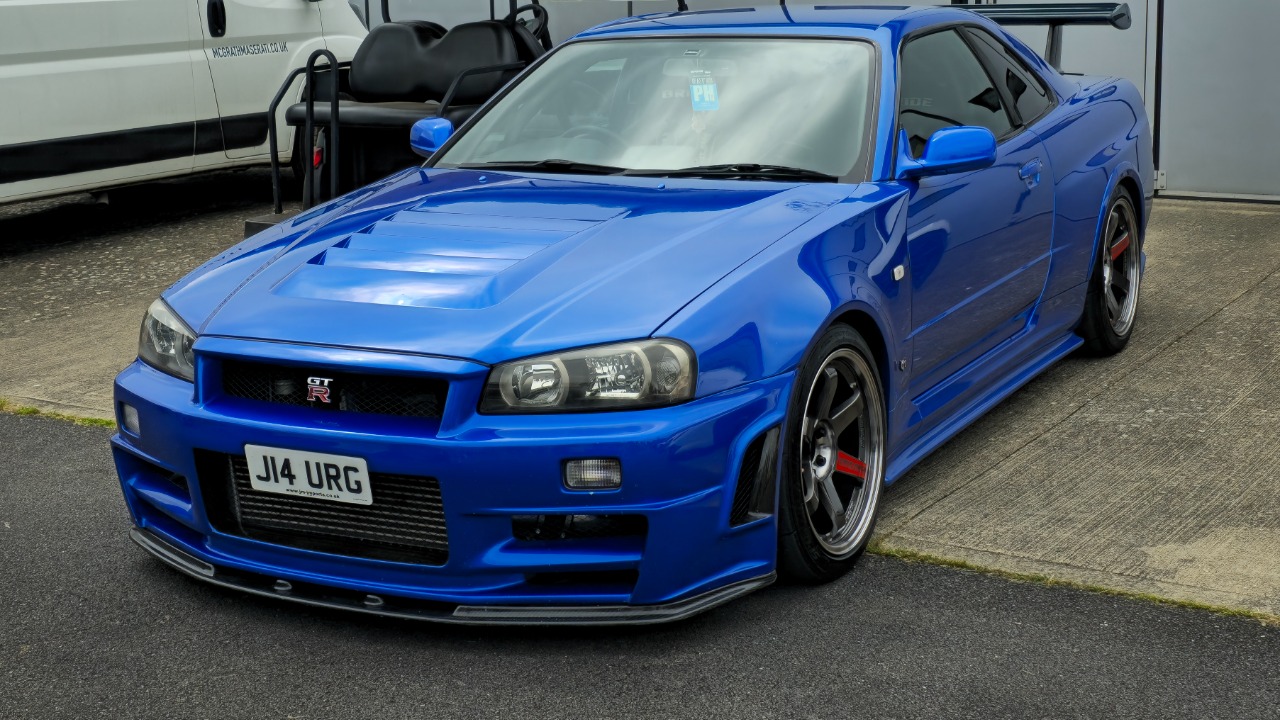

The 25-year import rule is about to unleash some of the wildest Japanese performance cars onto U.S. roads, and 2026 is shaping up as a landmark year for enthusiasts. As more 2001 icons age into exemption from federal DOT and EPA requirements, collectors finally get legal access to machines that defined an era of tuning culture, motorsport, and video game fantasies. I break down five of the most outrageous cars that will be fully legal to import in 2026, and why each one matters for the next wave of the American enthusiast scene.
1. Nissan Skyline GT-R (R34)
The Nissan Skyline GT-R R34 is the poster child for the 25-year rule, and by 2026 it stands out as one of the 5 coolest cars that enthusiasts can legally import to the U.S. thanks to its 2001 model year and cult status as a JDM supercar. The R34’s twin-turbo RB26DETT straight-six, paired with all-wheel drive and advanced electronics, turned it into a giant killer in period, and that same formula now makes it a top target among cars legal to import in 2026. Earlier coverage of the 25-year exemption explains that once a model clears this age threshold, it can enter the country without needing to be retrofitted to DOT and EPA standards, which is crucial for a complex performance car like the R34 that was never federalized from the factory. A separate report on how the Nissan R34 Skyline is “finally legal to import to U.S.” notes that it is making it through the “25-year rule,” confirming that this Japanese legend is transitioning from forbidden fruit to legitimate U.S. road car as its early production years age in.
That legal shift has major implications for the market. As more R34 GT-R examples, including sought-after 2001 variants, become eligible, importers and collectors are already jockeying for the cleanest chassis and rare trims, anticipating that values will track upward as supply remains limited and demand surges. The R34’s reputation was built not only on its RB26DETT engine and all-wheel-drive grip, but also on its sophisticated chassis balance and the way its technology translated to real-world speed, which is why it has been a fixture in games and movies for decades. With the 25-year barrier falling, I expect to see specialist shops in the U.S. focus on sourcing, maintaining, and tuning these cars, while insurers and valuation experts watch closely as prices respond to the sudden influx of legal imports. For enthusiasts who have waited years to drive a Skyline GT-R R34 on American plates, 2026 marks the moment when that dream becomes a realistic, if still expensive, proposition, backed by clear regulatory pathways and growing infrastructure around Japanese performance imports.
2. Mazda RX-7 (FD)
The Mazda RX-7 FD is another standout among performance icons that become fully eligible for U.S. import in 2026, particularly in later production years that now cross the 25-year threshold. Known for its lightweight chassis, pop-up headlights, and compact rotary engine, the FD RX-7 has long been celebrated as one of the coolest cars enthusiasts can finally bring in under federal rules for older models. Coverage of the coolest cars eligible for import in 2026 highlights the RX-7’s Wankel rotary as a defining feature, emphasizing how its high-revving character and distinctive sound set it apart from conventional piston engines and help explain its enduring appeal among tuners and track-day drivers. In that reporting, the RX-7 is grouped with other Japanese performance legends that are only now becoming accessible to U.S. buyers in factory-correct form, underscoring how the 25-year rule is reshaping the landscape of available enthusiast cars.
From a practical standpoint, the RX-7’s arrival in greater numbers will test how prepared the American aftermarket is to support rotary-powered imports at scale. The FD’s twin-turbo rotary demands meticulous maintenance and specialized knowledge, and the same sources that celebrate it as one of the coolest cars eligible for import also implicitly signal that buyers need to budget for expert care. I see that as part of the car’s wild appeal: the RX-7 rewards commitment with razor-sharp steering, a low driving position, and a power delivery that feels unlike anything else in its class. As more 2001-era examples become legal to import, I expect rotary specialists, parts suppliers, and tuning shops to expand their offerings, while insurers and valuation analysts watch how scarcity of good engines and original bodywork affects long-term values. For enthusiasts, the stakes are clear, because 2026 offers a rare chance to secure a clean FD RX-7 before prices climb further as demand outstrips the limited pool of well-preserved cars in Japan and other export markets.
3. Subaru Impreza WRX (first-generation GD chassis)
The Subaru Impreza WRX in its first-generation GD chassis configuration, particularly the 2001 models, is set to become one of the most attainable rally-bred imports that U.S. buyers can legally bring in starting in 2026. This version of the Impreza WRX combines a turbocharged boxer engine with all-wheel drive and a chassis tuned with lessons from the World Rally Championship, where Subaru’s competition cars built a reputation for rugged speed on gravel and tarmac. Enthusiast reporting on supercars you can’t buy easily in the USA has long treated the early GD WRX as a kind of forbidden performance icon, noting that certain high-spec Japanese domestic market versions were never officially sold here. As those 2001 cars hit the 25-year mark, they become eligible for import under the same federal exemption that is opening the door for more exotic machinery, giving American buyers access to configurations and trims that previously required complex legal workarounds or were simply out of reach.
For the broader market, the legal import of early GD WRX models in 2026 will likely influence both pricing and culture around Subaru performance cars already on U.S. roads. The arrival of authentic Japanese-spec WRX sedans and wagons, with their specific engine tunes, gear ratios, and interior details, will give collectors and tuners new benchmarks for originality and performance. I expect that to drive interest in period-correct modifications and restorations, as owners of U.S.-market cars look to align their builds with the newly available imports. At the same time, the WRX’s rally heritage and all-weather capability mean these cars are not just showpieces, but practical performance machines that can handle daily driving in varied climates. That dual role raises the stakes for buyers, who must balance the temptation to use these cars hard against the reality that clean, rust-free examples will likely appreciate as more enthusiasts recognize the significance of the first-generation GD chassis in Subaru’s performance history.
4. Mitsubishi Lancer Evolution VII
The Mitsubishi Lancer Evolution VII is poised to be one of the hottest imports of 2026, combining rally-derived performance with a reputation for raw, track-ready capability. Built on a more rigid platform than its predecessors and equipped with a turbocharged engine and advanced AYC drivetrain, the Evo VII sharpened the Lancer Evolution formula into a car that felt at home on both special stages and circuit days. As it reaches 25 years of age, it qualifies for legal import into the U.S., aligning with forecasts that identify the Mitsubishi Lancer Evolution VII as a model whose values are set to surge. Analysis of future classics notes that Hagerty says these cars are about to blow up in 2026, and the Evo VII appears in that context as an appreciating JDM legend, with its newfound import eligibility expected to amplify demand from collectors and track enthusiasts alike.
That convergence of legal access and rising values creates a narrow window for buyers who want to secure an Evo VII before prices move further out of reach. The car’s combination of turbo punch, sophisticated all-wheel drive, and aggressive styling has already made it a cult favorite in markets where it was originally sold, and the U.S. is likely to follow the same trajectory once importers begin sourcing clean 2001 examples. I anticipate that specialist shops will focus on preserving factory-correct cars while also catering to a tuning culture that has long embraced the Lancer Evolution platform for high-power builds. For insurers, auction houses, and valuation experts, the Evo VII’s arrival will provide a new reference point for pricing later Evolutions and comparable rally-bred sedans, potentially lifting the entire segment. From my perspective, the Evo VII’s mix of motorsport pedigree and everyday usability makes it one of the wildest yet most rational choices on the 2026 import list, especially for drivers who want a car that can handle both back-road blasts and serious track work.
5. Honda S2000 (AP1)
The Honda S2000 AP1 rounds out the list as a high-revving roadster that becomes newly importable in 2026, particularly in 2001 configurations that now clear the 25-year threshold. Known for its 9,000-rpm redline and VTEC engine that delivers power at the top of the rev range, the S2000 AP1 has been highlighted among the 5 coolest cars that will be legal to import in 2026, reflecting its status as a purist’s sports car with a uniquely intense driving experience. That same reporting groups the S2000 with other Japanese performance icons that are only now gaining full U.S. access, reinforcing the idea that the 25-year rule is unlocking a new wave of enthusiast-focused machinery. Separate analysis of future classics indicates that valuation experts expect the S2000 to appreciate, placing it alongside other cars that are projected to “blow up” in 2026 as demand increases and supply of clean, low-mileage examples tightens.
For American buyers, the ability to import 2001 S2000 AP1 models in 2026 expands the pool beyond the cars originally sold here, opening the door to Japanese-market specifications and colors that were not always available in the U.S. That shift matters for collectors who prioritize originality and for drivers who want to experience the car as it was tuned for its home market. The S2000’s combination of rear-wheel drive, precise manual gearbox, and open-top chassis makes it a compelling alternative to heavier modern sports cars, and I expect its renewed visibility in import discussions to inspire a fresh wave of interest among younger enthusiasts. As more AP1s arrive, the aftermarket for suspension, engine, and cosmetic parts is likely to grow further, while insurers and valuation guides adjust to rising transaction prices for well-kept examples. In that context, the S2000 AP1 stands out as one of the wildest cars you can legally import in 2026, not because it is the most powerful, but because its high-revving character and focused engineering deliver an intensity that few contemporary roadsters can match, making it a key player in the evolving landscape of legally imported performance cars.
More from MorningOverview