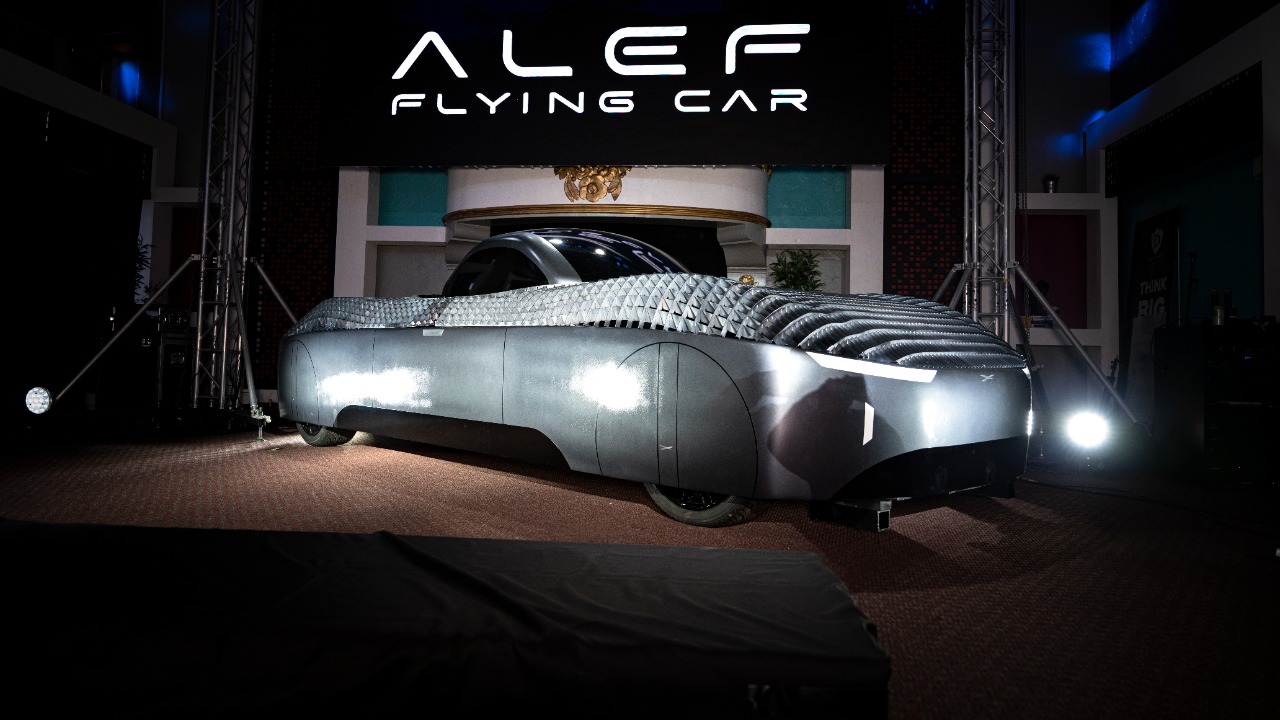

The long promised age of flying cars has quietly crossed a threshold, shifting from concept videos and airshow prototypes into real production lines and preorder queues. Instead of a distant sci fi fantasy, the first road capable aircraft are being hand assembled for early customers, while rival designs race to prove they can be as practical as a family EV. I see the start of production as the moment the story changes, from asking whether flying cars are possible to asking how they will fit into daily life, city planning and the wider transport economy.
Alef’s “first true flying car” moves from render to reality
The clearest sign that the flying car era is no longer hypothetical is that Alef Aeronautics has begun building vehicles for paying customers. The company, based in the Bay Area, has positioned its machine as the “first true flying car in history,” a vehicle that can drive on public roads and then lift off vertically when traffic or terrain demands it. Earlier this year, a report from Jun in the Bay Area described how Alef had already taken thousands of preorders, a level of demand that would be impressive for any startup, let alone one trying to merge automotive and aviation technology, and those reservations are now being converted into production slots at the firm’s California facility, according to coverage by By Sharon Song for Air and Space that highlighted how the company framed its breakthrough.
Those early customers are not just buying into a dream, they are buying into a specific promise about how and when they will receive their vehicles. In a follow up brief from Jun titled The Brief, the same Bay Area reporting noted that Alef said it has produced initial units and is accepting pre orders with delivery to follow once certification and manufacturing scale up allow, a sign that the company is trying to manage expectations while still capitalizing on intense interest. The fact that Alef is confident enough to talk about production, rather than just prototypes, marks a turning point for the sector and gives regulators, investors and rivals a concrete program to measure rather than a slide deck.
Inside the California workshop where the first cars are hand made
For now, Alef’s flying car is not rolling off a giant automated line, it is being built almost like a high end sports car, with a mix of industrial tools and meticulous hand work. Reporting from Dec described how the world’s first flying car is now being hand made in California, with the company explaining that its first full size “skeleton” was flown in 2018 and that the following year the first prototype was shown to a small group of observers, a development path that mirrors how many aerospace projects mature through successive test articles before anything customer facing is assembled. That same account stressed that the current production process is still relatively artisanal, which is typical for a new category where every component and workflow is still being refined.
A separate look at the factory floor in Dec underlined just how personal the build process remains, noting that the world’s first flying car is currently being assembled in California by Alef, in Silicon Valley, with a combination of industrial machines and hand assembly that allows engineers to tweak parts and processes on the fly. Only a small number of early customers are being served at this stage, which keeps quality control tight but also highlights how far the company will need to go to reach anything like mass market volumes. I see that hybrid approach, part aerospace hangar and part boutique car shop, as a bridge between the prototype era and the eventual goal of a more standardized, scalable production system.
From test flights to production line: how Alef got here
Behind the headlines about “firsts” sits a long and methodical test program that has gradually de risked Alef’s concept. The company’s own timeline, referenced in Dec coverage of how the world’s first flying car is now being hand made in California, points to a first full size “skeleton” flight in 2018, followed by a more polished prototype in 2019 that could be shown to invited guests, a pattern that suggests years of incremental engineering rather than a sudden leap. That early work helped Alef refine the core architecture of a car that can drive in traffic yet still house the lift and control systems needed for vertical takeoff, a far more complex challenge than building a pure eVTOL aircraft that never has to share a lane with a pickup truck.
By the time Alef Aeronautics announced that it had started production, the company had already secured a place in the broader conversation about sustainable mobility. A report by Phong Ngo, filed under the headline that the world’s first flying car enters production in the US, described Alef Aeronautics as a U.S. based sustainable mobility startup and noted that the vehicle had attracted attention from international outlets, with one citing a figure of 58 to describe a key performance or regulatory metric associated with the program. That combination of a clear test history, a defined production plan and growing global scrutiny is what convinces me that Alef has moved beyond the vaporware stage that has plagued so many earlier flying car ventures.
Why Alef calls its machine the first “true” flying car
Plenty of aircraft have been marketed as flying cars over the decades, so Alef’s insistence that its product is the first “true” example deserves scrutiny. The company’s argument, as reflected in Jun reporting from the Bay Area, is that its vehicle is designed from the outset to function as a road legal car that can be parked in a standard space, driven through city streets and then transition to flight without the need for a runway, a capability that earlier fixed wing roadable aircraft struggled to deliver. When Jun and By Sharon Song described Alef taking thousands of preorders for what it called the first true flying car in history, they were capturing that claim of seamless dual mode operation, not just the ability to bolt wings onto a car chassis.
Another layer to the “true” label is Alef’s focus on electric propulsion and vertical lift, which aligns it more closely with the emerging eVTOL sector than with traditional light aircraft. A detailed analysis from Jun on how the first true electric flying car could be here by the end of 2025 framed Alef’s design as an all electric machine that aims to offer a driving and charging experience comparable to a Tesla or any other EV, while still being able to rise above traffic when needed. That same piece argued that the flying car is no longer a Sci Fi fantasy, using the term Sci to underline how far the concept has traveled from comic books to engineering reality, and it is that blend of road practicality and electric flight that underpins Alef’s marketing language.
Rivals and cousins: Jetson, Switchblade and BlackFly
Alef is not alone in trying to reinvent personal air travel, and the competitive landscape helps explain why the company is so keen to claim a “first.” In Europe, Jetson has been developing a personal electric aerial vehicle that looks more like a minimalist helicopter than a car, and its recent decision to stage the Jetson Unveils Jetson Air Games Concept with an Electrifying Aerial Showcase at UP.Summit 2025 showed how it is leaning into the idea of flying as an accessible and exhilarating experience rather than a niche hobby. The Jetson team has emphasized that its machines are meant to be intuitive and fun to fly, which positions them as cousins to Alef’s car, sharing the same electric vertical lift DNA but targeting a different use case that does not involve driving on public roads.
On the more traditional aviation side, the Switchblade project has been working on a fixed wing flying car that can fold its wings and drive like a three wheeled vehicle when on the ground. A detailed profile of the program quoted its backers as saying that the purpose of the Switchblade is to solve regional travel by allowing people to travel on their schedule to over 10 thousand public use airports in the United States, a vision that leans on the existing airport network rather than trying to take off from a driveway. That same report stressed that Switchblade is entering a tightly regulated environment, which is why its creators have focused on conventional aircraft certification paths even as they promise a car like experience once the wings are stowed, a contrast to Alef’s more radical vertical lift approach.
Social media hype and the “no longer sci fi” moment
While engineering milestones matter, perception shifts often happen on social platforms, where short clips can do more to change minds than long technical papers. In Dec, Alef Aeronautics used Instagram to declare that the sky is officially no longer the limit, posting that it had begun production on what it called the world’s first true flying car and that it was “getting production off the ground,” a phrase that captured both the literal and metaphorical stakes. That post, shared under the company’s name and amplified by fans of futuristic transport, helped cement the idea that flying cars are not just test lab curiosities but products that real people might one day order online.
Other players in the space have benefited from similar bursts of viral attention, particularly designs that look dramatically different from conventional aircraft. The BlackFly, for example, is a personal aircraft that takes off and lands on its curved keel, does not have wheels and is described as surprisingly easy to operate, according to an Oct feature that traced how it hit the market with strict limits on where and when it can fly, including bans on night operations or flights in bad weather. That same report argued that the age of flying cars has arrived, using BlackFly’s commercial debut as evidence that regulators are willing to let radically new personal aircraft into the skies under carefully controlled conditions, a precedent that companies like Alef will be watching closely.
Regulators, safety and the limits of early adoption
For all the excitement, the first generation of flying cars will live inside a dense web of rules that shape how, where and by whom they can be used. The BlackFly example is instructive, since the Oct analysis made clear that even a relatively simple personal aircraft is restricted from flying at night or in bad weather, conditions that dramatically limit its utility compared with a car that can be driven at any hour in almost any conditions. I expect Alef’s vehicle to face similar constraints, at least initially, with regulators likely to insist on strict weather minima, pilot training requirements and geofenced operating zones until there is enough operational data to justify broader freedoms.
Traditional aviation authorities are not the only gatekeepers. Local governments and urban planners will have a say in whether flying cars can take off from residential streets, office parks or dedicated vertiports, and their decisions will be shaped by concerns about noise, privacy and safety over dense neighborhoods. A forward looking analysis from Bratislava Motor City framed the question bluntly, asking Flying cars? Yes, and arguing that as outlandish as it might sound, quick progress is being made in personal aerial transportation that could reshape how we commute in the coming decades, while warning that integration with existing road and air traffic systems will be a major challenge. That tension between rapid technological progress and cautious regulatory pacing will define how quickly the flying car era moves from early adopters to the mainstream.
From niche luxury to everyday transport?
In the short term, Alef’s hand built cars and similar machines are likely to be expensive, low volume products aimed at enthusiasts, executives and perhaps emergency services that can justify the cost. The Dec reporting on Alef’s California facility made it clear that only a small number of early customers are being served, a reality that mirrors the early days of electric cars, when models like the original Tesla Roadster were priced far beyond the reach of most drivers. I see that phase as a necessary proving ground, where real world use uncovers design flaws, maintenance needs and user behavior patterns that no amount of simulation can fully predict.
Over time, the question is whether flying cars can follow the same trajectory as EVs, moving from luxury status symbols to practical tools for a much wider audience. The Jun analysis that argued the first true electric flying car could be here by the end of 2025 explicitly compared Alef’s ambitions to the way a Tesla or any other EV fits into daily life, suggesting that the company wants its customers to think of the vehicle as a car first and an aircraft second. If Alef and its rivals can drive down costs, streamline certification and prove that operating a flying car is no more complex than using a modern driver assistance system, then the leap from niche to normal might come faster than skeptics expect, especially in regions where road congestion is already choking economic growth.
How cities and industries are preparing for a new layer of mobility
Even before the first Alef customer lifts off from a driveway, some regions are positioning themselves as hubs for the broader flying car and eVTOL ecosystem. An analysis from Bratislava Motor City on flying cars and a booming automotive industry argued that quick progress in personal aerial transportation could significantly change how we commute in the coming decades, and that cities which invest early in infrastructure, regulation and talent could capture a disproportionate share of the new value chain. That piece framed flying cars as both a challenge and an opportunity for traditional automotive clusters, which must decide whether to treat aerial mobility as a threat or as a natural extension of their existing expertise in vehicle design and manufacturing.
In the United States, Silicon Valley’s role in nurturing Alef Aeronautics shows how tech heavy regions can blend software, aerospace and automotive skills to create entirely new categories of product. The Dec account of how the world’s first flying car is currently being assembled in California by Alef in Silicon Valley, using a mix of industrial machines and hand assembly, underscored how the region’s culture of rapid prototyping and cross disciplinary teams is well suited to such hybrid projects. As more companies like Jetson, Alef and the makers of Switchblade and BlackFly push their designs toward production, I expect to see a new map of “motor cities” emerge, one that stretches from traditional car towns to tech hubs and aviation clusters, all vying to shape the next century of personal transport.
More from MorningOverview