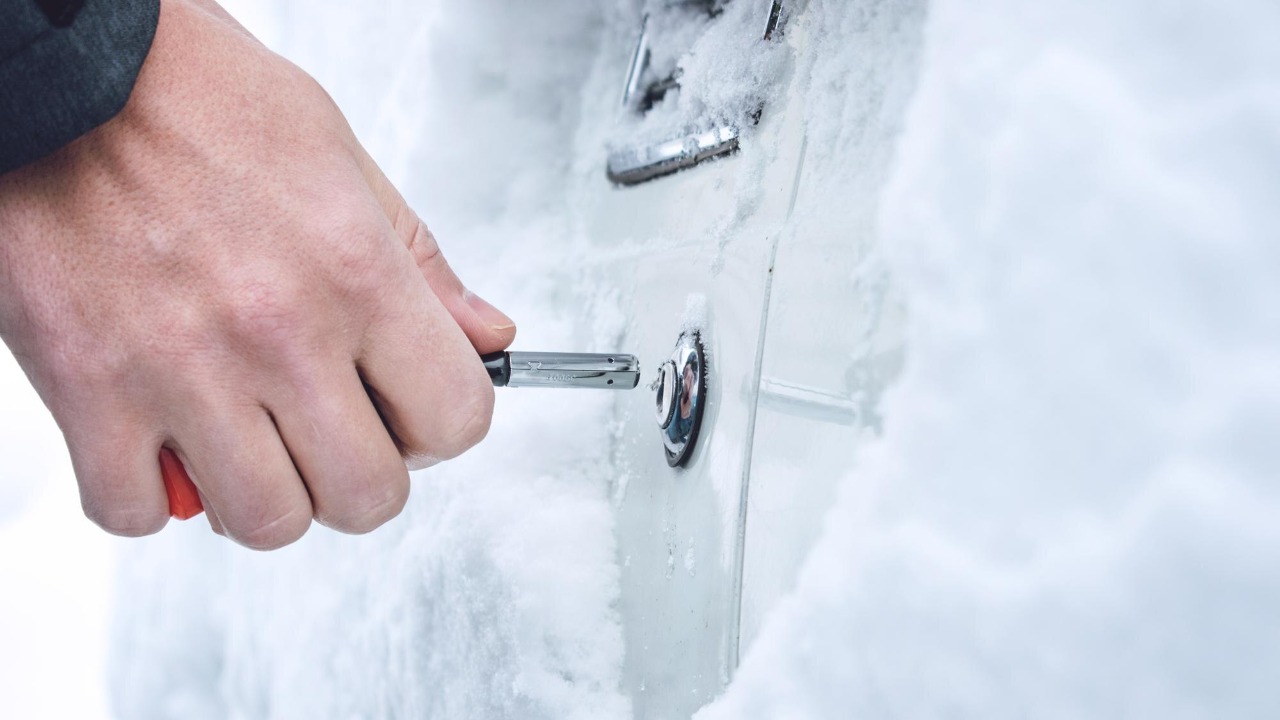

When a polar blast hits and your key suddenly refuses to turn, the real danger is not the ice in the cylinder but the snap of metal if you force it. A frozen door lock is usually a temporary problem, yet a broken key can turn a cold inconvenience into an expensive emergency call. Before you twist harder, there are safer ways to warm, melt and lubricate that mechanism so you can get inside without breaking anything.
Why frozen locks feel “broken” but usually are not
When a lock seizes up on a bitter morning, it is easy to assume the hardware has failed, but in most winter cases the culprit is moisture that has crept into the cylinder and solidified. As temperatures drop overnight, condensation or tracked-in snow can freeze around the pins and springs, so the key will not fully seat or turn and the lock feels jammed. Professional guidance on Frozen door locks stresses that when a key will not turn or the cylinder feels stuck, it is usually not a sign that the lock is breaking, just that ice is blocking the internal movement.
That distinction matters because it should change how you react in the moment. If I treat the resistance as a mechanical failure, I am more likely to crank harder on the key, which can bend or shear it off inside the plug. If I recognize it as a freezing issue, I can focus on gentle methods that add a bit of heat or a de-icing agent, then give the metal time to respond. Understanding that the lock is probably sound, and that the problem is temporary ice, is the first step to avoiding a snapped key and a ruined morning.
First rule: stop forcing the key
The most important move with a frozen lock is the one you do not make, which is to keep twisting. Keys are designed to align tumblers, not to act as levers against solid ice, and the torque from a frustrated hand can exceed what the thin metal can handle. A widely shared LPT on frozen cylinders spells this out bluntly: if you cannot get the key in or cannot turn it, do not force it, and instead reach for a light source of heat or a proper de-icer.
In practice, that means backing off as soon as you feel solid resistance rather than the usual smooth engagement of pins. I try a few millimeters of gentle wiggle to confirm that the key is fully inserted and correctly oriented, then stop. If the blade starts to flex or the bow digs into my fingers, I know I am in the danger zone. At that point, the safest path is to remove the key, warm it or the lock with a controlled method, and only then attempt another turn. Treating the key as a precision tool, not a pry bar, is the simplest way to avoid a break that could leave you locked out and facing a locksmith bill.
Safe ways to add heat without damaging the lock
Once I have stopped forcing the key, the next step is to introduce gentle warmth so the ice can soften and drain. One of the oldest tricks is to warm the key itself, then use it as a tiny heat probe inside the cylinder. Guidance on Immediate Solutions for a Frozen Lock describes a Heated Key Method as a classic approach: you warm the metal with your hands, a pocket hand warmer or another safe source, then insert and remove it a few times so the transferred heat can thaw the ice around the pins.
For car doors, some drivers go further and use external heat, but that is where restraint matters. Advice on opening a frozen car door warns that while warming a key can help, you should not overheat the key, because too much heat can make the metal more malleable and increase the risk of bending or breaking it in the lock. I avoid open flames near paint, seals or lubricants, and instead favor mild, indirect warmth, such as cupping the lock with gloved hands or using a hair dryer on a low setting if there is access to power. The goal is to nudge the temperature above freezing, not to blast the hardware.
Why hot water is a tempting but risky shortcut
Pouring hot water over a frozen lock feels like common sense, but it is one of the fastest ways to turn a minor problem into a recurring one. As soon as the water cools, it can refreeze inside the cylinder or around the door seals, leaving you with a lock that is even more solidly encased in ice. Detailed winter driving advice explicitly says Don’t Use Hot Water on a frozen lock, noting that while Common sense may suggest warming the lock, the water can seep in, freeze over again and further your problem.
There is also a long term cost to this shortcut. Repeated cycles of hot water and refreezing can promote corrosion inside the lock and around the door hardware, especially if the water carries road salt or other contaminants. Automotive specialists who focus on cold weather maintenance echo this concern, warning that Avoid Using Water to de-ice locks because Ice Locks Water Can Re freeze Quickly and the moisture can increase the Risk of Corrosion. In other words, the quick fix may get you in once, but it can shorten the life of the lock and make future freezes more likely.
Alcohol-based helpers: hand sanitizer and de-icer sprays
Instead of water, alcohol-based products are far better suited to breaking up ice in a lock because they lower the freezing point and evaporate quickly. One practical tip that circulates every winter is to keep a small bottle of hand sanitizer in your bag or glove box. A widely shared winter Dec LifeProTips post explains that the rubbing alcohol in the gel works almost like salt, helping to dissolve ice on everything from locks to frozen door handles. A small dab on the key, worked gently into the cylinder, can be enough to free stuck pins.
Dedicated lock de-icer sprays go a step further by combining alcohol with lubricants that protect the mechanism after the ice melts. Cold climate locksmiths describe Hand Sanitizer (60–70%) as a quick stand in when you do not have a commercial product, but they still rank Commercial Lock De Icer Spray as the Best overall, noting that Brands like Lock Saver can clear a cylinder in 10 to 20 seconds. I keep a small aerosol de-icer in my winter kit, because it can reach deep into the lock and is designed for repeated use without leaving sticky residue.
House doors versus car doors: what changes and what does not
While the physics of ice are the same, the stakes and techniques differ slightly between a front door and a vehicle. On a house, you are often dealing with a deadbolt or euro cylinder that is more exposed to wind and rain, and the surrounding frame may swell or shift with temperature changes. Guidance on Preventing a Frozen Lock in residential settings notes that One of the best ways to deal with a Frozen Lock is to stop moisture from entering in the first place, and that products like Vaseline or WD 40 can be applied sparingly to the keyway, then left for a few minutes to create a thin barrier film.
Car doors add moving parts like latches, weatherstripping and electronic actuators, so you may find that the key turns but the door still will not open because the rubber seal is frozen to the body. Automotive winter guides on simple fixes recommend silicone spray or graphite lubricant as a long term treatment for car locks, because they repel moisture without gumming up the tumblers. I treat the key cylinder and the door seals on my own car before the first hard freeze, which makes it far less likely that I will be stuck outside with a key that turns but a door that refuses to budge.
DIY tricks that actually work (and one video worth watching)
For drivers who prefer to see a technique before trying it, there are step by step demonstrations that walk through real world fixes. One popular tutorial from a Ford enthusiast channel, titled 6 Ways on How to Unfreeze a Car Door Lock in the Winter, shows how a Ford owner uses everyday items to warm the key, apply de-icer and gently free a stuck cylinder. Watching someone work through the process on an actual door, rather than just reading a list of tips, can make it easier to judge how much pressure to apply and how long to wait between attempts.
Beyond video guides, local weather coverage often compiles practical hacks that have been tested in real cold snaps. Reports on simple fixes for a frozen car lock in Dec cold spells highlight tricks like warming the key with your hands, using a straw to direct de-icer into the cylinder and gently tapping the lock body to help break surface ice. I find that combining these small moves, rather than relying on a single dramatic gesture, is what usually gets the mechanism moving again without damage.
Lubricants, flammability and what to avoid
Once the ice is gone, lubrication is your friend, but only if you choose the right product and apply it carefully. Dry options like graphite are often recommended for cylinders because they do not attract dust, while light oils and silicone sprays can help keep moisture out of exposed keyways. Some residential door specialists suggest using a small amount of penetrating lubricant to free a stuck mechanism, but they also warn that certain products are highly flammable. One guide to Tackling a Frozen Door Lock notes that while a spray like WD 40 can help, this lubricant is incredibly flammable, so it should never be combined with open flames or high heat sources.
That warning is especially important for anyone tempted to pair a torch or lighter with a freshly sprayed lock. Vapors from petroleum based products can ignite even when the metal feels cold to the touch, turning a minor inconvenience into a serious safety hazard. I stick to nonflammable de-icers when I know I will be adding heat, and if I do use an oil based spray, I give it time to settle and wipe away any excess. The goal is a thin protective film inside the cylinder, not a dripping keyway that could catch fire or attract grime.
How to keep locks from freezing in the first place
The most effective strategy is to avoid a frozen lock entirely by preparing before the first deep freeze. That starts with keeping moisture out of the cylinder, which means checking weatherstripping, using covers on rarely used locks and applying a suitable lubricant ahead of winter. Residential security experts emphasize that Vaseline or WD 40 can be used sparingly as a preventative, inserted on the key and worked into the lock, then left for a few minutes so it can coat the internal parts and make it harder for water to cling and freeze.
For vehicles, prevention also means regular maintenance of the key cylinders, even if you mostly use remote entry. Cold weather locksmiths advise treating car locks with silicone or graphite before winter, as highlighted in Dec guidance that recommends silicone spray or graphite lubricant as a lubricant for your lock. I also make a habit of using the physical key occasionally, even on a modern car, so that the cylinder stays exercised and any early stiffness shows up before the coldest nights arrive.
When to call a professional instead of pushing your luck
There is a point where persistence stops being smart and starts risking real damage, and knowing where that line sits can save both money and time. If you have tried gentle heat, an alcohol based de-icer and a suitable lubricant, and the key still will not seat or turn, the problem may be more than just surface ice. A locksmith can diagnose whether the cylinder is misaligned, the pins are worn or there is debris inside that needs to be cleared. Some winter lock problem guides, such as those focused on Frozen cylinders, stress that if the lock still feels stuck after thawing attempts, professional help is the safest route.
For car owners, the calculus also includes the risk of damaging electronic components or airbags if you start dismantling door panels in the cold. In some cases, roadside assistance plans will cover a locksmith visit, which can be cheaper than replacing a broken key, a damaged cylinder or a bent door frame. I treat a lock that remains immovable after several careful attempts as a red flag, not a challenge, and I am willing to make the call rather than escalate with more force or improvised tools. The cost of expertise is usually lower than the cost of repairing the consequences of a snapped key or a pried open door.
Building a simple winter lockout kit
Because frozen locks tend to strike at the worst possible moment, it pays to assemble a small kit before the season turns. In my own bag or glove compartment, I keep a compact aerosol de-icer, a travel size bottle of high alcohol hand sanitizer, a tube of graphite powder and a pair of thin gloves that still allow good dexterity. The idea is to have everything needed to thaw and protect a lock within reach, rather than relying on whatever happens to be in the kitchen or trunk when the temperature plunges.
Some of the most practical suggestions for such a kit come from a mix of professional advice and crowd tested hacks. Winter weather explainers on Dec frozen lock tips point to simple items like plastic straws for directing spray into a keyway and resealable bags to keep lubricants from leaking. Combined with the LifeProTips about using sanitizer and the locksmith guidance on proper de-icers, that small collection of tools can turn a potentially miserable lockout into a brief delay. With a bit of preparation and a refusal to force the key, a frozen lock becomes a solvable problem rather than a crisis.
More from MorningOverview