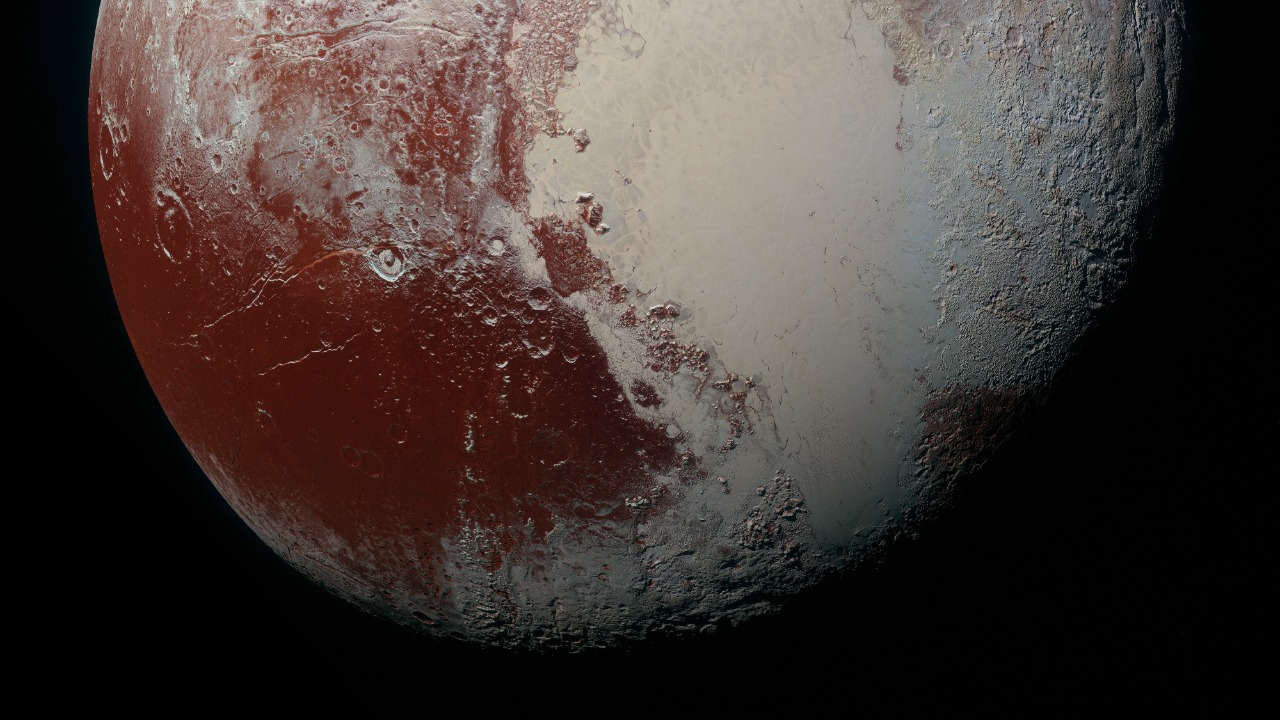

For the first time since Pluto was demoted, the idea of a true ninth planet is edging from speculation toward something testable. Instead of restoring Pluto, researchers are closing in on a different, hidden world that could be orbiting far beyond Neptune and reshaping the outer solar system. If the mounting hints hold up, the long‑imagined Planet Nine may finally move from theory to target.
I see a pattern emerging across multiple lines of evidence, from the orbits of distant icy bodies to fresh computer models and new telescope campaigns. Together they suggest that a large, unseen planet, not Pluto, may be the missing piece that explains the strange architecture of our cosmic backyard.
Why astronomers are hunting a new ninth planet at all
The modern search for a new outer planet began with a puzzle, not a prediction. When astronomers mapped the orbits of small, icy objects beyond Neptune, they noticed that several of these bodies seemed to share a similar, highly elongated path, as if something massive were tugging them into alignment. Instead of assuming the data were a fluke, planetary scientists treated the pattern as a clue that a hidden world might be shaping the distant Kuiper Belt.
That idea crystallized into the Planet Nine hypothesis, which proposes a giant planet on a stretched, off‑center orbit that carries it from roughly 150 astronomical units from the Sun at its closest to about 290 astronomical units at its farthest. Astronomers Konstantin Batygin and Michael Brown, who helped formalize the case for Planet Nine, argue that such an orbit could naturally corral distant objects into the strange configurations we see today, turning a messy outer solar system into something that suddenly makes dynamical sense.
From theory to “major evidence” at the edge of Neptune’s realm
As the hypothesis matured, observers began combing the sky for anything that might betray the presence of a distant giant. The most tantalizing hints so far come not from a direct image but from the way small bodies behave in the deep freeze beyond Neptune. In detailed simulations and surveys, researchers have found that the orbits of some extreme trans‑Neptunian objects cluster in ways that are hard to reproduce without invoking an extra planet.
That is why some Astronomers now talk about “major evidence” for a massive, unseen Planet lurking far beyond Neptune, even though no telescope has yet spotted it outright. The idea of finding a planet beyond Neptune has been circulating for years, and recent discussions of Planet Nine’s possible signature build on that long history of outer solar system detective work, as highlighted in explanations that trace how the concept evolved from classroom curiosity to a serious research program anchored in orbital dynamics around Neptune.
Fresh claims that the solar system is back to nine planets
Over the past year, the narrative has sharpened from “maybe” to “we might have found something.” Some teams now argue that the combined gravitational fingerprints in the outer solar system are strong enough to say our planetary count is effectively back to nine, at least in principle. Their work suggests a massive object lurking beyond Neptune, embedded in a region filled with icy debris that has been sculpted into unusual orbits.
One analysis framed the development with the striking phrase Astronomers Announce Evidence That Our Solar System Has Nine Planets Once Again, underscoring how seriously some specialists now take the possibility. At the same time, the same line of reporting stresses that Astronomers still need a direct detection before the object’s status can be confirmed, a caution echoed in follow‑up discussions that emphasize how much work remains before anyone can declare a new planet officially cataloged as a planet.
The Taiwan simulations and a wandering Neptune‑sized world
One of the most detailed attempts to pin down what this hidden world might look like comes from a group that modeled the far reaches of the solar system in high resolution. By tweaking the mass and orbit of a hypothetical planet, they tried to reproduce the observed distribution of distant icy bodies. The scenario that best matched reality involved a large, cold planet roaming far beyond the known giants.
In that work, Researchers at a university in Taiwan concluded that a Neptune‑sized object could be wandering roughly in the outer Kuiper Belt, taking thousands of years to orbit the Sun. Their “Searching the” distant solar system simulations suggest that such a body would be massive enough to herd smaller objects into the observed patterns, yet faint enough to have escaped past surveys, especially if it spends much of its time in the dim, remote reaches of the sky where few telescopes have looked deeply.
Two candidate worlds and the long arc of the 2025 search
The theoretical work has now been joined by concrete candidates. Earlier this year, astronomers reported that they had identified two possible objects that might fit the bill for a ninth planet, based on subtle signatures in survey data. These candidates are not confirmed planets, but they give observers specific coordinates and brightness ranges to test with deeper follow‑up imaging.
According to one summary, In June 2025, astronomers found two possible candidates for the role of the ninth planet by working with extensive sky surveys and refined orbital models. A later overview published in Jul noted that these objects, if confirmed, could finally bring an end to years of searching, while also reminding readers that the path from candidate to confirmed planet is long and filled with potential false alarms.
Clues from Caltech and the donut of debris beyond Neptune
While some teams chase specific candidates, others are still focused on the broader pattern of orbits that first hinted at Planet Nine. At the California Institute of Technology, researchers have revisited the distribution of small bodies in the outer solar system, comparing what they see to what computer models predict with and without an extra planet. The goal is to test whether a single, coherent explanation can account for the strange alignments and tilts in the data.
In one widely discussed analysis, Researchers at the California Institute of Technology, often referred to as Caltech, examined how a hypothetical Planet Nine would affect objects that cross Neptune’s path. They compared model panels that include the extra planet to what was observed by researchers, and Konstantin Batygin explained that the difference shows how the additional gravity could sculpt the orbits of minor bodies. The result strengthens the case that something large is lurking in that giant donut‑shaped region far away from Earth beyond the orbit of Neptune, a region that has also been highlighted in video explainers that walk viewers through the puzzling structure of the outer solar system beyond Neptune.
Planet Y and the possibility of a closer, Earth‑size neighbor
Complicating the picture, some researchers have proposed that the unexplained orbital patterns might not require a distant giant at all, but instead a smaller, closer world. This alternative, often dubbed “Planet Y,” suggests that an Earth‑size body could be hiding in a not‑too‑distant region of the solar system, perhaps on an inclined orbit that has kept it out of the main survey footprints. If true, the ninth planet would be much nearer than Planet Nine is usually assumed to be, and potentially easier to detect once telescopes know where to look.
Reports on this idea describe how Astronomers have found fresh clues of a hidden world in our solar system, with astrophysicists such as Jacopo Prisco relaying how new models point to a previously overlooked region. A separate analysis notes that Astronomers believe they have uncovered evidence of a previously unknown ninth planet lurking in the not‑too‑distant reaches of the solar system, an Earth‑size world that could be much closer to us than Planet Nine, even as some specialists remain skeptical of the new findings and urge more data before embracing the Planet Y scenario.
How new telescopes could finally catch Planet Nine in the act
Whether the hidden world is a distant giant or a closer, smaller planet, the next decisive step will come from new telescopes that can sweep huge swaths of sky to unprecedented depths. Wide‑field observatories are particularly well suited to this task, since a slow‑moving, faint planet will appear as a tiny, shifting point of light that only stands out when images are compared over time. The challenge is to cover enough sky, with enough sensitivity, to catch that motion.
One of the most anticipated tools in this hunt is the Vera Rubin Observatory, whose massive survey camera will repeatedly scan the southern sky. Planet Nine co‑proponent Mike Brown is convinced that beyond Neptune, at the far reaches of our solar system, there is an unseen giant planet, and he has argued that Rubin’s combination of depth and cadence could finally reveal it once the fine‑tuning of its instruments is complete. Other observers echo that optimism, pointing out that Rubin’s data will also test Planet Y‑style scenarios by revealing any slow, nearby movers that previous surveys might have missed.
Why Pluto is not getting its crown back
Amid all this excitement, it is worth remembering that the new candidate is not Pluto returning to planetary glory. Pluto’s demotion to “dwarf planet” status was driven by its small size, its location within a swarm of similar icy bodies, and the modern definition of a planet that requires an object to clear its orbital neighborhood. Any new ninth planet would have to be far more massive and dynamically dominant than Pluto, reshaping the orbits of other objects rather than simply sharing space with them.
That is why some coverage frames the emerging candidate as a potential replacement for Pluto in the planetary lineup. One widely shared story described how Scientists finally found a potential candidate to “replace” Pluto, with Pluto Astronomers emphasizing that the new world, if confirmed, would sit well beyond the dwarf planet and exert a much stronger gravitational influence. In that sense, the search is not about reversing Pluto’s demotion, but about filling a genuine gap in our understanding of the solar system’s structure.
How close we really are, and what happens if nothing is there
With so many hints on the table, it is fair to ask how close we truly are to an answer. Some researchers argue that the combination of orbital evidence, simulations, and emerging candidates means we are on the brink of a breakthrough. Others caution that nature can be messy, and that subtle observational biases might be mimicking the signature of a hidden planet. The tension between these views is driving a wave of new analyses designed to stress‑test the Planet Nine and Planet Y ideas.
One assessment put it bluntly, noting that Yet Brown may now be on the brink of fulfilling his daughter’s wish, with Evidence he and others have gathered over the past decade suggesting that we could soon again have a ninth planet. Another overview of the global effort stresses that with growing advancements in observational technology and collaborations across the globe, scientists are optimistic about finally determining if a new planet exists or not. And in a longer‑term perspective, theorist Mordasini has argued that the search for Planet Nine will soon yield results, with Answers on the horizon as telescopes become increasingly powerful and either reveal Planet Nine or force a rethink of the models that predicted it.
More from MorningOverview