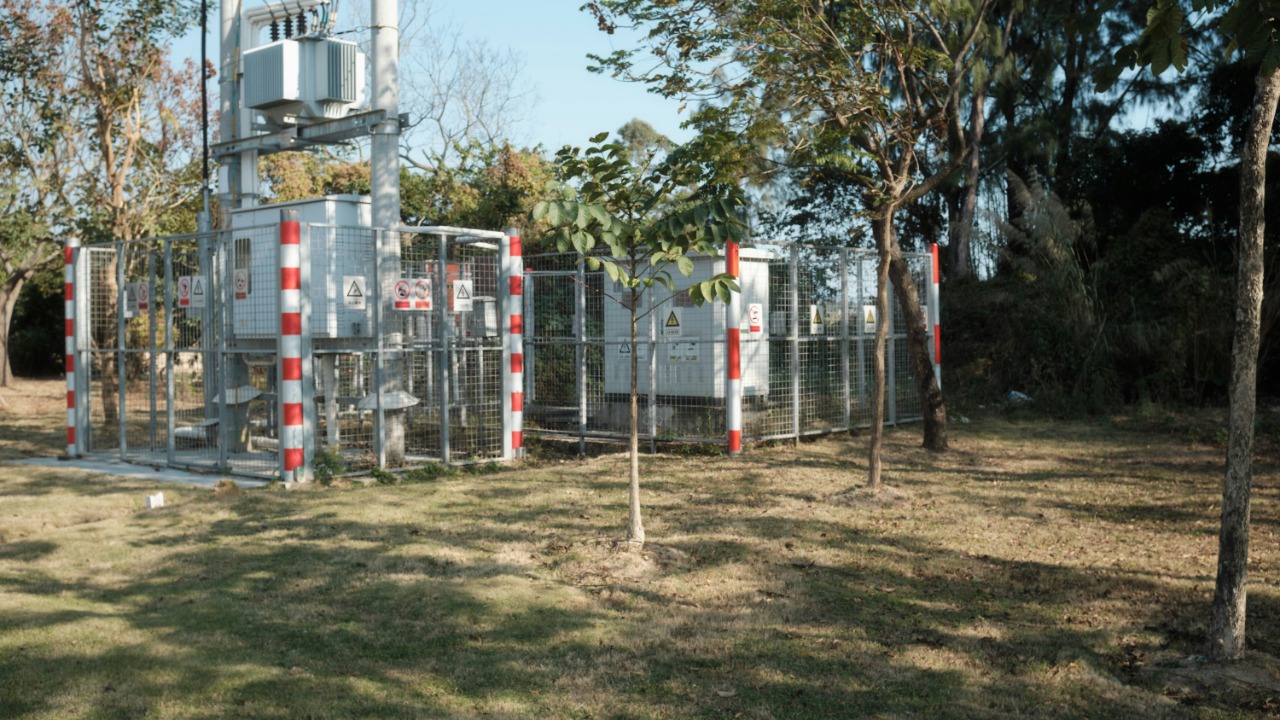

Across cities and suburbs, a curious pattern keeps turning up in aerial photos and field surveys alike: trees that stand closest to cell towers are often the ones that look the sickest. Their crowns thin out, branches die back on the side facing the antennas, and whole rows of street trees develop a lopsided, patchy look that foresters struggle to explain with ordinary urban stress alone. As the wireless buildout accelerates, scientists are racing to understand whether this is coincidence, a subtle side effect of radiofrequency exposure, or a warning sign that the infrastructure powering our phones is quietly reshaping the urban canopy.
Researchers are not claiming a catastrophe, and they are not calling for cell towers to be ripped out. Instead, they are zeroing in on the strange, repeating pattern around these structures and asking why the same visual clues keep appearing in different climates, on different species, and under different maintenance regimes. The stakes are not just aesthetic. Trees are critical to cooling overheated neighborhoods, filtering air pollution, and buffering storms, so if something in the way we deploy wireless networks is undermining them, the cost could be measured in public health as much as in lost shade.
What scientists are actually seeing around cell towers
When arborists walk the perimeter of a typical tower site, they often notice that the nearest trees look different from those even a short distance away. The closest trunks may lean slightly away from the structure, their bark can show odd cracking, and the foliage on the side facing the antennas sometimes appears sparser or prematurely yellowed. In several documented cases, the pattern is so stark that a ring of stressed vegetation seems to trace the tower’s footprint, while trees just beyond that invisible boundary look relatively normal.
Remote sensing specialists have started to pick up the same signal from above. High resolution imagery and drone surveys reveal that the crowns of trees within a tight radius of some towers have lower canopy density and more dead branches than comparable trees elsewhere in the same neighborhood. In many of these locations, the trees closest to cell towers show unusual signs of stress that cannot be fully accounted for by pruning, soil compaction, or obvious construction damage, a pattern that has been highlighted in analyses of trees closest to cell towers in multiple cities.
Why ordinary urban stress does not fully explain the pattern
Urban trees live hard lives, and any serious investigation has to start with the usual suspects. Roots are often boxed in by sidewalks and foundations, soil is compacted by foot traffic and heavy equipment, and road salt, exhaust, and heat radiating from asphalt all chip away at a tree’s resilience. Many tower sites sit in exactly these harsh environments, which makes it tempting to chalk up any decline to the same mix of drought, pollution, and neglect that kills so many city trees long before their time.
Yet when researchers compare trees that share the same cramped planting strips, the same traffic exposure, and the same maintenance schedule, the ones nearest the antennas still stand out. In some case studies, two trees planted on the same block, in the same year, and watered by the same crew diverged sharply once a new tower went live, with the tree closest to the structure losing foliage and fine branches while its neighbor remained relatively full. That kind of side by side contrast does not rule out traditional stressors, but it suggests that something about proximity to the tower is adding an extra burden that standard urban forestry models do not yet capture.
How radiofrequency energy interacts with living tissue
To understand what might be happening, it helps to look at how radiofrequency energy behaves when it meets biological material. Cell antennas emit non ionizing radiation, which does not have enough energy to break chemical bonds the way X rays do, but it can still interact with water molecules and charged particles in cells. In animals, the best documented effect is heating, which is why safety standards for phones and towers are built around limits on how much energy tissue can absorb without a measurable temperature rise.
Plants are built differently, but they are not immune to electromagnetic fields. Leaves are full of water, ions, and delicate protein structures that govern photosynthesis and respiration. Laboratory experiments on seedlings and potted saplings have found that certain frequencies and intensities of radiofrequency exposure can alter growth rates, change the opening and closing behavior of stomata, and shift the balance of stress related hormones. These effects are not uniform across species or frequencies, and many exposures show little to no impact, yet the existence of measurable biological responses at least makes it plausible that a dense cluster of antennas could nudge a vulnerable tree in the wrong direction.
The role of tower design, height, and antenna placement
Not all towers are created equal, and the way they are built may help explain why some sites show dramatic vegetation stress while others do not. Traditional macro towers often mount antennas high above the ground, tilted slightly downward to cover a wide area. The main beams of energy are designed to sweep over rooftops and streets, not to bathe the trunks of nearby trees, which means that only the upper canopy might sit in the most intense part of the field. In contrast, smaller structures mounted on utility poles or building facades can place antennas at or just above tree height, potentially bringing branches directly into the path of the strongest emissions.
Even on the same structure, the configuration matters. A tower that hosts multiple carriers, each with several panels and additional 5G equipment, can create a complex pattern of overlapping beams and side lobes. Trees that happen to stand in one of these hot spots may experience a very different exposure profile than those only a few meters away. Engineers also adjust power levels and antenna tilt over time as networks are upgraded, which means a tree that tolerated one setup for years might suddenly find itself in a more intense field after a routine optimization, complicating efforts to link a specific design choice to a visible decline.
Why some species seem more vulnerable than others
Walk around a tower site and the damage rarely looks uniform across every plant. Broadleaf species with large, thin leaves sometimes show more pronounced scorching and edge browning on the side facing the antennas, while nearby conifers with waxy needles appear relatively unbothered. This uneven response hints at species specific sensitivity, possibly tied to leaf structure, water content, or the way different trees manage oxidative stress. Trees with fast growth and high transpiration rates may be especially prone to subtle disruptions in their water balance or hormone signaling.
Age and health also play a role. A mature oak with deep roots and a robust energy reserve can absorb a lot of punishment before its crown starts to thin, whereas a young ornamental cherry planted in a shallow sidewalk pit may have little margin for error. If radiofrequency exposure adds even a small extra load on top of drought, pests, or soil contamination, the weakest individuals are likely to show symptoms first. Over time, that can create the impression that certain species are uniquely sensitive to tower proximity, when in fact they are simply the ones already living closest to the edge of their tolerance.
Competing explanations: coincidence, construction, or real signal
Critics of the emerging tree tower link argue that the pattern could be a mirage created by the way infrastructure is sited and built. Towers often go up in already degraded spaces such as highway verges, utility corridors, or the corners of parking lots, where trees are struggling long before any antenna is switched on. Construction itself can be brutal, with trenching, heavy machinery, and soil stockpiles crushing roots and stripping away topsoil. From this perspective, the ring of stressed vegetation is simply the footprint of human disturbance, not a signature of electromagnetic exposure.
Proponents of a genuine biological effect counter that the timing and geometry in some cases are hard to dismiss. They point to sequences where trees around a long standing tower remained stable for years, then began to decline after a major upgrade added new panels or increased power, with the worst damage consistently appearing on the sides facing the antennas. They also note that in a few locations, trees at similar distances from busy roads but far from any tower do not show the same asymmetric dieback. The debate is far from settled, yet the persistence of these anomalies has convinced a growing number of researchers that the pattern deserves more than a shrug.
What regulators and telecom companies say so far
Telecommunications regulators and network operators typically lean on existing safety standards to argue that tower emissions are well within limits for both people and the environment. Those standards, however, were largely developed with human exposure in mind, using models of adult bodies and assumptions about how much energy tissue can safely absorb. Trees and other plants were not the primary focus, and there is no dedicated regulatory framework that treats vegetation as a protected receptor in the same way that human bystanders are.
Industry representatives also emphasize that radiofrequency energy drops off quickly with distance and that most towers operate at a fraction of their maximum licensed power. From their perspective, if emissions are low enough to meet conservative human exposure limits at ground level, they are unlikely to pose a serious risk to trees that are often farther away or partially shielded by buildings. Environmental advocates respond that this reasoning sidesteps the possibility of chronic, low level effects on organisms that cannot move away, and they argue that the burden of proof should not rest solely on foresters who notice dying branches after the fact.
How researchers are trying to get clearer answers
To move beyond dueling anecdotes, scientists are turning to more systematic methods. Some teams are mapping tree health across entire neighborhoods, then overlaying those maps with detailed models of radiofrequency fields from nearby towers. By controlling for soil type, traffic density, and maintenance history, they hope to tease out whether proximity to high intensity lobes correlates with measurable declines in canopy cover or leaf area. Others are installing sensors on individual trees to track growth, sap flow, and stress markers over multiple seasons while recording the exact exposure levels they experience.
Controlled experiments are also underway, although they are harder to design in a way that mimics real world conditions. Seedlings can be placed in growth chambers and exposed to carefully calibrated fields at frequencies used by commercial networks, with researchers monitoring everything from germination rates to chlorophyll content. These studies can reveal subtle physiological changes that might be invisible in a street tree until years of cumulative stress take their toll. The challenge is translating those lab findings into practical guidance for how and where to place antennas in complex urban landscapes where trees, buildings, and people all share the same crowded airspace.
What it could mean for the future of urban forests
If ongoing research confirms that cell towers are a meaningful contributor to tree stress, even at the margins, the implications for city planning would be significant. Urban forestry programs might need to factor radiofrequency exposure into their species selection and planting strategies, favoring more resilient trees near heavy infrastructure and reserving sensitive species for quieter corridors. Network designers could be pushed to adjust antenna heights, tilt angles, or power levels to minimize direct hits on nearby canopies, especially in neighborhoods that already suffer from heat and pollution.
Even without definitive proof, the strange pattern around towers is already prompting a broader rethink of how digital infrastructure and green infrastructure intersect. Cities that pride themselves on both fast connectivity and ambitious climate goals may find that they have to coordinate these agendas more closely, treating trees not as decorative afterthoughts but as critical assets that deserve the same careful siting considerations as fiber routes and power lines. For now, the ring of stressed branches around some towers remains a puzzle, but it is one that cuts to the heart of how we balance the invisible signals that keep us connected with the living systems that keep our streets breathable and cool.
More from MorningOverview