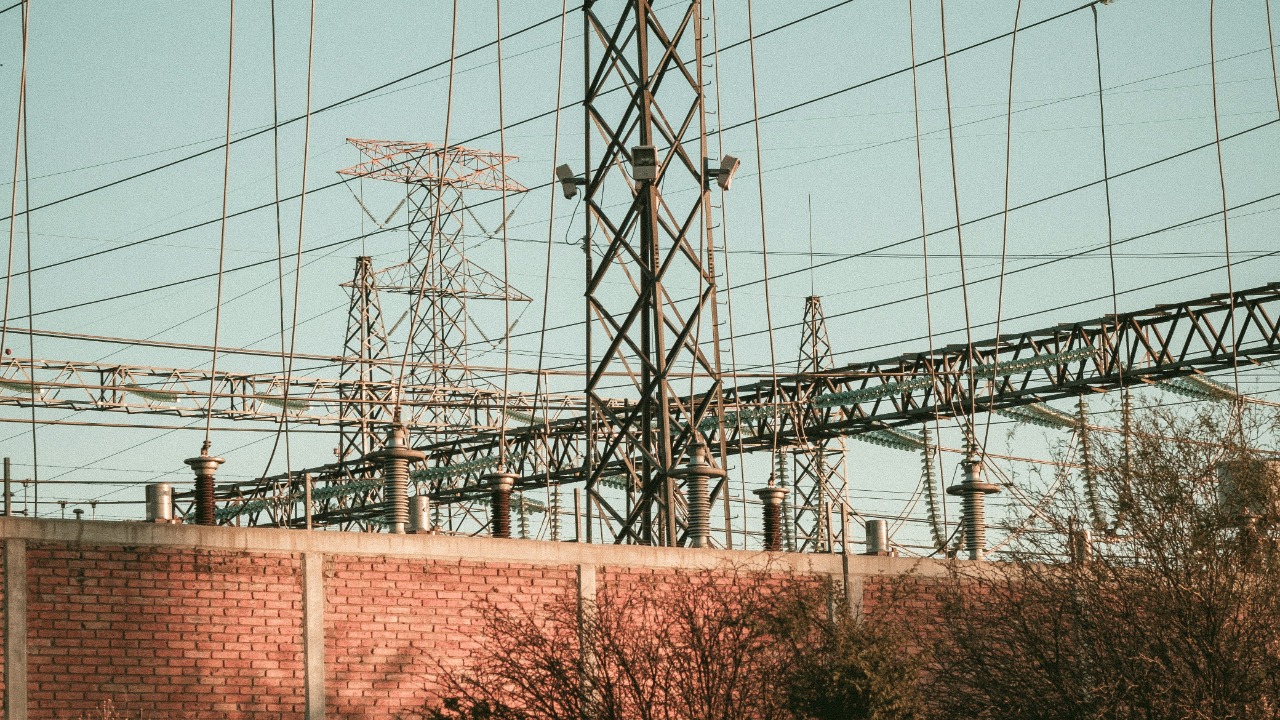

Artificial intelligence is colliding with a power system that was never designed for fleets of hyperscale data centers, electric vehicles, and electrified factories all at once. The next phase of the AI boom will be determined less by chips and algorithms than by whether the grid can quietly double its capacity without tearing up every landscape in sight.
Behind the scenes, a set of underused technologies and policy shifts could unlock that capacity far faster than building entirely new power lines. If regulators, utilities, and data center operators move quickly, these hidden grid upgrades could turn a looming power crunch into a catalyst for a more efficient, resilient system.
The AI boom’s real bottleneck is electricity, not chips
For years, the AI story has revolved around GPUs and model sizes, but the constraint now emerging is far more basic: enough electrons in the right place at the right time. Analysts tracking the sector argue that AI’s next bottleneck is not semiconductors but power, as hyperscale data centers race ahead of what local grids can reliably deliver and force a rethinking of how and where new capacity is built, a shift that is already visible in how Data centers are outpacing the electric grid. I see this as a structural problem, not a temporary mismatch, because the same regions that attract AI clusters, from Northern Virginia to central Ohio, are also grappling with aging infrastructure and slow permitting.
The scale of the demand shock is stark when set against national trends. Experts estimate that Electricity demand in the U.S. will increase 25% by 2030 from 2023 levels, a surge driven by data centers, electrified transport, and new industrial loads that is already forcing states to look at advanced transmission technologies to keep up with growth while managing wildfire risk and contact with vegetation, according to analysis of rising Electricity demand in the U.S.. When I talk to grid planners, they increasingly describe AI as the accelerant that is compressing a decade of expected load growth into just a few years, forcing them to hunt for capacity in places the industry once treated as marginal.
Data centers’ energy appetite is exploding
The numbers behind AI infrastructure make clear why utilities are scrambling. Current projections for 2025 indicate global data center consumption in terawatt-hours will keep climbing as operators add more racks of accelerators, and AI’s energy appetite is substantial enough that power requirements continue to escalate with each new generation of models and hardware, a trend that is already reshaping how operators think about siting and cooling according to assessments of What global data center consumption will be. I see this not as a one-off spike but as a structural ratchet, because once a region builds out the fiber, substations, and workforce to support AI campuses, the incentive is to keep stacking more compute on top of that foundation.
That appetite is already forcing uncomfortable choices. The rapid growth and competition in the AI industry are leading to the expansion of AI data centers in ways that are reshaping local power systems, to the point that some older power plants are being brought back into service to keep up with the new load, a reversal documented in reporting on how the AI data center boom forces older power plants back. When I look at those decisions, I see a warning sign: if the only way to feed AI is to revive aging fossil units, then the sector risks locking in higher emissions and reliability risks just as the rest of the economy is trying to decarbonize.
Onsite power is a stopgap, not a full solution
Faced with long interconnection queues and constrained substations, data center operators are increasingly turning inward. To meet the soaring demand, data centers are adopting onsite power systems as a primary energy source, a shift that reflects a 35 gigawatt energy gap by 2030 between what hyperscale campuses want and what the grid can currently promise, a shortfall detailed in the Bloom Energy 2025 Data Center Power Report. I read that as a sign of how far ahead AI demand has run: when companies that would rather focus on software are suddenly in the business of building their own power plants, it means the traditional utility model is struggling to keep up.
Onsite generation can buy time, but it cannot replace a robust grid. Fuel cells, gas turbines, and battery farms at the fence line may help a campus ride through local constraints, yet they still depend on upstream fuel supply and often come with higher emissions than large-scale renewables integrated into transmission. In my view, the real opportunity is to pair these onsite systems with smarter grid upgrades so that they act as flexible partners, exporting power when the grid is stressed and importing when renewable output is high, rather than as isolated islands that deepen fragmentation.
Advanced conductors can double capacity on existing lines
The most powerful tool hiding in plain sight is not a new power plant at all, but the wires themselves. A first-of-its-kind study led by UC Berkeley researchers found that the United States could double its electricity transmission capacity by replacing traditional steel-reinforced lines with advanced conductors, a change that would make expansion faster and cheaper while reducing the need for entirely new corridors, according to analysis of how advanced conductors provide a path for grid expansion. When I look at that finding, I see a direct answer to AI’s power crunch: doubling capacity on existing rights of way is exactly the kind of low-visibility upgrade that can unlock huge amounts of headroom without triggering the local backlash that often greets new towers.
Other studies point in the same direction. Now, studies show that if the United States transitions to the advanced conductors that are commercially available, that shift could significantly increase transfer capacity and cut congestion costs, while also reducing emissions on a scale comparable to what countries like Brazil emit in one year, a potential outlined in research on how the United States transitions to advanced conductors. For AI developers, that matters because congestion is what often strands cheap renewable power far from data center clusters; if utilities can move more energy over the same footprint, then the marginal megawatt for training a model is more likely to come from wind or solar instead of a peaker plant.
States are quietly rewriting the rules for high performance lines
Policy is starting to catch up with the technology. In Washington, D.C., August 27, 2025, state lawmakers across the country had already acted to require or encourage the use of high performance conductors, with 11 STATES PASS LAWS ON HIGH PERFORMANCE CONDUCTORS IN 2025 that collectively signal a shift in how regulators think about reconductoring and capacity uprates, a wave of legislation summarized in reporting that tracks how STATES PASS LAWS on HIGH PERFORMANCE conductors. I interpret these moves as a recognition that the cheapest megawatt is often the one you squeeze through an existing corridor, and that statutes need to nudge utilities toward those options instead of defaulting to like-for-like replacements.
At the same time, governors are being urged to treat grid modernization as a core economic development strategy. A recent framework on Advanced Grid Technologies argues that Governor Leadership can Spur Innovation and Adoption by aligning regulatory incentives, procurement rules, and pilot funding so that Modernizing electrical grids improves reliability and supports new industries, a case laid out in guidance on Advanced Grid Technologies and Governor Leadership. From my perspective, AI data centers give governors a concrete reason to act: if they can promise clean, reliable power at scale, they stand a better chance of landing the next wave of investment instead of watching it flow to more proactive states.
Advanced transmission tech can future proof the grid for AI
Beyond conductors, a broader suite of advanced transmission technologies is starting to move from pilot projects into mainstream planning. Analysts note that these combined forces of rising load, extreme weather, and new industrial policy underscore the urgent need for transmission systems that are efficient, high capacity, and adaptable, and that in this shifting landscape, Advanced conductors and related tools are emerging as a key strategy for future proofing the U.S. grid so it can serve AI clusters, data centers, and electrified communities without constant crisis, a vision detailed in work on the U.S. transmission transformation. I see this as a pivot from treating transmission as static hardware to viewing it as a flexible platform that can be tuned and upgraded as demand patterns change.
States are already experimenting with tools that fit this new mindset. Dec, for example, has become a shorthand in policy circles for a moment when Electricity planners began to look seriously at technologies like dynamic line ratings, advanced sensors, and compact tower designs that can increase capacity while reducing the risk of contact with vegetation and wildfire, a shift captured in discussions of how states look to advanced transmission technologies. For AI developers, the practical effect is that more regions will be able to host large data centers without waiting a decade for entirely new lines, because utilities can squeeze more out of what they already own.
Governors and regulators are racing to modernize
Political leaders are beginning to treat grid upgrades as a competitive race rather than a back-office chore. In the context of Advanced Grid Technologies, the argument is that Governor Leadership can Spur Innovation and Adoption by setting clear modernization targets, streamlining permitting, and aligning utility incentives so that Modernizing becomes a way to attract industries like AI rather than a cost to be minimized, an approach spelled out in the same guidance on Modernizing electrical grids. When I look at which states are landing the biggest AI campuses, there is a clear pattern: those that move fastest on grid planning tend to win the most investment.
Regulators are also rethinking how they measure success. Instead of focusing solely on keeping rates low in the short term, some commissions are starting to value resilience, flexibility, and the ability to integrate new loads like AI without constant emergency waivers. Mar has become a reference point in policy debates about how to time these changes, as stakeholders weigh whether to front-load investment or phase it in alongside load growth, a tension that surfaces in discussions of how new state policies will shape the grid’s future. From my vantage point, the states that treat AI as a predictable, long-term load rather than a speculative bubble are the ones most likely to build grids that can handle whatever comes next.
Why Wall Street is still missing the grid upgrade story
Despite the clear signals from policymakers and utilities, financial markets have been slow to price in the scale of the coming grid overhaul. Analysts tracking AI infrastructure argue that investors remain fixated on chipmakers and cloud platforms even as the real constraint shifts to substations and transmission, a disconnect highlighted in assessments that frame the quiet power play in the AI boom as the companies that can deliver reliable capacity where it is most needed, a theme explored in analysis of the Key Takeaways from AI’s next bottleneck. I see this as a classic case of markets chasing the visible story while underestimating the boring infrastructure that ultimately determines who wins.
That gap creates both risk and opportunity. If capital continues to flow overwhelmingly into compute while underfunding wires and substations, AI developers will face higher curtailment, more delays, and pressure to rely on stopgap onsite generation. Yet for utilities, equipment makers, and construction firms that specialize in reconductoring and advanced transmission, the combination of Dec policy shifts, new state laws on HIGH PERFORMANCE conductors, and the sheer scale of projected Electricity demand suggests a multi-decade investment cycle hiding in plain sight. From where I sit, the real test for Wall Street is whether it can look past the latest model release and recognize that the AI era will be defined as much by steel and aluminum as by silicon.
More from MorningOverview