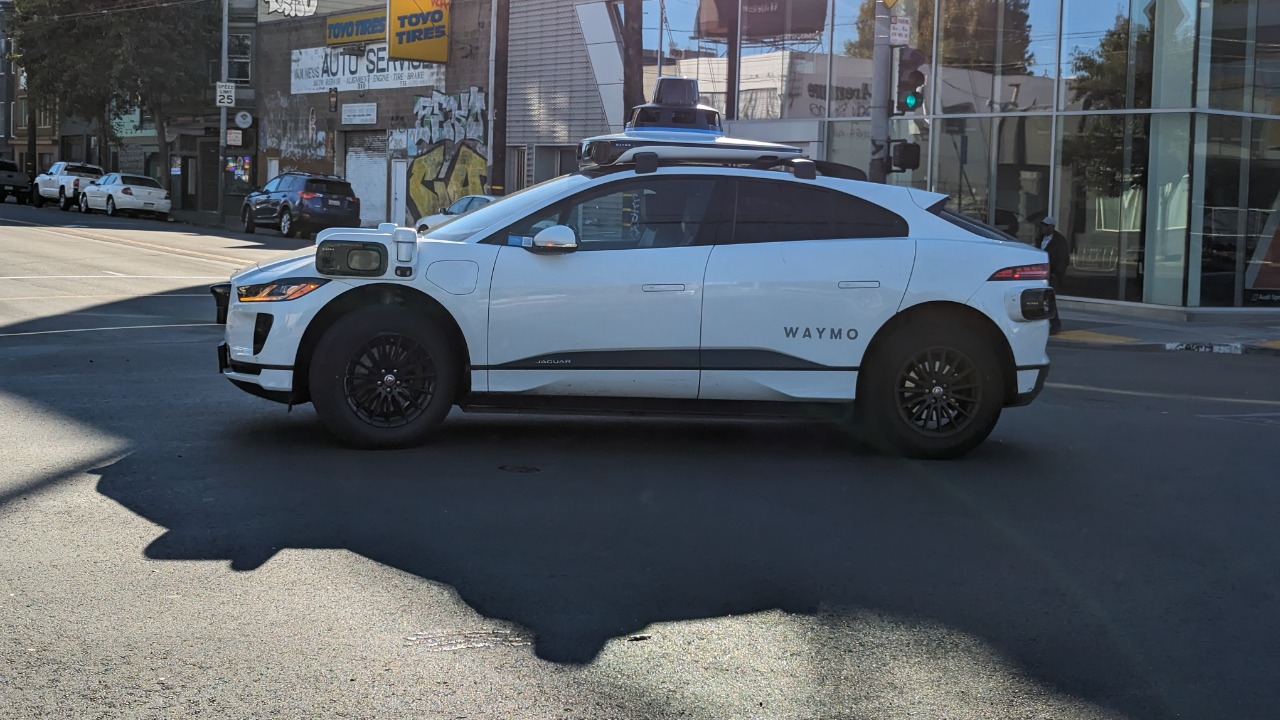

Robotaxis are marketed as fully autonomous, yet the industry quietly leans on human workers for some of the most mundane and awkward jobs in the system. The cars can navigate city streets alone, but when they freeze in traffic, need a charge, or confuse a construction cone for a roadblock, people still step in to do the “dumb” work the artificial intelligence cannot reliably handle.
I see a gap opening between the sleek promise of driverless mobility and the messy reality of remote helpers, street-level contractors, and call center staff who keep these fleets moving. The future of robotaxis is not a clean swap of humans for software, it is a hybrid network where people are hired to babysit, rescue, and recharge vehicles that are supposed to be self-sufficient.
Robotaxis are autonomous until they suddenly are not
On paper, companies selling self-driving rides insist their vehicles can handle city driving without human intervention, but the real systems are designed with escape hatches for when the software gets confused. The cars can navigate most of a trip, then stall in the middle of a lane, block a driveway, or stop short of a pickup point, forcing a human somewhere in the loop to nudge them back into motion. That gap between marketing and practice is where a surprising amount of human labor hides.
When a robotaxi stops responding to its own sensors and maps, the fallback is often a remote operations team that can see what the car sees and suggest or authorize the next move. Industry engineers describe these tools as a safety net rather than a steering wheel, but the effect is the same: the vehicle’s autonomy is conditional, and the moment conditions get weird, a person has to decide what happens next. The more these fleets expand into dense neighborhoods and chaotic traffic, the more often those edge cases crop up and the more visible the human scaffolding becomes.
The “secret army” rescuing stuck Waymo cars
Waymo’s driverless service is one of the most advanced on the road, yet it still depends on a dispersed network of people who physically help stranded vehicles. In Los Angeles, the company has quietly recruited locals who can be dispatched when a car is blocked by a double-parked truck, trapped behind a gate, or otherwise unable to complete a trip on its own. These helpers are not engineers or safety drivers, they are gig-style workers paid to walk up to a confused vehicle and follow instructions from a support app.
Because riders and passersby can be unreliable, Waymo pays workers in Los Angeles $20 or more for responding when a car gets stuck, a detail that turns the idea of a fully automated fleet into something closer to a neighborhood side hustle. Internal messaging encourages people to Follow Technology updates as that role expands, signaling that this “secret army” is not a temporary patch but a structured part of the operation. The work itself can be as simple as pressing a button on the car’s exterior or moving a traffic cone, yet without someone willing to do it, the robotaxi becomes an expensive roadblock.
How Americans are getting paid to “help” Google’s Waymo
Beyond emergency rescues, Waymo has turned routine assistance into a small but growing income stream for people who live where the service operates. Some Americans sign up through an app that alerts them when a nearby vehicle needs help with tasks like verifying a pickup location, checking for obstacles the sensors might misread, or guiding the car through a tight parking lot. The company frames this as a way to improve service quality while giving locals a chance to earn money without driving a car themselves.
In practice, these helpers are doing the low-status chores the artificial intelligence still struggles with, such as interpreting ambiguous curb markings or dealing with a malfunctioning gate code. Reports describe how How Americans help Google Waymo robotaxis has become a niche job category, with some owners of nearby properties describing it as difficult when cars repeatedly misinterpret their driveways or private roads. The arrangement underscores that even a brand built on cutting-edge autonomy still needs people on the ground to interpret messy human environments.
Tesla’s remote helpers and the myth of “Bull Self-Driving”
Tesla has long promoted its vision of a future where its cars operate as driverless taxis, yet the company is now building a team of remote workers whose job is to intervene when those vehicles get into trouble. Internal planning documents describe a system where each robotaxi could be supported by about 1.5 human workers who monitor alerts, review camera feeds, and help the car navigate complex situations. That ratio alone undercuts the idea that the service will run itself once the software is deployed.
Some of the language around this effort has been almost self-parodying, with references to “Bull Self-Driving You” and marketing that leans on slogans like “Yes, they are. But” when addressing whether the cars truly drive themselves. Behind the bravado, the company is hiring people who can remotely assist or even briefly control vehicles that are stuck or confused, a model described in one report on Bull Self-Driving as a kind of high-tech call center for cars. The more Tesla leans on this structure, the clearer it becomes that its robotaxis are not independent agents but clients in a human-staffed support network.
What “remote operations” really means in a driverless world
Industry insiders use the phrase “remote operations” to describe the human layer that supports autonomous vehicles, but the term covers several very different kinds of work. In some cases, a remote operator simply approves a maneuver the car has already chosen, such as crossing a double yellow line to pass a stalled truck. In others, the person provides high-level guidance, like drawing a path around a construction zone on a digital map. At the most intensive end, an operator can briefly take direct control of steering and acceleration to navigate a tricky intersection.
One detailed breakdown of these roles explains that it is worth defining some terms before judging how autonomous a system really is, since “remote operations” can mean anything from occasional oversight to frequent teleoperation. As robotaxi rides begin in more cities, the mystery of Tesla’s human helpers and similar teams at other companies has become a central question for regulators and riders who want to know who is actually in charge when something goes wrong. The same analysis notes that What self-driving developers call remote operations is essentially a way to route difficult edge cases to a human brain, then feed the outcome back into the learning system when it needs help.
Charging, cleaning, and the physical bottlenecks of robotaxis
Even when the driving itself is handled by software, robotaxis still need to be plugged in, cleaned, and repositioned, and those chores are far from automated. Electric fleets in particular face a bottleneck at charging stations, where someone has to move vehicles in and out of stalls, manage queues, and deal with broken hardware. The more trips these services complete, the more often they need to be recharged, turning energy logistics into a labor problem as much as an infrastructure one.
Some companies are experimenting with robotic arms and automated depots, but executives admit that for now, people are still doing much of the work. One chief executive described how the industry is wrestling with who will recharge all those robotaxis and whether more robots or more humans will handle the task, a tension captured in a report that urges readers to Follow Lloyd Lee as Every new fleet expansion exposes fresh bottlenecks. Until fully automated charging and cleaning systems are widely deployed, the supposedly driverless future will still rely on workers who unplug cables, wipe down seats, and shuttle cars between depots and busy zones.
Why companies hide the human layer behind glossy autonomy
From a branding perspective, admitting that a “driverless” service depends on a small army of remote staff and local contractors undermines the core sales pitch. Investors are told that autonomy will slash labor costs, regulators are promised that software will be safer than human drivers, and customers are sold on the novelty of riding in a car with no one at the wheel. Acknowledging that people are still steering decisions from afar or jogging down the block to free a stuck vehicle complicates that story.
There is also a competitive incentive to keep the scale of human support opaque, since rivals and policymakers could use those numbers to question whether the technology is ready for broad deployment. If one company needs 1.5 workers per vehicle while another claims to operate with far fewer, the comparison could shape public perception and regulatory scrutiny. By burying the human layer under vague terms like “remote assistance” and “field support,” robotaxi operators can maintain the illusion of full autonomy while quietly staffing up the back office.
The new jobs created by “dumb” robotaxi tasks
For workers, the rise of robotaxis is not just a story about lost driving jobs, it is also about new roles that did not exist a few years ago. People in cities like Los Angeles can now sign up to be on-call helpers who respond when a vehicle needs a human touch, whether that means pressing a reset button, guiding a car through a confusing driveway, or simply reassuring a nervous passenger through a support line. These tasks may be unglamorous, but they represent a new category of tech-adjacent work that blends gig labor with real-time operations.
At the same time, the quality of these jobs is uneven, with some helpers praising the flexibility and others complaining about inconsistent pay and unclear expectations. The fact that companies like Waymo and Tesla are building structured programs for these roles suggests they are not temporary stopgaps but long-term components of the business model. As fleets grow, the demand for people who can handle these “dumb” tasks is likely to grow with them, even if the companies continue to talk publicly about a future where the cars do everything on their own.
More from MorningOverview