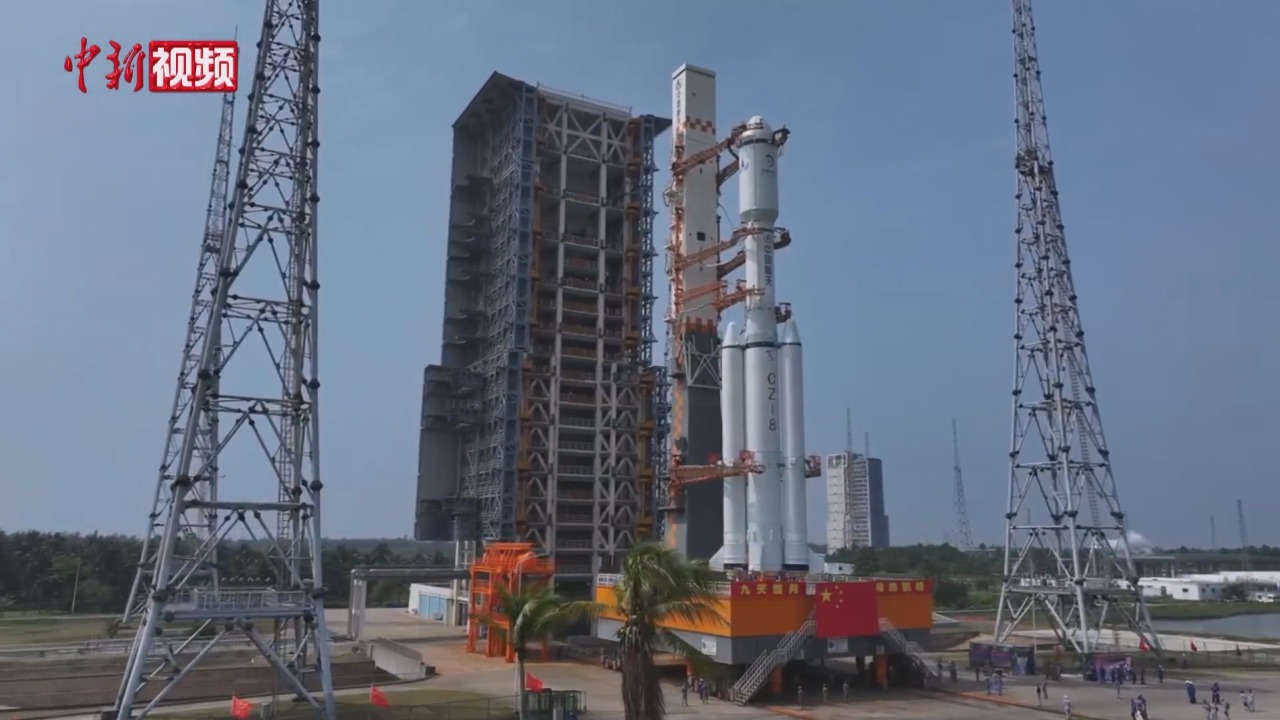

China has added another building block to its space-based broadband ambitions, using the Long March-8A to send a fresh cluster of internet satellites into orbit from its new commercial launch hub in the south. The mission extends a fast-growing national network of low orbit spacecraft designed to blanket the country, and eventually parts of the world, with high speed connectivity. It also underscores how quickly China is turning experimental rockets and coastal pads into a routine launch pipeline for commercial and state-backed operators alike.
Long March-8A’s latest climb to orbit
The newest flight of the Long March-8A marked a confident step for China’s medium lift workhorse, pairing a relatively young rocket with a maturing internet constellation. Officials described the launch as a success, with the carrier placing its payload of broadband satellites into their planned orbit after lifting off from the country’s southern coastline. The mission followed a series of earlier flights that proved the basic design and cleared the way for more frequent use of the upgraded vehicle from the Hainan commercial spacecraft launch site.
State reports framed the operation as part of a broader campaign to normalize commercial style missions on government developed rockets, highlighting how the Long March-8A is now being dispatched with internet payloads rather than only test hardware or single large satellites. Coverage of the event emphasized that the rocket is part of the wider Long March-8A rocket launches program that is increasingly focused on supporting communications infrastructure in orbit, not just prestige science or exploration missions.
A coastal launch window in Hainan
The choice of launch site was as significant as the rocket itself, reflecting China’s push to turn its southern island province into a gateway for commercial spaceflight. The Long March-8A lifted off from the Hainan commercial spacecraft launch site, a facility built to handle a high cadence of missions and to give operators easier access to equatorial orbits that are ideal for communications satellites. By flying from Hainan, mission planners can take advantage of favorable geography that reduces fuel needs and allows heavier payloads to reach low Earth orbit.
Local reporting noted that the latest mission also marked a milestone for the site’s own operations, describing how the Hainan pad has now supported multiple orbital flights in quick succession as part of a ramp up toward regular commercial service. The launch was cited as one of the key steps in a year when the coastal complex completed its 10th launch, underscoring how quickly the new facility is being woven into China’s national space infrastructure.
Building a mega internet satellite network
Behind the spectacle of liftoff, the real story sits in orbit, where each new batch of spacecraft thickens a web of satellites designed to deliver broadband coverage. The latest group has been folded into a Chinese State run mega internet satellite network that already counts more than 130 satellites in low Earth orbit. They are intended to work together as a mesh, handing off signals as they circle the planet so that users on the ground experience a continuous connection rather than isolated coverage patches.
Officials have described the constellation as a strategic asset that will eventually support consumer broadband, enterprise links and government communications, with the newest satellites joining earlier groups to expand both capacity and geographic reach. Reports on the deployment stressed that They have become the newest parts of the Chinese State mega internet satellite network, which has more than 130 satellites in low orbits after the latest deployment, signaling that the project has moved well beyond its initial pilot phase.
The 17th batch and a growing launch rhythm
The cluster that rode the Long March-8A is not an isolated experiment but part of a steady drumbeat of launches that are gradually filling out the constellation. Chinese coverage identified this group as the 17th set of internet satellites to be sent into orbit under the program, a figure that hints at how many separate missions have already been devoted to the network. Each batch adds incremental capacity, but together they represent a sustained industrial effort to manufacture, test and launch spacecraft at a pace that would have been difficult for China’s space sector a decade ago.
Video reports from the launch highlighted how the mission from Hainan was framed domestically as a sign that China is ready to support dozens of such flights in the coming years, with the local commercial launch ecosystem expected to scale up accordingly. One segment noted that China successfully launched its Long March-8A carrier rocket from Hainan, sending the 17th group of internet satellites into orbit, and that the site is set to support over 60 launches, a target that would place it among the busiest spaceports in the world if achieved.
Technical profile of the Long March-8A
From a hardware perspective, the Long March-8A is an upgraded branch of China’s broader Long March family, designed to slot into the medium lift category that is ideal for clustered satellite deployments. The rocket builds on the base Long March design but incorporates structural and performance changes that make it better suited to carrying multiple spacecraft to low Earth orbit. Its configuration is optimized for flexibility, allowing different combinations of satellites to be stacked under a larger payload fairing without extensive redesign between missions.
Public technical references describe the Long March-8A as an enhanced version of the Long March 8, featuring a 5.2 meters diameter payload fairing that can accommodate sizeable satellite stacks or modular dispensers. The vehicle is presented as part of the CZ-8A variant of the Long March line, an evolution that reflects how Chinese engineers are tailoring rockets specifically for constellation building rather than only for one off national missions.
Cleaner propulsion and commercial positioning
One of the quieter but important aspects of the Long March-8A program is its use of cleaner propellants compared with older Chinese launchers that relied heavily on toxic hypergolic fuels. Reports on the latest mission noted that the rocket uses liquid oxygen and liquid hydrogen, or similar modern combinations, instead of traditional kerosene and nitrogen tetroxide mixes that pose greater environmental and handling risks. This shift aligns with a global trend toward greener launch systems and helps make the Hainan site more acceptable to local communities and tourism driven development on the island.
Regional coverage from Beijing and the Gulf region framed the launch as a sign that China is positioning its Long March rockets as competitive options in the commercial market, not just as national workhorses. One dispatch from Beijing explained that China today launched a Long March-8A rocket carrying a group of internet satellites into space and highlighted that the vehicle uses environmentally friendlier fuel instead of traditional kerosene, a detail that doubles as both a technical note and a marketing point for potential international customers.
International attention and regional reactions
The mission has drawn notice well beyond China’s borders, in part because it illustrates how quickly the country is building a rival to Western satellite broadband systems. Outlets in regions as varied as the Middle East and Europe have carried dispatches on the launch, often emphasizing that the satellites are intended to provide internet services and that the rocket is domestically developed. This external coverage reflects a recognition that China’s growing constellation could eventually offer connectivity options to partners in Asia, Africa and beyond, potentially reshaping the competitive landscape for satellite internet.
One report datelined ISTANBUL described how China on Friday launched a new group of internet satellites into space aboard an indigenously built Long Mar rocket, noting that the spacecraft were successfully deployed into their designated orbit. Another bulletin categorized under Miscellaneous from Beijing stated that Beijing, December 26 (QNA) saw China launch a Long March-8A rocket carrying internet satellites, with the report timestamped at 48 minutes past the hour, a small detail that nonetheless underscores how closely international desks are tracking each step of the program.
From test flights to routine operations
The Long March-8A’s current role is the product of a rapid evolution from initial trials to regular service. Earlier flights of the broader Long March 8 family were used to validate the basic architecture and to demonstrate that the rocket could handle multiple payloads, including rideshare missions. With those milestones behind it, the 8A variant is now being treated as a dependable platform for constellation building, dispatched repeatedly from Hainan with similar payload stacks and mission profiles that differ mainly in orbital parameters and satellite configurations.
Chinese accounts of the program’s development have highlighted specific milestones, such as a previous launch in Dec when the rocket lifted off at 3:53 p.m. from Hainan carrying another group of satellites. That mission was described as part of the Long March series of rockets, with the 3:53 p.m. liftoff time cited as a marker of the precise scheduling and ground operations now in place at the Hainan commercial spacecraft launch site. The shift from one off demonstrations to such clockwork launches is a key indicator that the vehicle has entered a more mature operational phase.
Domestic narrative and visual storytelling
Inside China, the launch has been presented not only through technical briefings but also through carefully produced visuals that showcase the rocket’s ascent and the coastal setting of the pad. Video segments have focused on the plume of the Long March-8A rising over Hainan’s shoreline, the rollout of the rocket from its assembly building and the moment of satellite separation in orbit. This kind of storytelling is designed to build public familiarity with the new generation of rockets and to frame the internet constellation as a tangible national project rather than an abstract infrastructure plan.
One widely shared clip highlighted how China successfully launched a Long March-8A carrier rocket with internet satellites, noting that the spacecraft were deployed into their designated orbit and pairing that information with dramatic footage of liftoff. Another domestic report from Haina, referencing the same family of rockets, stressed that China launched a Long March-8A carrier rocket on Friday in south China’s Haina, tying the mission to a narrative of regional development and technological progress that extends beyond the space sector itself.
More from MorningOverview