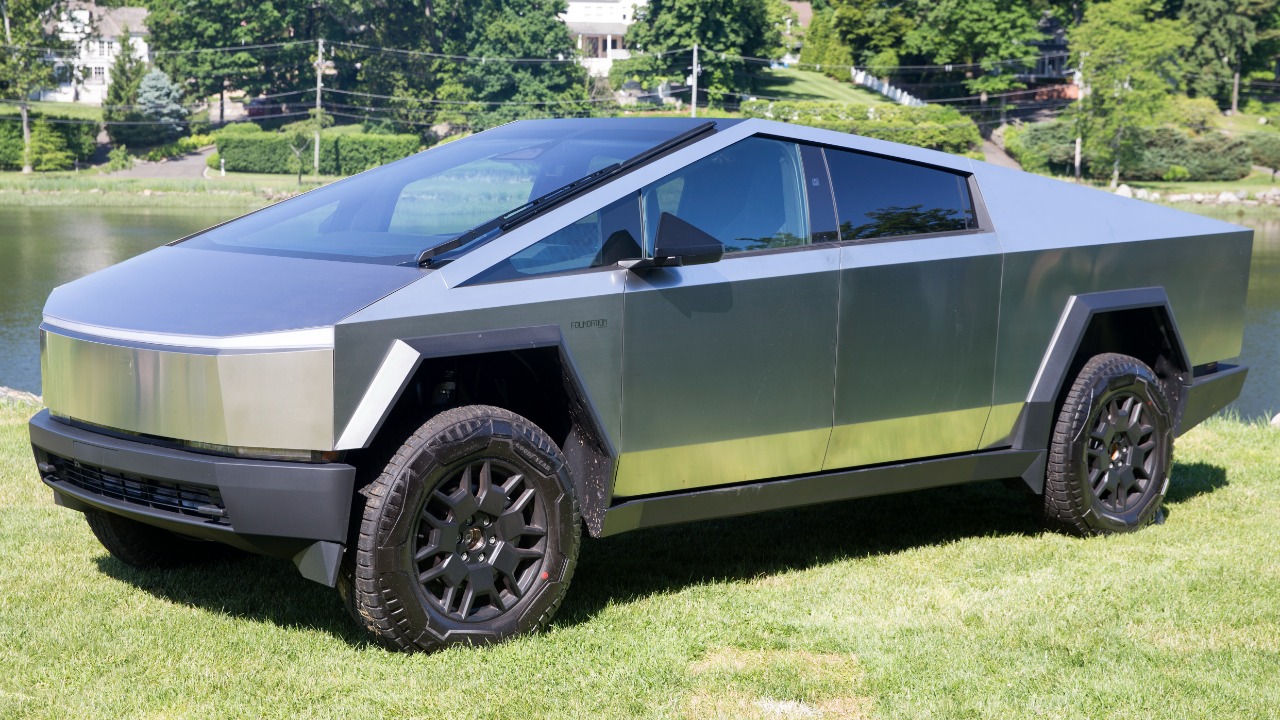

The Tesla Cybertruck was pitched as a futuristic tank for the road, but its radical design is now colliding with a more sobering reality on the fireground. Firefighters and safety investigators are warning that the same features that make the truck look indestructible can slow rescues, complicate firefighting tactics, and turn already dangerous electric vehicle incidents into life‑or‑death races against time.
Those concerns are no longer theoretical. A deadly inferno after a Cybertruck crash in Piedmont, mounting scrutiny of Tesla’s door systems, and new training sessions devoted almost entirely to the truck’s quirks have pushed this vehicle to the center of a broader debate over how far design can stretch before it undermines basic emergency access.
The Piedmont crash that crystallized the stakes
The turning point for many first responders came in the Piedmont crash that killed three people, including Nelson and Tsukahara, after they initially survived the impact. According to investigators, the collision set off a chain reaction that left the Cybertruck engulfed, with survivors trapped inside as fire spread faster than rescuers could gain access, a sequence that experts described as driven in part by “Poor” design choices that complicated escape and extrication, as detailed in the Piedmont crash report.
For firefighters who already treat any electric vehicle fire as a high‑risk event, the Piedmont scene underscored how little margin for error exists when occupants cannot be reached quickly. Crews had to contend not only with a growing blaze but also with a vehicle whose structure and systems resisted conventional tools and tactics, turning what might have been a survivable crash into a fatal entrapment that is now at the center of litigation and policy questions.
A “bulletproof” exoskeleton that fights back
At the heart of the problem is the Cybertruck’s exoskeleton, which Tesla has promoted as a kind of rolling armor. The company has said the Cybertruck’s stainless steel body is a selling point, touting its apparent impenetrability and even highlighting its resistance to dents and damage in an October 2023 post on X, a message that helped cement the truck’s image as an indestructible wedge of metal, according to reporting on how Tesla has touted the vehicle.
That armor is built from Tesla’s own stainless steel alloy, described as the Ultra‑hard 30X Cold‑rolled material that also forms the SpaceX Starship shell, a detail that has impressed fans but worried rescue professionals who see a skin that standard cutting tools may struggle to breach, as explained in a technical breakdown of The Cybertruck exoskeleton.
Firefighters warned about extrication years before deliveries
Long before the first production trucks hit the street, some in the fire service were already gaming out worst‑case scenarios. In a discussion thread from Nov 2019, one firefighter watching the Cybertruck reveal wrote that extrication might be tricky, pointing to the Cybertruck body, the use of Stainless steel, and the prospect of Armored glass as a combination that could blunt saws and spreaders that normally peel open conventional vehicles in minutes, a concern captured in an early Cybertruck extrication debate.
Those warnings are now being echoed in real‑world training. In one widely shared clip from a session labeled Firefighters Struggle to Break the Tesla Cybertruck’s “Transparent Metal” Glass During Emergency Response Training, crews repeatedly strike the truck’s windows with tools that would normally shatter automotive glass, only to see the Transparent Metal surface flex and hold, a demonstration that has become shorthand for how difficult it may be to Break the Tesla Cybertruck in a hurry, as seen in the Transparent Metal glass training video.
Electronic doors and the risk of being sealed inside
Beyond the body shell, firefighters are increasingly focused on the Cybertruck’s reliance on electronic door systems. Tesla’s vehicles have long featured flush‑mounted, electronically powered door handles, a unique design for aerodynamics and styling that can become inaccessible from the outside when power fails, leaving rescuers hunting for hidden releases while smoke and flames spread, a vulnerability highlighted in a video explaining how Tesla’s vehicles have long used these handles.
Regulators are now probing whether similar systems in other models are failing when they are needed most. NHTSA’s Office of Defects Investigation opened a case after a complaint from a man in Ge who said his Tesla Model 3 doors would not release, a review that has been linked in public discussion to the Piedmont crash and the broader question of how electronic latches behave in emergencies, as described in the notice that NHTSA’s Office of Defects Investigation is now pursuing.
Design choices under a growing legal and investigative spotlight
The Piedmont fire has become a focal point in a broader pattern of incidents involving Tesla vehicles and emergency access. A Washington Post review found at least a dozen cases since 2019 in which Tesla drivers, passengers, or first responders struggled with doors, windows, or other systems during crashes or fires, a tally that has fed into lawsuits and regulatory files that question whether the company’s design priorities have adequately accounted for worst‑case scenarios, according to documents summarized in a Washington Post review.
Those concerns are now intersecting with a separate legal fight over a Cybertruck fire that allegedly began in its battery pack. In that case, plaintiffs argue that the truck’s pack was unreasonably dangerous and that, Unlike a traditional fuel tank, a damaged or overheated battery can enter thermal runaway that is difficult to stop once it starts, a claim laid out in a complaint that labels the design Defective and points to the risk when the pack is punctured or overheated, as detailed in a Defective design lawsuit.
Why EV battery fires are a different kind of fight
Even in a conventional sedan, lithium‑ion packs pose challenges that firefighters have had to learn quickly. Battery damage during a crash can lead to fires or explosions that are harder to control than gasoline blazes, often requiring far more water, extended monitoring for re‑ignition, and careful management of toxic runoff, a set of hazards that increase danger to both occupants and first responders, as explained in a legal analysis of why a Battery damage can be more dangerous than a ruptured fuel tank.
When that battery is buried in a heavy, armored pickup, the job gets even harder. In one documented Cybertruck fire, Assistant Fire Chief Ruben Balboa from the Harlingen Fire Department said the vehicle’s battery caught fire after the crash and that crews spent more than an hour chasing flames emanating from the Cybertruck, a timeline that illustrates how long thermal runaway can keep flaring even after the visible fire seems under control, as described in a report quoting Assistant Fire Chief Ruben Balboa.
Toxic vapors and invisible threats to crews
Firefighters are also grappling with the chemical side of EV incidents. In Sacramento, four firefighters were injured by toxic fumes from an EV battery fire, describing a very low‑lying white cloud that rolled across them and left a metallic taste in their mouths, forcing them to retreat to a garage as a safer location and later seek medical care, an episode that has become a case study in how They can be harmed even when they are not in direct contact with the vehicle, as recounted in a report on how They immediately had to move.
Another incident involved a Tesla that put five firefighters in the hospital even though they were not close to the vehicle, after toxic vapors from the battery drifted farther than expected and turned what initially did not appear to be a thermal runaway into a hazardous materials event, a reminder that crews can be exposed to invisible plumes long before flames are visible, as described in a video titled Tesla Toxic Vapors that has circulated widely in training circles.
Training days: from Los Angeles classrooms to Tesla‑run drills
To keep up, departments are racing to update their playbooks. In Los Angeles, instructors at the Frank Hodkins Memorial Training Center have been walking firefighters through the new hazards of lithium‑ion battery and electric vehicle fires, using classroom sessions and live burns to show how quickly packs can vent, how runoff can carry contaminants, and how tactics must change when a vehicle’s structure resists cutting, as seen in footage from the Frank Hodkins Memorial Training Center seminar.
Tesla itself has begun hosting sessions for Southern California first responders, with company representatives telling attendees, “Our goal is to accelerate the world’s transition to sustainable energy, and so we can’t do it alone,” while walking crews through techniques to contain battery fires and use specialized equipment, an effort framed as helping departments be more prepared to handle them, according to coverage of how Our goal is to accelerate that transition.
Cybertruck as a “firefighter’s nightmare”
Even with that training, the Cybertruck is emerging as a special case. According to new reporting, the Tesla pickup’s unorthodox design, including its stainless exoskeleton and armored glass, could be endangering its passengers by making it harder for rescuers to get inside quickly, a combination that has led some in the fire service to describe Cybertrucks as a firefighter’s nightmare when seconds matter, as summarized in an analysis that begins, “According to” new findings about how According to new reporting the truck’s design could be putting people at risk.
Those fears are not limited to catastrophic crashes. In a viral video from Texas, a Cybertruck hits a fire hydrant and the results are described as kind of interesting, with viewers urged to stick around to the end to see whether there will be fire, a clip that has fed a cottage industry of tests and stunts probing how the truck behaves in edge cases and how its systems respond to impacts that might barely register in a conventional pickup, as seen in the Cybertruck vs Fire Hydrant video shot in Texas.
Door handles, design culture, and what executives knew
Behind the hardware, critics are also scrutinizing the culture that produced it. One analysis of Tesla’s electric door handles describes how Elon Musk was Channeling Apple in pushing for sleek, flush designs, citing research conducted by Bloomberg’s David Welch and Edward Ludlow that drew on internal communications obtained through public records requests to trace how executives weighed aesthetics against redundancy and fail‑safe access, a debate that now looks very different in light of fatal fires, as detailed in a piece titled Channeling Apple.
For firefighters, the question is less about design philosophy and more about whether they can get a trapped person out when power is gone and panels refuse to budge. Short videos explaining that when power fails in a fire you need a mechanical backup to open doors have circulated widely, including one clip titled “They survived a Cybertruck crash. Then a fire killed them.” that walks viewers through how inaccessible handles can turn survivable impacts into fatal entrapments, a message that has become a staple of EV safety briefings, as seen in the They survived a Cybertruck crash short.
EV hazards are forcing a rethink of access control
The Cybertruck debate is also prompting a broader rethink of how access is managed in high‑risk environments. Security experts often note that the most critical areas of failure are access points such as personnel turnstiles, gates, and vehicle entries, which become key breach points requiring high‑level access control in data centers and other sensitive sites, a principle that now has an eerie parallel in vehicles whose doors and windows can lock out not just intruders but rescuers, as described in a briefing on why The most critical areas of failure are often access points.
In that sense, the Cybertruck is forcing regulators, automakers, and fire departments to confront a simple question: how much security and structural strength is too much when it begins to impede rescue. As more EVs hit the road and more Cybertrucks roll into driveways, the tension between fortress‑like design and first responder access is likely to intensify, and the outcome of investigations into incidents like Piedmont will help determine whether future trucks look more like armored wedges or return to forms that give firefighters a fighting chance.
Firefighters adapt while Tesla leans into training
On the ground, departments are not waiting for regulators to settle those questions. In California, reporters have noted that Tesla battery fires are becoming increasingly common as more Californ drivers adopt the brand, prompting local stations to refine their tactics and share lessons learned from each incident, a trend captured in a segment titled Tesla trains firefighters on lithium‑ion battery fires that shows crews experimenting with new containment tools and cooling strategies.
At the same time, Tesla is trying to position itself as a partner rather than an obstacle, sending staff to regional academies and emphasizing that it wants first responders to be more prepared to handle them. Whether that outreach can offset the structural and electronic challenges baked into the Cybertruck’s design is an open question, but for now, every new training day, lawsuit, and investigation is adding pressure on the company to prove that its most radical truck can be both futuristic and survivable when something goes terribly wrong.
More from MorningOverview