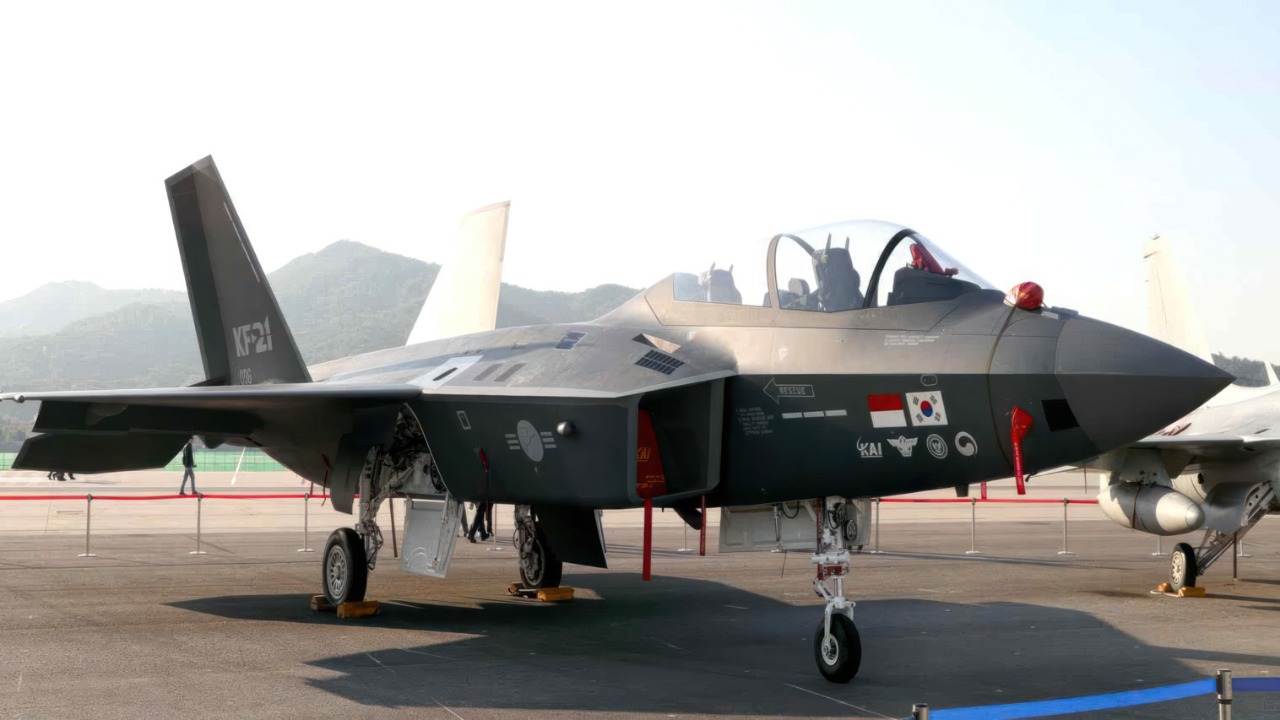

South Korea is moving from licensed fighter engines to a fully indigenous powerplant, committing $3.4 billion to a new 16,000lb-thrust engine tailored for the KF-21 program. The decision signals that the country is no longer content to assemble advanced jets around foreign cores and instead wants to own the most complex part of the aircraft. It is a bet that control over propulsion will decide who really leads the next generation of regional airpower.
Why a $3.4 billion engine program matters now
By locking in $3.4 billion for a homegrown fighter engine, Seoul is treating propulsion as a strategic asset rather than a line item in a procurement spreadsheet. The KF-21 is already central to South Korea’s plan to field a modern combat fleet, but relying on imported engines leaves a critical vulnerability in any long conflict or export campaign. A domestic 16,000lb-class engine promises not just performance, but political freedom to upgrade, sanction-proof supply, and the ability to tailor the jet to national doctrine instead of foreign export rules.
The funding decision also fits a broader pattern of South Korea using high-end manufacturing and defense technology to climb the value chain in global industry. The same state that turned Hyundai into a global car brand and Samsung into a smartphone powerhouse is now applying that model to aerospace, with South Korea positioning itself as a full-spectrum airpower producer rather than a perpetual licensee. In that context, the engine program is less a one-off splurge and more a down payment on decades of industrial and military leverage.
Inside Seoul’s $3.4 billion commitment
The core of the move is a formal allocation by Seoul of $3.4 billion specifically to develop an indigenous fighter engine for the KF-21. That figure is large enough to cover a full development cycle, from early design and materials work through ground testing, flight trials, and certification for operational use. It signals that the government is not dabbling in a technology demonstrator, but intends to field a production-standard engine that can compete with established Western designs in thrust, reliability, and life-cycle cost.
Reporting on the decision notes that Seoul allocates $3.4 billion with the explicit goal of breaking dependence on foreign propulsion for its flagship fighter. That money will be spent over multiple years, giving engineers time to iterate on compressor and turbine designs, integrate advanced digital engine controls, and validate the engine in a range of climates and mission profiles. The scale of the budget also reflects the reality that modern fighter engines are among the most complex machines humans build, and that catching up to decades of Western experience will not be cheap.
Hanwha Aerospace steps out from the shadow of license production
For years, Hanwha Aerospace has been the quiet workhorse behind South Korea’s fighter propulsion, producing foreign engines under license and building up a deep bench of manufacturing and test expertise. The new program gives the company a chance to move from being a subcontractor on imported designs to the prime industrial player on a national flagship project. That shift is as much about prestige and intellectual property as it is about revenue, since owning the design unlocks export and upgrade options that license production never could.
According to detailed coverage of the plan, Hanwha Aerospace, which produces foreign fighter engines under licence, will play a key role in the indigenous engine effort. The company can leverage its existing test cells, supply chains, and quality systems, but it will also need to expand into areas like high-temperature single-crystal turbine blades and advanced combustor design that were previously imported as black-box technology. If Hanwha succeeds, it will not only secure long-term work on the KF-21, but also position itself as a regional propulsion supplier for future unmanned aircraft and trainers.
DAPA’s green light and the new governance structure
The decision to proceed with a national fighter engine did not emerge from a single ministry memo; it is the product of a deliberate governance structure built to manage risk and coordinate stakeholders. South Korea’s Defense Acquisition Program Administration, better known as DAPA, has formally approved the project and is now responsible for balancing technical ambition with schedule and budget discipline. That approval effectively moves the engine from concept to program-of-record status, which in turn unlocks stable funding and clear accountability.
Coverage of the approval notes that DAPA has greenlit the fighter engine project, with reporting by Steve Trimble highlighting how Hanwha is drawing on decades of license-production experience as it steps into a lead role. That institutional memory matters, because DAPA has seen other complex programs struggle when industrial partners underestimated the challenge of integrating cutting-edge subsystems. By tying the engine effort to a clear acquisition framework from the start, the agency is trying to avoid the kind of scope creep and fragmented oversight that have plagued some international fighter projects.
A ministerial task force to keep the engine on track
Recognizing that a fighter engine touches everything from research labs to export policy, South Korea has also set up a ministerial-level body to guide development. This task force is designed to sit above individual agencies and services, giving political leaders a single forum to resolve disputes over requirements, funding priorities, and technology sharing. In practice, that means the engine program will not be left to drift between ministries or be derailed by overlapping budgets and duplicated research projects.
Reporting on the new structure explains that the task force will manage certification requirements, prevent overlapping budgets, and coordinate research across agencies, with the task force explicitly charged with avoiding waste and aligning technical work with operational needs. A related account notes that South Korea forms a ministerial body to guide fighter engine development and ensure that lessons from this program shape future propulsion projects. In my view, that kind of centralized oversight is essential when a country is attempting a first-of-its-kind industrial leap, because it reduces the odds that promising technologies get stranded in stovepiped labs.
How the 16,000lb engine fits into the KF-21 roadmap
The new engine is not an abstract technology demonstrator; it is being designed with a specific airframe and block upgrade in mind. South Korea’s plan is for the indigenous powerplant to equip Block 3 examples of the Korea Aerospace Industries KF-21, giving later-production jets more national content and greater upgrade freedom than the early batches. That sequencing allows the program to field combat-capable aircraft with existing engines while the domestic design matures, then transition to the new powerplant once it has cleared testing and certification.
Detailed reporting notes that the engine will power Block 3 KF-21s, tying the propulsion timeline directly to the fighter’s upgrade path. That same coverage identifies Korea Aerospace Industries, often shortened to KAI, as the airframe prime, which means close integration between KAI’s structural and systems teams and Hanwha’s engine engineers will be critical. Getting that interface right will determine not only raw thrust, but also how much internal volume can be freed for fuel or weapons, how maintenance-friendly the jet is on the ramp, and how easily future stealth or sensor upgrades can be accommodated.
KF-21 Boramae today: a 4.5-generation stepping stone
To understand why propulsion matters so much, it helps to look at where the KF-21 stands today. The aircraft, known as Boramae, is currently described as a 4.5-generation combat jet, combining modern sensors and weapons with a design that falls short of full fifth-generation stealth. That puts it in the same broad category as late-model F-16s or the Eurofighter Typhoon, but with a clear roadmap toward more advanced capabilities as South Korea gains experience and confidence.
One detailed account notes that the nation currently produces the KF-21 Boramae, a 4.5-generation combat aircraft that is moving toward low-rate initial production. Another report highlights how South Korea is pushing forward with enhancements to turn the KF-21 into a fifth-generation stealth jet, including work on related sensor and material technologies. In that context, a domestic engine is not just a propulsion upgrade; it is a foundational element of a broader transformation that aims to move Boramae from a transitional platform into a true peer of the F-35 in certain mission sets.
From 4.5 to fifth generation: stealth, sensors, and propulsion
Moving from a 4.5-generation design to something approaching fifth-generation capability is not a matter of bolting on a few new antennas. It requires a tightly integrated package of low observable shaping, radar-absorbent materials, advanced sensors, and mission systems that can fuse data in real time. A new engine with 16,000lb of thrust per unit fits into that picture by enabling internal weapons carriage, higher electrical power for sensors, and more generous cooling capacity for high-end electronics, all without sacrificing range or climb performance.
Reporting on the upgrade path explains that South Korea is pushing forward with sweeping enhancements to transform the KF-21 Boramae into a fifth-generation stealth jet, including work on related sensor and material technologies. In my assessment, pairing those efforts with an indigenous engine gives designers more freedom to tweak inlet geometry, manage infrared signatures, and allocate internal volume, because they are not constrained by the black-box integration rules that often accompany foreign engines. That flexibility could be the difference between a jet that is stealthy only from certain angles and one that can genuinely survive in contested airspace.
Technical and industrial hurdles on the path to 16,000lb thrust
Even with political backing and a generous budget, building a modern 16,000lb-thrust fighter engine is a formidable technical challenge. South Korea must master high-temperature materials, precision cooling passages, and advanced digital controls that keep the engine stable across a wide flight envelope. It also needs to prove that the engine can deliver thousands of hours between overhauls, handle repeated throttle transients, and maintain performance in hot, humid conditions that stress compressors and turbines.
Coverage of the program notes that South Korea commits $3.4 billion to a 16,000lb-thrust indigenous KF-21 fighter engine and that the Defense Acquisition Program Administration expects a rigorous series of ground and flight tests. In my view, the biggest risk is not that the engine will fail outright, but that it could fall short on durability or maintenance cost, forcing operators to accept lower availability or higher sustainment bills. That is where Hanwha’s experience with license-built engines may pay off, because the company has seen firsthand how subtle design choices affect real-world reliability.
Strategic payoffs: autonomy, exports, and alliance politics
If South Korea can bring the engine to maturity on schedule, the strategic dividends will extend far beyond the KF-21 fleet. A domestic powerplant gives Seoul far more autonomy in deciding how and when to upgrade its fighters, including sensitive areas like electronic warfare and long-range strike. It also reduces the risk that export deals will be blocked or delayed by third-country engine suppliers, a recurring problem for nations trying to sell aircraft that rely on foreign cores.
Reporting on the broader initiative frames it as part of a national push to ramp up homegrown fighter engine capabilities, with S. Korea ramping up homegrown fighter engine initiatives through coordinated task forces and industrial partnerships. At the same time, detailed coverage of the funding decision notes that South Korea commits $3.4 billion to develop an indigenous fighter engine, underscoring that this is a long-term strategic choice rather than a tactical budget tweak. For allies, that means a more capable partner that can shoulder a larger share of regional airpower, but it also introduces a new competitor in the global fighter export market.
What success would mean for South Korea’s place in aerospace
Should the KF-21’s indigenous engine reach operational service with the promised 16,000lb thrust, South Korea will have joined a very small club of nations that design and build their own modern fighter powerplants. That achievement would validate decades of investment in materials science, precision manufacturing, and systems engineering, and it would give the country a powerful calling card in future aerospace collaborations. It would also reinforce the narrative that South Korea is no longer just a fast follower in advanced industries, but an innovator capable of setting its own course.
Detailed program coverage notes that Share of the work will rest on Hanwha’s shoulders, while By Greg Waldron’s reporting on the funding decision underscores how central the engine is to the KF-21’s future. Taken together, the governance reforms, industrial partnerships, and financial commitment suggest that South Korea is prepared to accept the risks of such an ambitious program in exchange for the strategic and economic rewards that only true propulsion sovereignty can deliver.
More from MorningOverview