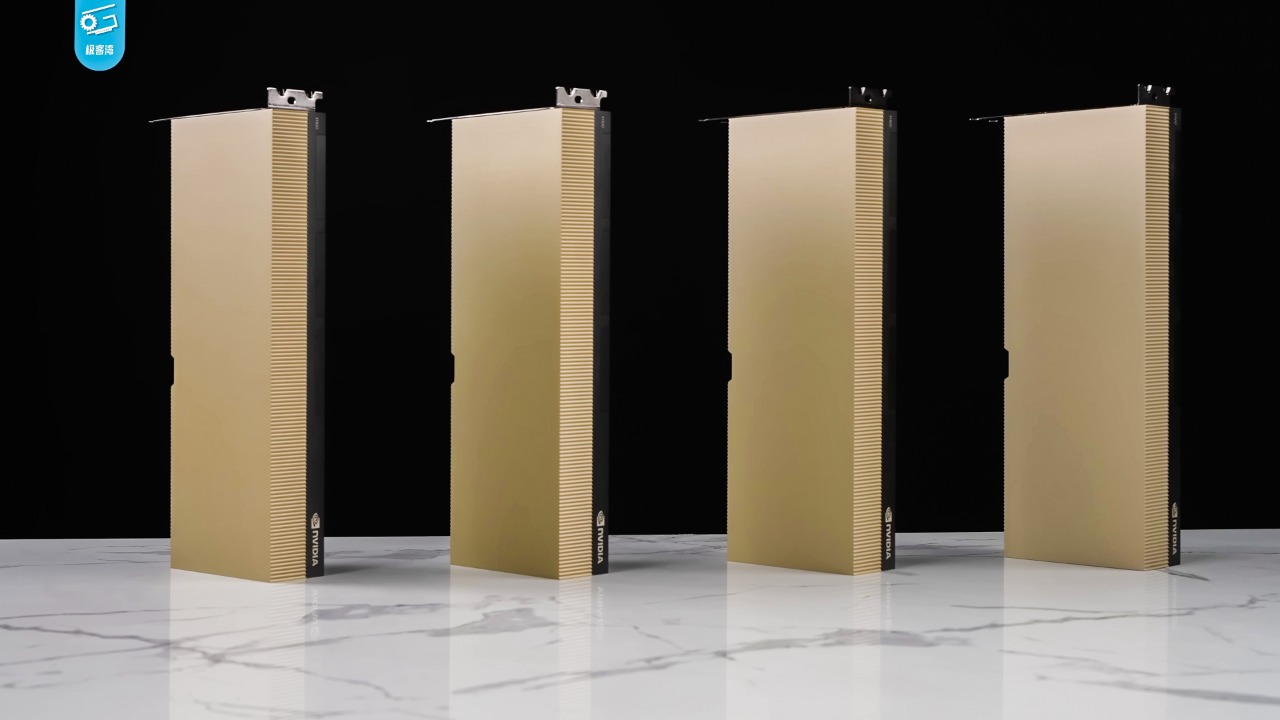

China’s push to build its own high‑end AI accelerators has moved from aspiration to measurable silicon, and the obvious yardstick is Nvidia’s H200. The question is no longer whether Chinese vendors can tape out advanced chips, but how closely their latest designs match the performance, memory bandwidth, and ecosystem advantages that make the H200 the default choice for large‑scale AI training.
As I look across Huawei’s Ascend line, Cambricon’s data‑center parts, and Moore Threads’ GPUs, a pattern emerges: some Chinese chips now rival or even beat Nvidia’s export‑limited products in specific benchmarks, yet the H200 still sets the pace in raw capability and software maturity. The gap is narrowing in targeted workloads, but it remains wide where the biggest models and most demanding customers live.
What makes Nvidia’s H200 the benchmark to beat?
Nvidia’s H200 is not just another GPU, it is the reference point for modern AI infrastructure because of its balance of compute, memory, and software support. The chip builds on the Hopper architecture and pairs it with HBM3e, which gives it the headroom to handle very large transformer models and long‑context inference without constant trips to slower system memory. That combination is why cloud providers and hyperscalers still treat the H200 as the safe bet for training and serving cutting‑edge language and vision models.
On the numbers, The NVIDIA H200 GPU delivers 76% more memory capacity than the H100, with 141 GB of HBM3e, and 43% faster memory bandwidth, which is critical for bandwidth‑bound training jobs and long‑context processing according to detailed H200 guidance. Another breakdown of Nvidia’s data‑center lineup notes that the H100 delivers 3.35 TB/s of memory bandwidth, while the H200 steps up to 4.8 TB/s, a 43% improvement that keeps it well ahead of most rivals and still short of the future B200’s 8 TB/s ceiling in comparative GPU analyses. That memory advantage, combined with Nvidia’s CUDA and software stack, is the bar Chinese vendors are trying to clear.
Huawei Ascend 910C: China’s closest challenger on raw compute
Among Chinese accelerators, Huawei’s Ascend 910C is the clearest attempt to go toe‑to‑toe with Nvidia’s high‑end parts on sheer throughput. The chip targets data‑center training and inference, and Huawei has built full rack‑scale systems around it to show that it can anchor large clusters rather than just lab demos. The design uses multiple dies and aggressive packaging to compensate for process constraints and to push performance into a range that can credibly support multi‑billion parameter models.
Technical teardowns that are Dissecting the Ascend 910C report that the Combined dies can deliver 752 teraFLOPS of dense FP16 and BF16 performance, which puts the chip in the same broad performance class as Nvidia’s top Hopper parts for many training workloads based on rack‑scale evaluations. A separate performance comparison notes that the 910C delivers total processing performance (TPP) of 12,032, compared with the H200’s 15,840, which means Huawei is within striking distance on this composite metric even if Nvidia still leads in direct TPP benchmarks. That gap matters for the very largest clusters, but it also shows that Chinese silicon is no longer stuck several performance generations behind at the chip level.
Why Huawei still trails Nvidia despite impressive specs
Even with the Ascend 910C’s strong numbers, Huawei is still playing catch‑up with Nvidia on process technology, packaging, and ecosystem depth. Restrictions on access to leading‑edge manufacturing and advanced packaging mean Huawei cannot simply mirror Nvidia’s latest designs, and that shows up in efficiency, thermals, and the ability to scale to the absolute largest models. The company has responded by optimizing its own software stack and building tightly integrated systems, but that is a heavier lift for customers used to Nvidia’s plug‑and‑play tooling.
A detailed assessment of Huawei’s AI efforts notes that Huawei is stuck several generations behind Nvidia, with its flagship AI accelerators coming from the Ascend line and the most recent chips still limited by access to cutting‑edge processes and advanced packaging according to a report on Huawei Ascend. Comparative tables that pit NVIDIA’s H200 against Huawei’s Ascend 910 series highlight that, at the Feature level, the Hopper H200 still outclasses the Ascend 910 in several dimensions, even if the 910 can match some of Nvidia’s best offerings in specific metrics like FP16 throughput in head‑to‑head chip comparisons. In other words, Huawei has narrowed the raw compute gap, but Nvidia’s lead in memory bandwidth, software, and ecosystem still keeps the H200 ahead for most global customers.
Cambricon Siyuan 590 and the rise of specialized Chinese accelerators
Huawei is not the only Chinese player trying to close in on Nvidia’s H200. Cambricon has focused on AI accelerators that target specific data‑center workloads, and its Siyuan 590 shows how specialization can sometimes beat a general‑purpose GPU. By tuning its architecture for particular inference and training patterns, Cambricon can deliver strong performance per watt and per dollar, even if its chips do not match Nvidia’s flagships across every benchmark.
Performance data for Cambricon’s latest parts shows that Cambricon’s Siyuan 590, with TPP of 4,493, can outperform Nvidia’s export‑limited H20 in some scenarios, even though it still falls short of the H200’s 15,840 TPP and 900 GB/s memory bandwidth in side‑by‑side TPP comparisons. That kind of targeted advantage matters for Chinese cloud providers that cannot easily buy the latest Nvidia parts and are willing to optimize their software around domestic accelerators to get acceptable performance at lower cost.
Moore Threads and the MTT S4000: GPU ambitions beyond training
While Huawei and Cambricon lean into custom accelerators, Moore Threads is trying to build a full‑fledged GPU ecosystem that can handle both graphics and AI. Its MTT S4000 is a powerful GPU designed by Moore Threads for large models, built on the latest third‑generation MUSA architecture, and aimed at data‑center deployments that need both compute and visualization. That dual focus reflects China’s desire not only to match Nvidia in AI, but also to reduce dependence on foreign GPUs for gaming, cloud graphics, and professional visualization.
Official product information describes the MTT S4000 as a GPU from Moore Threads for large models, based on the MUSA architecture and capable of driving UHD 8K HDR display alongside AI workloads according to Moore Threads’ own specifications. Independent testing of a large computer cluster built around China‑made Moore Threads AI GPUs found that the system, using MTT S4000 parts, ranked among the top AI GPU clusters of the same scale and appeared competitive against unspecified Nvidia solutions when training a three billion parameter language model based on cluster‑level benchmarks. That does not mean the S4000 matches an H200 in absolute terms, but it shows that Moore Threads can deliver usable AI performance at scale inside China’s ecosystem.
How far behind are Chinese GPUs in generational terms?
Even as individual Chinese chips notch impressive wins, the broader picture still shows a generational lag behind Nvidia’s best. Analysts tracking China’s AI hardware strategy point out that Nvidia’s two‑generation‑old H200 still outperforms most Chinese domestic chips by a wide margin, which underscores how difficult it is to catch up when the leader keeps moving to new architectures like Blackwell. That performance gap is not just about FLOPS, it is about memory bandwidth, software tooling, and the ability to support the largest, most complex AI models without heroic engineering.
One assessment of China’s AI chip self‑sufficiency plan notes that the dilemma is that NVIDIA’s two‑generation‑old H200 still outperforms most Chinese domestic chips by a wide margin, even as Chinese vendors improve rapidly and target specific niches in broader strategic analysis. Another comparison of Moore Threads’ S4000 notes that, Compared to models from Nvidia, the S4000 is better than the Turing based Tesla server GPUs from 2018 but still behind more recent Nvidia architectures, which effectively pegs it a generation or two back from Hopper and the H200 in side‑by‑side GPU evaluations. In practical terms, that means Chinese chips can be good enough for many domestic workloads, but they still trail the H200 in the most demanding global benchmarks.
Domestic momentum: clusters, workloads, and “good enough” performance
Where Chinese AI chips are making the biggest impact is not in beating the H200 outright, but in delivering “good enough” performance for a large share of domestic workloads. Many Chinese enterprises do not need to train trillion‑parameter models; they need accelerators that can handle recommendation systems, vision tasks, and mid‑sized language models at reasonable cost and power. In that context, domestic chips that lag Nvidia’s best by a generation can still be highly attractive, especially when they are easier to procure and integrate with local cloud services.
Industry analysis of Chinese domestic chips argues that, from an application standpoint, AI computing power demand shows a clear structural divide, with a smaller number of highly demanding training jobs and a much larger base of inference and mid‑scale workloads where domestic chips can already offer sufficient performance and superior cost effectiveness in assessments of Chinese domestic chips. Real‑world deployments, such as the large computer cluster that used China‑made Moore Threads AI GPUs to train a three billion parameter language model, show that a GPU like the MTT S4000 can appear competitive against unspecified Nvidia solutions at that scale, even if it would struggle with the very largest models based on those cluster results. That is where domestic accelerators are already easing short‑term pressure on China’s AI ambitions.
Why Nvidia’s H200 will not end China’s chip ambitions
Nvidia’s continued dominance with the H200 could have discouraged Chinese chipmakers, but the opposite has happened. Instead of trying to match Nvidia on every front, Chinese vendors are carving out segments where they can compete on price, availability, or specialization, while the state backs long‑term efforts to close the technology gap. The result is a landscape where Nvidia still leads at the high end, yet Chinese chips are steadily gaining share in domestic data centers and government backed projects.
Analysts who have looked at Why Nvidia’s H200 is unlikely to derail chip ambitions of China’s Huawei and Moore Threads argue that the H200’s strength does not eliminate the strategic and political drivers behind China’s push for self‑reliance, and that companies like Huawei and Moore Threads will keep investing even if they trail Nvidia on performance in assessments of Why Nvidia’s H200 matters. At the same time, comparative reporting on Chinese AI chips notes that while the 910C’s TPP of 12,032 still trails the H200’s 15,840, and other domestic players offer less competitive products, the trajectory is clearly upward as each new generation narrows the gap in overviews of how China’s AI chips stack up. In that sense, the H200 is both a benchmark and a moving target that shapes, but does not stop, China’s AI hardware strategy.
The consumer and cloud angle: beyond data‑center benchmarks
Most of the attention falls on data‑center accelerators, but China’s AI chip race also touches consumer devices and cloud services that sit closer to end users. Domestic GPUs and accelerators are starting to appear in gaming PCs, AI‑enhanced laptops, and edge servers that run vision and speech models on site. These products may not match the H200 in any metric, yet they are crucial for building a full‑stack ecosystem that does not depend on imported silicon.
Retail listings for AI‑capable hardware in China already feature systems built around domestic accelerators, with some product pages highlighting local GPUs and AI chips as selling points for buyers who want compliance with national procurement rules and assurance of long‑term supply in online product catalogs. Additional storefronts show similar configurations that pair domestic GPUs with local cloud services, signaling that Chinese vendors are pushing their chips not only into flagship data centers but also into mainstream enterprise and consumer channels in other product listings. A third set of listings underscores how these domestic accelerators are being bundled into turnkey AI servers and workstations, further embedding them into China’s broader computing landscape through additional product catalogs. That diffusion into everyday hardware is another way Chinese chips are closing the practical, if not yet the absolute, gap with Nvidia’s H200.
More from MorningOverview