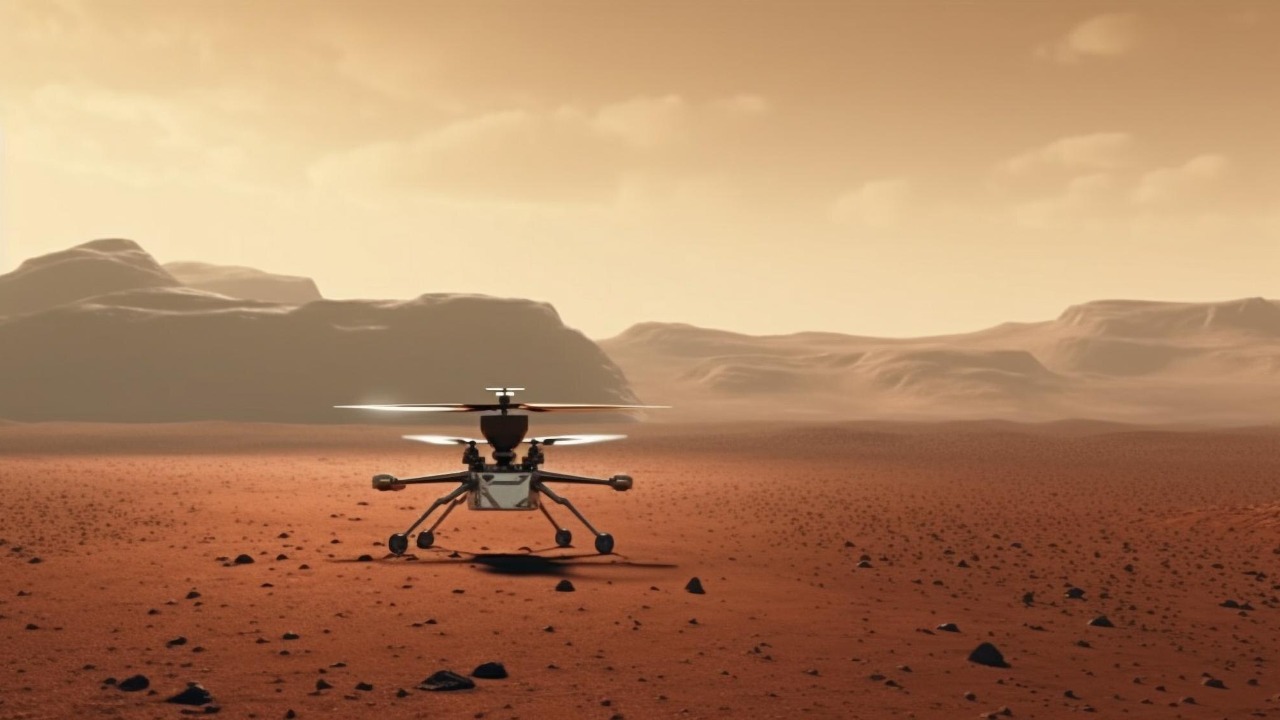

Mars ended NASA’s InSight mission on its own terms, not with a dramatic crash or a catastrophic malfunction, but with a slow, suffocating blanket of dust that starved the lander of power. That quiet defeat, delivered by the planet’s thin atmosphere and stubborn soil, reshapes how I see the mission: InSight did not simply run out of time, it ran into the limits of how we currently design robots for a world that does not care about our engineering assumptions.
By the time NASA formally called the mission over, the lander had already rewritten what scientists know about the Martian interior and weather, even as the same environment was conspiring to shut it down. The story of how Mars “beat” InSight is really a story about how success and failure are intertwined on the Red Planet, and why the next generation of missions will have to treat dust, wind and alien geology as central design players rather than background conditions.
InSight’s bold promise: listen to a restless planet
When NASA sent InSight to Mars, the goal was not to chase pretty panoramas or roving road trips, but to turn the entire planet into a seismic experiment. The stationary lander was built to sit still and listen, using ultra sensitive instruments to capture Marsquakes and probe the crust, mantle and core in a way no previous mission had attempted. According to mission records, InSight successfully landed on Mars at Elysium Planitia, a relatively flat plain chosen precisely because it was geologically boring at the surface, which made it ideal for hearing subtle rumbles from deep below.
The lander was part of NASA’s Discovery Program, a line of relatively low cost missions that are supposed to deliver focused, high impact science rather than sprawling, multi purpose platforms. InSight’s designers promised that by listening to thousands of tiny tremors, the mission would reveal how a rocky world cools, cracks and evolves over billions of years, with lessons that apply not just to Mars but to Earth and other terrestrial planets. That ambition framed everything from the placement of its seismometer to the inclusion of a self hammering heat probe, and it set the stakes for what was ultimately lost when the lander fell silent.
A four year run that outlived its original script
InSight was never meant to last forever, but it did last longer than its initial script. The mission was designed around a primary phase of about two Earth years, yet the lander kept working on the Martian surface for roughly four, steadily building a seismic catalog and weather record that far exceeded the minimum requirements. NASA later noted that the Retires Mars Lander Mission After Years of Science decision came only after the team had squeezed as much data as possible from the fading spacecraft.
By the time controllers stopped hearing from the lander, InSight had detected hundreds of Marsquakes, tracked dust devils and recorded meteor impacts that rattled the ground. One analysis described how NASA’s InSight lander has been declared dead after four years of operations, but not before its data revealed where water might be hiding underground and offered surprising evidence of ongoing geological activity. That extended run meant that when Mars finally shut the mission down, it did so after InSight had already delivered a scientific legacy.
The slow suffocation: dust, power and a quiet end
In the end, InSight did not fail because of a single dramatic event, but because Mars slowly choked off its energy supply. The lander relied on solar panels, and over time a fine layer of dust settled on them, cutting the available power to a fraction of what it had at landing. Engineers watched the output drop until the stationary lander was only able to collect about one tenth of its original power, a decline captured starkly in InSight lander’s final selfie on Mars, which showed its once gleaming arrays buried under grime.
Mission managers had hoped that gusts or dust devils might occasionally sweep the panels clean, as happened with earlier rovers, but the winds at Elysium Planitia were not cooperative. Reports on the final months describe how NASA’s $813 million InSight lander entered a power crisis after repeated failed attempts to reestablish communications, with the team acknowledging that the local atmosphere simply had not been very windy. In that sense, Mars “won” not through violence but through indifference, letting dust accumulate until the lander could no longer phone home.
Why dust was not just a nuisance but a design flaw
Dust is not a surprise on Mars, yet InSight’s fate shows how mission design can still underestimate it. The lander carried no mechanical brushes or compressed gas systems to clear its panels, in part because every extra mechanism adds cost, mass and risk. Instead, the team gambled on natural cleaning events, a bet that had paid off for rovers like Spirit and Opportunity but failed at Elysium Planitia. As one detailed account put it, with dusty solar panels, InSight’s days on Mars are numbered, and the team knew months in advance that the mission was heading toward a forced shutdown.
From my perspective, that choice reflects a deeper tension in planetary exploration between squeezing in more instruments and hardening a spacecraft against the environment. InSight’s greatest accomplishment may also have been its last act, because the same seismic sensors that recorded Marsquakes also picked up the vibrations of dust devils that were not strong enough to clean the panels. A later analysis noted that But InSight’s greatest accomplishment may have been capturing a massive Marsquake just weeks before the team began shutting down instruments to conserve power. The lander was doing its best science at the very moment the environment was making that science unsustainable.
Inside Mars: what the quakes and weather really revealed
For all the focus on its dusty demise, InSight’s scientific haul is what will matter decades from now. The mission’s seismometer recorded a rich catalog of Marsquakes that allowed researchers to map the thickness of the crust, estimate the size of the core and infer the structure of the mantle. NASA later highlighted that Quick Facts from the mission include collecting the most comprehensive weather data of any mission sent to the surface of Mars, along with seismic measurements that revealed the planet’s interior layers in unprecedented detail.
Those data sets are already reshaping models of how rocky planets cool and whether they can sustain magnetic fields or volcanic activity over time. One overview of the mission’s finale noted that the seismic data alone from this Discovery Program mission offers insights not just into Mars but into other rocky worlds, because the physics of how waves travel through rock is universal. In that sense, Mars may have ended InSight’s operations, but the planet also cooperated by shaking, rumbling and whipping up dust devils in ways that turned the lander into a long running geophysical observatory.
The heat probe that met its match in Martian soil
If dust was the slow killer, Martian soil was the early spoiler. One of InSight’s headline instruments was a self hammering heat probe, nicknamed the “mole”, designed to burrow up to 5 meters below the surface to measure how much heat was flowing out of the planet’s interior. The device was meant to hammer itself down 16 feet, or 5 meters, and measure how much heat is rising up from the deep core, as described in mission briefings that later chronicled how the device was meant to hammer itself down 16 feet but never reached its target depth.
The problem was that the soil at Elysium Planitia did not behave as expected. Instead of providing friction to help the mole dig, the grains clumped and collapsed, leaving the probe to bounce in place. Engineers spent years improvising fixes, using the lander’s robotic arm to press on the probe and even scoop soil around it. A technical account noted that NASA’s InSight lander touched down at Elysium Planitia on Mars and that the Martian soil proved less receptive than expected, forcing the team to accept a partial success. For me, that episode is a reminder that even the best pre launch simulations can be undone by a few centimeters of alien dirt.
How and why NASA finally called time on the mission
By the time NASA formally ended InSight’s mission, the decision was less about choice and more about acknowledging reality. Communications had become sporadic as the lander’s power levels fell, and eventually controllers stopped receiving any data at all. Agency officials later explained that NASA declares end of InSight Mars mission after failing to contact the lander on two consecutive attempts, and that they did not expect to hear from it again.
European partners who had contributed instruments also marked the end of operations, noting that InSight landed on Mars on 26 November 2018 and that, due to a lack of power supply, the mission was declared terminated by Due to a lack of power supply, the mission was declared terminated by NASA. NASA itself framed the shutdown as a retirement rather than a failure, emphasizing that the mission had met its primary objectives and that the lander had earned its rest. From a policy standpoint, that framing matters, because it signals that losing a spacecraft to environmental conditions is acceptable if the science return justifies the risk.
Mars as an unforgiving test range for every space agency
InSight’s struggles with dust and soil fit into a broader pattern: Mars has a long history of humbling spacecraft from multiple nations. Several missions have failed outright, sometimes for reasons as mundane as unit conversion errors and sometimes because the Martian atmosphere behaves in ways that are hard to model from Earth. One analysis of global efforts pointed out that The others were outright failures, thanks to causes ranging from a Martian (the Red Planet) atmosphere that shredded spacecraft to navigation mistakes that sent probes off course.
That track record makes InSight’s four year run look less like a disappointment and more like a hard won success in a hostile test range. Mars is not just a destination, it is an active participant in every mission, with its thin air, dust storms and temperature swings constantly probing for weaknesses. When I look at InSight through that lens, the fact that Mars eventually beat the lander is less surprising than the fact that the spacecraft held out long enough to deliver a complete seismic and weather archive.
What InSight’s fate means for the next generation of Mars missions
The way Mars ended InSight’s mission is already influencing how engineers think about future landers and rovers. One clear lesson is that relying solely on solar panels, without robust dust mitigation, is a gamble that may not pay off in every region. Designers are weighing options such as tilting arrays, adding wipers or even pairing solar with small radioisotope power sources to avoid a repeat of InSight’s slow suffocation. NASA’s own post mission reflections emphasize that NASA Retires InSight Mars Lander Mission After Years of Science with a better understanding of how dust, wind and local weather patterns should shape future designs.
There is also a more subtle lesson about assumptions. Planetary scientists have been reminded that temperature and atmosphere are not the only factors that determine whether water, dust or soil behave in a certain way. A recent report on another world noted that This discovery significantly changed how scientists view planetary water sources, showing that specific geological and orbital conditions matter too. InSight’s experience with unexpectedly cohesive soil and stubborn dust is a Martian version of that same lesson: local conditions can overturn neat theoretical expectations, and missions have to be built with that uncertainty in mind.
The story that remains after the signal is gone
When I step back from the technical details, what lingers about InSight is the image of a silent lander sitting on a cold plain, its panels caked in dust, its instruments frozen mid task. NASA ended the mission after concluding that the lander had sent this final photo before dying after 4 years studying Mars quakes, dust devils and meteor impacts, a quiet farewell from a machine that had done its job. The mission’s end was not a failure of imagination but a reminder that exploration is always a negotiation with environments we do not fully control.
Mars beat InSight in the narrow sense that the planet’s dust and soil outlasted the lander’s power and tools, but the mission changed the story by turning that struggle into data. Every quake that shook the seismometer, every dust devil that dimmed the panels and every failed hammer blow of the heat probe is now part of a record that will guide the next wave of explorers. In that way, the planet’s quiet victory over one spacecraft may help humanity design the machines that will one day stay, work and perhaps even live on the Red Planet far longer than InSight ever could.
More from MorningOverview