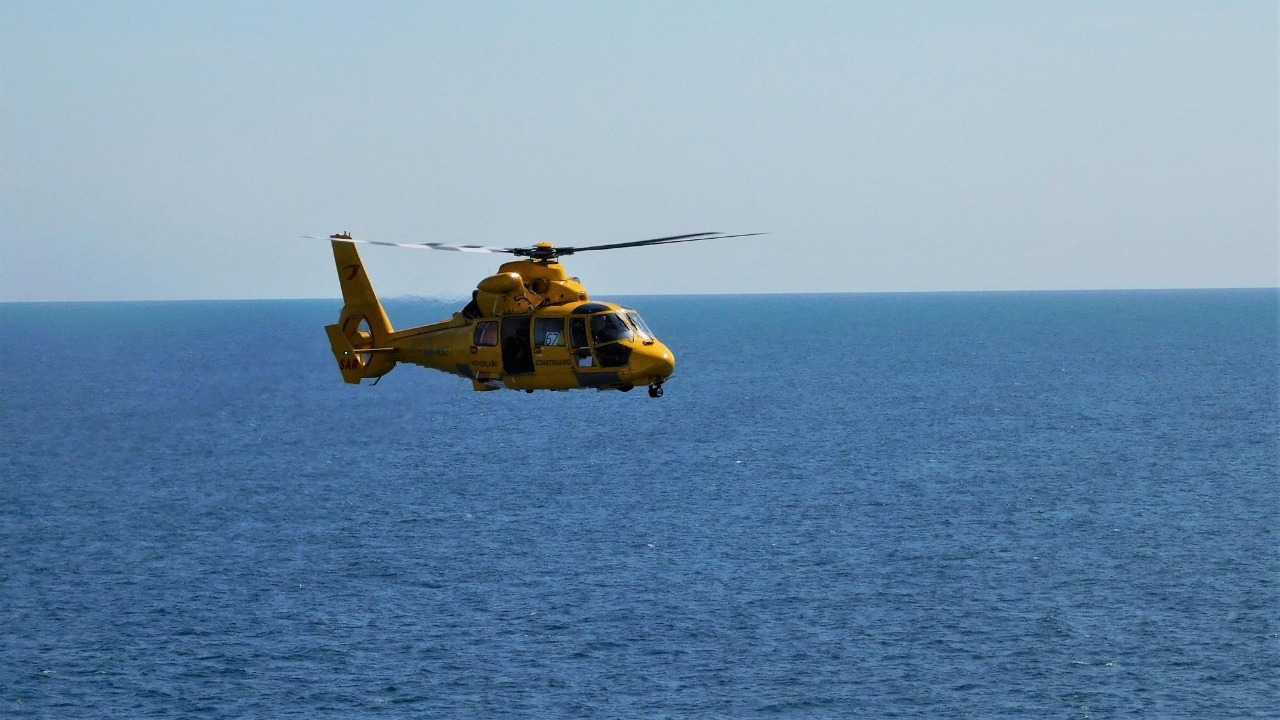

A helicopter trying to claw its way into the air from the surface of the ocean, only to be dragged under by the waves, captures a nightmare scenario for pilots and passengers alike. The image is dramatic, but it is not an outlier: when rotorcraft and water mix, small misjudgments and subtle forces can quickly turn into a sinking fuselage and a frantic scramble to survive. I want to unpack how that happens, and why similar patterns keep showing up in crashes from tourist flights to offshore rigs and even military operations.
When a helicopter meets the sea and loses
Helicopters are designed to hover, but they are not boats, and the moment their skids or floats settle into waves, the physics change brutally fast. A machine that feels light and responsive in the air can become heavy and sluggish as water drags at the fuselage, blades bite into spray, and the pilot fights both lift and buoyancy at once. In the scenario suggested by a helicopter attempting an ocean takeoff and then sinking, the key failure is usually loss of control in that awkward transition between floating and flying, when a single gust or wave can tilt the aircraft just enough to start a chain reaction.
Once the helicopter tips, the rotor disc no longer produces clean vertical lift, and the blades can strike the water, shattering or bending in milliseconds. That impact robs the pilot of the only tool that can pull the aircraft clear, leaving the cabin to flood as the airframe rolls. Offshore accident investigations have described how a rotorcraft that seemed stable one moment suddenly lost control near the surface and, Thereafter, the helicopter sank into the sea, underscoring how unforgiving that low-altitude, water-adjacent envelope can be.
The unforgiving transition from hover to water contact
The most dangerous part of a helicopter’s flight is often not cruising at altitude but operating close to the surface, where there is little margin for error. As a pilot eases down toward water, they must manage power, attitude, and wind while judging a surface that can rise and fall unpredictably beneath them. A slight miscalculation in descent rate or a momentary distraction can lead the skids or floats to touch harder than intended, bouncing the aircraft or digging one side into a wave trough, which can start a roll that is almost impossible to arrest in time.
Video evidence from training and rescue operations shows how quickly a seemingly controlled approach can unravel once a helicopter’s lower structure grazes the water. In one widely shared Video, a firefighter helicopter only lightly clips the water’s edge, yet that small contact is enough to tilt the machine, trigger a spin, and end with the aircraft crashing into a pond. The sequence illustrates how, once the rotor disc is no longer perfectly aligned and the tail swings, the pilot has only seconds to react before the helicopter is in the water and at the mercy of gravity and hydrodynamics.
How waves, wind, and rotor wash conspire against control
From a distance, a helicopter hovering over the sea looks like it is simply hanging in place, but the air and water around it are in turmoil. Rotor wash churns the surface into spray, which can obscure the pilot’s view and feed back into the intake, while gusts of wind push against the broad side of the fuselage. At the same time, waves rise and fall beneath the skids, so the reference point the pilot is using to judge height is constantly moving. In rougher conditions, a crest can suddenly meet the aircraft earlier than expected, slamming into the underside and pitching it forward or sideways.
When a pilot then tries to lift off from that unstable platform, they must generate enough power to break free from the water’s grip without over-torquing the engines or losing directional control. If the helicopter is already tilted, the initial lift vector is skewed, which can cause the aircraft to yaw or roll as it comes off the surface. Investigators who have reviewed incidents where helicopters ended up in the sea describe a pattern in which the machine appears to be in a stable hover or low approach, then abruptly departs controlled flight, and, Thereafter, sinks as water floods the cabin and overwhelms any buoyancy aids.
What viral crash videos reveal about loss of control
In the age of smartphones and social platforms, many helicopter accidents near water are captured in stark, unedited clips that show the physics in real time. These videos are not just morbid curiosities; they offer a frame-by-frame look at how quickly a rotorcraft can go from routine maneuver to catastrophe. I find that they often highlight subtle precursors, like a slight wobble in the hover or a tail swing that might not feel dramatic in the cockpit but signals that the aircraft is already close to the edge of controllability.
One clip that circulated widely shows a police helicopter over a lake in Hungary, initially appearing to hover before it begins to spin uncontrollably and then slams into the water about 300 meters from shore. The footage, which spread across Reddit and other platforms, shows how once the tail rotor’s authority is lost and the helicopter begins to yaw, the pilot has almost no time to regain control before the machine hits the water. The spin, impact, and rapid submersion echo the same pattern seen when a helicopter tries to lift off from a watery surface and instead is dragged down by the very environment it is trying to escape.
Tourist flights and the human cost of small mistakes
Commercial sightseeing operations add another layer of complexity, because they mix demanding low-level flying with the pressure of keeping paying passengers happy and schedules tight. Pilots in these settings may be asked to perform frequent takeoffs and landings near water, hover for photo opportunities, or adjust routes on the fly to chase better views. Each extra maneuver near the surface is another chance for a misjudged height, a sudden gust, or a distraction in the cockpit to set off the same chain of events that can end with a helicopter sinking.
The emotional toll of such accidents is clear in testimony from those involved in high-profile tourist crashes. At an inquest into a collision involving a Sea World helicopter, for example, ground staff member Grace Hickeyi described in painful detail how she loaded passengers onto the aircraft identified as VHX KQ, known as VHX, before it lifted off. Her account underscores how, for every technical discussion of rotor dynamics or wave interaction, there are individual people who remember the weight of each bag, the faces of each family, and the moment an ordinary flight turned into a disaster that no one on the ground could stop.
Offshore rigs and the perilous commute over open water
Few helicopter missions are as unforgiving as shuttling workers to and from offshore drilling rigs, where every flight crosses long stretches of open sea and ends with a landing on a compact platform surrounded by waves. Pilots in this environment must contend with strong winds, limited visual cues, and the constant risk that a mechanical issue or sudden weather change will force them to ditch near the rig. When that happens, the helicopter may initially stay afloat if it is equipped with emergency floats, but any significant swell or structural damage can quickly compromise buoyancy.
Accident reports from offshore operations describe how a helicopter on approach can lose control in the final moments, sometimes due to spatial disorientation, unexpected turbulence, or instrument misinterpretation. In one documented case involving an S-76D approaching an Indian drilling rig, investigators noted that the aircraft lost control near the platform and ended up in the water, and Thereafter the helicopter sank into the sea. For the crew and passengers, the difference between a routine commute and a life-threatening immersion can be measured in a few seconds of confusion or a single misread cue on final approach.
Military operations: training, ejection seats, and rescue helicopters
Military aviation faces many of the same water-related risks, but with the added complexity of combat operations, high-performance jets, and training missions that push aircraft to their limits. When a fighter jet suffers a malfunction over the sea, the crew’s survival often depends on ejection seats and the speed of the rescue response. In some recent incidents, pilots have managed to eject in time and then relied on helicopters to pluck them from the water before exposure or currents could claim them.
In one reported case in the Red Sea, Both pilots of an F/A-18 Super Hornet ejected safely after an incident, and they were recovered by an MH-60S Seahawk helicopter. Their lives were not in danger thanks to the rapid response and the capabilities of that rescue platform. The episode highlights a stark contrast: while helicopters themselves can be vulnerable when operating near water, they are also the primary lifeline for aircrew who end up in the sea, making their safe operation in maritime environments a critical part of military risk management.
Why helicopters sink so fast once the cabin floods
From a passenger’s perspective, one of the most shocking aspects of a helicopter ditching is how quickly the cabin can go from dry to submerged. Unlike large ships, rotorcraft have relatively little inherent buoyancy, and their shapes are not optimized to float upright for long periods. Once the fuselage is breached or doors and windows are opened under the surface, water rushes in, displacing the trapped air that had been keeping the aircraft marginally afloat. The heavy engines and transmission, usually mounted high, can cause the helicopter to invert as it sinks, leaving occupants disoriented and upside down in murky water.
Investigations into offshore and coastal accidents repeatedly note that survival often hinges on training in underwater escape techniques and the availability of flotation devices. Even when emergency floats deploy correctly, they are designed to keep a helicopter on the surface long enough for evacuation, not to guarantee long-term buoyancy in rough seas. In cases where the aircraft has already been destabilized by a hard impact or rotor strike, the floats may be damaged or overwhelmed, and, as in the S-76D rig approach incident where Thereafter the helicopter sank into the sea, the window for escape can be brutally short.
Lessons from repeated patterns of water-related crashes
Looking across these incidents, from tourist flights to offshore shuttles and police or military operations, I see the same themes repeating. The transition zone near the water’s surface is unforgiving, and small deviations in attitude or power can cascade into a loss of control that leaves the helicopter at the mercy of waves and gravity. Once the rotor disc is compromised or the tail rotor loses authority, the pilot’s options narrow rapidly, and the aircraft can go from flying to sinking in less time than it takes to describe the sequence.
Those patterns point to clear priorities for operators and regulators: more rigorous training for low-level over-water operations, better simulation of wave and wind effects, and wider adoption of safety gear like emergency floats and underwater escape training for passengers. The haunting image of a helicopter trying to claw its way off the ocean, only to be dragged under, is not just a freak accident but a predictable outcome when physics, environment, and human limits intersect in the wrong way. By studying detailed accounts like Grace Hickeyi loading passengers onto VHX before a fatal tourist flight, or the Hungarian lake crash captured on Reddit and viral video, I believe the aviation community can better understand how to keep rotorcraft from becoming submarines when something goes wrong above the waterline.
More from MorningOverview