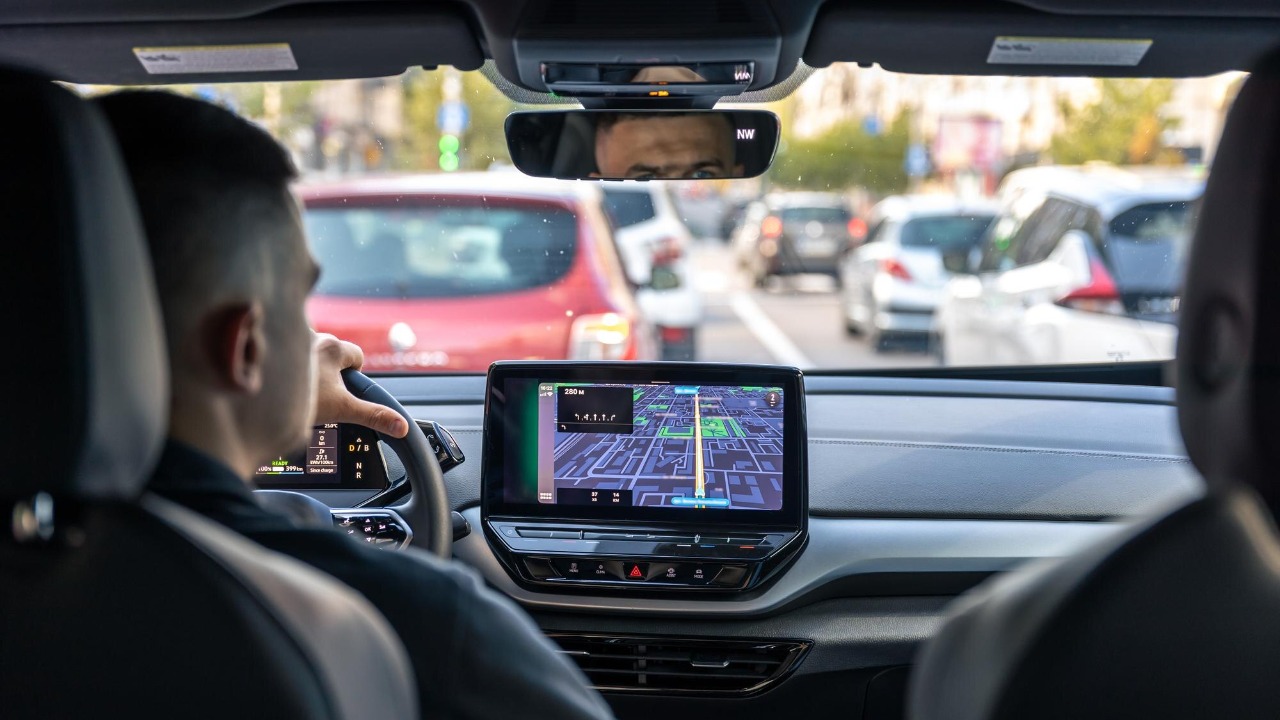

Modern cars are packed with technology, yet a surprising number of features that buyers pay real money for end up gathering digital dust. I see the same pattern that plays out in wider tech and AI-driven work repeated in the cabin: sophisticated systems are installed, but everyday habits barely change, leaving expensive capabilities idle.
Built-in Navigation Systems
Built-in navigation systems are one of the clearest examples of a feature that inflates a window sticker but often sits unused once the novelty wears off. Factory GPS units promise integrated maps, turn-by-turn guidance and a screen that blends neatly into the dashboard, yet many drivers default to smartphone apps like Google Maps or Waze after a few weeks. The pattern mirrors what happens in sectors where artificial intelligence is reshaping tasks: complex tools are deployed, but people cling to familiar workflows. Reporting on the 40 jobs most at risk from AI and 40 it cannot touch shows how advanced systems can be present in workplaces without being fully embraced, and in cars, the underused navigation hardware is a small-scale version of that disconnect between capability and behavior.
From a buyer’s perspective, the stakes are financial and practical. Navigation is often bundled into expensive technology or premium packages, so owners pay for map databases, voice guidance and traffic prediction that they then bypass with a phone clipped to a vent. Because smartphone apps update constantly and integrate live traffic, restaurant reviews and real-time rerouting, the in-dash system’s static interface and slower updates feel dated even in a new vehicle. That gap is especially visible in used cars, where infotainment hardware may still be modern but the mapping data is several years old, leaving drivers to rely on their phones while the built-in screen becomes a glorified display for Bluetooth audio. The result is a feature that looks impressive in brochures yet delivers little day-to-day value, a quiet reminder that paying for technology does not guarantee anyone will actually use it.
Advanced Driver-Assistance Systems (ADAS)
Advanced driver-assistance systems, often shortened to ADAS, bundle features such as adaptive cruise control, automatic emergency braking and lane-keeping into safety-focused packages that can add thousands of dollars to a car’s price. Many new vehicles are available with ADAS, and one detailed overview highlights how these systems include safety tools such as Lane-keeping or lane centering that can subtly steer the car to help prevent drifting. On paper, that is a powerful upgrade to basic cruise control and mirrors the broader rise of semi-automated assistance in transport and logistics. In practice, however, a large share of drivers either switch these systems off or never explore their full menu of functions, using only the most basic cruise setting and ignoring the rest of the driver-assist stack.
The underuse has several roots, all of which carry real implications for safety and value. Some owners find the constant beeps, steering nudges and dashboard icons distracting, so they disable lane-keeping or distance alerts after a few drives, effectively turning a sophisticated ADAS suite into a simple speed holder. Others never dig into the settings that control following distance, steering sensitivity or automatic braking thresholds, so the car’s most advanced capabilities remain buried in menus. That gap between what the system can do and what the driver actually uses resembles the way AI-enabled tools in other industries can sit idle when training or trust is lacking. For automakers and regulators, the stakes are high: crash-avoidance benefits depend on real-world activation, not just installation rates, and when buyers pay for ADAS but rarely touch it, both safety gains and return on investment are left on the table.
Heated and Ventilated Seats
Heated and ventilated seats are marketed as everyday comfort upgrades, yet they often function more like occasional luxuries than regularly used tools. In many models, these features are locked behind higher trims or bundled with leather upholstery, panoramic roofs or premium audio, so buyers effectively pay a significant premium for the option to warm or cool their seats. The reality in many climates is that seat heaters see heavy use for a few winter months, while ventilation is tapped only during the hottest days, leaving the hardware dormant for most of the year. That pattern echoes the way some roles identified as relatively safe from automation in analyses of advanced tech for less still involve specialized skills that are not constantly in demand, adding cost without daily visibility.
For owners, the main consequence is paying for complexity that rarely justifies its price. Heating elements, fans and perforated leather add manufacturing cost and potential maintenance points, yet many drivers simply forget the buttons exist once the novelty fades. In used cars, the situation can be even starker: shoppers may choose a higher trim because it is available on the lot, not because they specifically want heated and ventilated seats, and then never use the extra controls beyond an initial test. There is also a subtle behavioral factor at play, since adjusting climate control for the whole cabin often feels simpler than fine-tuning individual seat settings. The result is a feature that sounds indulgent in marketing copy but, in everyday life, becomes one more unused icon on a crowded center console, illustrating how comfort technology can drift into the same underutilized territory as other optional extras.
Panoramic Sunroofs
Panoramic sunroofs have become a visual shorthand for “premium,” stretching glass almost the full length of the roof and flooding cabins with light. They are frequently tied to appearance or luxury packages, so buyers pay extra for the expansive glass even if they rarely slide the shade open after the first few weeks. In many regions, strong sun, heat or glare quickly turn that open view into a liability, prompting drivers to keep the cover closed most of the time. The dynamic resembles the way some hands-on trades highlighted among the futuristic car tech found in used cars remain essential but underappreciated: the structure is there, it adds cost and complexity, yet its full experiential benefit is not consistently tapped.
Beyond aesthetics, panoramic roofs carry practical trade-offs that many owners underestimate. The extra glass can add weight, reduce headroom and introduce potential creaks or leaks as the car ages, particularly in used vehicles where seals and tracks have already seen years of expansion and contraction. Despite those downsides, the feature is often chosen because it photographs well in brochures and online listings, making cars look brighter and more upscale. Once the vehicle is in daily use, however, drivers may prioritize cabin temperature, noise reduction and shade over the occasional open-sky feel, so the roof remains shut while the air conditioning does the real work. That gap between showroom appeal and real-world behavior turns the panoramic sunroof into a classic example of a feature that people pay for and then barely touch, a glass ceiling in more ways than one for how much value they actually extract.
Premium Audio Systems with Multiple Speakers
Premium audio systems with multiple speakers, branded subwoofers and digital sound processing are another feature that often looks better on a spec sheet than in everyday use. Automakers promote counts like 10, 14 or even more speakers, along with branded partnerships, to signal luxury and justify higher trim prices. Yet many drivers primarily listen to compressed Bluetooth streams, podcasts or talk radio, sources that do not fully exploit the hardware’s capabilities. The situation parallels concerns in coverage of AI’s impact on creative and technical jobs, where sophisticated tools can threaten specialized roles such as audio engineering even as end users ignore the nuance those experts build into systems.
From a practical standpoint, the underuse comes down to habits and environments. Few owners take the time to calibrate equalizer settings, adjust balance and fade or explore surround modes, so the system runs on default profiles that may not match the cabin’s acoustics or the listener’s preferences. Road noise, wind and conversation further mask the subtle improvements that extra speakers and amplifiers can deliver, especially at legal highway speeds. In used cars, premium audio can be a selling point that nudges a buyer toward a particular vehicle, yet once the car is home, the owner may never think about the brand name on the speaker grilles again. The result is a costly layer of technology that often functions as background infrastructure rather than a consciously appreciated upgrade, reinforcing how easily buyers can pay for capabilities they rarely, if ever, truly engage.
More from MorningOverview