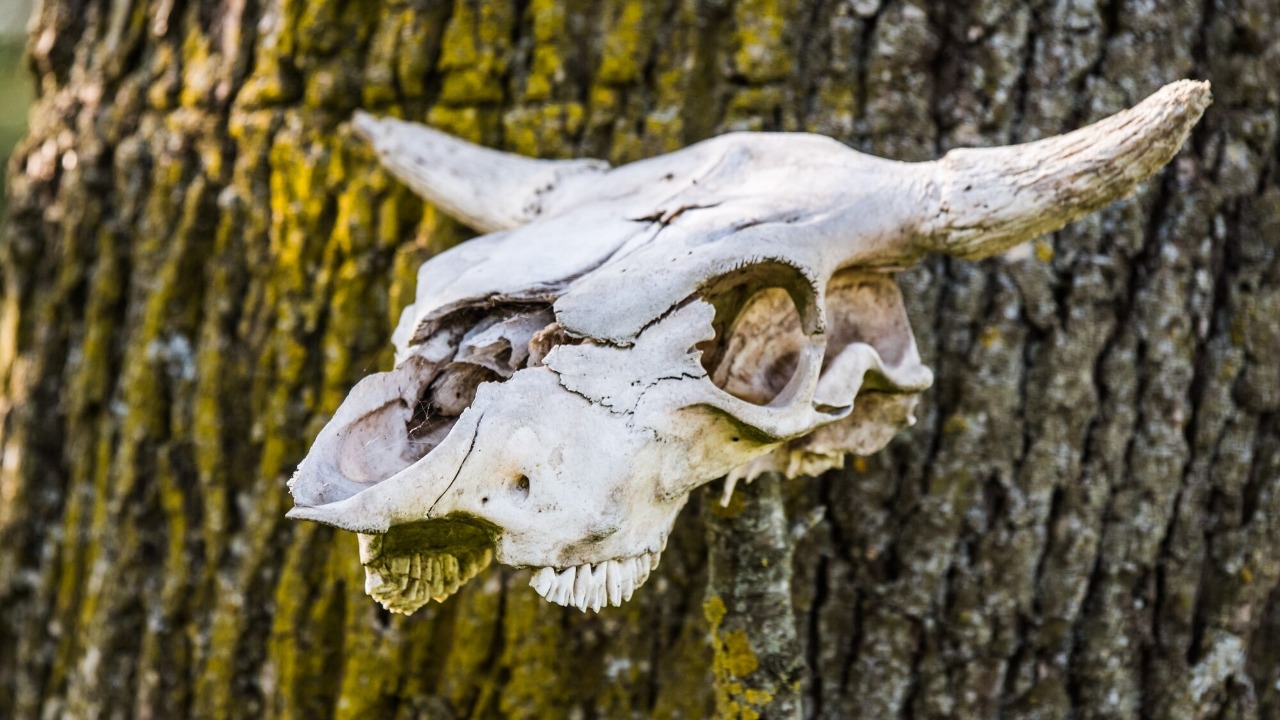

Long after an animal’s soft tissues have vanished, its skull still carries a blueprint of how it sensed the world. For extinct mammals, those bony clues now show that noses were not just prominent facial features but high powered instruments that helped drive survival, brain expansion, and even radical lifestyle shifts. By reading the cavities that once housed olfactory bulbs and nasal turbinates, researchers are finding that many prehistoric species were far more smell focused than their modern relatives.
What emerges from this work is a picture of evolution that starts at the snout. From tiny early mammals to hulking Neanderthals and the first whales, the architecture of the nose seems to have shaped everything from hunting strategies to brain size. I see a consistent pattern in the data: whenever life got harder or habitats changed, the species that invested in better noses often gained a decisive edge.
How bones preserve the ghost of a nose
At first glance, a fossil skull looks like a static object, but for sensory biologists it is a map of vanished soft tissue. The interior of the snout holds impressions of the olfactory bulbs, the brain regions that process smell, and the channels where delicate nasal turbinates once sat. By measuring these spaces, researchers can estimate how much neural real estate an extinct mammal devoted to scent and how complex its airflow pathways were, even though the original tissue is long gone.
Teams working in Stuttgart have pushed this approach further by combining high resolution scans with comparative anatomy across many species. In work highlighted by the State Museum of Natural History in Stuttgart, researchers link the size and shape of these bony structures to how animals find food, avoid predators, and communicate. The key insight is that bone does not just protect the brain, it records the priorities of that brain, and in many extinct mammals, smell clearly ranked near the top.
Reconstructing ancient noses with digital forensics
To turn those bony hints into functional reconstructions, scientists now rely on digital forensics. High resolution CT scans allow them to build three dimensional models of fossil skulls, then virtually “reinflate” the olfactory bulbs and nasal passages that once filled the empty spaces. By comparing these reconstructions with living mammals whose sensory abilities are known, they can infer how sensitive an extinct species’ nose likely was and how it might have used that sense in daily life.
One line of work shows that species with especially enlarged olfactory bulbs in these reconstructions tend to have carried larger repertoires of intact olfactory receptor genes, a genetic signature of strong smell capacity. That link between bulb size and gene count, reported in analyses of species with enlarged olfactory bulbs, gives researchers confidence that the bony cavities they see in fossils really do track sensory power. It also lets them map how smell waxed and waned across different branches of the mammal family tree.
Fossil skulls as a window into vanished brains
Because brains rarely fossilize, paleontologists have long relied on endocasts, the internal molds of skulls, to infer brain shape and size. For the olfactory system, this method is especially powerful. The bulbs sit at the very front of the brain, pressed against bone, so their outlines are often preserved as clear bulges in the cranial cavity. When researchers digitally fill those spaces, they can estimate not only the absolute size of the bulbs but also how much of the total brain volume they occupied.
Recent work on ancient mammal skulls uses this strategy to judge the noses of animals that no one can ever measure directly. By scanning the cranial cavities and reconstructing the underlying brain regions, including the olfactory bulbs, researchers can compare extinct species with modern analogues. When the bulbs loom large relative to the rest of the brain, it is a strong signal that smell was central to that animal’s behavior, whether for tracking prey, navigating complex environments, or recognizing kin.
Early mammals and the nose driven brain boom
One of the most striking stories to emerge from this work is how early mammals seem to have grown big brains in order to smell better. Fossils of tiny Jurassic species such as Hadrocodium show that, even at a small overall body size, the brain was already expanding compared with their cynodont ancestors. Crucially, a disproportionate share of that extra volume went into the olfactory bulbs, suggesting that the first major brain upgrade in our lineage was not about abstract thought but about tracking scents in a dangerous world.
CT scans comparing the brains of a modern short tailed opossum and Hadrocodium highlight this shift. In the older cynodonts, the scans show simple, relatively small brains with tiny bulbs, while in Hadrocodium the front of the brain swells where the olfactory regions sit. Researchers interpret this as evidence that mammals first evolved big brains for a better sense of smell, a conclusion supported by detailed reconstructions of Hadrocodium olfactory structures and comparative studies of living mammals that still rely heavily on scent.
Rowe’s scans and the competitive edge of smell
When Timothy Rowe and colleagues began scanning early mammal relatives, they were looking for clues to how brains changed as our group emerged from reptile like ancestors. What they found was a stark contrast between the small, simple brains of cynodonts and the more elaborate brains of early mammals, with the olfactory bulbs as a key point of divergence. In the cynodonts, those bulbs are tiny nubs, but in the early mammals they balloon, taking up a much larger share of the cranial cavity.
Rowe’s scans suggest that this expansion in smell processing capacity may have given early mammals a crucial advantage in the nocturnal, predator filled ecosystems they inhabited. A nose that could pick up faint traces of food or danger in the dark would have been a powerful survival tool, especially for small animals competing with larger reptiles. The work on how Rowe documented these differences supports the idea that sensory demands, rather than abstract cognition, initially drove mammalian brain enlargement.
Early whales and the rise and fall of a super nose
Whales are often held up as examples of mammals that abandoned smell in favor of hearing, especially echolocation in toothed species. Yet the fossil record complicates that simple narrative. Early in their history, when whales were still transitioning from land to water, their skulls show clear and relatively large olfactory bulbs. In Eocene fossils of these early whales, the front of the braincase leaves ample room for smell processing, larger than what is seen in many modern cetaceans.
Those Eocene skulls tell a story of a powerful sense of smell that later faded as whales became fully aquatic and shifted their sensory priorities. As these animals adapted to life in open water, their olfactory bulbs shrank and other systems, such as echolocation, took over as primary tools for finding prey and navigating. Analyses of Early whales told through their skulls show that, for a time, these ancestors combined strong smell with emerging aquatic traits, before the demands of ocean life made that ability less central.
When aquatic life dulled a once sharp sense
The decline of smell in later whales illustrates how sensory systems can be traded off when environments change. In water, odor molecules disperse differently than in air, and the advantages of long range scent tracking diminish. For fully aquatic whales, investing in high frequency hearing and sophisticated sonar offered a better return than maintaining large olfactory bulbs that no longer delivered the same survival benefits.
Fossil skulls capture this transition as a gradual reduction in the size of the olfactory region relative to the rest of the brain. By the time modern whales emerge, the bony housing for smell processing is much reduced, and in some lineages almost vestigial. Studies that follow this arc from strong to weak smell, including work showing how that ability faded with aquatic life, underscore that even a once dominant sense can be dialed down when evolution finds a more efficient way to solve the same problems.
Neanderthals and the power of a big, cold weather nose
Not all impressive noses belong to nonhuman mammals. Neanderthals, our close extinct relatives, had famously large midfaces and broad nasal openings, features that long puzzled anthropologists. Recent work using three dimensional models of Neanderthal skulls suggests that these structures were not just cosmetic quirks but functional adaptations. When researchers simulated airflow through the reconstructed nasal passages, they found that Neanderthals could move air through their upper respiratory tract almost twice as effectively as modern humans.
This efficient airflow would have been especially valuable in cold, dry Ice Age environments, where warming and humidifying each breath is critical. A larger nasal cavity provides more surface area for conditioning incoming air, protecting the lungs and helping maintain body temperature. The modeling work on how Neanderthals breathed suggests that their big noses were extremely useful, allowing them to sustain high activity levels in harsh climates while still processing large volumes of air efficiently.
What powerful noses reveal about mammal evolution
Across these examples, a consistent pattern emerges: whenever mammals faced new challenges, from nocturnal life among dinosaurs to the plunge into the oceans or the rigors of Ice Age Europe, noses often led the way. Enlarged olfactory bulbs and complex nasal passages show up early in lineages that later become ecologically dominant, hinting that sensory innovation can open doors long before other traits catch up. In that sense, the skulls of extinct mammals are not just relics, they are records of strategic investments in perception.
I see these findings as a reminder that evolution frequently solves problems from the outside in. Before brains became engines of language or abstract reasoning, they were engines of smell, tuned to tiny chemical gradients and faint traces of life. The work from Dec in Stuttgart, the reconstructions of ancient Fossils, the story of Eocene whales, and the airflow models of Neanderthals all point in the same direction. To understand how mammals, including humans, came to dominate so many environments, it helps to start with the simple, powerful act of taking a breath and catching a scent.
More from MorningOverview