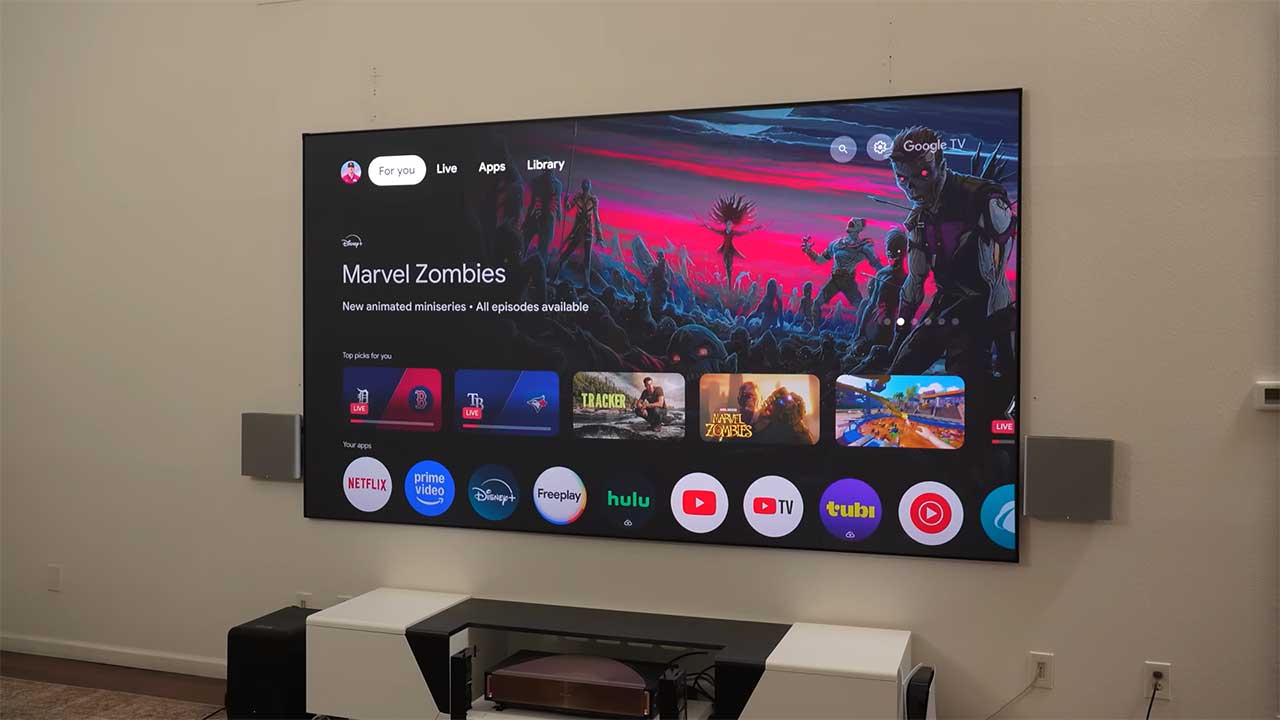

Hisense is betting that the next big thing in living‑room screens will not hang on a wall at all, but sit a few inches from it. With its latest laser projector platform, the company is promising cinema‑scale images, brightness that rivals premium televisions, and color performance that could make even high‑end OLED sets feel redundant. The question now is whether this new generation of “laser TV” can turn a niche enthusiast product into a mainstream alternative to traditional flat panels.
I see Hisense’s strategy as a direct challenge to the idea that the best home picture must come from a conventional television. By combining ultra‑short‑throw projection, powerful multi‑laser light engines, and integrated smart TV software, the brand is trying to collapse the gap between projector and TV, and in the process redefine what a flagship home display looks like.
Laser TV 101: Why Hisense thinks projection can replace a TV
To understand why Hisense is so confident, it helps to look at how it defines a “laser TV.” Rather than a bare projector that needs a dark room and a tangle of accessories, the company describes a complete system that pairs an ultra‑short‑throw projector with a dedicated screen, built‑in sound, and a full smart platform, all designed to behave like a television while using a laser light source instead of an LED or OLED panel. In its own materials, Hisense positions this category as a way to get a massive image in everyday living spaces, with the projector sitting close to the wall and throwing a bright, high‑contrast picture onto a specially coated surface that rejects ambient light, a setup it frames as a natural evolution of the TV rather than a separate hobbyist device in the home theater basement.
The company also stresses that laser light engines bring practical advantages that traditional lamps and even many LED‑based projectors cannot match, including long life, stable brightness, and wide color coverage that can approach or exceed what viewers expect from premium televisions. In that sense, the “laser TV” label is as much about expectations as it is about hardware: Hisense wants buyers to think of these products as everyday screens for sports, streaming, and gaming, not just occasional movie‑night gear, a positioning it reinforces in its explanation of what a laser TV is supposed to deliver.
The new XR10 platform: A projector built to make OLED feel optional
The clearest expression of that ambition is the XR10 family that Hisense is rolling out ahead of the next CES cycle. At the heart of this platform is a laser projector that the company is openly pitching as capable of making OLED televisions feel unnecessary, thanks to a combination of screen size, brightness, and certification that is usually reserved for the most expensive flat panels. The quick spec rundown includes projection up to 200 inches, a light output of 3,500 ANSI lumens, and IMAX Enhanced certification, a trio that signals Hisense is not just chasing size but also cinematic standards for contrast, color, and mastering.
What makes this particularly disruptive is how directly Hisense is framing the XR10 as an answer to high‑end TVs. The company is introducing the XR10 and its XR10PX4‑Pro sibling Ahead of CES, positioning them as living‑room centerpieces rather than niche projectors. By promising a picture that can stretch far beyond the largest mainstream OLED sizes while still hitting brightness levels that work in real‑world lighting, Hisense is effectively arguing that the trade‑offs that once made projectors a compromise are shrinking fast.
PX4‑PRO and the push for flexible, bright home cinema
Alongside the XR10, Hisense is also building out the PX4‑PRO line, which is aimed at buyers who want a true home theater experience without dedicating an entire room to blackout conditions and ceiling mounts. The company describes The Hisense PX4‑PRO as a showcase for its multi‑color laser leadership, combining a compact ultra‑short‑throw chassis with a bright, color‑rich image that is meant to hold up in multipurpose spaces like living rooms and dens. The emphasis here is on versatility, with the projector designed to sit close to the wall and deliver a large picture without the installation headaches that have historically limited projector adoption.
In practical terms, that flexibility shows up in the projection range and brightness targets. Reporting on the PX4‑PRO notes that the projection size can stretch from 65 inches up to 300 inches, a span that covers everything from modest apartments to dedicated media rooms. That range, combined with the focus on color saturation and brightness, underlines Hisense’s belief that laser projection can be tuned for everyday environments rather than confined to dark, specialized spaces.
L9Q: The laser TV that already beats “most OLED TVs”
If the XR10 and PX4‑PRO are Hisense’s next wave, the L9Q is the model that has already proven the concept in front of skeptical eyes. The L9Q is an ultra‑short‑throw Laser TV that Hisense unveiled ahead of CES, and early hands‑on impressions have been strikingly positive. One reviewer who saw it on the show floor later described Hisense’s L9Q as the best new projector they saw at CES and said it beats most OLED TVs, a bold endorsement that underscores how far laser projection has come in perceived picture quality.
Part of that impression comes down to raw light output and color volume. The L9Q’s TriChroma triple‑laser light engine is rated for up to 5,000 ANSI lumens, and one report notes that Apparently the L9Q offers better brightness and color volume than its predecessors. That kind of output, combined with a screen engineered to reject ambient light, helps explain why some viewers now see it as a credible rival to high‑end OLED sets in mixed‑light living rooms rather than just in darkened theaters.
“Forget OLED”: 150‑inch and 300‑inch laser images change the scale
Where Hisense’s latest projectors really separate themselves from televisions is in sheer scale. One recent model built around the L9Q platform is marketed with the rallying cry “Forget OLED TVs,” and it backs up that swagger with a 150-inch picture and 5,000 lumens of brightness. That combination is simply out of reach for consumer OLED televisions, which top out at far smaller diagonals and rely on panel technologies that are difficult and expensive to scale to wall‑filling sizes.
Hisense is also preparing an even more extreme option that pushes the idea of a home screen to its logical limit. Another upcoming laser projector is being teased with the line “Forget OLED,” promising a 300-inch image with 6,000 nits of brightness. That kind of specification reads almost like a thought experiment in how far projection can go, but it also signals Hisense’s intent to own the conversation about truly gigantic home displays at a time when traditional TV makers are still wrestling with the economics of panels beyond 100 inches.
Smart TV brains and streaming built in
Raw image specs are only part of the story, because Hisense is also working to ensure that its laser projectors behave like modern smart TVs the moment they are powered on. The L9Q, for example, is equipped with Google TV, which gives users access to more than 800 free live TV channels and over 700,000 movies and shows aggregated from across major streaming services. That kind of integration means buyers do not need an external box or stick to start watching, and it aligns the user experience with what people already expect from premium televisions.
Behind the scenes, this smart layer is increasingly shaped by large‑scale retail and content data. Google, for instance, has detailed how its Shopping Graph ingests information from brands, stores, and other content providers to build a constantly updated map of Product information, which in turn feeds into recommendations and search results. For a device like the L9Q or XR10 running a Google‑powered interface, that means the same algorithms that surface trending gadgets and accessories can also help users discover new streaming apps, rental options, and even compatible screens or mounts, further blurring the line between a projector and a fully integrated TV ecosystem.
Audio, gaming, and everyday usability
Hisense is also paying attention to the parts of the experience that often get overlooked in projector discussions, particularly sound and responsiveness. The L9Q variant highlighted in early coverage is paired with a 6.2.2 surround sound system, a configuration that aims to deliver convincing immersion without requiring a separate AV receiver and speaker package. By bundling substantial audio hardware with the projector and screen, Hisense is trying to remove another barrier that has historically pushed buyers toward all‑in‑one televisions, which usually include at least adequate speakers out of the box.
On the usability front, ultra‑short‑throw design is a major advantage. Because these projectors sit close to the wall, they are less prone to shadows and obstructions than traditional long‑throw models, and they can be placed on standard TV stands rather than ceiling mounts. Reports on the L9Q emphasize that it is intended to function as a daily‑use display, with low input lag and smooth motion that make it suitable for console gaming as well as streaming and sports. When combined with the brightness figures of 5,000 lumens and the large screen sizes already discussed, that responsiveness helps make the case that a laser projector can be the primary screen in a household rather than a special‑occasion accessory.
How far can Hisense push the market away from OLED?
All of this raises a larger question about where the premium TV market is heading. OLED has long been the reference point for deep blacks and rich color, but it is constrained by panel manufacturing limits, cost at very large sizes, and brightness ceilings that can be challenging in sunlit rooms. Hisense’s laser projectors attack those weak spots directly, offering images that can stretch from 65 inches to 300 inches, brightness ratings like 6,000 nits, and color performance that early viewers say can beat “most” OLED TVs.
At the same time, there are still trade‑offs that will matter to many buyers, including the need for a dedicated screen, the impact of room lighting on perceived contrast, and the fact that even ultra‑short‑throw projectors can be more sensitive to placement than a wall‑mounted TV. Hisense’s bet is that the benefits now outweigh those compromises for a growing slice of the market, especially as it refines products like the L9Q, XR10, and PX4‑PRO and showcases them at high‑profile events such as CES. If the enthusiastic early reactions and aggressive “Forget OLED” messaging are any indication, the company is not just trying to carve out a niche, it is trying to redefine what a flagship home display looks like in the first place.
More from MorningOverview