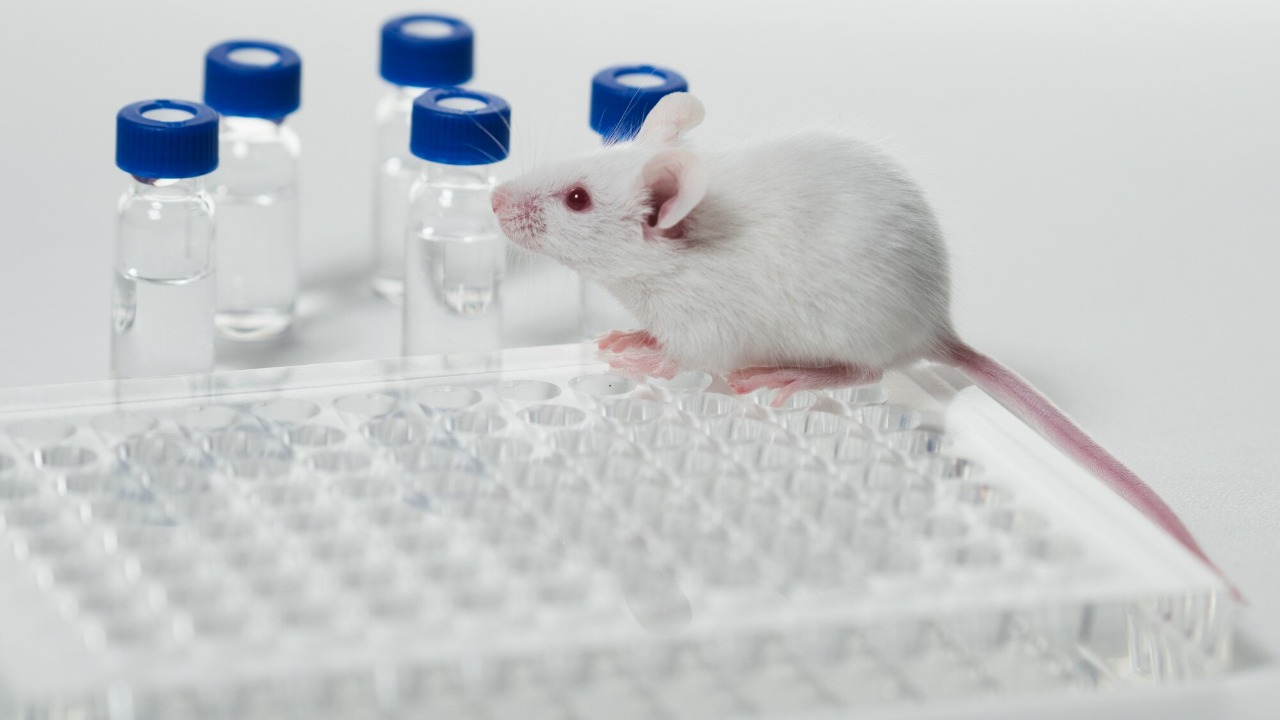

When scientists opened the doors of a research facility and let carefully bred lab mice loose into a fenced field, they expected skittish, fragile animals to struggle. Instead, the mice rapidly shed many of the anxious behaviors that had defined them in captivity and began to look, move, and even fight infections more like their wild cousins. The experiment did not just change how the animals behaved, it challenged the foundations of how I, and many researchers, think about the lab models that underpin modern medicine.
What unfolded in those enclosed fields was not a simple feel-good story about animals enjoying fresh air. It was a controlled test of what happens when creatures designed for sterile cages are plunged into a complex, unpredictable environment, and the results are now rippling through debates about mental health, immunity, and the reliability of preclinical research.
The field outside Cornell that rewrote the script on fear
The most vivid images from this new wave of work come from a large, enclosed field just off the campus of Cornell, where postdoctoral researcher Matthew Zipple has been releasing cohorts of lab-bred mice and tracking how they cope. These animals, raised in plastic cages and handled by gloved hands, were expected to freeze or hide when confronted with open sky, shifting weather, and the scent of predators. Instead, within days they began exploring, foraging, and interacting in ways that looked far closer to wild behavior than to the rigid routines of the animal room, a transformation captured in photographs credited to Chris Kitchen for Cornell University.
Researchers at Cornell did not simply watch from the sidelines, they measured how fear and anxiety shifted as the mice adapted to the semi-natural enclosure. In work published in Current Biology, they reported that fear responses that had been amplified by life in the lab were actually reversed once the animals were rehomed to the fields, suggesting that the very environment designed to control variables may have been exaggerating anxiety-like traits.
From maze panic to outdoor calm
In the lab, anxiety in mice is often quantified with mazes that force them to choose between exposed, risky arms and sheltered, enclosed ones. Standard lab mice tend to cling to the walls and avoid open spaces, a pattern that intensifies with repeated testing and has long been interpreted as a proxy for chronic stress. When some of those same strains were moved outdoors into the Cornell fields, their behavior in subsequent tests shifted in the opposite direction, with animals spending more time in exposed areas and showing less of the rigid avoidance that had defined them in captivity.
Reporting on the project has highlighted how this change unfolded over repeated exposures, with indoor animals growing more fearful while their outdoor counterparts relaxed, a contrast that aligns with separate coverage of how natural environments may reduce fear and anxiety. For me, the striking part is that the same genetic line of mice, tested with the same maze, produced opposite trajectories depending solely on whether they had been confined to cages or allowed to roam a more naturalistic space.
Matthew Zipple’s “rewilding” experiment
At the center of this work is Matthew Zipple, a postdoctoral researcher who has spent years watching what happens when domesticated lab animals are given a taste of the outside world. Zipple’s approach is not to dump mice into an uncontrolled wilderness, but to place them in a large, fenced field near Cornell where they can dig burrows, encounter weather, and navigate social hierarchies while still being tracked and recaptured. The mice, which have only ever known the artificial calm of the animal facility, are suddenly confronted with a landscape that demands constant decisions about risk and reward, a setup described in detail in Cornell’s account of how the mice, which have only lived in cages, were rehomed to fields.
Coverage of the project notes that dozens of animals have now passed through this semi-natural enclosure, creating a kind of living laboratory where behavior, physiology, and survival can be compared directly with cage-bound controls. One summary described how dozens of laboratory mice allowed to roam a field near Cornell University quickly began acting in ways that surprised even seasoned animal behaviorists, a reminder that the instincts of a small mammal are not easily erased by a few generations of breeding.
What lab life does to a mouse immune system
The behavioral shift is only half the story. For years, immunologists have warned that standard lab housing produces animals whose immune systems look more like those of newborn humans than of adults, with underdeveloped memory T cells and limited exposure to the microbes that shape real-world defenses. One influential study argued that Laboratory mice, like newborn humans, lack effector-differentiated and mucosally distributed memory T cells, which means that decades of vaccine and infection research may have been built on animals whose immune histories are fundamentally unlike those of the patients they are meant to represent.Other work has underscored how stark the gap is between caged animals and their wild counterparts. Reviews of field and lab data point out that Laboratory mice are maintained in specific pathogen free facilities, while free-living mammals such as humans and wild mice display heightened immune activation, a difference that shows up in everything from white blood cell counts to the way tissues respond to inflammatory signals. When I look at those comparisons alongside the Cornell rewilding work, the message is blunt: the calm, clean lab that makes experiments easier to control also strips away much of what makes an immune system realistic.
Rewilded mice grow tougher defenses
Releasing lab mice into more natural environments does not just change their behavior, it appears to rewire their immune systems in ways that bring them closer to wild animals and, by extension, to humans living outside sterile bubbles. In one line of research, scientists found that when laboratory mice were moved into semi-natural enclosures, their bodies ramped up the production of certain white blood cells and mounted stronger responses to infections, a pattern described as enhanced granulopoiesis and immunity. The authors reported that we previously demonstrated that laboratory mice released into a semi-natural environment display an increased myeloid cell compartment and are constantly exposed to environmental fungi, a combination that pushes their immune systems into a more activated, human-like state.
Another strategy has been to start even earlier, by letting wild mice serve as parents for the next generation of lab animals. In that setup, pups are born into a world of soil, diverse microbes, and fluctuating temperatures, then later brought back into controlled facilities for testing. Researchers have shown that laboratory mice born to wild mice have natural microbiota at all barrier sites surveyed, meaning their guts, skin, and other tissues carry a microbial signature far closer to what a human body experiences. For me, that finding connects directly to the Cornell field work: both suggest that when you let mice live more like real animals, their internal biology shifts in ways that could make them far better stand-ins for us.
Why this matters for human medicine
All of this might sound like an arcane debate about mouse husbandry, but it cuts to the heart of why so many promising drugs fail when they move from preclinical tests to human trials. If the animals used to screen therapies are unusually anxious, immunologically naive, and sheltered from the messy realities of life, then the results they produce will be skewed. That is why some researchers now argue that letting lab mice experience more natural conditions could improve how well animal data predicts human outcomes, a point captured in discussions of how letting lab mice run wild improves preclinical translatability.
In that context, the Cornell field experiments look less like a quirky side project and more like a prototype for a new kind of animal model, one that blends the control of the lab with the complexity of the outside world. When I see anxiety reversing in rehomed mice and immune systems toughening in semi-natural enclosures, I see a roadmap for building studies that better capture how real patients respond to stress, infection, and treatment. The shock is not that mice thrive when given space and stimulation, it is that it has taken this long for mainstream biomedical research to take that fact seriously.
Ethics, welfare, and the future of lab animals
There is also an ethical dimension to all of this that is hard to ignore. Standard cages are designed for cleanliness and convenience, not for the behavioral needs of a small, social mammal that evolved to dig, climb, and navigate complex terrain. The Cornell work, along with the broader rewilding literature, suggests that when mice are given richer environments, their stress markers fall and their behavior normalizes, which is good science and arguably better welfare. Watching anxiety melt away in animals that have been moved from racks of cages to a field with soil and shelter forces a rethinking of what humane housing should look like in facilities that breed and use millions of mice each year.
At the same time, rewilding is not a simple welfare upgrade. Semi-natural enclosures expose animals to predators, parasites, and social conflict, all of which can cause suffering even as they make biology more realistic. That tension is part of why I see these experiments as a turning point: they compel institutions to weigh the harms of sterile confinement against the risks of more naturalistic lives, and they hint at a future in which the default lab mouse is no longer a sheltered, anxious creature but a tougher, more adaptable animal whose experiences mirror our own far more closely.
More from MorningOverview