
Safety has become the defining spec sheet line for family SUVs, and no organization shapes that conversation more than the Insurance Institute for Highway Safety. Its Top Safety Pick and Top Safety Pick+ awards now function as a de facto shortlist for buyers who want crash protection and active tech that has been independently vetted. I set out to identify the sport-utility vehicles that rise to the top of those rankings, then sort them into clear size and price brackets so shoppers can see where the safest options really sit.
Rather than chasing marketing claims, I am focusing on models that meet the IIHS criteria for crashworthiness, crash avoidance and headlight performance, then cross-checking them against recent reporting that groups the safest SUVs by segment. The result is a practical guide to the SUVs that stand out for safety right now, from compact crossovers to three-row electric flagships.
How IIHS decides which SUVs are truly safe
Before comparing individual models, it helps to understand what a Top Safety Pick badge actually means. The IIHS evaluates vehicles in a battery of crash tests, including a small overlap front impact where a vehicle hits a barrier at a specified speed so only part of the front end absorbs the blow. For midsize SUVs, the organization notes that the small overlap front rating is based on a 40 mph crash test, and that score is then combined with side impact, roof strength and head restraint performance to form the core crashworthiness picture.
On top of that, the IIHS now requires strong performance from automatic emergency braking, pedestrian detection and headlights to award its Top Safety Pick and Top Safety Pick+ labels. The current list of 2025 TOP SAFETY PICKs shows how strict those standards have become, with only a subset of SUVs earning the coveted “plus” designation. For buyers, that means the safest SUVs are not just engineered to protect you in a crash, they are also designed to help you avoid one in the first place.
Small SUVs: big safety in compact footprints
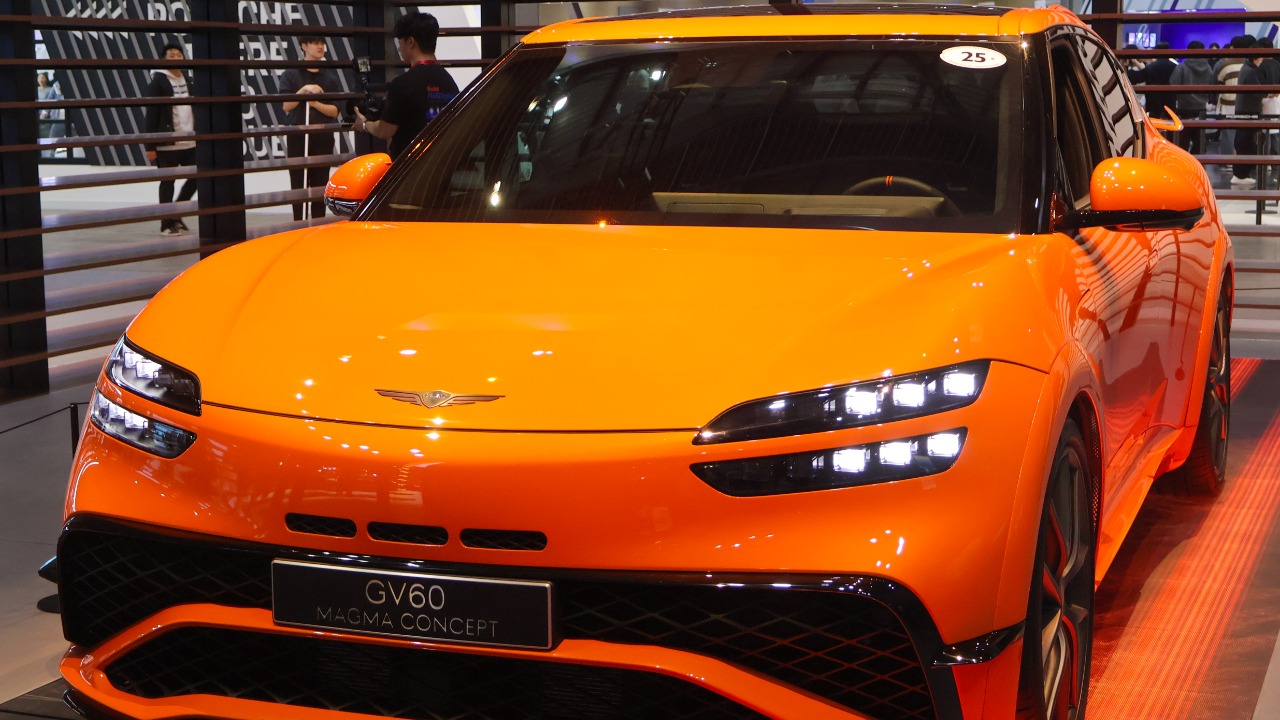
Small SUVs are now the default family car for many households, so it is significant that several of them sit at the top of the IIHS rankings. The organization’s Top Safety Pick+ list for small SUVs includes the 2025 Genesis GV60, a 4-door SUV that pairs a fully electric powertrain with a full suite of active safety tech. Alongside it is the 2025–26 Honda HR-V, another 4-door SUV that has been recognized as a Small SUV Top Safety Pick, showing how mainstream brands are matching luxury players on crash protection.
Electric crossovers are particularly prominent in this class. The 2025 Hyundai Ioniq 5 appears on the same small SUV honor roll, reflecting the brand’s investment in structural rigidity and advanced driver assistance. The IIHS Top Safety Pick+ roster for small SUVs also highlights how the category has broadened, with models like the Toyota Corolla Cross earning a Top Safety Pick designation in independent testing that groups it with other small crossovers. For shoppers who want a compact footprint without compromising on crash scores, these badges are a strong signal.
Hyundai, Kia and the Korean safety surge
One of the clearest trends in the latest IIHS data is how aggressively Korean brands have chased safety accolades. Hyundai has publicly touted that the 2025 IONIQ 5, IONIQ 6, Kona (not EV), Tucson/Tucson Hybrid and Santa Fe/Santa Fe Hybrid (built after Nov) have all secured Top Safety Pick+ designations from the Insurance Institute of Highway Safety. That is a broad spread of body styles and sizes, from compact crossovers to family haulers, and it underscores how safety engineering has become a core part of Hyundai’s brand pitch.
Kia has followed a similar path, particularly in the electric and three-row segments. The large Kia EV9 has been singled out in roundups of the safest SUVs as a Top Safety Pick+ contender, while the gasoline-powered Telluride continues to appear on lists of recommended three-row SUVs that meet IIHS thresholds. Hyundai is also preparing the Hyundai Ioniq 9, a larger electric SUV that is expected to target the same safety benchmarks as the IONIQ 5 and IONIQ 6, reinforcing the Korean group’s strategy of using IIHS scores as a competitive weapon.
Honda, Acura and the Japanese safety playbook
Japanese brands have long built their reputations on reliability, but their latest SUVs show a clear push to dominate safety rankings as well. Reporting on the 2025 IIHS Top Safety Pick and Top Safety Pick+ winners notes that the 2025 Acura ADX appears as a Top Safety Pick in the small SUV category, sitting alongside the Toyota Corolla Cross (TSP) in the same list of Winners. That places Acura’s new entry-level crossover squarely in the conversation for buyers who want premium features without sacrificing crash performance.
Honda’s mainstream SUVs are just as competitive. A recent analysis of the safest SUVs highlights the Honda Passport as one of the models that meets IIHS Top Safety Pick criteria, and the company has emphasized that Five Honda and two Acura models have secured top safety ratings from the Insurance Institute for Highway Safety for 2025. That roster includes crossovers like the HR-V and Passport, which means buyers can move up and down Honda’s SUV lineup without stepping out of the IIHS safety sweet spot.
Mazda, Subaru and the driver-focused safe choices
Mazda has carved out a niche as a driver’s brand, but its latest SUVs show that sharp handling can coexist with top-tier safety. The subcompact Mazda CX-30 and the slightly larger CX-50 both appear in safety-focused roundups as examples of small SUVs that pair strong crash scores with responsive steering and braking. Moving up the range, the two-row Mazda CX-70 and three-row CX-90 are both built on a new rear-drive-based platform that has been engineered with IIHS crash tests in mind, and they are frequently cited among the safest midsize and large SUVs you can buy.
Subaru, meanwhile, leans on its standard all-wheel drive and conservative engineering to appeal to safety-conscious buyers. The 2025 Subaru Solterra, the brand’s electric SUV, is positioned as a safe alternative to more performance-oriented EVs, and it has been evaluated under the same IIHS protocols that govern gasoline crossovers. Together, Mazda and Subaru show that you do not have to choose between engaging dynamics and rigorous crash protection, as long as you prioritize models that appear on the IIHS Top Safety Pick and Top Safety Pick+ lists.
Ford, Chevrolet and the safest American family haulers
Domestic brands still dominate the full-size SUV segment, and several of their models now carry IIHS endorsements that match their foreign rivals. A detailed breakdown of the safest SUVs points to the Ford Explorer as a Top Safety Pick+ in certain configurations, reflecting improvements in its crash structure and active safety systems. Ford’s electric crossover, the Mustang Mach-E, is also highlighted as a TSP+ model, which means families who want an American EV do not have to compromise on IIHS scores.
On the General Motors side, the latest Chevrolet Traverse appears in safety rankings as a TSP, while the related GMC Acadia is also cited as a Top Safety Pick in the same analysis. One report that catalogs the safest SUVs you can buy according to the IIHS explicitly lists the Chevrolet Traverse (TSP) and notes that the Ford Explorer (TSP+) and Ford Mustang Mach (TSP+, 2025 and 2026) sit alongside it, underscoring how American three-row crossovers have caught up with their Asian and European counterparts. For buyers who want a familiar badge and a large cabin, those IIHS-backed models are the standouts.
Luxury SUVs: when safety meets high-end tech
Luxury SUVs often debut new safety technologies before they filter down to mainstream models, and the current IIHS rankings reflect that trickle-down pattern. Audi’s lineup is a case in point, with the sleek Audi Q5 Sportback and the electric Q6 E-Tron both featuring prominently in discussions of the safest premium SUVs. Larger models like the Audi Q7 combine three-row practicality with advanced driver assistance, and they are often cross-shopped by buyers who treat IIHS scores as a baseline requirement.
German and Scandinavian rivals are just as active. The BMW X5 and Mercedes-Benz GLC are both cited in safety-oriented buyer’s guides as midsize luxury SUVs that meet IIHS Top Safety Pick thresholds, while the larger GLE competes with the Audi Q7 and Volvo’s flagship EX90. Genesis, the Korean luxury brand, has also made safety central to its pitch, with the Genesis GV70 and larger GV80 both appearing on lists of SUVs that achieve the highest IIHS ratings.
Body-on-frame bruisers and electric outliers
Not every safe SUV rides on a car-like unibody platform. Traditional body-on-frame models such as the Infiniti QX80 and its corporate cousin, the Nissan Armada, have been updated with more advanced safety suites and structural reinforcements to stay competitive in IIHS testing. While their sheer size and weight can work in their favor in some crash scenarios, they still have to meet the same small overlap and side-impact standards as lighter crossovers, which is why their presence in safety roundups is noteworthy.
On the electric side, newer players are using safety as a differentiator. The three-row Rivian R1S is frequently mentioned alongside the Kia EV9 and Volvo EX90 as a large electric SUV that aims for top IIHS scores, while Volkswagen’s Atlas Cross Sport shows how legacy automakers are refreshing existing platforms to meet the latest crash and headlight standards. For buyers who need towing capacity or off-road capability, these models prove that you can still prioritize safety without abandoning ruggedness.
How to use IIHS data when you shop
Knowing which SUVs top the IIHS charts is only half the battle, the other half is using that information intelligently when you are in a showroom or browsing listings. Practical buying guides now explicitly advise shoppers to Check Safety Ratings and Look for 5-star NHTSA scores or IIHS Top Safety Pick awards, and they point directly to the IIHS website as the place to verify any model you are considering. That advice is especially important for SUVs, where trim level, headlights and build date can all affect whether a specific vehicle qualifies for Top Safety Pick or Top Safety Pick+.
When I compare SUVs, I start by pulling up the IIHS list of Top Safety Pick and Top Safety Pick+ models, then cross-reference it with independent roundups that group the Small and midsize SUVs that score best. I also pay attention to analyses that focus specifically on the Safest Midsize SUVs You Can Buy According to IIHS, which highlight models like the 2025 Hyundai Santa Fe with a starting MSRP of $34,800. Finally, I look at broader lists of the These Are The Safest SUVs You Can Buy, According to the IIHS and cross-check them against the official IIHS Winners page that catalogs the Dec IIHS Top Safety Pick and Top Safety Pick Winners for categories like Small Cars and the Acura Integra. Taken together, those resources make it possible to cut through marketing spin and focus on SUVs that have genuinely earned their safety reputations.
More from MorningOverview