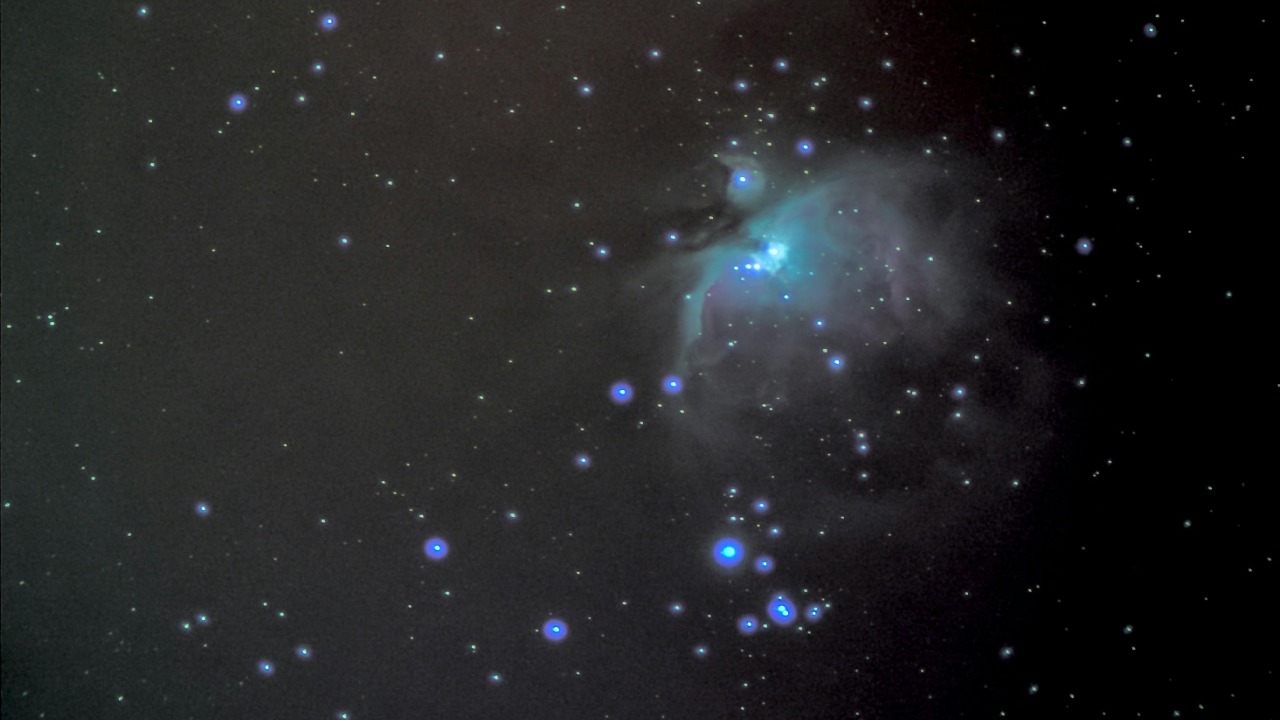

Two massive galaxy clusters are slamming into each other, and for once astronomers are not reconstructing the crash from the debris long after the fact. They have caught the system in the act, with stars, gas, and dark matter stretched into a luminous bridge that records the violence of the encounter in real time. Watching a cluster mid‑merge offers a rare laboratory for testing how gravity sculpts the largest structures in the universe and how invisible matter shapes what we see.
Instead of a static snapshot, the new observations reveal a dynamic scene: sub‑clusters rushing together, shock waves rippling through superheated gas, and stray stars flung into intergalactic space. I see this as a turning point in cluster science, where wide, deep surveys and targeted follow‑ups finally give us the time‑resolved view that theorists have been chasing for decades.
The stellar bridge that gave the merger away
The clearest sign that astronomers have intercepted a cluster collision in progress is a fragile filament of stars stretching between the two main clumps. This bridge is made of stars that have been stripped from their home galaxies by tidal forces, then left to drift in the thin space between clusters. Instead of orbiting neatly inside a single galaxy, they trace a glowing arc that links the two systems and betrays the fact that gravity is pulling them together right now, not in some distant past.
Researchers describe this bridge as a preview of the kind of discoveries that will become routine once the Vera C. Rubin Observatory begins its wide, repeated scans of the sky. In their analysis, they argue that the faint stream of intracluster stars is direct evidence that the two galaxy clusters are actively merging, a conclusion supported by the distribution of light and the dynamics of the surrounding galaxies, as detailed in the report on a bridge of stray stars.
Shock waves as a cosmic smoking gun
Stars alone do not tell the whole story of a cluster collision, so astronomers have turned to the hot gas that fills the space between galaxies. When two sub‑clusters crash together, their gas halos slam into each other and generate enormous shock waves, heating the plasma and compressing it into sharp edges that X‑ray telescopes can see. Catching such a shock at the right moment is difficult, because the structures evolve over hundreds of millions of years, yet a recent study managed exactly that.
In that work, a predoctoral fellow identified a distinct shock front in the X‑ray emitting gas of a merging system and argued that the feature captured two sub‑clusters in a crucial early epoch of the merging process, providing a missing link between theoretical models and observed cluster morphologies. The team emphasized that with this discovery, they had effectively caught the system in the act of a cluster merger, a point underscored in the description of the shock wave in merging galaxy clusters.
Dark matter racing ahead of normal matter
While stars and gas provide the visible drama, the bulk of a cluster’s mass is locked up in dark matter, which does not emit or absorb light. During a collision, this invisible component can behave very differently from the ordinary matter we see, and that difference is one of the most powerful probes of dark matter’s properties. In some mega‑clusters, gravitational lensing maps show that the main mass peaks, which trace dark matter, have moved ahead of the hot gas, suggesting that dark matter passed through the collision with little resistance while the gas was slowed by pressure and shocks.
One recent analysis of a particularly massive system highlighted how dark matter appears to fly ahead of normal matter in a mega galaxy cluster, using X‑ray data and lensing reconstructions to separate the components and track their relative motion. The researchers noted that, in the future, they hope that more studies like this one will lead to new clues about the mysterious nature of dark matter and its interactions, a goal they lay out explicitly in their discussion of how dark matter flies ahead of the cluster gas.
A local laboratory: Abell 3667 under the microscope
Not all of the action is happening in distant corners of the cosmos. One of the most instructive merging systems is relatively nearby, in the form of the galaxy cluster Abell 3667. Because it sits close enough for detailed imaging, astronomers can resolve individual galaxies, map the diffuse light between them, and trace the arcs of radio and X‑ray emission that mark the collision’s shock fronts. This makes Abell 3667 a kind of Rosetta stone for understanding how cluster mergers unfold and how different components respond to the same gravitational event.
Earlier this year, a Brown University astronomer, Englert, reported new evidence of merging galaxies within this local cluster, arguing that the data reveal interactions that had not been clearly seen before in Abell 3667. Englert’s results about Abell 3667 were published in the Astrophysical Journal Letters, and the work has been highlighted as the first time such merging activity has been captured so clearly in this particular system, as described in the account of how Englert studied Abell 3667.
Why dark matter still dominates the merger story
Even with spectacular images of stellar bridges and gas shocks, the most important player in a cluster collision remains unseen. The motions of galaxies and the binding of clusters require far more mass than can be accounted for by stars and gas alone, which is why astronomers infer the presence of dark matter. This missing mass problem becomes especially stark in merging systems, where the separation between dark and luminous components can be measured and compared to theoretical expectations.
Standard explanations for the missing mass in galaxies and clusters emphasize that dark matter particles cannot interact with light, meaning they do not absorb, emit, or reflect photons in any detectable way. If they did, we would already have seen them directly, rather than inferring their presence from gravity. Educational treatments of the subject stress that dark matter must be non‑luminous and only weakly interacting, a point laid out clearly in discussions of possible explanations for the missing mass in galaxies and clusters.
Rubin, Webb and the new era of cluster watching
Catching a cluster mid‑merge is not just a stroke of luck, it is the payoff from a new generation of observatories designed to watch the sky systematically. The Vera C. Rubin Observatory, often shortened to Rubin, is built to scan large swaths of the sky repeatedly, which will make it far easier to spot transient features like stellar bridges and to track how cluster substructures evolve over time. The recent detection of a bridge of stray stars has already been framed as a preview of the kind of routine discoveries Rubin will enable once its survey cadence is fully underway.
On the infrared side, the 6.5-meter James We telescope is opening a complementary window on cluster mergers by resolving faint, distant galaxies and probing the environments where clusters are still assembling. To do similar observations for small, rocky, Earth like planets, astronomers have argued that we need bigger telescopes like the 6.5-meter James We instrument and even larger mirrors that should be operational by 2025, a case made in a broader discussion of how next‑generation facilities will expand our reach from exoplanets to large‑scale structure, as outlined in the essay on worlds without end.
From galaxy interactions to full‑scale cluster collisions
One of the striking lessons from these observations is how processes repeat across scales. The same gravitational tides that pull stars out of individual galaxies during a close pass also operate when entire clusters interact, only now the victims are whole galaxies and their dark matter halos. In systems like Abell 3667, astronomers see both levels at once: galaxies merging within the cluster and the cluster itself undergoing a larger‑scale collision, a nested hierarchy of interactions that builds structure step by step.
When I look at the stellar bridge between clusters and the shock waves in the intracluster gas, I see them as scaled‑up versions of the tidal tails and gas compression seen in galaxy pairs like the Antennae. The difference is that in clusters, dark matter’s role is more obvious, because the mass budget is dominated by the invisible component and the separations between gas and dark matter become measurable. That is why the combination of stellar streams, gas shocks, and lensing maps in these mid‑merger clusters is so powerful: together they reveal how gravity, ordinary matter, and dark matter cooperate to shape the cosmic web.
What catching a cluster mid‑merge tells us about the universe
Seeing a galaxy cluster in the middle of a merger is more than an astronomical curiosity, it is a direct test of the standard cosmological model. The rate at which clusters collide, the energies involved, and the way dark matter behaves all feed back into our estimates of how much matter the universe contains and how it is distributed. If dark matter were to interact strongly with itself or with normal matter, for example, the offsets between gas and dark matter in these systems would look very different from what is observed.
By combining the evidence from stellar bridges, shock waves, and dark matter offsets, astronomers can constrain how clumpy the universe is on large scales and how quickly structures grow over cosmic time. I see the current mid‑merger observations as the first entries in a much larger catalog that Rubin, James We, and future X‑ray missions will assemble, turning rare case studies into a statistical science. Each new cluster caught in the act will sharpen our picture of how the universe built its largest structures and how the unseen majority of its matter continues to steer the visible few per cent.
More from MorningOverview