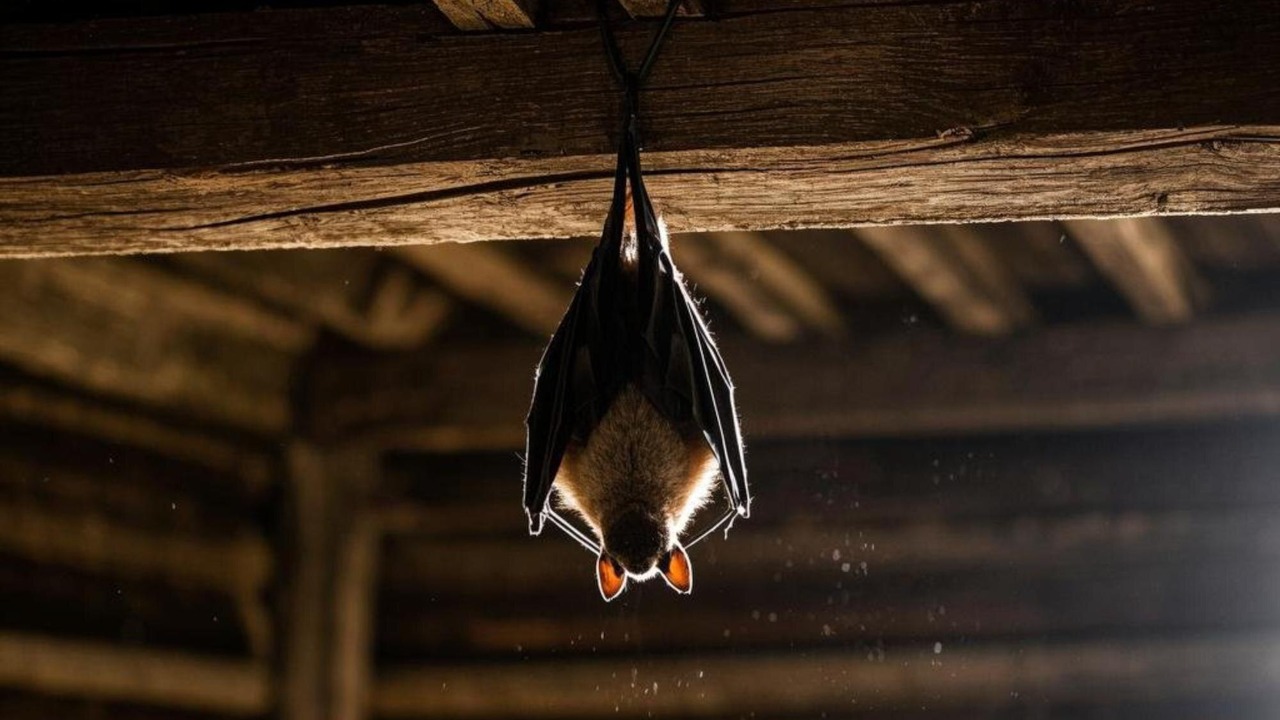

When a bat appears in a bedroom or living room, the real danger is often the bite you never felt. Rabies remains almost uniformly fatal once symptoms start, which is why many health officials now tell people to act as if they were bitten any time a bat is found in close quarters and contact is uncertain. I am treating that guidance as the starting point, then looking at what experts say about risk, testing, and the steps that can keep a frightening encounter from turning into a medical emergency.
Why bats in homes worry health officials more than you might think
I start with the blunt reality: in the United States, bats are now the leading source of deadly rabies infections in people, even though most bats are healthy and never come near humans. Federal guidance notes that In the United States, bats are the most reported animals with rabies and that most people who die of rabies in this country were infected by bats. That shift has changed how doctors and local health departments think about a bat that suddenly shows up in a house, especially in a bedroom where someone was asleep.
Part of the concern is that bat bites can be so small that people never realize they were exposed. Public health officials emphasize that Protecting against rabies depends on recognizing those hidden encounters early enough to start treatment. When I look at the pattern of fatal cases, a recurring theme is someone waking up to find a bat in the room, assuming nothing happened, and declining care. That is why the modern advice sounds extreme: if you find a bat in your house and cannot confidently rule out contact, you should behave as if you were bitten until a professional tells you otherwise.
The science behind “assume you were bitten”
The “assume exposure” message is not about panic, it is about the biology of rabies and the limits of human perception. Guidance on Assessing Exposure stresses that Only people who may have been exposed to a bat or other potentially rabid animal should consider treatment, but it also explains that in certain situations, like a bat in a room with a sleeping person, an unsupervised child, or someone intoxicated, you simply cannot rely on memory or visible wounds. In those cases, experts treat the scenario itself as evidence that a bite could have occurred.
Local health departments echo that logic. One county rabies program warns that Bat bites or scratches can be very tiny and are not always noticed, especially by a sleeping person, a child, or someone with cognitive impairment, a situation they label an “occult exposure.” When I weigh that against the near 100 percent fatality rate of untreated rabies, the precautionary approach makes sense: if a bat was in the room and you cannot be sure there was no contact, you treat it as if there was.
Rabies is rare, but the stakes are absolute
It is important to keep two truths in view at once. First, rabies from bats is rare compared with other everyday risks, and most bats never carry the virus at all. Wildlife advocates point out that Are bats harmful is the wrong question, because the incidence of rabies in bat populations is extremely low and bats play a crucial role in ecosystems. Second, when rabies does slip through, the outcome is almost always fatal, which is why health agencies treat even a small, uncertain risk with outsized seriousness.
Medical officials in one county underline that Human rabies is usually fatal without prompt post-exposure vaccine and treatment, and that their last locally acquired case of Rabies in a person was decades ago precisely because people who are exposed get care quickly. That track record is the quiet success story behind the alarming advice. When I look at the data, the real risk is not the bat itself, it is the delay between a suspicious encounter and a call to a doctor.
Why you cannot “eyeball” a healthy bat
One of the most dangerous myths is that you can tell if a bat has rabies just by how it looks or behaves. Health officials are explicit that the only way to know for sure is a laboratory test on the animal’s brain tissue. Guidance on how do I know if a bat has rabies explains that there is no reliable visual cue, and that testing is the research method used to confirm infection and to help people avoid post-exposure prophylaxis (PEP) when it is not needed.
That is why local programs urge residents not to release a bat that has been inside a living space until they have spoken with staff. One county’s rabies page states plainly that if you find a bat in your house, please do not let it go until you speak with a member of their team, because Rabies is a fatal but preventable disease and the bat should be captured for testing when there is any chance of exposure. I read that as a reminder that your eyes are not a diagnostic tool; the lab is.
What to do in the first minutes after you spot a bat
When a bat is suddenly circling a bedroom or clinging to a curtain, the first priority is to avoid direct contact. Federal advice on What to do if you encounter a bat is blunt: Avoid touching bats, because Bat bites can be tiny and you may not even know if you were bitten. I would add a practical step here: calmly move children and pets out of the room, close the door, and if possible block the gap under the door with a towel so the animal cannot move into other parts of the home.
Once the room is contained, the next move is to get expert help. National guidance says that if you think you have been exposed to rabies, you should see a healthcare professional urgently and, if you see strange bat behavior or a bat in a room with a sleeping person, consult with a public health expert. Many local health departments have on-call staff who can walk you through whether the bat needs to be captured for testing and whether you should head straight to an emergency department. The key is not to wait until morning or after work; the clock for safe, effective treatment starts ticking the moment exposure is possible.
How to safely capture a bat for testing
If officials advise capturing the bat, they are not asking you to become a wildlife wrangler without guidance. Public health materials on Determining the Rabies Status of the Bat explain that testing is only possible if the animal’s head is intact, and they point people to step by step instructions on How to Safely Capture a bat using simple tools like a small box, a piece of cardboard, and thick gloves. The goal is to trap the bat against a wall or on the floor, slide the cardboard under the container, and secure it with tape, all while keeping your hands protected.
Local guidance on Capturing a Bat in Your Home reinforces that you should never handle the bat yourself with bare hands and that, whenever possible, animal control or trained staff should do the capture. I see a consistent message across these instructions: preserving the bat for testing can spare you from unnecessary shots, but no one wants you to get hurt in the process. If you are at all unsure, close the room off and wait for professionals.
When doctors recommend rabies shots
Once a bat encounter is reported, clinicians walk through a structured risk assessment. A technical guide on Other non-bite exposures explains that, aside from organ or tissue transplants, casual contact almost never causes rabies and post-exposure prophylaxis is usually not indicated. The exceptions are situations where a person cannot reliably say whether a bite or scratch occurred, such as a sleeping child, a mentally disabled person, or an intoxicated person in a room with a bat. In those cases, the absence of a visible wound does not rule out risk.
Specialists also look at whether the bat is available for testing. If the animal is captured and a lab confirms it is not infected, treatment can be stopped or avoided entirely. If the bat cannot be found, the decision leans more heavily on the scenario itself. One pest control guide notes that The CDC recommends post-exposure prophylaxis when direct contact between a human and a bat has occurred unless a thorough assessment shows that a bite, scratch, or mucous membrane exposure did not happen. In practice, that often means erring on the side of treatment when memories are fuzzy or the person was asleep.
What rabies treatment actually involves
For many people, the phrase “rabies shots” conjures an outdated image of a long series of painful injections in the stomach. Modern post-exposure prophylaxis looks very different. One hospital guide explains that if you have been exposed to a bat, the first step is to wash any obvious bites or scratches with soap and water, then start a series of vaccines and, in some cases, immune globulin, a process that That involves several doses over about two weeks. The shots are typically given in the arm, similar to other vaccines.
Another section of the same guidance addresses the question many people ask in the emergency room: What Does a Bat Bite Look Like, and how do you know if you need treatment. The answer is that bat bites can resemble tiny pinpricks or may not be visible at all, which is why doctors focus more on the circumstances of the encounter than on dramatic wounds. From my perspective, the key takeaway is that the regimen is finite and highly effective when started promptly, a far better tradeoff than gambling on an invisible bite.
How easy is it to get rabies from a bat, really?
People often swing between two extremes: assuming any bat near a house is a death sentence, or dismissing the risk entirely because they have “always had bats in the attic.” The truth sits in the middle. A detailed How Easy Is It to Get Rabies from a Bat Guide on Bat Encounters explains that while the odds of any single bat carrying rabies are low, the virus is present enough that every direct contact has to be taken seriously. The guide stresses that most people who end up infected either did not realize they were bitten or chose not to seek care.
Public health messaging on social media has started to echo that nuance in plain language. A recent post warned, with a photo of a small brown bat, that if you have Found a bat in your home, Don’t ignore it, because Bats are the most common carriers of rabies in Wisconsin and You may not see a bite mark at all. I read that as an attempt to reset expectations: you do not need to fear every bat outdoors, but you do need to treat any bat in your living space as a medical question, not just a nuisance.
Why bedrooms are a special case
Experts draw a sharp line between a bat flying through a hallway while you are fully awake and one discovered in a bedroom where someone was sleeping. Technical guidance on Bats in Bedrooms explains that assessing risk hinges on whether a person could have been bitten without knowing it, which is far more likely when they were asleep, a small child, or impaired. Only in those situations do officials recommend assuming exposure even if no bite is seen.
Wildlife professionals add another wrinkle: a bat in your house today may have been there longer than you think. One humane wildlife company notes that Mar sightings of bats in homes often reveal that the animal was in your house for some time, and because bat teeth are very small, a person can be bitten in their sleep and never wake up. That combination of stealthy bites and extended indoor time is why bedrooms, nurseries, and spaces where people nap on couches get special attention from health departments.
Regional patterns: why some states talk about bats more
Not every part of the country faces the same rabies landscape, and state health departments tailor their warnings accordingly. In Michigan, for example, officials state that In Michigan, rabies most commonly occurs in bats, so residents are urged to prevent bats from entering living quarters or occupied spaces in homes, schools, and other buildings. That focus shapes everything from school nurse protocols to how landlords handle reports of bats in apartment hallways.
Other regions use similar language but emphasize local history. One county health department notes that the last human Rabies case in their area was in 1969, a statistic they connect to aggressive prevention campaigns and quick responses to bat encounters. When I compare these messages, the pattern is clear: where bats are the primary rabies reservoir, officials talk more often and more bluntly about sealing up homes, reporting indoor bats, and not releasing an animal that might need testing.
Keeping bats out without demonizing them
Preventing bats from getting into your living space in the first place is the least stressful way to avoid the “was I bitten?” dilemma. Pest control and public health guides recommend sealing gaps around rooflines, chimneys, and attic vents, and installing one-way exclusion devices so bats can leave but not reenter. One step by step resource on how to keep bats out of your home stresses timing those repairs outside of maternity season so young bats are not trapped inside walls, a reminder that humane control and rabies prevention can go hand in hand.
At the same time, bat advocates urge people not to see every bat as a threat. Educational materials on Bats emphasize that these animals eat vast numbers of insects and that the National Centers for Disease Control and Prevention highlight only specific scenarios, such as a bat in a room with a sleeping person or unsupervised small child, as reasons to seek medical advice. I find that balance useful: keep bats out of bedrooms and living rooms, but support them outdoors where they belong.
What experts wish you would remember in the moment
When I listen to infectious disease specialists and wildlife officers, a few themes repeat. First, do not touch the bat. Second, do not let it go until you have talked with a health professional about whether it should be tested. Third, do not wait to seek medical advice if there is any chance of contact. A Mayo Clinic physician put it starkly in a recent video, explaining that the most dangerous threat of rabies in the US is flying overhead and that the old image of a rabid dog has been replaced by bats, a point made in an Oct segment on what you should know about bats and rabies.
Public health campaigns also stress that staying away from wildlife in general is a core prevention strategy. Federal messaging notes that Staying away from wildlife, especially Bats, is key to preventing rabies in people, and that people who wake up to find a bat in the room are among those most likely to receive PEP for rabies. In practical terms, that means teaching children never to pick up a grounded bat, calling animal control instead of trying to rescue wildlife yourself, and treating any bat in your home as a medical question first and a nuisance second.
More from MorningOverview