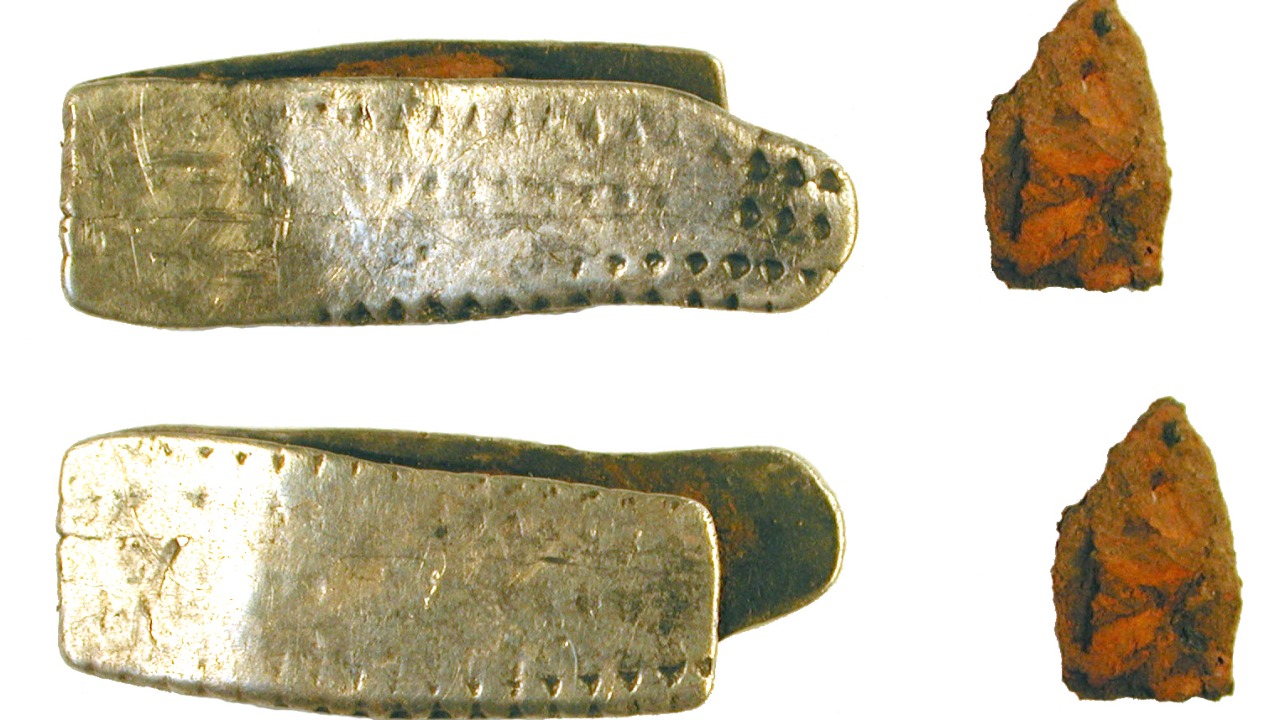

What looked like a tangle of “old wires” in a Norwegian farm field turned out to be a cache of Viking silver that had been hidden in the soil for roughly 1,100 years. The misidentified scrap, once cleaned and catalogued, revealed itself as carefully worked jewelry and bullion, a reminder that the Viking Age still sits just beneath the surface of everyday life in rural Scandinavia. I see this discovery as more than a lucky find, it is a window into how Vikings used silver, land and secrecy to navigate a world built on fragile alliances and long-distance trade.
From “old wires” to buried wealth
The story begins with a routine look at the ground, not a grand expedition. On a working farm, archaeologists and landowners initially believed they had exposed nothing more than discarded cabling, the kind of debris that often turns up when fields are drained or renovated. The material was thin, twisted and darkened by centuries underground, so it is not surprising that the first impression was of mundane “old wires” rather than anything that might rewrite a local history book.
Only when the pieces were lifted, cleaned and examined did their true nature emerge. What had been dismissed as scrap revealed itself as Viking silver, including Four Bracelets and other worked fragments that had been deliberately buried and then forgotten. In coverage of the find, the episode is framed with the phrase They Thought They Had Unearthed Old Wires In a Farmhouse, But It Was Actually Hidden Viking Treasure, a neat summary of how easily the extraordinary can masquerade as the ordinary when it has spent a millennium in the ground.
A hoard frozen in time for 1,100 years
What makes this discovery stand out is not only what was found, but how long it lay undisturbed. Archaeologists estimate that the silver was hidden roughly 1,100 years ago, a span that places the burial squarely in the heart of the Viking Age, when Scandinavian seafarers were raiding, trading and settling from the British Isles to the Black Sea. That figure, 1,100, is not just a round number, it is a reminder that the objects were already old when the first stone cathedrals of Europe were rising and that they have outlasted kingdoms, languages and borders.
In reports on Viking Treasure Uncovered After Years in Norway, researchers describe how Norwegian specialists traced the context of the hoard to a period of intense political change, when local chieftains were consolidating power and silver was a key tool for rewarding loyalty. The fact that this cache remained hidden for so long suggests that whoever buried it never returned, whether because of death, displacement or a shift in settlement patterns. For me, that silence is as evocative as the metal itself, turning the hoard into a time capsule of interrupted plans and unfinished stories.
The farm setting and a very modern mistake
The setting of the discovery, an active Farm rather than a monumental burial mound, underlines how deeply Viking activity was woven into the everyday landscape. Archaeologists were not chasing legends of lost treasure; they were working through the practical realities of rural land use when the silver appeared. In one account, the episode is framed as Archaeologists Thought They Found Wires Buried on a Farm, a reflection of how routine infrastructure work can intersect with deep history in a country where past and present share the same soil.
That initial misreading also speaks to the visual language of modern life. To contemporary eyes, thin metal strands in the ground suggest electricity or telecommunications, not ancient wealth. The phrase Archaeologists Thought They Found Wires Buried captures that reflex, while the follow up, It Was Actually Viking Treasure, marks the pivot from the twenty-first century back to the Viking Age. The contrast is sharpened in coverage that pairs the words Archaeologists Thought They Found Wires Buried with the revelation that it was a good thing the material was checked more carefully, because the “wires” were anything but disposable.
What the silver itself reveals
Once the pieces were recognized as Viking, their shapes and workmanship became crucial clues. The hoard included Four Bracelets, each formed from twisted and hammered silver, along with other cut fragments that likely served as bullion. These are not random scraps; they are objects that once sat on human wrists, caught the light in longhouses and markets, and then were chopped or bent to match the weight standards of the time. The combination of intact jewelry and hacked silver fits a broader pattern of Viking hoards that blur the line between adornment and currency.
Descriptions of the find emphasize that the bracelets and other items were carefully arranged before burial, suggesting a deliberate act of concealment rather than casual loss. In the account titled They Thought They Had Unearthed Old Wires In a Farmhouse, But It Was Actually Hidden Viking Treasure, the silver is treated as a coherent deposit, not a scatter of dropped coins. That detail matters, because it hints at a person or family making a conscious decision to convert portable wealth into a hidden reserve, trusting the land itself to guard their assets until they could return.
Norway’s landscape of hidden Viking hoards
This farm discovery fits into a wider Norwegian pattern in which ordinary fields and pastures conceal extraordinary finds. Archaeologists working in Norway have repeatedly uncovered Viking Treasure Uncovered After Years in Norway during surveys linked to construction, road building or agricultural improvements. In the report that highlights Norwegian archaeologists and a significant Vikin hoard, the discovery was made during routine work, then transferred to the museum for further analysis, a process that mirrors the path from “old wires” to curated artifacts in the farm case.
What strikes me is how these finds cluster in places that still support everyday livelihoods. The same soils that now grow barley or support dairy herds once held the savings of Viking households, and the continuity of land use means that tractors and drainage ditches are now the tools that bring those savings back to light. The Norwegian countryside, in this sense, is not just scenic; it is an archive, and each new hoard adds another entry to a ledger of how people in the past managed risk, wealth and uncertainty.
Archaeologists, chance and the role of expertise
The farm hoard also illustrates how much archaeology depends on a mix of luck and trained attention. Without someone on site who was willing to question the assumption that the metal was just discarded cabling, the silver might have been tossed aside or recycled without a second thought. In one account, the narrative centers on an Archaeologist who noticed that the “wires” did not quite match modern materials, a small moment of doubt that ultimately led to the find and to the recognition that It Was Actually Viking Treasure rather than trash.
Reports that frame the story as Archaeologists Thought They Found Wires Buried on a Farm, It Was Actually Viking Treasure underline how easily a misclassification could have erased a piece of history. The repetition of that phrase in different contexts, including a version that begins with Sep, Archaeologists Thought They Found Wires Buried and continues with Archaeologists Thought and Farm, shows how the anecdote has already become a cautionary tale within the field. For me, it is a reminder that expertise is not just about knowing what something is, but about being willing to pause when something does not quite fit expectations.
Why Vikings buried silver in the first place
To understand why a Viking would hide Four Bracelets and other silver on a farm, it helps to think about how wealth worked in that world. Silver was the primary medium of high-value exchange, but it did not always circulate as standardized coins. Instead, people used arm rings, neck rings and chopped fragments, weighing them out in transactions that could range from bridewealth to trade deals. Burying such items in a field could serve several purposes: a hedge against theft, a ritual offering, or a way to park wealth during a period of danger or travel.
The Norwegian context, highlighted in accounts of Viking Treasure Uncovered After Years in Norway, suggests that hoards often cluster in regions that were politically contested or economically strategic. In those settings, hiding silver in the ground might have been as rational as moving money into a secure account today. The fact that this particular hoard remained in place for roughly 1,100 years implies that whatever short-term crisis prompted the burial was followed by longer term disruptions that prevented recovery, turning a temporary stash into a permanent archaeological feature.
How a farm hoard reshapes public imagination
Discoveries like this one do more than fill museum cases; they reshape how people imagine the Vikings and their relationship to the land. Popular culture often focuses on ships, raids and distant voyages, but a hoard buried on a Farm and mistaken for old wires pulls attention back to the domestic sphere. It suggests that Viking households were not just staging points for warriors, but complex economic units where people made decisions about savings, security and inheritance in ways that feel surprisingly familiar.
The narrative arc captured in phrases like Archaeologists Thought They Found Wires Buried on a Farm, It Was Actually Viking Treasure has already proven compelling enough to travel widely, and I suspect that is because it bridges the gap between past and present so neatly. A farmer today worrying about commodity prices is not so far removed from a Viking landholder deciding whether to convert silver into livestock or hide it in the soil. By surfacing that continuity, the hoard invites readers and visitors to see the Viking Age not as a distant saga, but as a lived reality that still echoes in the fields where people work every day.
More from MorningOverview